Şanlıurfa: Göbeklitepe and the City of Prophets
On this page
- What is Şanlıurfa?
- How do you get to Şanlıurfa?
- Where should you stay in Şanlıurfa?
- What type of climate does Şanlıurfa have?
- When is the best time to visit Şanlıurfa?
- What is the history of Şanlıurfa?
- What is Şanlıurfa famous for?
- What are the historical places of Şanlıurfa?
- What are the best things to do in Şanlıurfa?
- What are the best places to visit in Şanlıurfa?
- What is the traditional food of Şanlıurfa?
- What should you buy in Şanlıurfa?
- Frequently asked questions about Şanlıurfa
- What do the official records say about Şanlıurfa?
Key facts: Şanlıurfa
- UNESCO World Heritage: Göbeklitepe, inscribed in 2018 (UNESCO).
- UNESCO Tentative List: “Harran and Şanlıurfa” has been on Türkiye’s Tentative List since 2000 (UNESCO); it is not yet inscribed.
- UNESCO Creative City: Şanlıurfa joined the Creative Cities Network as a City of Music in 2023.
- Region: Southeastern Anatolia, on the Harran plain of upper Mesopotamia, between the Euphrates and the Syrian border.
What is Şanlıurfa?
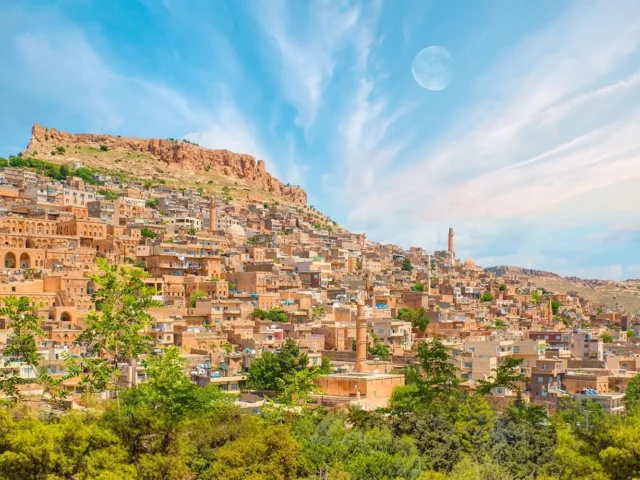
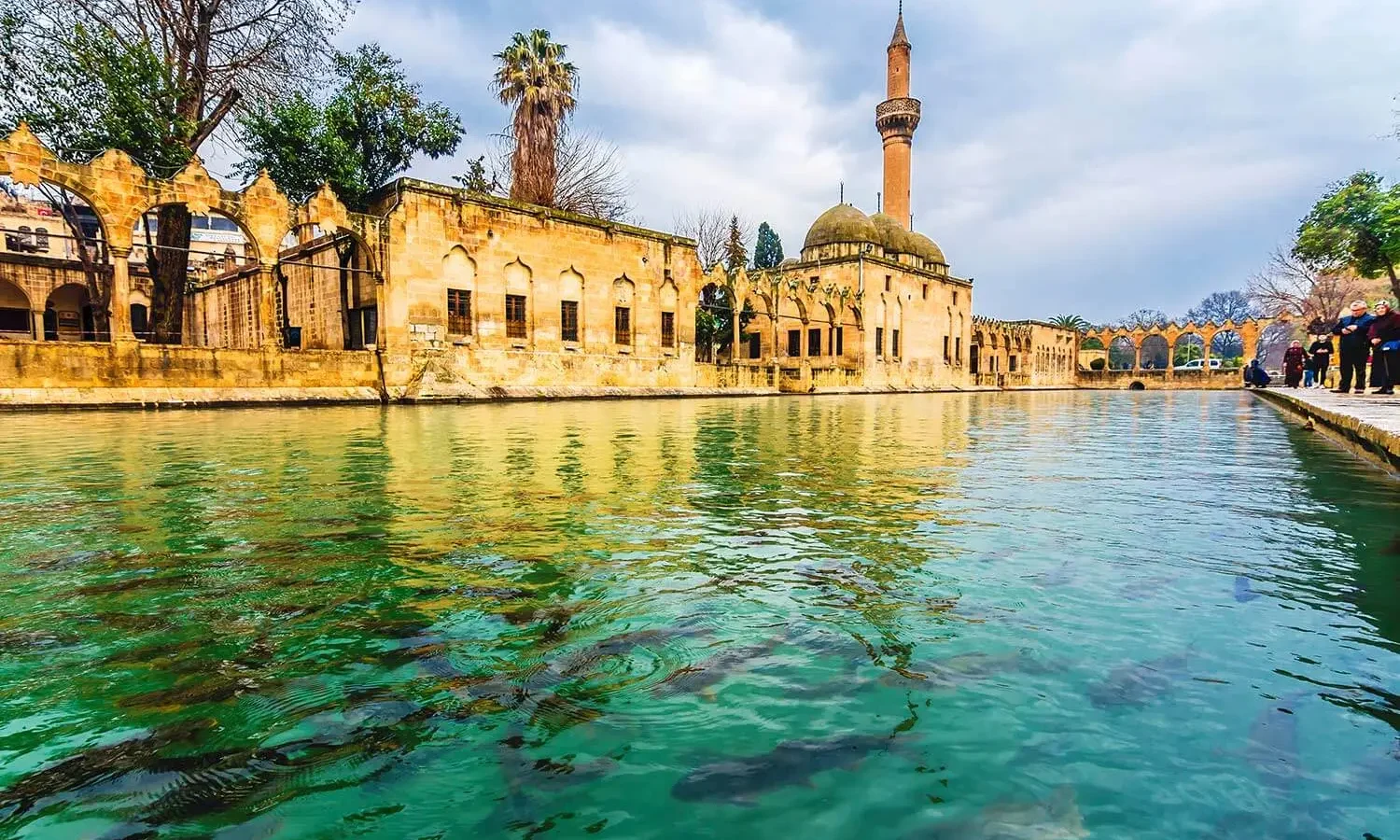
Şanlıurfa, still called Urfa by most people, is a large province in southeastern Türkiye and the name of its capital, a city of limestone houses, bazaars and mosques built around a castle rock and a spring-fed pool. The pool, Balıklıgöl, is full of carp that local tradition holds sacred, and the old city around it is a place of pilgrimage tied to the Prophet Abraham. Many call Urfa the “city of prophets”.
Since the excavations at Göbeklitepe began in 1995, Şanlıurfa has also become the base for exploring the Neolithic “Taş Tepeler” (Stone Hills), where hunter-gatherers raised carved stone pillars around 11,000 years ago. Göbeklitepe was inscribed on the UNESCO World Heritage List in 2018 and is now one of the most visited archaeological sites in Türkiye.
Outside the city the province spreads south across the flat Harran plain, irrigated since the 1990s by water from the Atatürk Dam on the Euphrates, to the Syrian border. Harran, with its beehive houses, and Halfeti, a half-submerged town on the Euphrates, are the classic day trips.
Places to visit in Şanlıurfa

Göbeklitepe
Göbeklitepe near Şanlıurfa: UNESCO-listed Neolithic enclosures of carved T-shaped pillars from 9600…

Balıklıgöl
Balıklıgöl in Şanlıurfa: the Pool of Abraham with its sacred carp, Ayyubid…
Harran
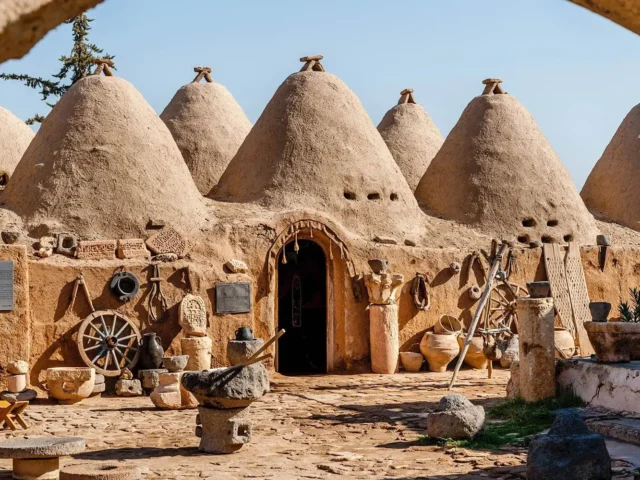
Harran near Şanlıurfa: conical mudbrick beehive houses, the 8th-century Great Mosque, a…

Halfeti
Halfeti on the Euphrates: the half-submerged stone town, boat trips to Savaşan…
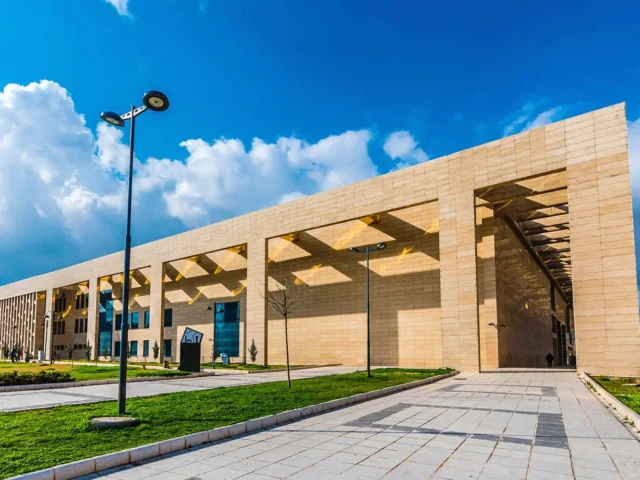
Şanlıurfa Archaeology and Mosaic Museum
Şanlıurfa Archaeology and Mosaic Museum: the Urfa Man, Göbeklitepe finds and replica,…

Halil-ür Rahman Mosque
Halil-ür Rahman Mosque at Balıklıgöl, Şanlıurfa: Ayyubid mosque of 1211 on a…
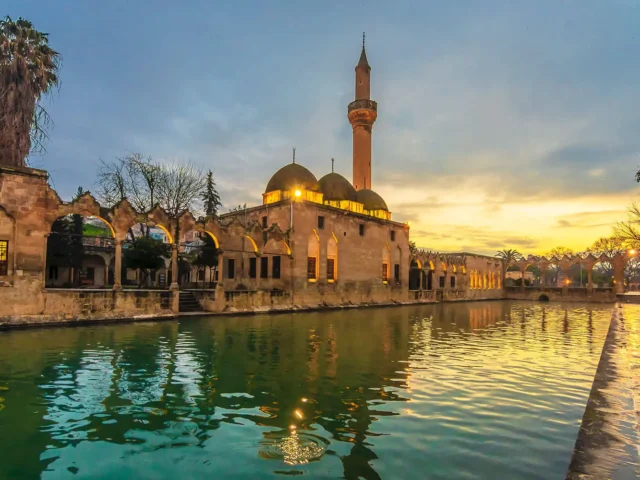
Ayn Zeliha Lake
Ayn Zeliha Lake in Şanlıurfa: the sacred fish pool named after Nimrod’s…
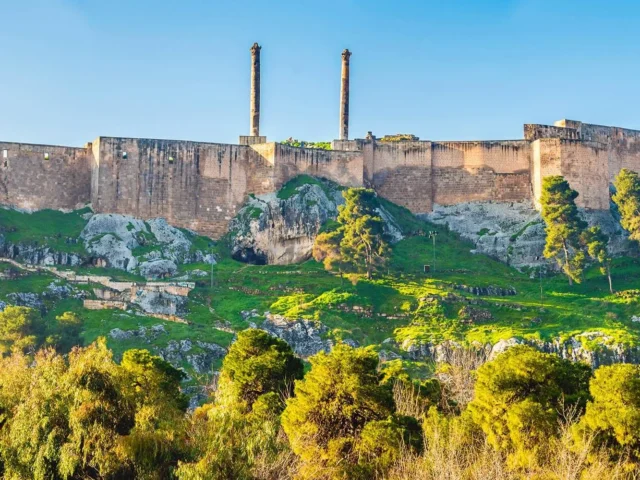
Şanlıurfa Castle
Şanlıurfa Castle on Dambak hill: two 3rd-century Corinthian columns, a rock-cut moat,…

Cave of Abraham
The Cave of Abraham in Şanlıurfa: the Mevlid-i Halil cave revered as…
How do you get to Şanlıurfa?
By air: Şanlıurfa GAP Airport (GNY), opened in 2007, lies about 35 km northeast of the city. Turkish Airlines flies from Istanbul Airport; AJet flies from Sabiha Gökçen and Ankara; Pegasus from Sabiha Gökçen and İzmir; and SunExpress from Antalya and İzmir. There are no regular international flights, so overseas visitors connect in Istanbul. Gaziantep Airport, about two hours’ drive west, is a useful alternative.
By road: Şanlıurfa is on the main motorway between Gaziantep and Mardin. Coaches run from Istanbul, Ankara and all the cities of the region, and minibuses and buses connect the city with Harran, Halfeti (via Birecik), Siverek and other towns. Adıyaman and Mount Nemrut are about three hours north, across the Atatürk Dam lake.
Getting around: The old city, Balıklıgöl, the castle and the museum complex are all walkable. For Göbeklitepe, Harran and Halfeti you need a car, taxi or tour, though minibuses run to Harran town.
Border areas: The UK Foreign Office advises against all travel within 10 km of the Syrian border (FCDO). In Şanlıurfa province that includes border towns such as Akçakale, Suruç and Ceylanpınar. Şanlıurfa city, Göbeklitepe, Harran and Halfeti are outside that zone.
Where should you stay in Şanlıurfa?
Stay in the old city near Balıklıgöl if you can. A number of stone mansions in the streets around the pools and the bazaar have been turned into small hotels with courtyards and iwans, and some host the traditional music evenings known as sıra gecesi. You can walk to the pools at dawn, when the city is quietest, and to the bazaar.
The newer districts along the main boulevards have larger modern hotels with parking, convenient for drivers heading out to Göbeklitepe, Harran and Mount Nemrut. Halfeti has a few guesthouses and boutique hotels in restored stone houses if you want to stay by the Euphrates.
Book a Şanlıurfa tour
−5% Istambul readers save 5% on every tour below — applied at checkout.
Partner listings via GetYourGuide · free cancellation on most
What type of climate does Şanlıurfa have?
Şanlıurfa is one of the hottest cities in Türkiye. Summers are long, dry and very hot, with July and August afternoons regularly approaching or passing 40°C; the stone streets hold the heat well into the night. Winters are cool and rainy, with occasional frost and rare snow. Most of the year’s rain falls between November and April, and spring turns the Harran plain briefly green.
When is the best time to visit Şanlıurfa?
March to May and October to November are the best months: warm enough for long days outdoors but cool enough to walk around Göbeklitepe and Harran in the middle of the day. In summer, plan Göbeklitepe and Harran for early morning and spend the afternoon in the museum or the covered bazaar. Religious holidays bring large numbers of pilgrims to Balıklıgöl and the Cave of Abraham, which is atmospheric but crowded.
What is the history of Şanlıurfa?
The Şanlıurfa region has some of the oldest monumental architecture in the world. At Göbeklitepe, 18 km northeast of the city, hunter-gatherers built round and rectangular enclosures of carved T-shaped pillars between about 9600 and 8200 BC, according to UNESCO. In the city itself, at Balıklıgöl, builders found the life-size limestone figure now called the Urfa Man, around 11,000 years old and now in the Şanlıurfa Archaeology and Mosaic Museum.
The Ministry’s Culture Portal describes Urfa as, since ancient times, the busiest and most important meeting point of East and West, on the old road network linking the two worlds in culture and trade. Harran, 45 km to the southeast, was a great centre of the Mesopotamian moon god Sin and is named in Genesis as the place where Abraham’s family settled on its way from Ur to Canaan. Near Harran (ancient Carrhae) the Parthians crushed the Roman army of Crassus in 53 BC.
After Alexander the Great, the Seleucids refounded the city as Edessa. From the 2nd century BC to the 3rd century AD it was the capital of the kingdom of Osroene, ruled by the Abgar dynasty. Edessa became one of the first centres of Syriac Christianity: tradition holds that King Abgar exchanged letters with Jesus, and the city gave its name to the image known as the Mandylion. The two columns that still stand on Şanlıurfa Castle were raised in this period, around AD 240.
The city passed between Rome, Byzantium and Persia, and to the Arabs in the 7th century. In 1098 Baldwin of Boulogne made it the capital of the County of Edessa, the first Crusader state; its fall to Zengi in 1144 led to the Second Crusade. It was then ruled by the Zengids, Ayyubids, who built the Halil-ür Rahman Mosque in 1211, Mamluks and Akkoyunlu, before becoming Ottoman in the early 16th century.
After the First World War, Urfa resisted British and then French occupation, and the French garrison withdrew in April 1920. In recognition of that resistance the Grand National Assembly passed Law No. 3020 on 12 June 1984, renaming the province Şanlıurfa, “glorious Urfa”.
What is Şanlıurfa famous for?
Göbeklitepe and the Taş Tepeler. The world’s best-known Neolithic site, and a dozen related hilltop sites in the province, including Karahantepe.
Abraham and the prophets. Local and Islamic tradition places the birth of Abraham in a cave in the city and his ordeal by fire at Balıklıgöl. The province also has shrines associated with Job (Eyüp), Elisha (Elyasa) and Jethro (Şuayb).
Sacred fish. The carp of Balıklıgöl and Ayn Zeliha are never caught or eaten; visitors feed them.
Food and music. Urfa kebab, çiğ köfte, isot pepper and lahmacun; and sıra gecesi, evenings of food, conversation and music that helped earn the city its UNESCO City of Music status in 2023.

What are the historical places of Şanlıurfa?
In Şanlıurfa city
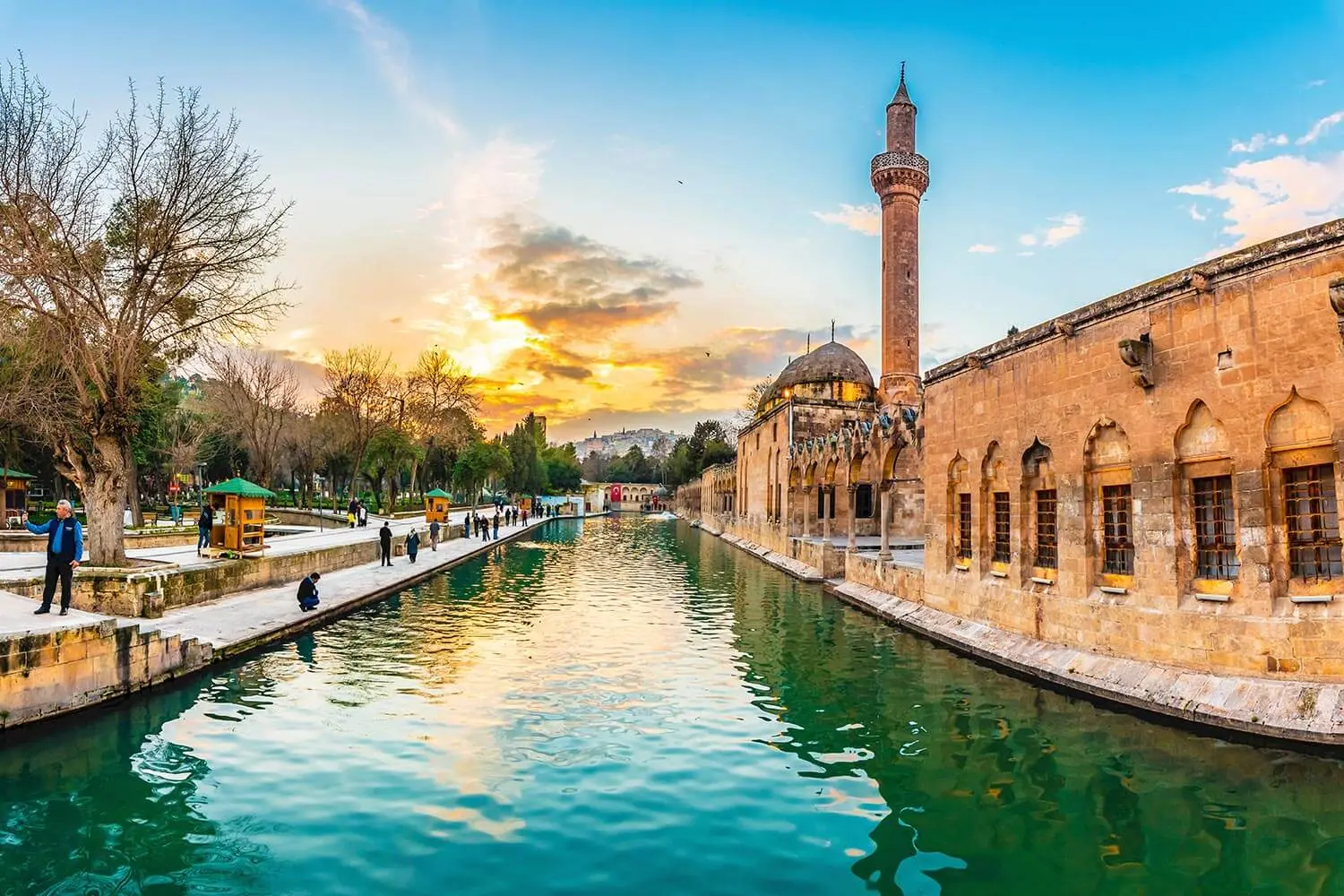
Balıklıgöl and the Halil-ür Rahman complex. The sacred pools, surrounded by mosques and madrasas, in the Gölbaşı park below the castle.
Halil-ür Rahman Mosque. Built in 1211 under the Ayyubids at the spot where Abraham is said to have fallen into the fire.
Rızvaniye Mosque and Madrasa. On the north side of the pool, built in the early 18th century by Rıdvan Ahmed Pasha, Ottoman governor of Raqqa, on the site of a Byzantine church of St Thomas.
Cave of Abraham (Mevlid-i Halil). The cave where Abraham is believed to have been born, beside the Mevlid-i Halil Mosque.
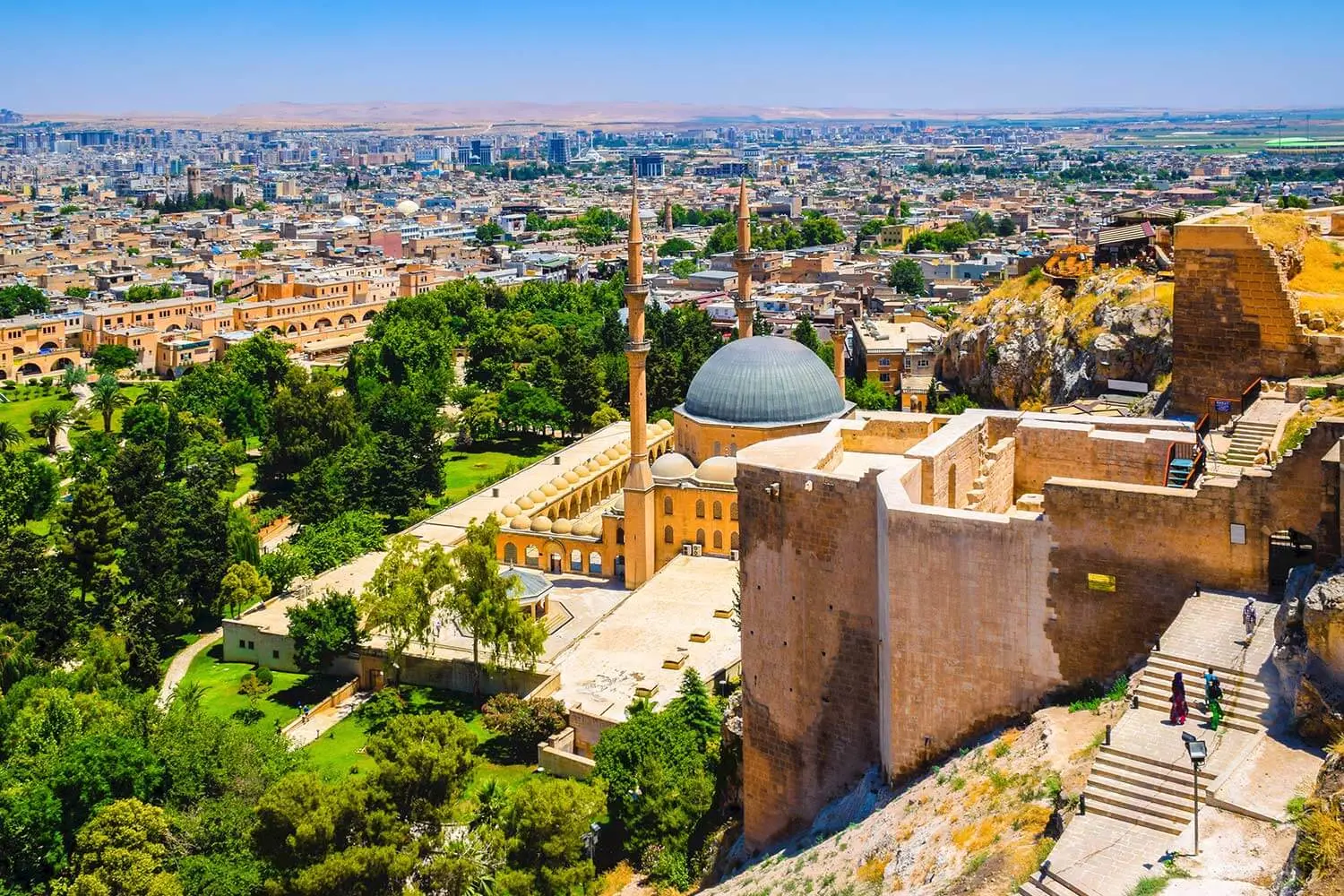
Şanlıurfa Castle. The citadel on Dambak hill above the pools, with its two Corinthian columns and rock-cut moat.
Ulu Cami (Great Mosque). According to the Ministry of Culture and Tourism, the oldest mosque in the city centre, built between 1170 and 1175 by Nur ad-Din Zengi on the site of the church of St Stephen, known as the Red Church for its many red columns. Its octagonal bell tower now serves as the minaret.
Kapalı Çarşı and Gümrük Hanı. The covered bazaar and the Ottoman customs han, whose courtyard is full of tea tables, are the heart of the old commercial quarter.
Şanlıurfa Archaeology and Mosaic Museum. The museum complex opened in 2015, home of the Urfa Man and the Haleplibahçe mosaics.
Eyyüp Peygamber Makamı. The shrine in the city where, according to tradition, Job lived in a cave during his illness and was healed by the water of a well.
Around the province
Göbeklitepe. The UNESCO-listed Neolithic site, 18 km northeast of the city.
Harran. Beehive houses, the Great Mosque of 744–750, a castle and the walls of the ancient city, 45 km southeast.
Halfeti. The Euphrates town partly flooded by the Birecik Dam in 2000, with boat trips to Savaşan and Rumkale.
Soğmatar and Şuayb City. In the Tektek mountains east of Harran: Soğmatar, a cult centre of the moon god, and the Roman-period ruins of Şuayb City with a cave associated with Jethro. The Ministry says Şuayb City is 45 km from Harran.
Eyyüp Nebi village. 12 km from Viranşehir, with the tombs of Job, his wife Rahime and Elisha.
Karahantepe. A Neolithic site related to Göbeklitepe, under excavation and being prepared for regular visits.
What are the best things to do in Şanlıurfa?
- Feed the fish at dawn. Balıklıgöl is calm and beautiful before the crowds arrive.
- Visit Göbeklitepe early. Arrive at opening time to see the enclosures in soft light and before the tour groups.
- Drink tea in the Gümrük Hanı. The courtyard of the old han is the city’s living room.
- Spend an evening at a sıra gecesi. Several old mansions host evenings of food, conversation and local music.
- Take a boat from Halfeti. The trip passes the drowned village of Savaşan and reaches Rumkale.
- Walk the Harran beehive houses. Some can be visited, and a few serve tea and local food.
- Climb to the castle for sunset. When it reopens, the view over the pools and the old city is the best in town.
What are the best places to visit in Şanlıurfa?
Göbeklitepe: monumental enclosures of T-shaped pillars carved with foxes, boars, vultures and snakes, built by hunter-gatherers around 11,000 years ago.
Balıklıgöl: the Pool of Abraham, with its sacred carp, arcades and mosques.
Harran: a Mesopotamian city with conical mudbrick houses and the ruins of an 8th-century mosque.
Halfeti: stone houses running down into the Euphrates, boat trips and the famous dark roses.
Halil-ür Rahman Mosque: the Ayyubid mosque of 1211 at the edge of the pool.
Ayn Zeliha Lake: the second sacred pool, named after Zeliha, with tea gardens around it.
Şanlıurfa Archaeology and Mosaic Museum: the Urfa Man, a full-size replica of a Göbeklitepe enclosure and the Amazon mosaics of Haleplibahçe.
Şanlıurfa Castle: the citadel above the pools, with its 3rd-century columns.
Cave of Abraham: the birthplace of Abraham according to local tradition.
Also worth your time: the Ulu Cami, the bazaars and Gümrük Hanı, Soğmatar, Şuayb City and the Atatürk Dam. Further afield, Gaziantep and Mardin are each two to three hours away.
What is the traditional food of Şanlıurfa?
Şanlıurfa food is built on lamb, bulgur and isot, the dark, smoky, sun-dried red pepper of the region. Urfa kebab is a minced lamb kebab grilled on wide skewers, milder than its Adana cousin. Çiğ köfte was traditionally kneaded from raw meat, bulgur and isot; restaurants now serve a meatless version. Tepsi kebabı, a tray kebab of minced meat with vegetables, was registered as a geographical indication. Other dishes include lahmacun, içli köfte, liver kebab eaten for breakfast, and şıllık, thin pancakes with walnuts and syrup.
Finish with mırra, a very strong, bitter coffee boiled for hours and served a few drops at a time in small handleless cups.
What should you buy in Şanlıurfa?
Isot and spices. Buy isot pepper by weight in the bazaar, along with sumac and dried peppers.
Mırra sets. Small cups and long-spouted copper coffee pots for mırra.
Copper and textiles. The covered bazaar and the streets around Gümrük Hanı have coppersmiths, felt-makers and shops selling scarves and local clothing.



Frequently asked questions about Şanlıurfa
Is Şanlıurfa worth visiting?
Yes. Göbeklitepe, the sacred pools of Balıklıgöl, the museum complex, Harran and Halfeti make it one of the most rewarding destinations in southeastern Türkiye.
How many days do you need in Şanlıurfa?
Three days: one for the old city, pools and museum, one for Göbeklitepe and Harran, and one for Halfeti and Rumkale.
How far is Göbeklitepe from Şanlıurfa?
About 18 km northeast of the city centre, roughly 25 minutes by car or taxi.
What is the nearest airport to Şanlıurfa?
Şanlıurfa GAP Airport (GNY), about 35 km northeast of the city, with flights from Istanbul, Ankara, İzmir and Antalya.
Is Şanlıurfa safe to visit?
The city and its main sights are outside the 10 km strip along the Syrian border where the UK Foreign Office advises against all travel. Avoid border towns such as Akçakale and check current advice before you go.
Why is Urfa called Şanlıurfa?
“Şanlı” means glorious. Parliament renamed the province in 1984 (Law No. 3020) in recognition of its resistance during the War of Independence.
When is the best time to visit Şanlıurfa?
March to May and October to November. Summer afternoons approach or pass 40°C.
What do the official records say about Şanlıurfa?
Urfa has been, since ancient times, the busiest and most important meeting point of East and West. Its location at the junction of the old and important road network linking the eastern and western worlds in culture and trade prepared the founding of cities with a brilliant level of civilisation in this region from very early times.
The roads that carried commercial and military traffic through the region in antiquity connected Harran, Urfa, Suruç, Birecik, Samsat and Raqqa, cities whose founding dates are unknown but which form one of the oldest and greatest centres of world civilisation. A bill to rename Urfa province Şanlıurfa, in recognition of the heroism shown in the War of Independence, was passed by the Grand National Assembly on 12 June 1984; Law No. 3020 was published in the Official Gazette on 22 June 1984 and entered into force. (Ministry of Culture and Tourism, Türkiye Culture Portal, kulturportali.gov.tr)
Ready to see Şanlıurfa?
Hand-picked tours with good reviews and clear prices.
Partner listings via GetYourGuide · free cancellation on most
Before or after: Istanbul
Most trips start or end in Istanbul. Our own experiences there:

 Dinner, sunset and day cruises between Europe and Asia.See cruises bosporuscruise.com

 Historic Turkish baths in the old city — hand-picked hamams, booked direct.Book a hamam istanbulhamam.com

 Istanbul’s tallest viewpoint: both continents from 369 metres.Get tickets camlicatower.com

 Free audio guides in 15 languages, safe routes and local tips — plus 5% off GetYourGuide.Open the free guide localada.com