
Halfeti: The Half-Sunken Town on the Euphrates
On this page
Key facts: Halfeti
- What it is: A small town on the east bank of the Euphrates, partly submerged by the Birecik Dam reservoir in 2000, known for boat trips and dark roses.
- Where: Halfeti district, northwest Şanlıurfa province, about 110 km from Şanlıurfa and about 105 km from Gaziantep.
- Cittaslow: Member of the Cittaslow (slow city) network since 2013.
What is Halfeti?
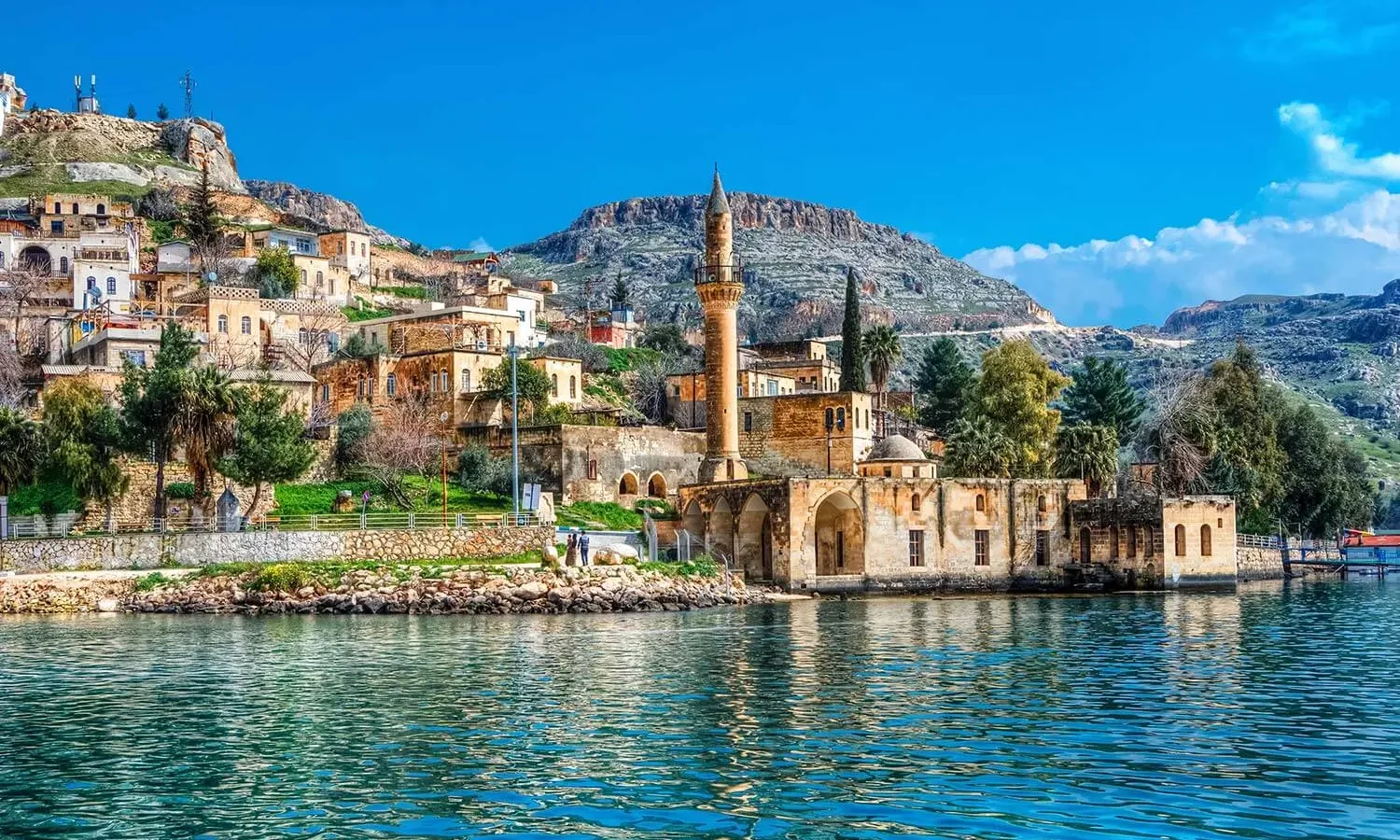
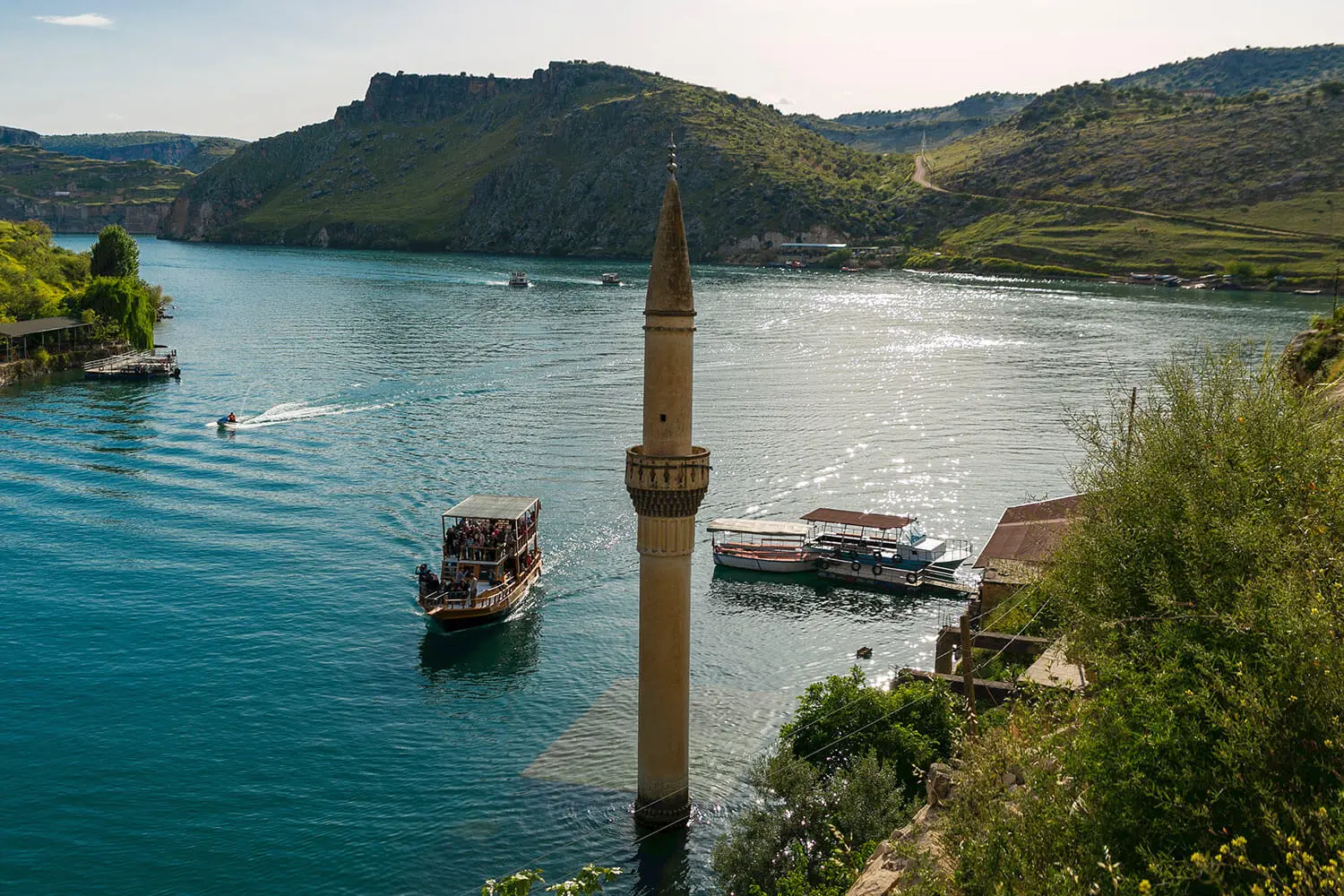
Halfeti is a riverside town on the Euphrates in the northwest of Şanlıurfa province. Its old quarter of pale stone houses climbs the steep bank above the water, and part of it now lies beneath the reservoir of the Birecik Dam, which began to fill in 2000. Rooftops, walls and a minaret rise from the water, and the government moved most of the town to a new site at Karaotlak.
What remains has become one of the most popular day trips in southeastern Türkiye. Boats leave from the waterfront for the drowned village of Savaşan and the fortress of Rumkale, cafés line the quay, and the town is known for its deep-red, almost black roses. Halfeti joined the Cittaslow network of “slow cities” in 2013.
How do you get to Halfeti?
Halfeti is about 110 km from Şanlıurfa and about 105 km from Gaziantep, so it is roughly the same drive from either city, via Birecik. Minibuses run from Birecik, which is on the main Gaziantep–Şanlıurfa road; a car or tour is far more convenient if you want to combine it with Rumkale or Zeugma.
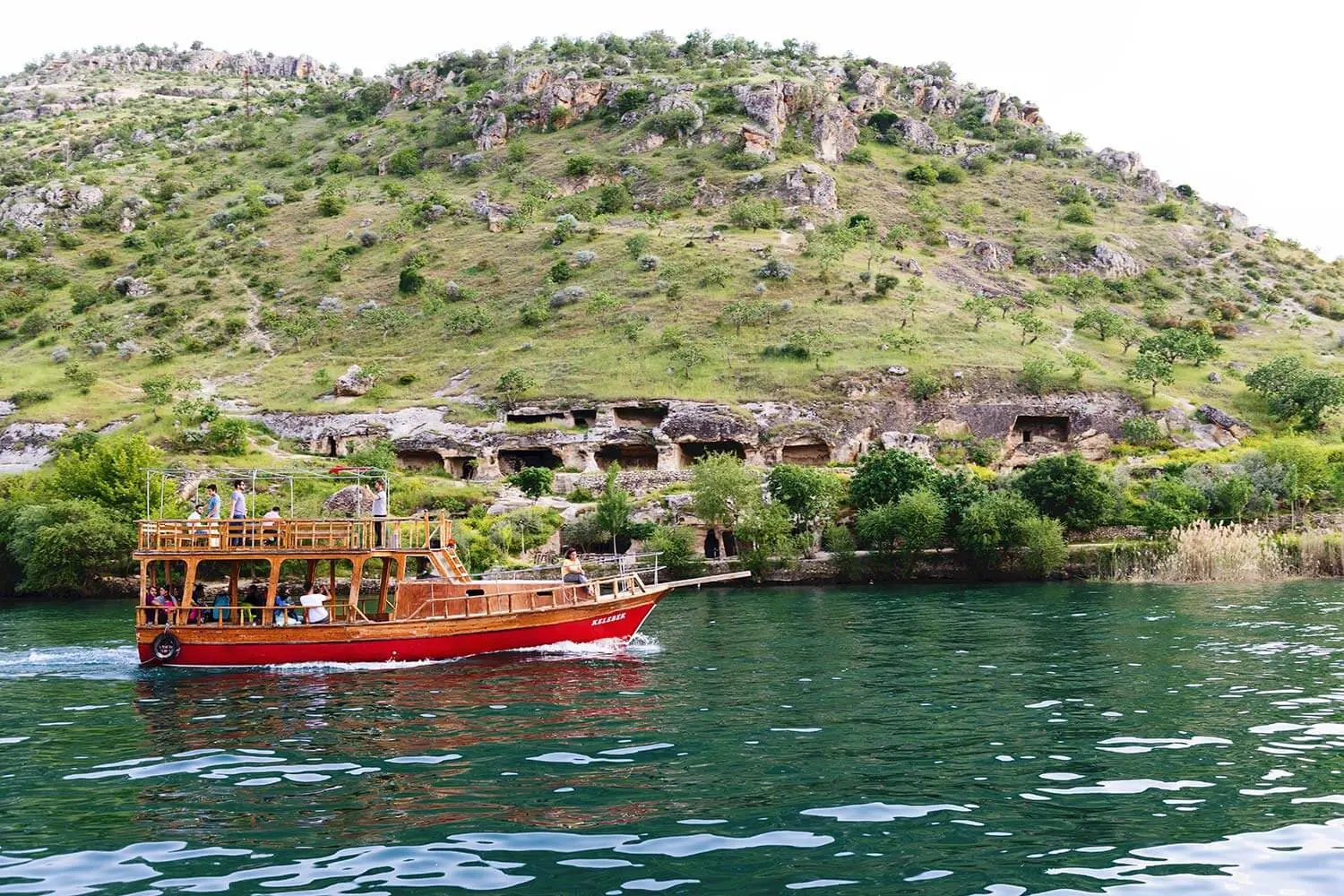
The boat trips start from the old town waterfront. Several operators run daily tours, from short loops to longer trips to Rumkale, and private boats can be hired.
Book a Halfeti tour
−5% Istambul readers save 5% on every tour below — applied at checkout.
Partner listings via GetYourGuide · free cancellation on most
When is the best time to visit Halfeti?
April to June and September to October. The black roses bloom in spring and again in autumn. Summer is hot but the breeze on the water helps, and an evening on the river is pleasant. Weekends and holidays are very busy with day-trippers from Gaziantep and Şanlıurfa; go on a weekday morning for a quieter boat ride.
What is the history of Halfeti?
Halfeti grew up at a crossing of the Euphrates, close to Rumkale, the fortress that commanded this stretch of the river from at least the 9th century BC. The area passed through the hands of many powers over the centuries, and stone houses, churches and mosques in the town and in Savaşan village reflect its mixed population.
Before the dam, people lived by fishing the Euphrates and farming the riverbank, especially pistachios. The Birecik Dam was built for electricity and irrigation, and when its reservoir filled in 2000 about half the old town and most of the surrounding villages went under water. Many residents moved to New Halfeti at Karaotlak, and some buildings were taken down and rebuilt there.
Since joining the Cittaslow network in 2013, Halfeti has reinvented itself as a tourist town. Officials have spoken of turning the abandoned stone houses of Savaşan into hotels and restaurants, and the waterfront has been rebuilt for boats and visitors.
What is Halfeti famous for?
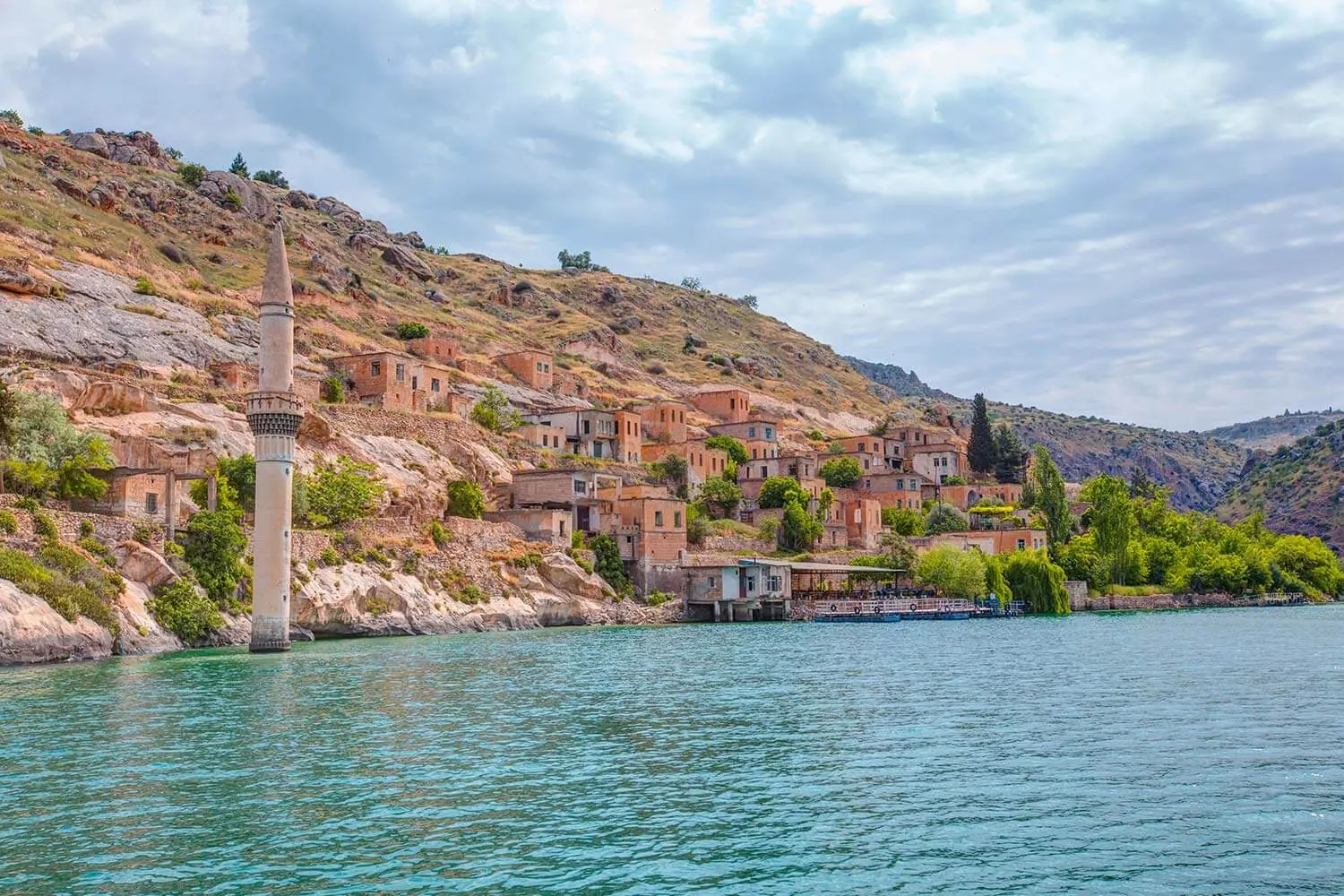
- The “sunken city”. Houses and a minaret standing in the water.
- Boat trips. To Savaşan, the Çekem area and Rumkale, between limestone cliffs.
- Black roses. The karagül, a deep crimson rose with a velvety black sheen.
- Slow pace. Its Cittaslow status and riverside cafés.
What can you do at Halfeti?
Take the boat to Savaşan. Most of the old village of Savaşan is underwater; from the boat you see stone houses on the slope above the water line and a mosque minaret rising out of the river.
Visit Rumkale. Longer trips continue downstream to the cliff-top fortress of Rumkale in Gaziantep province, former seat of the Armenian Catholicos.
Walk the old town. Climb the lanes between stone houses with carved doors and look down on the river.
See the black roses. Gardens and pots around the town grow the karagül; shops sell rose products.
Eat by the water. Riverside restaurants serve fish and local dishes; cafés serve tea and coffee on terraces above the quay.
Look for Savaşan’s church. Local historians describe Savaşan as an old settlement with one of the oldest churches in the region, its walls marked with nearly a hundred carved crosses. Ask your boat operator whether it can be seen on your route.
Watch for birds. The cliffs and the quieter arms of the reservoir are breeding grounds for birds, and the boat ride is a good chance to see them.
Planning your visit
- How long: half a day covers a walk and a short boat trip; allow a full day to include Rumkale and a long lunch.
- Combine it: Halfeti pairs well with Birecik on the way, and with Zeugma and its museum in Gaziantep if you are travelling west.
- Stay over: a few guesthouses and boutique hotels in restored stone houses let you see the river at dusk and dawn, when the day-trippers have gone.
- Bring: a hat and water for the boat in summer, and a layer for the breeze on the river in spring and autumn.
Common misconceptions about Halfeti
Are Halfeti’s roses really black?
What people often assume: That Halfeti grows truly black roses found nowhere else in the world.
What the record says: The karagül is a very dark crimson rose that looks black in some light; travel writers describe a dark crimson colour with a velvety black sheen. Claims of a naturally black rose are described in Wikipedia’s article on Halfeti as an internet legend (source).



Frequently asked questions about Halfeti
How far is Halfeti from Şanlıurfa?
About 110 km, roughly an hour and a half by car via Birecik. It is about 105 km from Gaziantep.
Why is Halfeti underwater?
The reservoir of the Birecik Dam on the Euphrates filled in 2000 and submerged about half of the old town and most nearby villages.
Can you visit Rumkale from Halfeti?
Yes. Boat trips from the Halfeti waterfront go to Savaşan and on to Rumkale; ask whether your trip includes landing.
When do Halfeti’s black roses bloom?
In spring and again in autumn.
Is Halfeti worth a day trip?
Yes. A boat trip, a walk through the old town and lunch by the river make an easy day from Şanlıurfa or Gaziantep.
Ready to see Halfeti?
Hand-picked tours with good reviews and clear prices.
Partner listings via GetYourGuide · free cancellation on most
Before or after: Istanbul
Most trips start or end in Istanbul. Our own experiences there:

 Dinner, sunset and day cruises between Europe and Asia.See cruises bosporuscruise.com

 Historic Turkish baths in the old city — hand-picked hamams, booked direct.Book a hamam istanbulhamam.com

 Istanbul’s tallest viewpoint: both continents from 369 metres.Get tickets camlicatower.com

 Free audio guides in 15 languages, safe routes and local tips — plus 5% off GetYourGuide.Open the free guide localada.com
Nearby
All destinations
Cave of Abraham
The Cave of Abraham in Şanlıurfa: the Mevlid-i Halil cave…
Ayn Zeliha Lake
Ayn Zeliha Lake in Şanlıurfa: the sacred fish pool named…
Harran
Harran near Şanlıurfa: conical mudbrick beehive houses, the 8th-century Great…
Şanlıurfa Castle
Şanlıurfa Castle on Dambak hill: two 3rd-century Corinthian columns, a…
