
Halil-ür Rahman Mosque: Ayyubid Mosque at the Pool of Abraham
On this page
- What is Halil-ür Rahman Mosque?
- How do you get to Halil-ür Rahman Mosque?
- When is the best time to visit Halil-ür Rahman Mosque?
- What is the history of Halil-ür Rahman Mosque?
- What is Halil-ür Rahman Mosque famous for?
- What can you see at Halil-ür Rahman Mosque?
- Common misconceptions about Halil-ür Rahman Mosque
- Frequently asked questions about Halil-ür Rahman Mosque
- What do the official records say about Halil-ür Rahman Mosque?
Key facts: Halil-ür Rahman Mosque
- What it is: An Ayyubid mosque and madrasa complex on the edge of the sacred pool, also called the Döşeme or Makam Mosque.
- Where: Southwest corner of Halil-ür Rahman Lake (Balıklıgöl), Eyyübiye district, Şanlıurfa.
- Period: Built on the site of a church of 504; mosque dated by its inscription to 1211 (608 AH); restored in 1810.
What is Halil-ür Rahman Mosque?
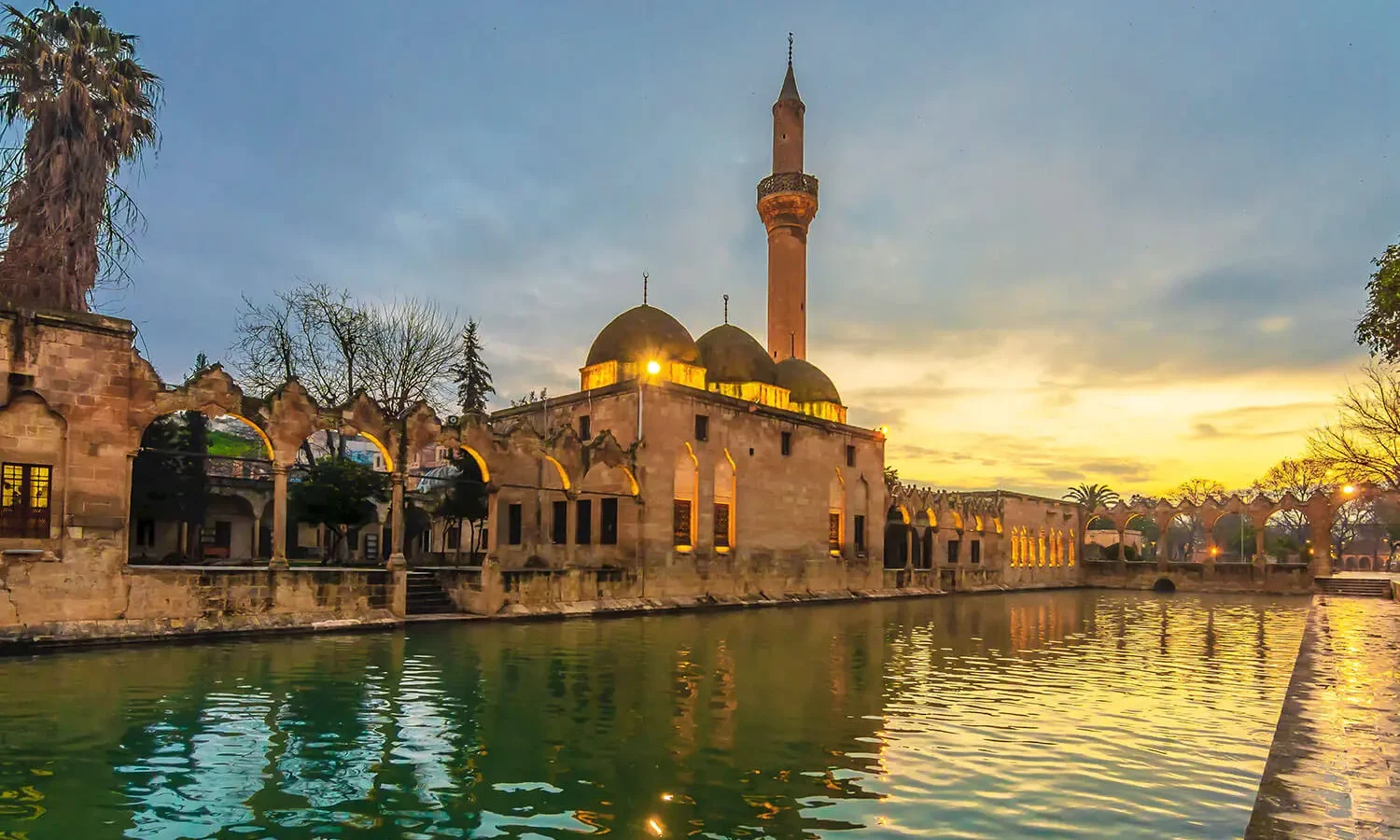
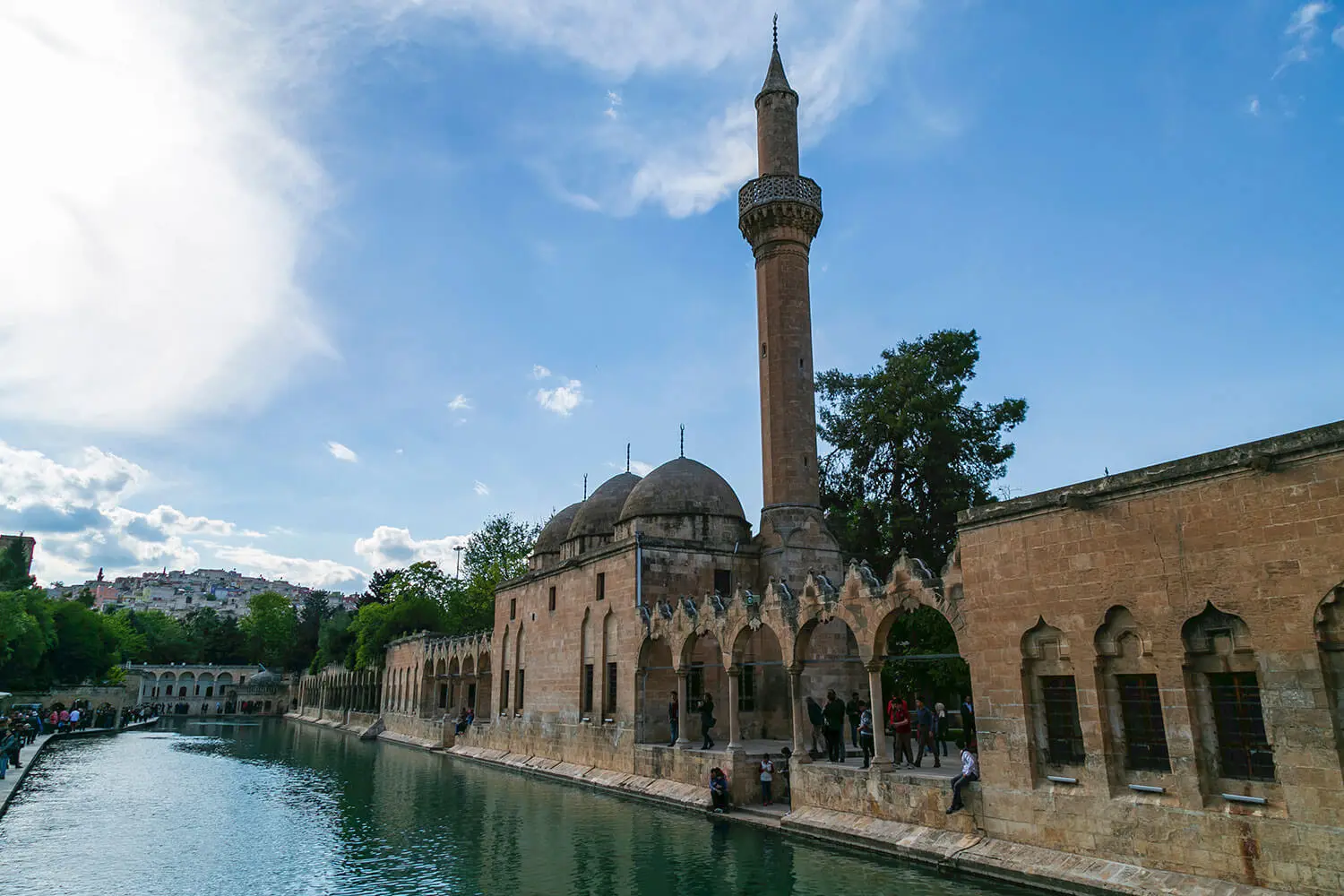
The Halil-ür Rahman Mosque is the oldest of the buildings around Balıklıgöl, the sacred pool of Şanlıurfa. It stands at the southwest corner of the water, at the spot where, according to local tradition, Abraham landed when Nimrod hurled him into the fire. For this reason it is also called the Makam (“place”) Mosque, and the Döşeme Mosque.
The Ministry of Culture and Tourism describes it as a complex (külliye) made up of a mosque, a madrasa, a graveyard and the place where Abraham fell. Its square stone minaret, rising from the southeast corner, is one of the landmarks of the old city and appears in almost every photograph of the pool.
How do you get to Halil-ür Rahman Mosque?
The mosque is in the Gölbaşı area of the old city, on the edge of Balıklıgöl. From the old-town hotels it is a short walk; from the newer districts take a taxi or city bus to Balıklıgöl. The Ayn Zeliha Lake, the Cave of Abraham and the museum complex are all within a few minutes’ walk.
Book a Halil-ür Rahman Mosque tour
−5% Istambul readers save 5% on every tour below — applied at checkout.
Partner listings via GetYourGuide · free cancellation on most
When is the best time to visit Halil-ür Rahman Mosque?
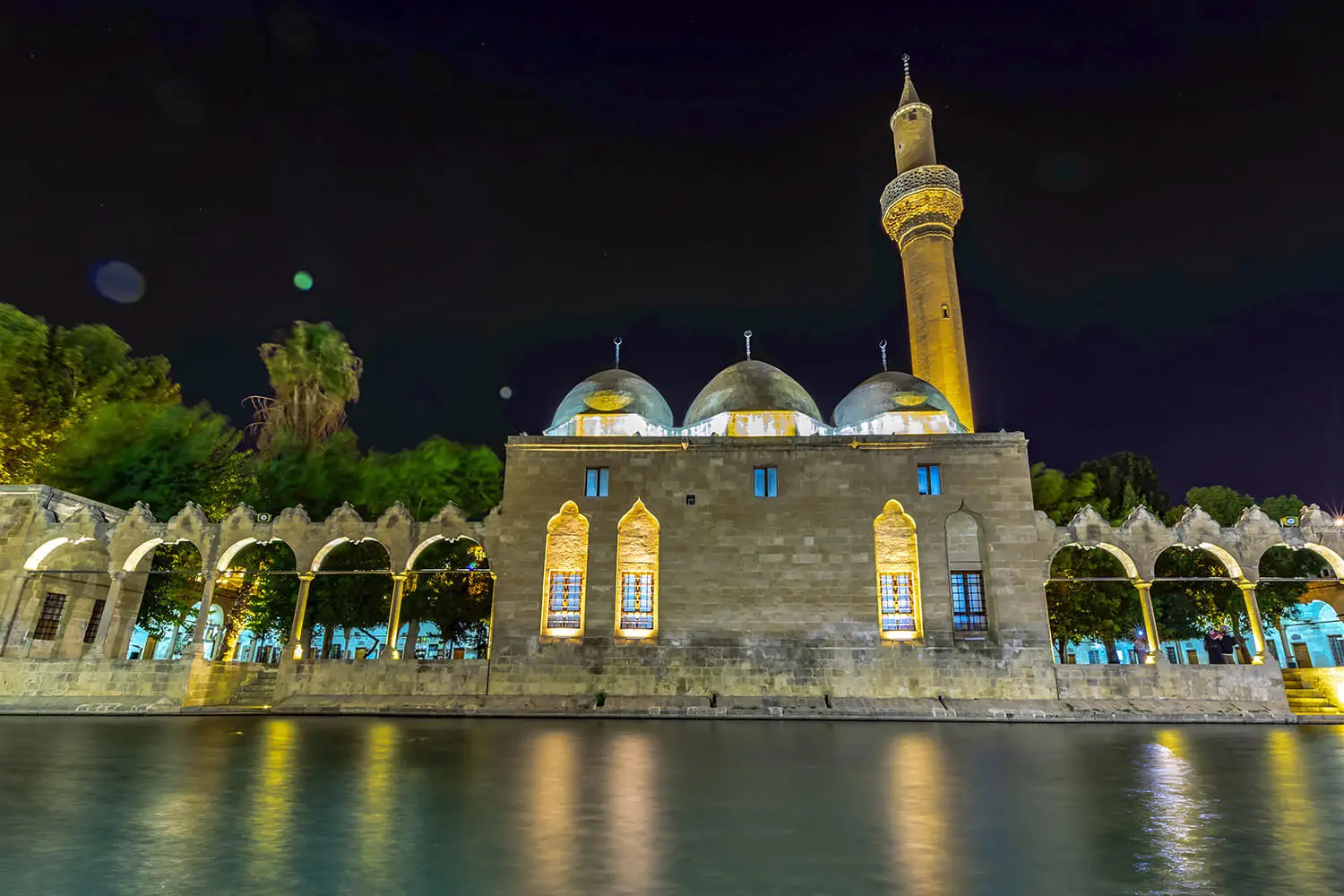
Visit outside the five daily prayer times, and avoid Friday midday prayers. Early morning and late afternoon are quietest and coolest, and the minaret is floodlit after dark. Dress modestly: women should cover their hair, and everyone should cover shoulders and knees. Shoes come off at the door.
What is the history of Halil-ür Rahman Mosque?
The mosque was built on the site of a church. The Ministry of Culture and Tourism records a Church of the Virgin Mary built here in 504, in the Byzantine period, funded by Urbisius for the Monophysite community of Edessa.
An inscription on the stone minaret dates the present mosque to 608 AH (1211–12), under the Ayyubid ruler al-Malik al-Ashraf Muzaffar al-Din Musa, a nephew of Saladin. Some sources attribute an earlier mosque here to the Abbasid caliph al-Ma’mun in the 9th century, but the encyclopaedia Kure treats that as doubtful. The building took its present form in a major restoration of 1810.
The madrasa along the west shore of the pool, with its students’ cells and arcades, was built in 1871 by Mustafa Efendi, director of the pious foundations of Urfa. In the 20th century the area around the pool was cleared and a restoration in 1991 added the railings and arches that link the mosque with the other buildings around the water.
What is Halil-ür Rahman Mosque famous for?
- The place of Abraham’s fall. Pilgrims come to pray at the spot associated with the story of Nimrod’s fire.
- The minaret. A square, tower-like minaret of the 13th century, unusual among Turkish minarets.
- Its age. The oldest of the Balıklıgöl buildings, on a site used for worship since at least the 6th century.
- Its setting. Reflected in the pool among the plane trees.
What can you see at Halil-ür Rahman Mosque?
The minaret. Square in plan, built of dressed stone, at the southeast corner, with its inscription of 1211.
The prayer hall. A simple stone interior, much rebuilt in 1810, used for daily prayers.
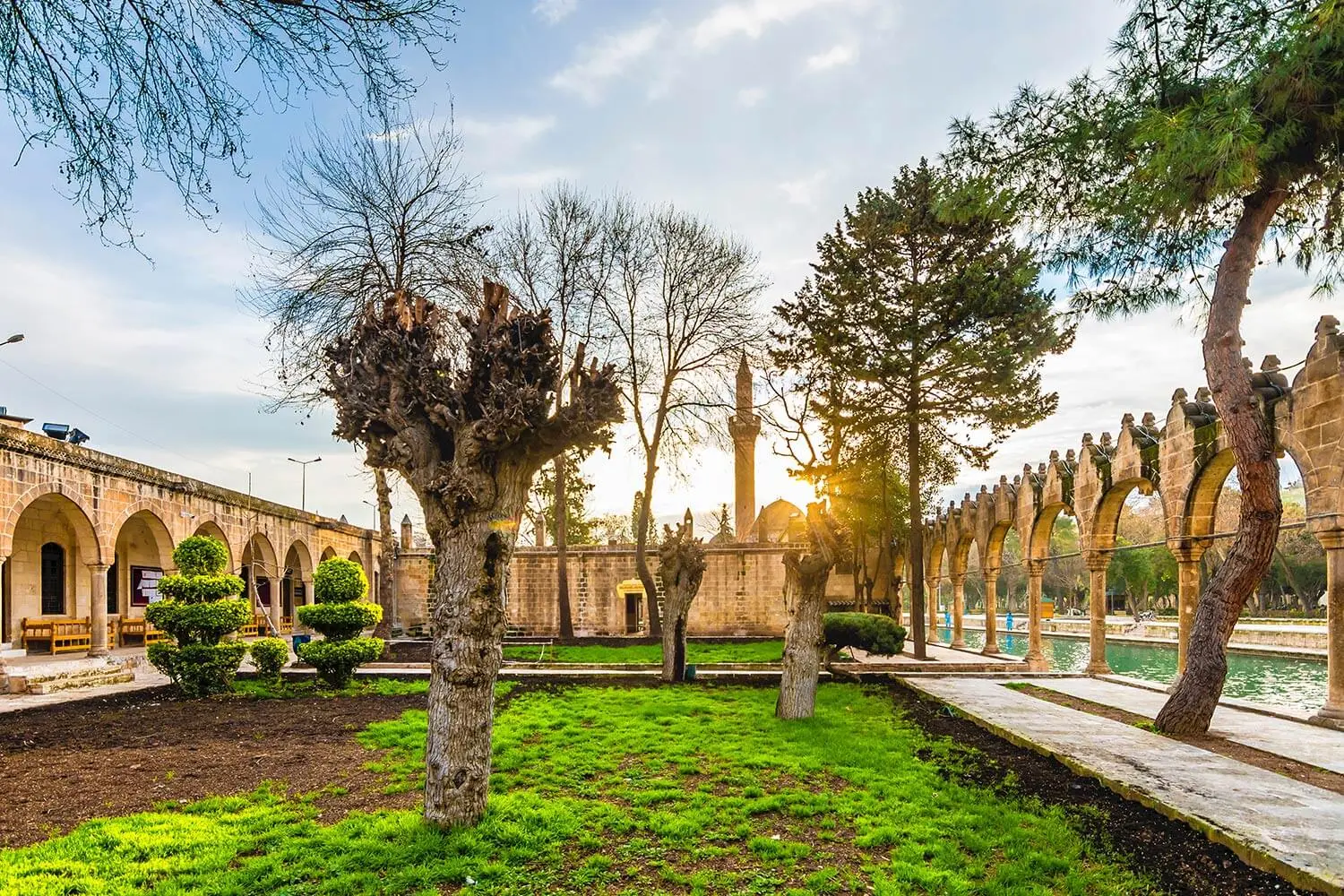
The madrasa. The arcaded row of student rooms of 1871 along the west side of the pool.
The graveyard. Historic gravestones within the complex.
The pool edge. The courtyard opens onto the water, where pilgrims feed the sacred carp.
Around the mosque
Rızvaniye Mosque and Madrasa. Across the pool on the north side, built in the early 18th century by Rıdvan Ahmed Pasha, Ottoman governor of Raqqa. Its madrasa is arranged in a U around a courtyard with a library in the middle, still lodges students, and its wooden entrance door is said to be assembled without nails.
The Cave of Abraham. A short walk south, beside the Mevlid-i Halil Mosque; see our Cave of Abraham guide.
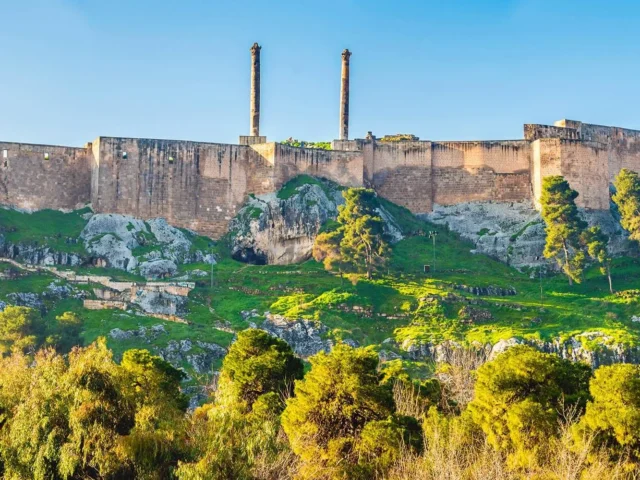
The castle. The castle rock rises straight behind the mosque, with its two Corinthian columns, the “Throne of Nimrod” from which the story says Abraham was thrown.
Common misconceptions about Halil-ür Rahman Mosque
Is the minaret a converted church bell tower?
What people often assume: Because of its square, tower-like form and the church that once stood here, the minaret is often described as the bell tower of the Byzantine church, reused as a minaret.
What the record says: The minaret carries the inscription dating the mosque to 1211, and the encyclopaedia Kure treats the bell-tower claim as doubtful (source). The one Urfa minaret that clearly is a former bell tower is the octagonal tower of the Ulu Cami.



Frequently asked questions about Halil-ür Rahman Mosque
When was Halil-ür Rahman Mosque built?
Its minaret inscription dates it to 1211 (608 AH), under the Ayyubid ruler al-Malik al-Ashraf Musa. It was restored in 1810.
What stood there before the mosque?
A Church of the Virgin Mary built in 504, according to the Ministry of Culture and Tourism.
Can non-Muslims visit the mosque?
Yes, outside prayer times. Dress modestly, women should cover their hair, and shoes are removed at the door.
Why is it called Halil-ür Rahman?
Halil-ür Rahman, “friend of the Merciful”, is a title of Abraham, who tradition says fell into the fire at this spot.
What do the official records say about Halil-ür Rahman Mosque?
The Ministry of Culture and Tourism records that the Halil-ür Rahman Mosque, also known as the Döşeme or Makam Mosque, stands at the southwest corner of Halil-ür Rahman Lake. It is a complex with a mosque, a theological school, a graveyard and the place where Abraham fell. It was built on the site of the Church of the Virgin Mary, dating to AD 504 in the Byzantine period, which Urbisius had built for the Monophysites. The present building dates to the 13th century, the Ayyubid period; an inscription on the stone minaret at the southeast corner records its construction in 1211 under Melik Eşref Muzaffereddin Musa. (Ministry of Culture and Tourism, “Şanlıurfa”, ktb.gov.tr)
Ready to see Halil-ür Rahman Mosque?
Hand-picked tours with good reviews and clear prices.
Partner listings via GetYourGuide · free cancellation on most
Before or after: Istanbul
Most trips start or end in Istanbul. Our own experiences there:

 Dinner, sunset and day cruises between Europe and Asia.See cruises bosporuscruise.com

 Historic Turkish baths in the old city — hand-picked hamams, booked direct.Book a hamam istanbulhamam.com

 Istanbul’s tallest viewpoint: both continents from 369 metres.Get tickets camlicatower.com

 Free audio guides in 15 languages, safe routes and local tips — plus 5% off GetYourGuide.Open the free guide localada.com
Nearby
All destinations
Halfeti
Halfeti on the Euphrates: the half-submerged stone town, boat trips…
Şanlıurfa Castle
Şanlıurfa Castle on Dambak hill: two 3rd-century Corinthian columns, a…
Harran
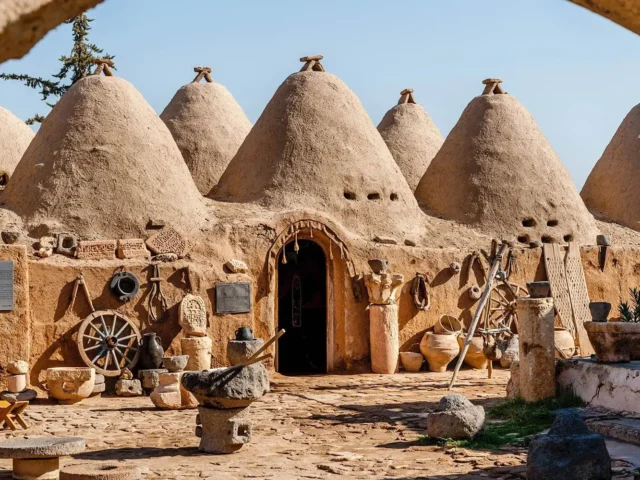
Harran near Şanlıurfa: conical mudbrick beehive houses, the 8th-century Great…

Göbeklitepe
Göbeklitepe near Şanlıurfa: UNESCO-listed Neolithic enclosures of carved T-shaped pillars…
