
Şanlıurfa Castle: The Columns Above the Pool of Abraham
On this page
- What is Şanlıurfa Castle?
- How do you get to Şanlıurfa Castle?
- When is the best time to visit Şanlıurfa Castle?
- What is the history of Şanlıurfa Castle?
- What is Şanlıurfa Castle famous for?
- What can you see at Şanlıurfa Castle?
- Frequently asked questions about Şanlıurfa Castle
- What do the official records say about Şanlıurfa Castle?
Key facts: Şanlıurfa Castle
- What it is: The citadel of Şanlıurfa (Urfa Kalesi) on Dambak hill, with two 3rd-century Corinthian columns, towers and a moat cut into the rock.
- Where: Directly south of Balıklıgöl, in the old city of Şanlıurfa.
- Status: Under excavation and restoration; the governor said in October 2025 that it should reopen to visitors by the end of 2026 (report).
What is Şanlıurfa Castle?
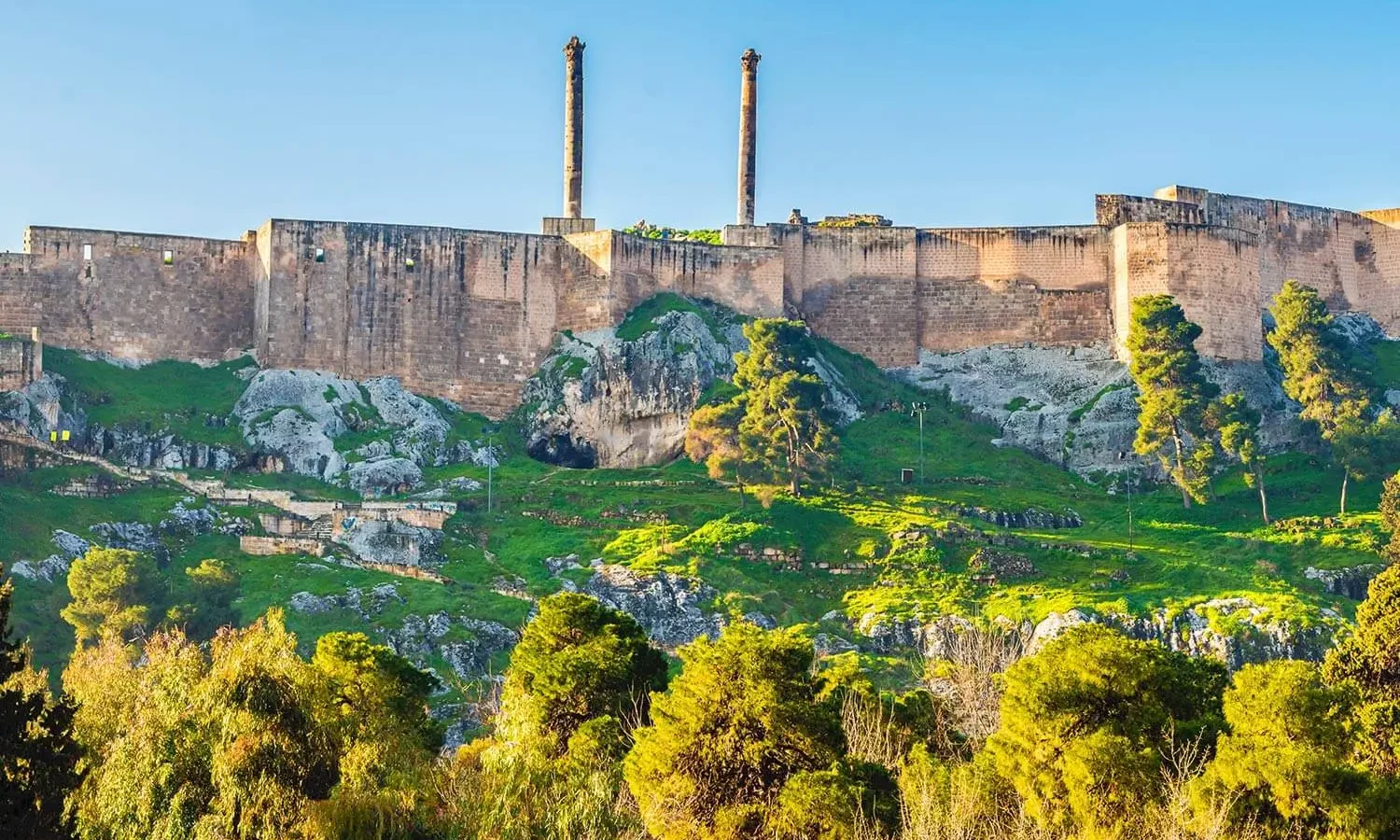
Şanlıurfa Castle (Urfa Kalesi) crowns the rocky hill of Dambak, which rises directly behind the sacred pool of Balıklıgöl. Its walls and towers run along the cliff edge, and on the summit stand two tall Corinthian columns that are the symbol of the city. Local people call them the Throne of Nimrod or Nimrod’s Catapult, after the legend that Nimrod had Abraham hurled from here into the fire below.
The castle is surrounded on three sides by a moat cut into the rock. Since 2019 it has been the scene of a long excavation and restoration project, and it was further damaged in the February 2023 earthquakes.
How do you get to Şanlıurfa Castle?
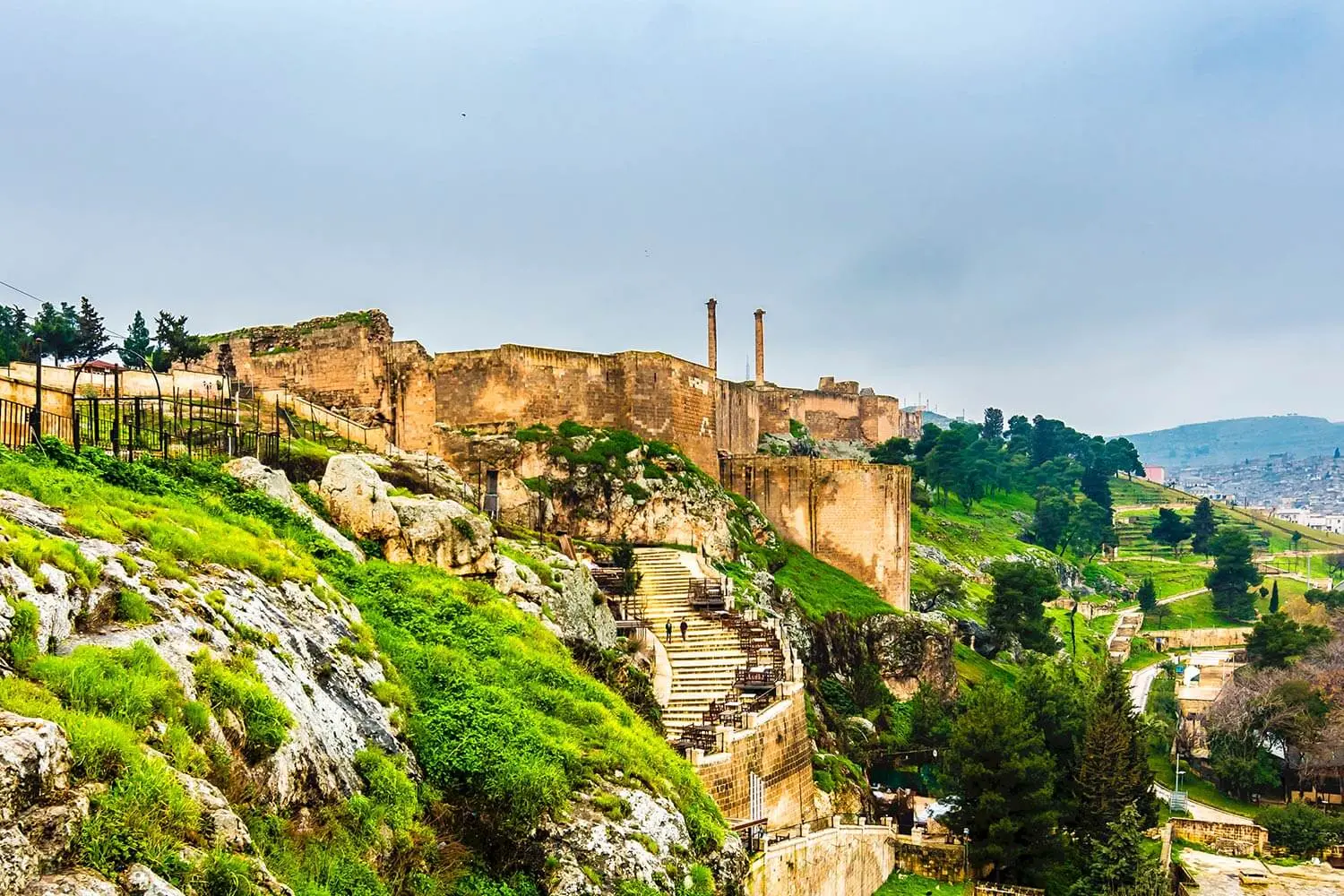
The castle is in the old city, directly south of Balıklıgöl. Its stairs rise from the Gölbaşı park, and you can walk there from any old-town hotel. City buses serving Balıklıgöl stop nearby.
Check before you go whether the castle has reopened: excavation and restoration were ongoing in 2025 and the governor gave the end of 2026 as the target for reopening. Even when it is closed, the walls and columns dominate the view from the pools and the Ayn Zeliha tea gardens.
Book a Şanlıurfa Castle tour
−5% Istambul readers save 5% on every tour below — applied at checkout.
Partner listings via GetYourGuide · free cancellation on most
When is the best time to visit Şanlıurfa Castle?
When it is open, late afternoon is best: the climb is cooler and the summit catches the sunset over the old city and the pools. Spring and autumn are most comfortable. The stairs are steep, with little shade.
What is the history of Şanlıurfa Castle?
The hill has been occupied for a very long time; the Şanlıurfa Municipality says settlement here is estimated to go back to the Neolithic. Excavations led by Professor Gülriz Kozbe have found evidence of a palace on the site as early as the 3rd century BC, though the present walls are much later.
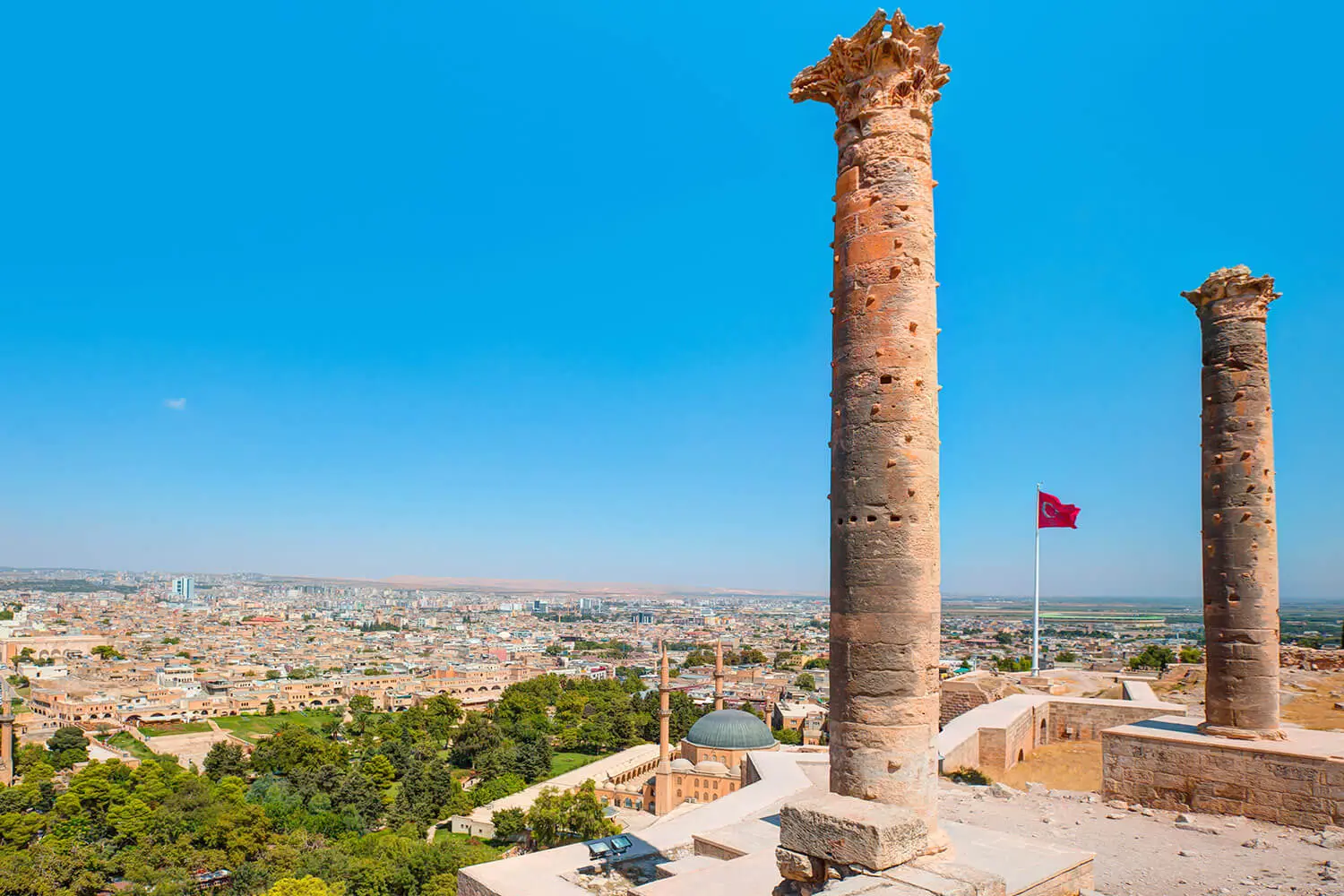
The two columns were raised around AD 240–242, in the time of the kingdom of Osroene, whose capital was Edessa. A Syriac inscription on the eastern column says that Aftuha, son of the commander Barşamaş, made the column and the statue on it for Queen Shalmath. Each column is about 17 m tall, built of stacked stone drums without mortar.
The circuit of walls is generally dated to the 9th century AD, the Abbasid period; the municipality gives 812–814 as the accepted dates, while Hürriyet Daily News reports that the Abbasids first walled the site in the 9th century. The castle remained in use under the Crusader counts of Edessa, the Zengids, Ayyubids, Mamluks and Ottomans until the 18th and 19th centuries.
Excavations since 2019 have uncovered walls, towers, bastions and the entrance gate, as well as houses, pottery, metal tools, arrowheads and coins. In 2025 the team found a mosaic floor with a Greek inscription, thought to belong to a 5th- or 6th-century church, and a rock-cut tomb with a Syriac inscription inside the walls. The February 2023 earthquakes loosened mortar on the northern and southeastern walls, without structural collapse, and restoration has continued alongside the excavation.
What is Şanlıurfa Castle famous for?
- The columns. Two Corinthian columns of the 3rd century AD, the emblem of Şanlıurfa.
- The legend of Nimrod. The hill is where Nimrod is said to have thrown Abraham into the fire.
- The rock-cut moat. A deep ditch cut into the limestone on three sides.
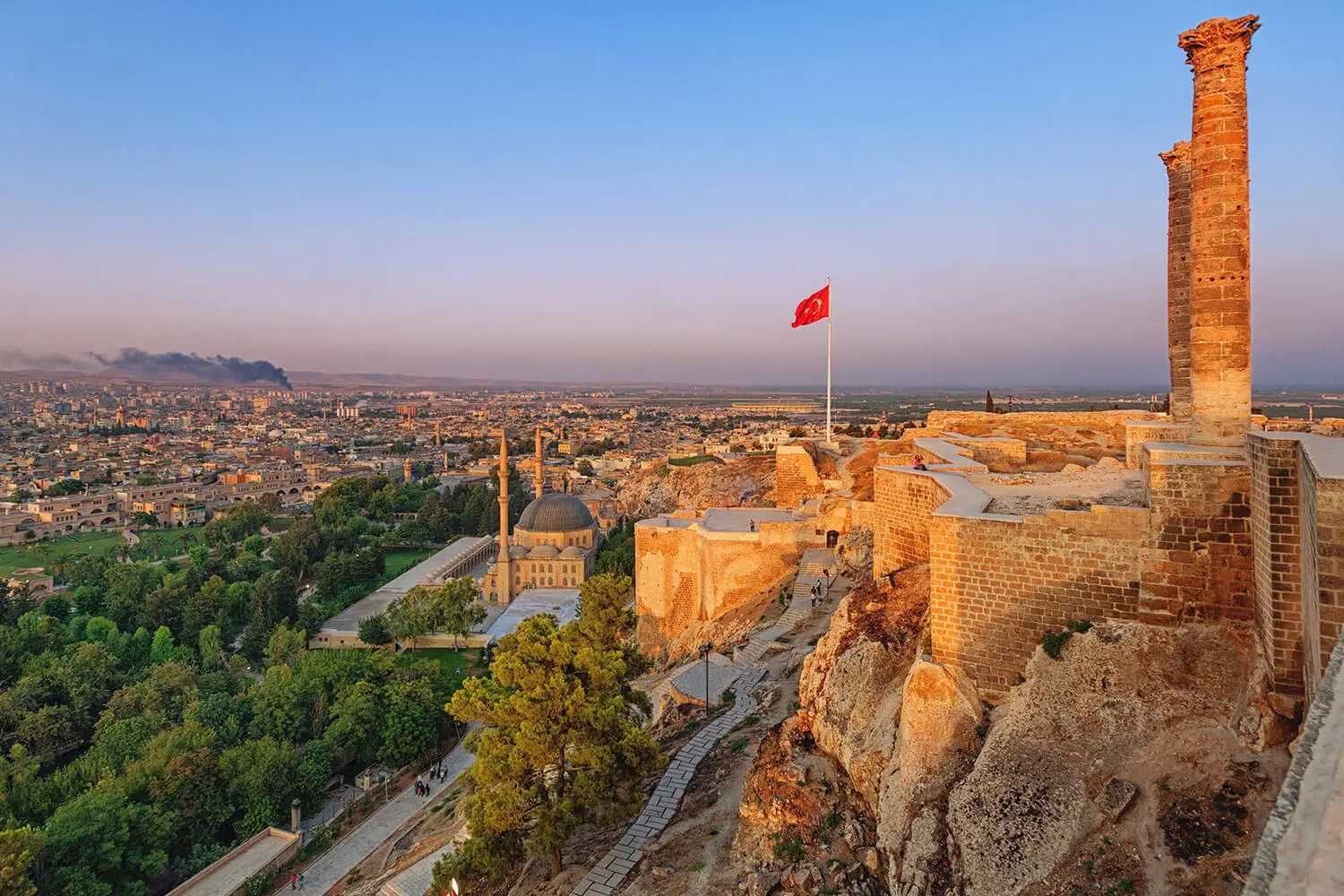
- The view. From the top you look straight down on the pools and over the domes of the old city.
What can you see at Şanlıurfa Castle?
The columns. On the summit, with their Corinthian capitals and the Syriac inscription on the eastern column.
Walls and towers. Stretches of the Abbasid and later walls along the cliff edge, and the entrance gate uncovered by the excavation.
The moat. Best seen from the south and east sides.
Rock tombs. Rock-cut tombs on the western slope of the hill.
Tips. Wear shoes with grip for the worn stone stairs, carry water, and if the summit is closed, the best views of the columns are from the Gölbaşı park and the terraces around Ayn Zeliha.
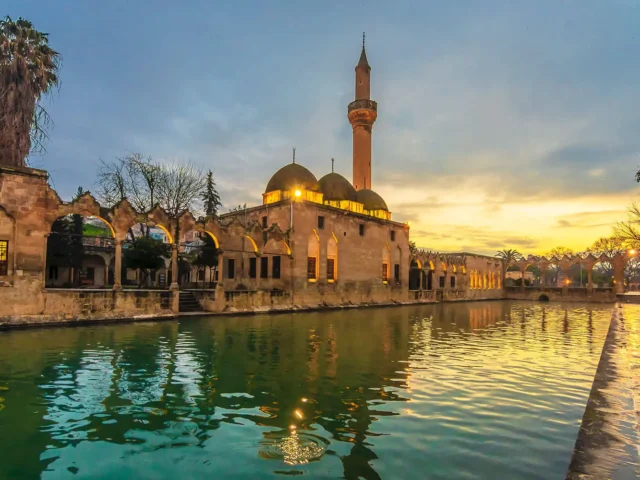
The view. When open, the summit gives a bird’s-eye view of Balıklıgöl, Ayn Zeliha, the Halil-ür Rahman Mosque and the city beyond.



Frequently asked questions about Şanlıurfa Castle
Is Şanlıurfa Castle open to visitors?
It has been closed for excavation and restoration. In October 2025 the governor said it should reopen by the end of 2026; check locally before you go.
How old are the columns on Şanlıurfa Castle?
They were raised around AD 240–242, in the kingdom of Osroene. A Syriac inscription names Aftuha, son of Barşamaş, and Queen Shalmath.
Why are the columns called the Throne of Nimrod?
Local legend says Nimrod had Abraham catapulted from the castle hill into the fire that became Balıklıgöl.
When were the castle walls built?
The walls are generally dated to the 9th century AD, in the Abbasid period, with later additions.
Was the castle damaged in the 2023 earthquake?
Yes, mortar on the northern and southeastern walls was loosened, but there was no structural collapse.
What do the official records say about Şanlıurfa Castle?
The Ministry of Culture and Tourism refers to the castle in its account of the legend of Abraham: the Prophet was cast into the fire by Nimrod from Şanlıurfa Castle, the fire became water and the stones became fish. The Ministry also records the Der-Yakup church on the west side of the castle, at the Damlacık ridge, which is believed to be one of the first churches built in Anatolia after the birth of Christianity and is also known as the Throne of Nimrod, the tomb of Nimrod and the Mountain of Abgar; its Syriac name is Deyro D’Nalşotho, the Monastery of the Spirits. (Ministry of Culture and Tourism, “Şanlıurfa”, ktb.gov.tr)
Ready to see Şanlıurfa Castle?
Hand-picked tours with good reviews and clear prices.
Partner listings via GetYourGuide · free cancellation on most
Before or after: Istanbul
Most trips start or end in Istanbul. Our own experiences there:

 Dinner, sunset and day cruises between Europe and Asia.See cruises bosporuscruise.com

 Historic Turkish baths in the old city — hand-picked hamams, booked direct.Book a hamam istanbulhamam.com

 Istanbul’s tallest viewpoint: both continents from 369 metres.Get tickets camlicatower.com

 Free audio guides in 15 languages, safe routes and local tips — plus 5% off GetYourGuide.Open the free guide localada.com
Nearby
All destinations
Balıklıgöl
Balıklıgöl in Şanlıurfa: the Pool of Abraham with its sacred…

Cave of Abraham
The Cave of Abraham in Şanlıurfa: the Mevlid-i Halil cave…

Göbeklitepe
Göbeklitepe near Şanlıurfa: UNESCO-listed Neolithic enclosures of carved T-shaped pillars…
Ayn Zeliha Lake
Ayn Zeliha Lake in Şanlıurfa: the sacred fish pool named…
