
Göbeklitepe: The Stone Pillars of the Neolithic
On this page
- What is Göbeklitepe?
- How do you get to Göbeklitepe?
- When is the best time to visit Göbeklitepe?
- What is the history of Göbeklitepe?
- What is Göbeklitepe famous for?
- What can you see at Göbeklitepe?
- Common misconceptions about Göbeklitepe
- Frequently asked questions about Göbeklitepe
- What do the official records say about Göbeklitepe?
Key facts: Göbeklitepe
- What it is: A Neolithic site of monumental round and rectangular enclosures with carved T-shaped limestone pillars, built by hunter-gatherers.
- Where: Near Örencik village, Haliliye district, about 18 km northeast of Şanlıurfa city.
- Date: About 9600–8200 BC, according to UNESCO.
- UNESCO: World Heritage Site since 2018, criteria (i), (ii) and (iv) (UNESCO).
What is Göbeklitepe?
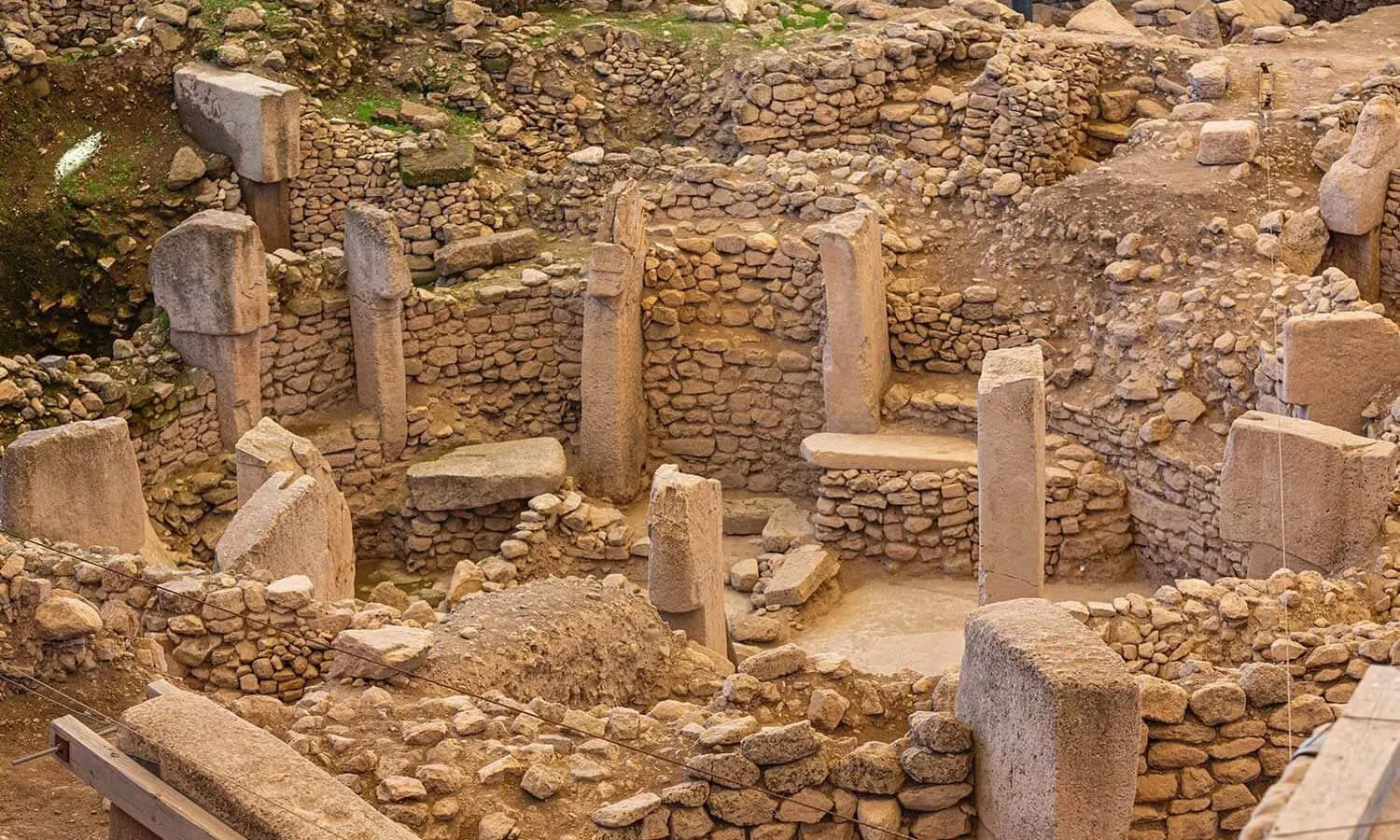
Göbeklitepe (“potbelly hill”) is an artificial mound on a limestone ridge northeast of Şanlıurfa, about 15 m high and 8 hectares in area. Inside it, archaeologists have uncovered great round and oval enclosures ringed by T-shaped stone pillars, some up to 5.5 m tall, carved with wild animals and with human arms, hands and belts. They were built between about 9600 and 8200 BC, before pottery, metal or the wheel, and before farming had fully taken hold.
UNESCO describes the enclosures as monumental communal buildings, probably used for social or ritual gatherings, and inscribed the site on the World Heritage List in 2018. It is the best known of the Taş Tepeler (“Stone Hills”), a group of related Neolithic sites around Şanlıurfa. In 2025 it received about 781,000 visitors.
How do you get to Göbeklitepe?
Göbeklitepe is about 18 km northeast of Şanlıurfa city, near Örencik village. By car or taxi it takes around 25 minutes; many hotels arrange taxis or small tours, often combined with Harran on the same day. There are city buses towards the site, but check the current route and timetable locally.
At the entrance are the ticket office, visitor centre, shop and café. A shuttle bus included in the ticket runs from the entrance to the excavation; you can also walk the one-kilometre path. A new welcome centre about 2.5 km below the site, with parking, walking routes and rest areas, was under construction in late 2025 and planned to open in 2026.
Book a Göbeklitepe tour
−5% Istambul readers save 5% on every tour below — applied at checkout.
Partner listings via GetYourGuide · free cancellation on most
When is the best time to visit Göbeklitepe?
Spring (March to May) and autumn (October to November) are ideal. In summer the plateau is very hot and exposed, so go at opening time. The site is open every day. Holiday weekends and religious holidays bring heavy crowds; weekday mornings are calmest. Allow one and a half to two hours including the visitor centre.
What is the history of Göbeklitepe?
The mound was first recorded in 1963 during a survey by Istanbul and Chicago universities, but the surveyors took the broken limestone slabs on its surface for the remains of a medieval cemetery, and the site attracted little attention. In 1994 the German archaeologist Klaus Schmidt of the German Archaeological Institute recognised what it was, and excavations began in 1995 with the Şanlıurfa Museum.
The earliest structures belong to the late Pre-Pottery Neolithic A; later phases date to the Pre-Pottery Neolithic B. The large circular enclosures A to D were dug first; geophysical surveys suggest there may be around 16 more under the mound. Each has two tall central pillars surrounded by a ring of smaller pillars set into a stone wall. Later, smaller rectangular buildings with shorter pillars were built.
The site was gradually filled in, partly by deliberate backfilling and debris, which is why the pillars survived so well. Research published since 2019 has found evidence of domestic buildings, cereal processing, water supply and everyday tools, changing the earlier picture of a pure sanctuary visited by nomadic hunters. Excavation continues, now as part of the Taş Tepeler project.
What is Göbeklitepe famous for?
- Its age. Monumental stone architecture built some 7,000 years before Stonehenge.
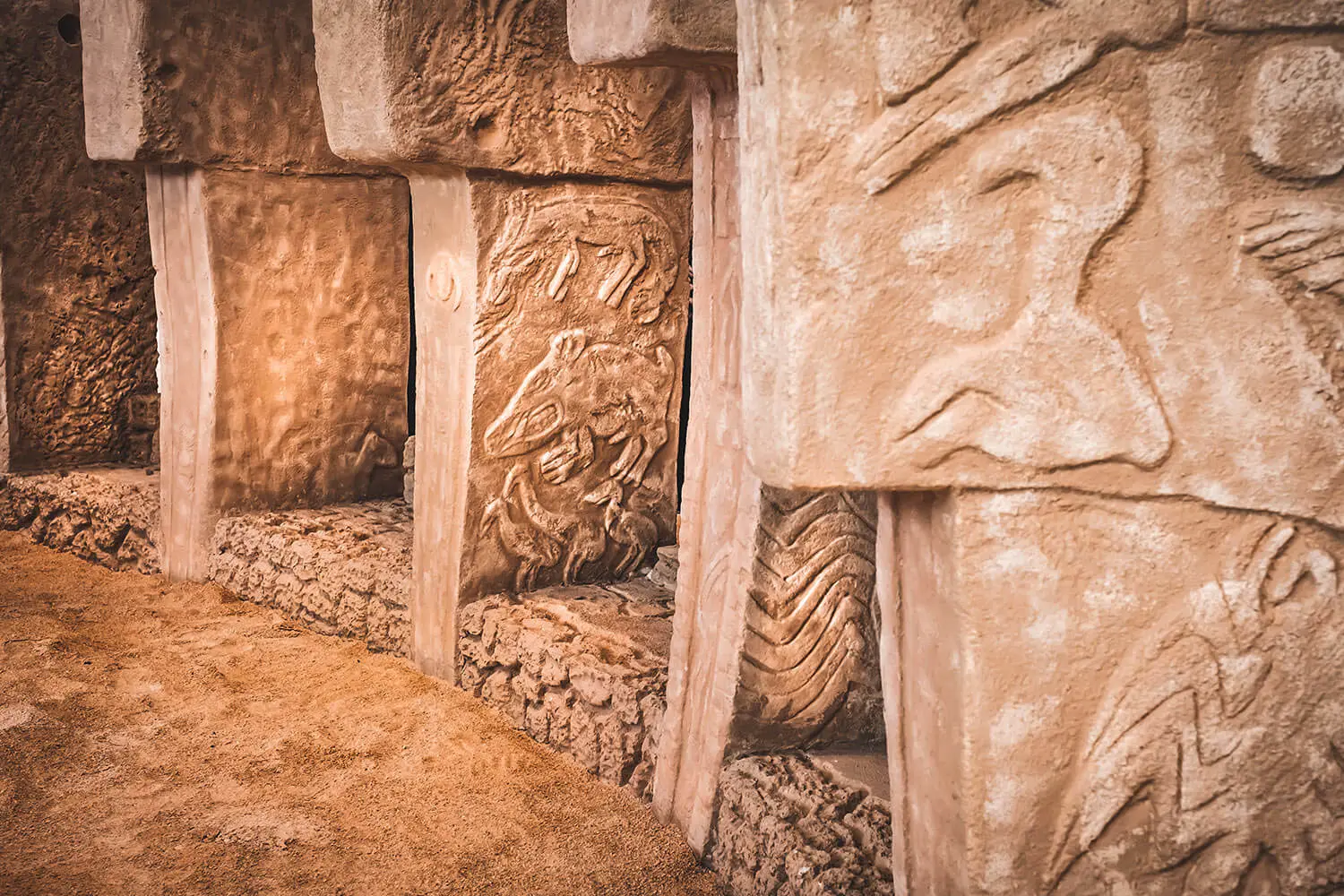
- The T-shaped pillars. Stylised human figures: the central pillars of Enclosure D have arms, hands with long fingers, belts and loincloths carved on them.
- The animal reliefs. Foxes, boars, snakes, aurochs, cranes, scorpions and vultures.
- Pillar 43. The “Vulture Stone” in Enclosure D, carved with a vulture, scorpion and other figures.
What can you see at Göbeklitepe?
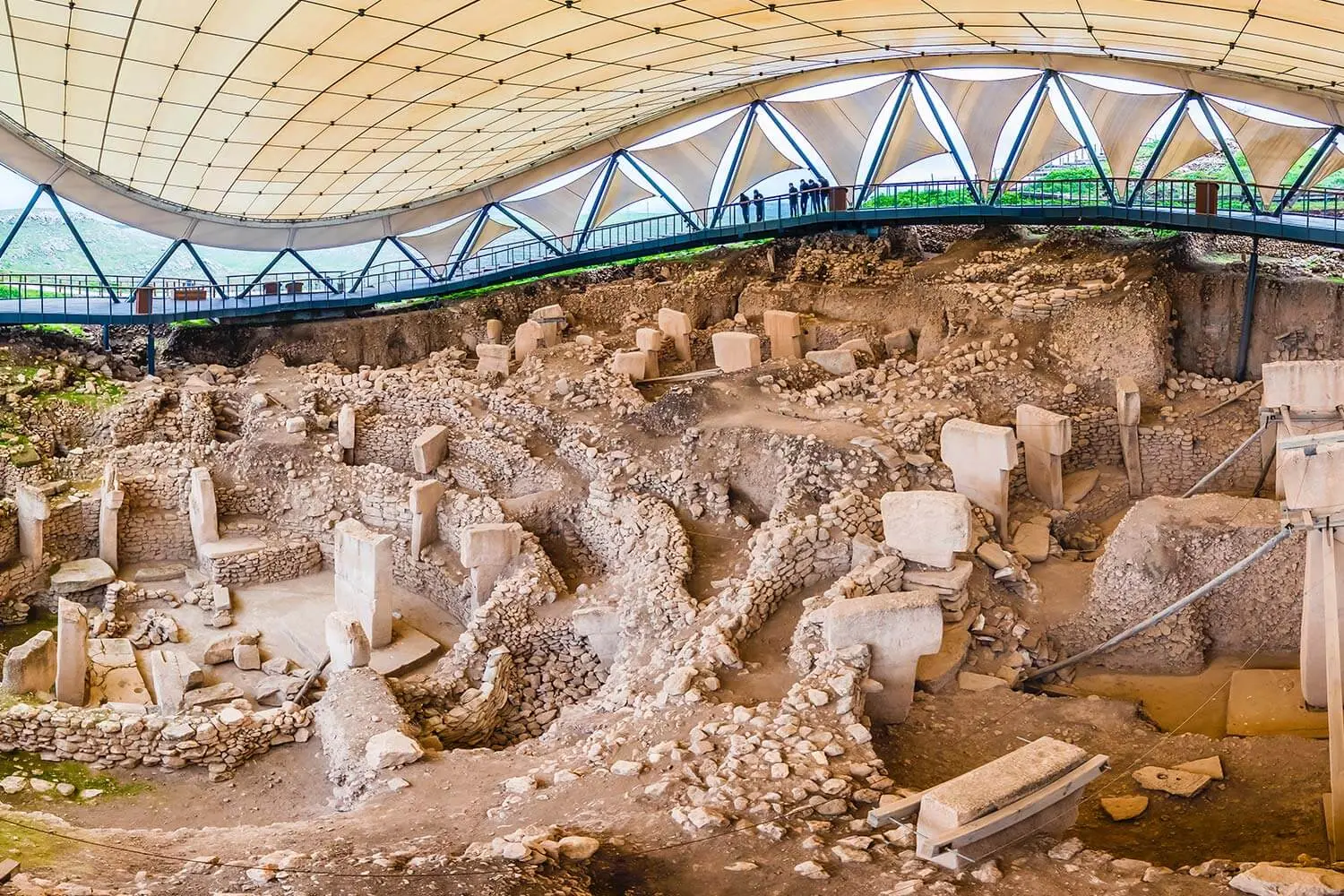
The main excavation. Enclosures A, B, C and D lie under a large protective roof. You view them from a raised wooden walkway that circles the site; you cannot enter the enclosures or trenches, and the site is under camera surveillance.
Enclosure D. The best preserved, with its two central pillars about 5.5 m tall and the carved arms and belts. Pillar 43, the Vulture Stone, is set in its surrounding wall.
Enclosure C. Concentric stone rings and pillars with boar reliefs.
The landscape. From the ridge you see the Harran plain to the south and the limestone quarries where the pillars were cut, including an unfinished pillar still in the bedrock.
The visitor centre. Models, films and replicas explain the excavation. For the best finds, including carved figures and a full-size replica of Enclosure D, visit the Şanlıurfa Archaeology and Mosaic Museum in the city.
Common misconceptions about Göbeklitepe
Was Göbeklitepe only a temple, with no one living there?
What people often assume: That Göbeklitepe was the “world’s first temple”, a purely ritual centre visited by nomadic hunter-gatherers who lived elsewhere.
What the record says: UNESCO describes the large enclosures as communal buildings, and notes that excavations have also found non-monumental structures that appear to be domestic. Research published from 2019 points to houses, cereal processing and water supply on the site (source).



Frequently asked questions about Göbeklitepe
How old is Göbeklitepe?
UNESCO dates the enclosures to about 9600–8200 BC, roughly 11,000 to 12,000 years ago.
How do you get to Göbeklitepe from Şanlıurfa?
It is about 18 km northeast of the city, around 25 minutes by taxi or car. A shuttle runs from the entrance to the excavation.
Can you walk among the pillars?
No. Visitors follow a wooden walkway around the enclosures under the protective roof and cannot enter the excavation.
How long do you need at Göbeklitepe?
One and a half to two hours, including the visitor centre.
Who discovered Göbeklitepe?
It was recorded in a 1963 survey, but Klaus Schmidt of the German Archaeological Institute recognised its importance in 1994 and began excavating in 1995.
Is Karahantepe open to visitors?
Karahantepe, a related site, was still being prepared for regular visits in 2026, with a visitor centre and protective roof planned. Ask locally before going.
What do the official records say about Göbeklitepe?
In its World Heritage listing, UNESCO records that Göbeklitepe is located in the Germuş mountains of southeastern Anatolia, where monumental round-oval and rectangular megalithic structures were erected by hunter-gatherers in the Pre-Pottery Neolithic age, between 9600 and 8200 BC. The monuments were probably used in connection with rituals, most likely of a funerary nature. Distinctive T-shaped pillars are carved with images of wild animals, providing insight into the way of life and beliefs of people living in Upper Mesopotamia about 11,500 years ago. (UNESCO World Heritage Centre, Göbekli Tepe, 2018)
Ready to see Göbeklitepe?
Hand-picked tours with good reviews and clear prices.
Partner listings via GetYourGuide · free cancellation on most
Before or after: Istanbul
Most trips start or end in Istanbul. Our own experiences there:

 Dinner, sunset and day cruises between Europe and Asia.See cruises bosporuscruise.com

 Historic Turkish baths in the old city — hand-picked hamams, booked direct.Book a hamam istanbulhamam.com

 Istanbul’s tallest viewpoint: both continents from 369 metres.Get tickets camlicatower.com

 Free audio guides in 15 languages, safe routes and local tips — plus 5% off GetYourGuide.Open the free guide localada.com
Nearby
All destinations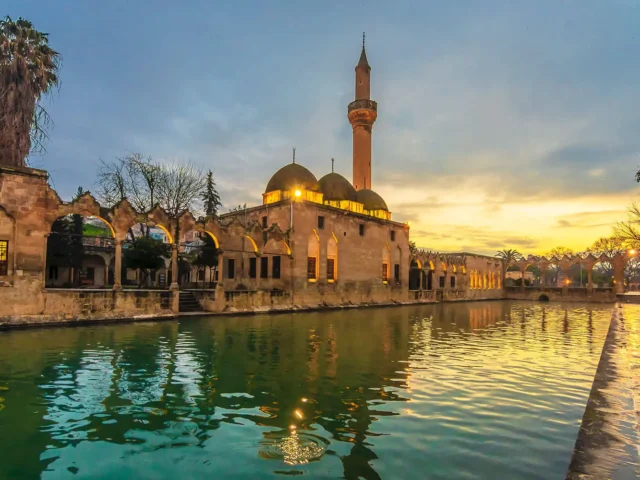
Ayn Zeliha Lake
Ayn Zeliha Lake in Şanlıurfa: the sacred fish pool named…

Balıklıgöl
Balıklıgöl in Şanlıurfa: the Pool of Abraham with its sacred…

Halfeti
Halfeti on the Euphrates: the half-submerged stone town, boat trips…

Halil-ür Rahman Mosque
Halil-ür Rahman Mosque at Balıklıgöl, Şanlıurfa: Ayyubid mosque of 1211…
