
Harran: Beehive Houses on the Mesopotamian Plain

On this page
Key facts: Harran
- What it is: An ancient Mesopotamian city and today a small town known for its conical mudbrick “beehive” houses, Great Mosque ruins and castle.
- Where: Harran district, about 45 km southeast of Şanlıurfa city, on the Harran plain; roughly 20 km from the Syrian border.
- UNESCO: Part of “Harran and Şanlıurfa” on the UNESCO Tentative List since 2000 (UNESCO); not inscribed.
What is Harran?
Harran is one of the oldest continuously named cities in the world, on the flat plain south of Şanlıurfa. Today it is a small town whose old quarter is built of conical mudbrick houses, the “beehive houses” for which it is famous. Around them lie the ruins of the ancient city: a long circuit of walls, a large brick castle, the mound of the earliest settlement and the tall square minaret of the Great Mosque of the 8th century.
Harran appears in Genesis as the place where Abraham’s family stopped on its way from Ur to Canaan, and in Mesopotamian records as a great centre of the moon god Sin. UNESCO’s Tentative List entry describes it as lying on the trade routes between the Mediterranean coast and Kargamış, mentioned in the Bible and in the documents of Mari, and home to one of the first Islamic universities.

How do you get to Harran?
Harran is about 45 km southeast of Şanlıurfa, roughly 45 minutes by car on the Akçakale road and then east. Minibuses run from Şanlıurfa to Harran town, but a car, taxi or tour lets you combine it with Göbeklitepe and the sites of the Tektek mountains, such as Şuayb City and Soğmatar, on the same day.
Harran lies about 20 km from the Syrian border at Akçakale, outside the 10 km zone where the UK Foreign Office advises against all travel (FCDO). Do not continue south to Akçakale.
Book a Harran tour
−5% Istambul readers save 5% on every tour below — applied at checkout.
Partner listings via GetYourGuide · free cancellation on most
When is the best time to visit Harran?
March to May and October to November. The Harran plain is one of the hottest places in Türkiye, and in July and August midday temperatures often pass 40°C with almost no shade. In summer, arrive early in the morning or late in the afternoon, when the low sun turns the mudbrick golden. In spring the irrigated plain is green.
What is the history of Harran?
Harran may have been founded around 2500–2000 BC as a trading post on the routes between Mesopotamia, Anatolia and the Mediterranean. Its temple of Sin, the Eḫulḫul, was rebuilt by several Assyrian and Babylonian kings; its exact site is unknown, though the Great Mosque is considered the most likely place. The Hebrew Bible says that Abram was 75 years old when he left Harran for Canaan, and the Ministry of Culture and Tourism notes that some scholars place Abraham’s house among the ruins on the northern ridge of the mound.
In 53 BC, near Harran (Roman Carrhae), the Parthian general Surena destroyed the army of Marcus Licinius Crassus, one of Rome’s worst defeats. The city kept its old star and moon cults long into the Christian and Islamic eras. In 830, when the caliph al-Ma’mun demanded that its people declare a recognised religion, they called themselves Sabians, and Harran’s scholars became known as translators of Greek science and philosophy.
The Umayyad caliph Marwan II (744–750) made Harran his capital and built the Great Mosque. Tradition holds that the first Muslim university was founded here in 717 under the caliph Umar II, and Harran’s madrasa flourished in the 8th century. The Mongols took the city in 1260 and abandoned it in 1271, deporting its people to Mardin and Mosul, and Harran never recovered. Shortage of water was a major reason; only since the 1990s have canals from the Atatürk Dam made the plain fertile again.
What is Harran famous for?
- Beehive houses. Conical mudbrick domes, built without wooden beams in a plain with no timber, which keep the interiors cool in summer.
- Abraham. The Genesis account of Abraham’s family settling in Harran.
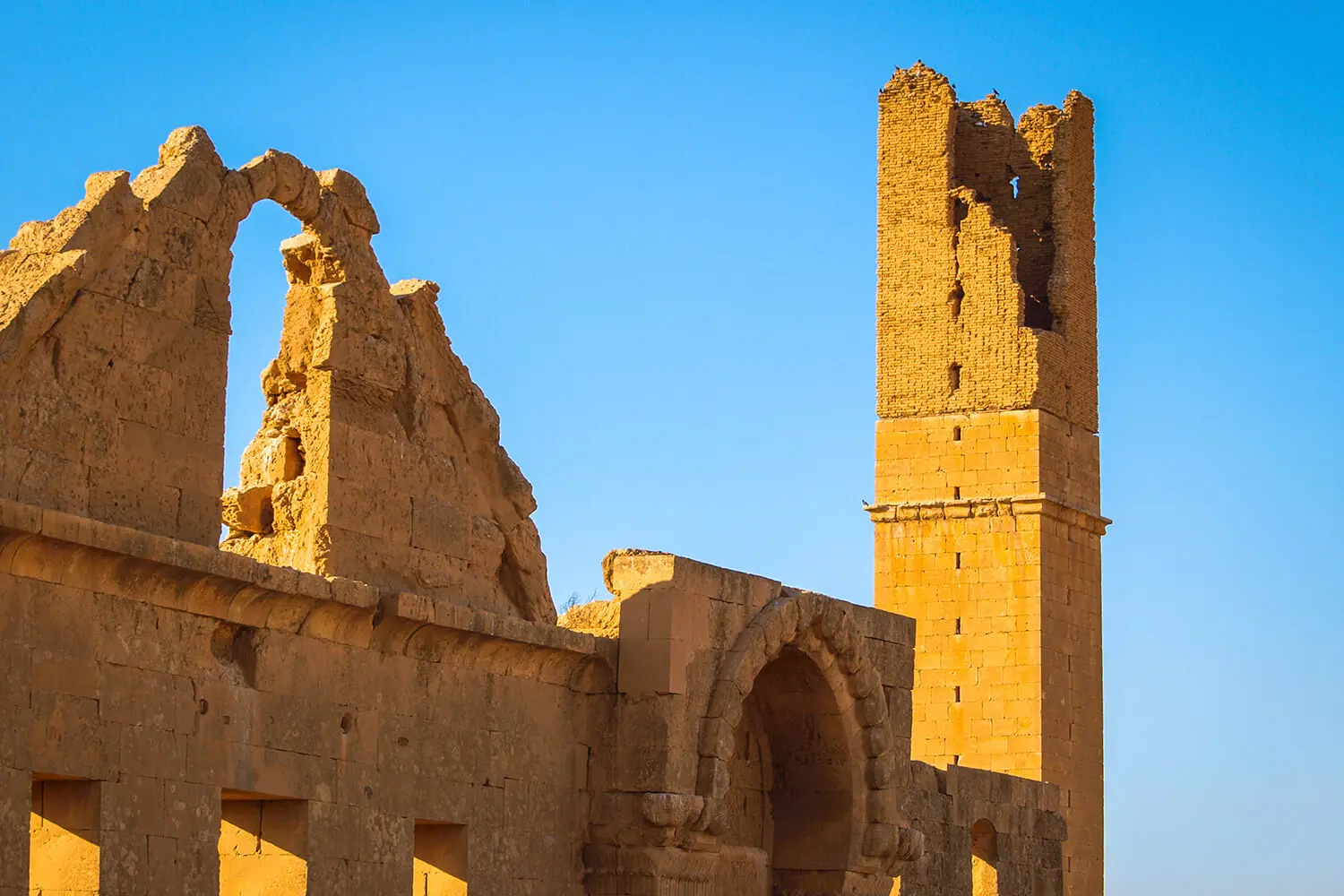
- The Great Mosque. One of the oldest and largest mosques in Anatolia, with its tall square minaret.
- Science and learning. Harran’s Sabian scholars and early Islamic madrasa.
What can you see at Harran?
The beehive houses. A count in 2002 put their number at about 2,760; only a few dozen remain in the old town, many used for storage. Several have been restored as small museums, cafés and craft houses where you can see the inside, sit on cushions under the dome and drink tea.
The Great Mosque (Ulu Cami). On the northeast side of the mound. The Ministry of Culture and Tourism says it was built between 744 and 750 by Marwan II, was believed to have formed a complex with a madrasa, bath and hospital, and was restored in the Seljuk period. The square minaret, about 33 m tall, still stands.
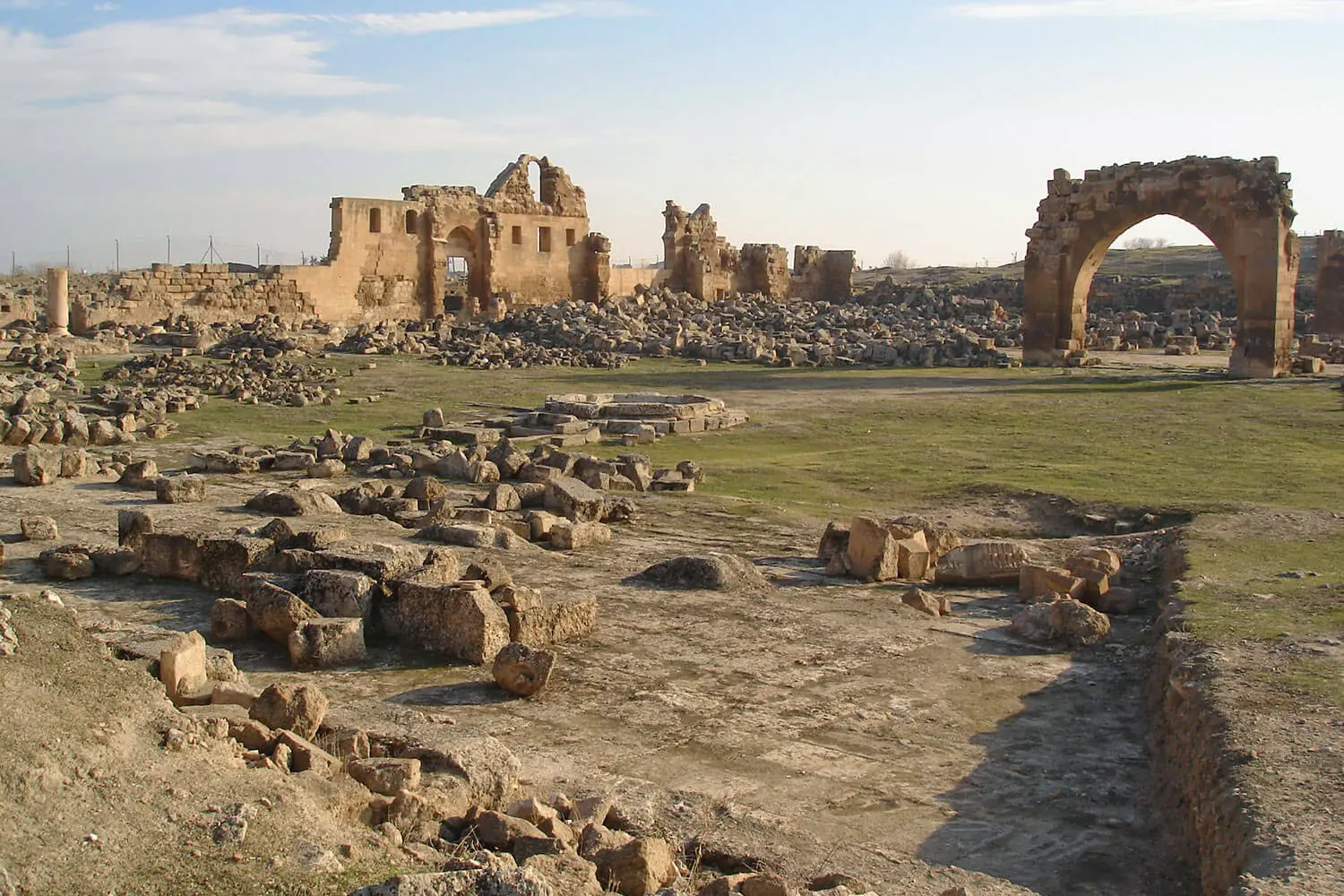
The castle. A large brick fortress on the southeast edge of the old city, of uncertain date, possibly Byzantine or early Islamic, rebuilt in the medieval period and partly excavated and reconstructed.
The city walls and the mound. The walls run for about 4.5 km around the ancient city, with remains of several gates. The mound in the centre holds the earliest settlement.
Nearby. The Han el-Ba’rur caravanserai on the road to the Tektek mountains, Şuayb City, and Soğmatar with its rock reliefs linked to the moon cult.



Frequently asked questions about Harran
How far is Harran from Şanlıurfa?
About 45 km southeast, roughly 45 minutes by car. Minibuses also run from the city.
Why are Harran’s houses shaped like beehives?
The plain has no timber for roof beams, so houses were roofed with self-supporting mudbrick domes, which also keep the interiors cool.
What is the connection between Harran and Abraham?
Genesis says Abraham’s family settled in Harran on the way from Ur to Canaan, and that Abram left Harran at the age of 75.
Is Harran safe to visit?
Harran is about 20 km from the Syrian border, outside the 10 km zone where the UK Foreign Office advises against all travel. Do not continue to Akçakale on the border.
How long do you need in Harran?
Two to three hours for the beehive houses, Great Mosque, castle and walls; a full day if you add the Tektek mountain sites.
What do the official records say about Harran?
The Ministry of Culture and Tourism records that the Great Mosque of Harran, on the northeast side of the Harran mound, was built between 744 and 750 by the Umayyad ruler Marwan II. It is believed to have been a complex with a theological school, bathhouse and hospital, and it is one of the oldest and largest mosques in Anatolia; it was restored and repaired in the Seljuk period. The Ministry adds that Harran is associated with the Abraham narrative of the Pentateuch, which says Abram was 75 years old when he left Harran, and that scholars claim his house was among the ruins on the northern ridge of the mound in the city centre. (Ministry of Culture and Tourism, “Şanlıurfa”, ktb.gov.tr)
Ready to see Harran?
Hand-picked tours with good reviews and clear prices.
Partner listings via GetYourGuide · free cancellation on most
Before or after: Istanbul
Most trips start or end in Istanbul. Our own experiences there:

 Dinner, sunset and day cruises between Europe and Asia.See cruises bosporuscruise.com

 Historic Turkish baths in the old city — hand-picked hamams, booked direct.Book a hamam istanbulhamam.com

 Istanbul’s tallest viewpoint: both continents from 369 metres.Get tickets camlicatower.com

 Free audio guides in 15 languages, safe routes and local tips — plus 5% off GetYourGuide.Open the free guide localada.com
Nearby
All destinations
Göbeklitepe
Göbeklitepe near Şanlıurfa: UNESCO-listed Neolithic enclosures of carved T-shaped pillars…

Halfeti
Halfeti on the Euphrates: the half-submerged stone town, boat trips…
Şanlıurfa Castle
Şanlıurfa Castle on Dambak hill: two 3rd-century Corinthian columns, a…

Cave of Abraham
The Cave of Abraham in Şanlıurfa: the Mevlid-i Halil cave…
