Mardin: City of Stone on the Mesopotamian Plain
On this page
- What is Mardin?
- How do you get to Mardin?
- Where should you stay in Mardin?
- What type of climate does Mardin have?
- When is the best time to visit Mardin?
- What is the history of Mardin?
- What is Mardin famous for?
- What are the historical places of Mardin?
- What are the best things to do in Mardin?
- What are the best places to visit in Mardin?
- What is the traditional food of Mardin?
- What should you buy in Mardin?
- Frequently asked questions about Mardin
- What do the official records say about Mardin?
Key facts: Mardin
- UNESCO Tentative List: “Mardin Cultural Landscape” has been on Türkiye’s Tentative List since 2000 (UNESCO), and the churches and monasteries of Tur Abdin, including Deyrulzafaran and Mor Gabriel, were added in 2021 (UNESCO). Neither is yet an inscribed World Heritage Site.
- Region: Southeastern Anatolia, on the southern edge of the Tur Abdin plateau, looking out over the Mesopotamian plain towards the Syrian border.
- Best known for: A terraced old town of honey-coloured limestone, Artuqid mosques and madrasas, and some of the oldest working Syriac Christian monasteries in the world.
What is Mardin?
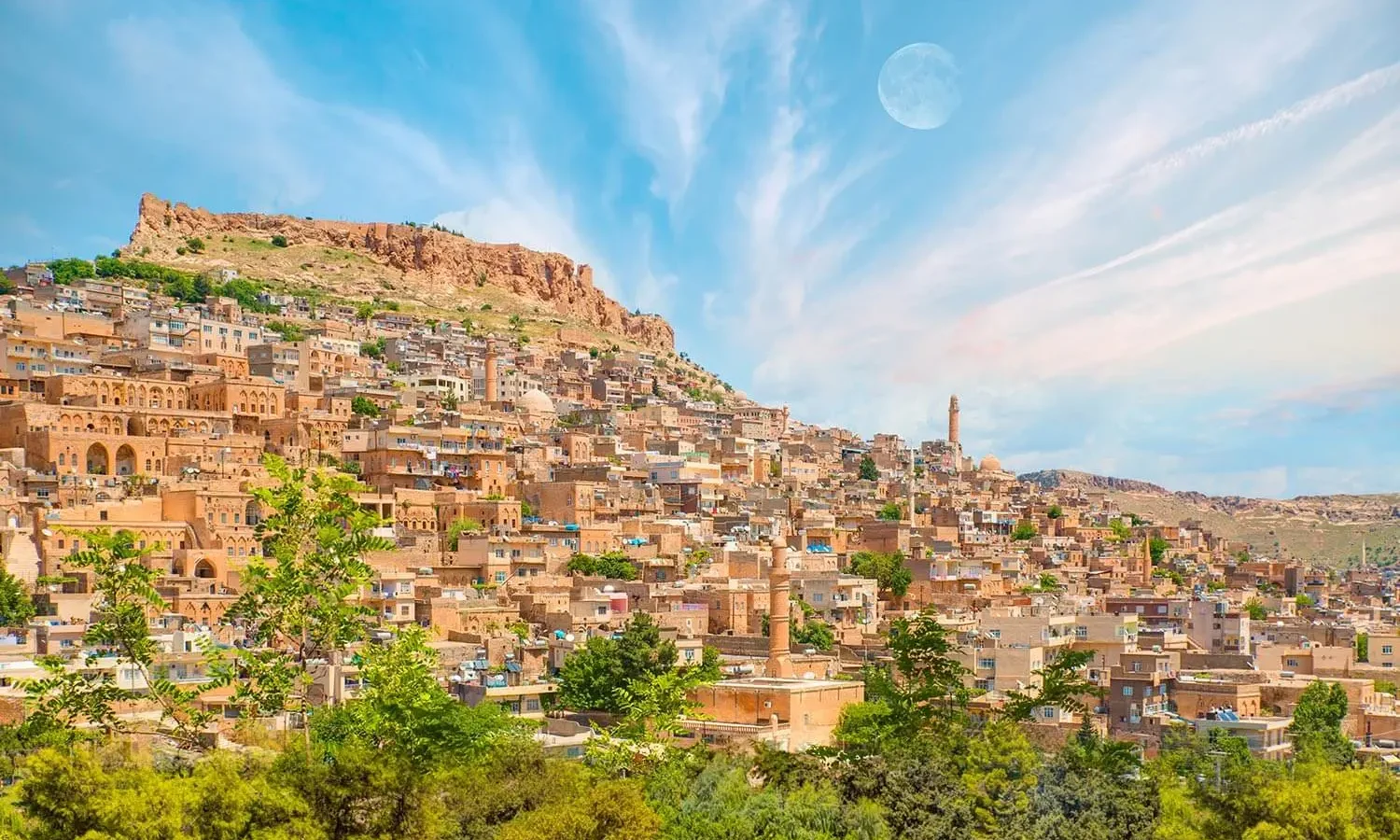
Mardin is a province in southeastern Türkiye, and also the name of its capital, an old town built in tiers down the south face of a limestone ridge. From the upper streets the view drops straight onto the Mesopotamian plain, flat and brown or green depending on the season, running south to the Syrian border.
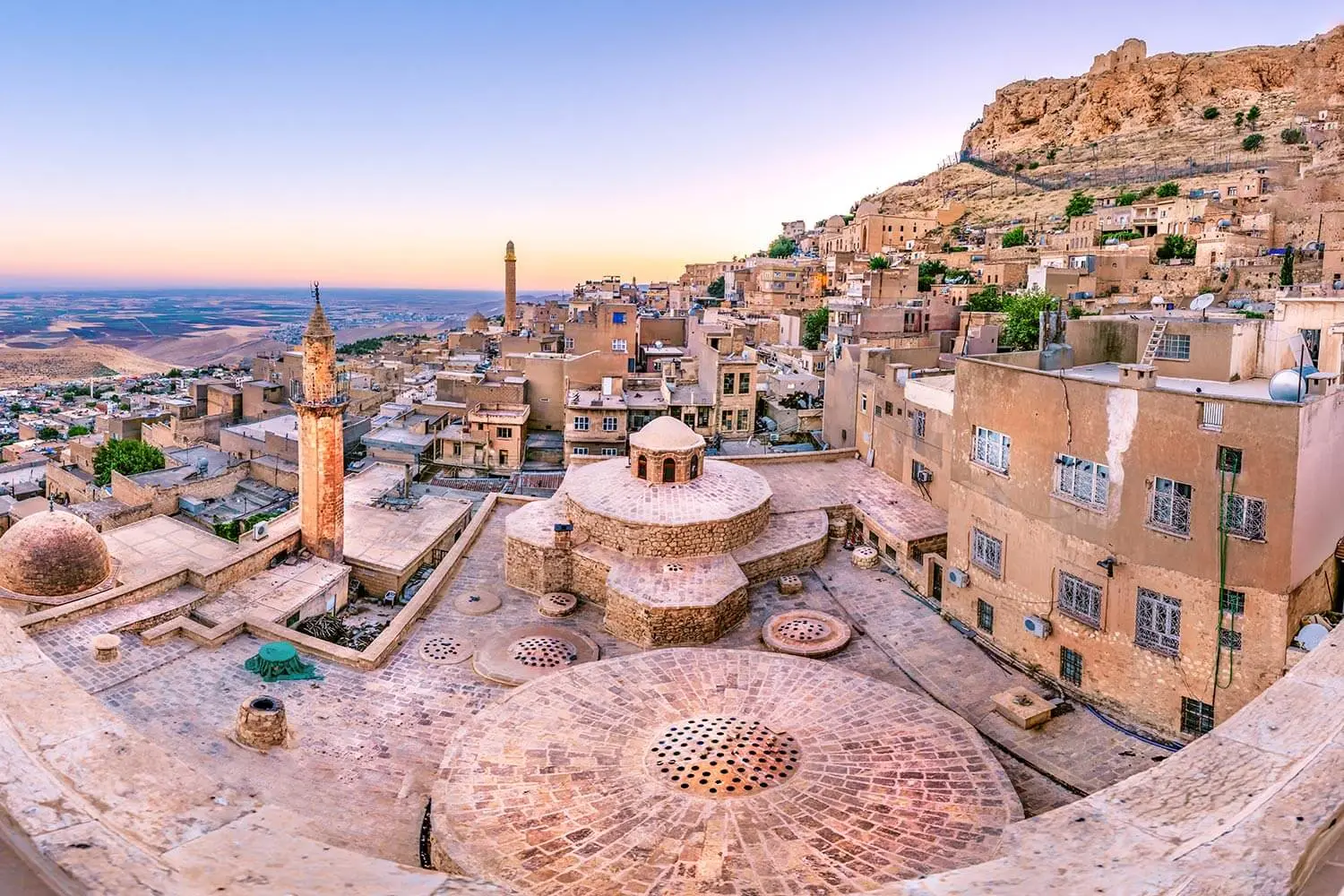
The old town sits in the Artuklu district. Its houses, mosques, churches and madrasas are built from the same yellow limestone, so the whole slope reads as one structure: flat roofs stepping down the hill, narrow stairways called abbara passing under houses, and minarets and bell towers within a few metres of each other.
The province is also the western gateway to Tur Abdin, the plateau around Midyat that has been the heartland of the Syriac Orthodox Church since late antiquity. Monasteries such as Deyrulzafaran and Mor Gabriel are still inhabited by monks and nuns and still hold services in Syriac.
Places to visit in Mardin

Deyrulzafaran Monastery
Deyrulzafaran (Mor Hananyo), seat of the Syriac Orthodox patriarchs from 1293 to…
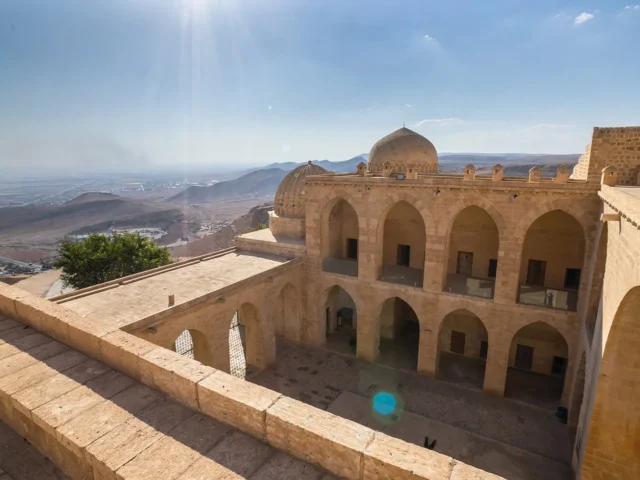
Kasımiye Madrasa
Kasımiye Madrasa in Mardin: the Artuqid-Akkoyunlu college with its courtyard pool, opening…
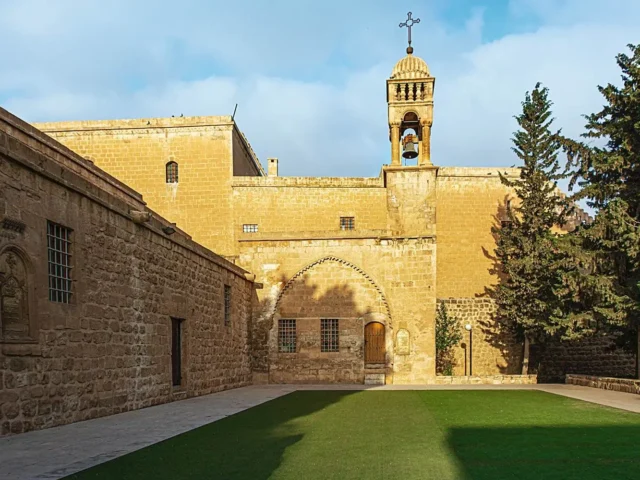
Mor Behnam (Kırklar) Church
Mor Behnam, Mardin's Kırklar Church: the 6th-century Syriac Orthodox church of the…

Midyat
Midyat, the old capital of Tur Abdin: carved stone mansions, Syriac churches,…

Mor Gabriel Monastery
Mor Gabriel (Deyrulumur), the Syriac monastery near Midyat founded in 397: its…
How do you get to Mardin?
By air: Mardin Prof. Dr. Aziz Sancar Airport (MQM) lies in the Kızıltepe direction, about 20 km south of the old town. Turkish Airlines flies from Istanbul Airport; AJet and Pegasus fly from Sabiha Gökçen, AJet from Ankara, and Pegasus and SunExpress from İzmir. There are no scheduled international flights, so overseas visitors connect in Istanbul. Diyarbakır Airport, roughly 95 km north, is a useful alternative when Mardin flights are full.
By road: Intercity coaches reach Mardin’s bus station from Istanbul, Ankara and most cities in the southeast. Minibuses run frequently to Diyarbakır, Şanlıurfa, Midyat and Nusaybin. From the bus station, municipal buses and minibuses climb to the old town’s main street, Cumhuriyet Caddesi (also called 1. Cadde).
Getting around: The old town is walked, not driven: stairways and lanes are too steep and narrow for most cars. Deyrulzafaran Monastery has no public transport, so you need a taxi or car, and the same goes for Dara and Mor Gabriel unless you join a tour.
Where should you stay in Mardin?
Stay in the old town if you can. Many old stone mansions along and just below Cumhuriyet Caddesi have been converted into small hotels with vaulted rooms and terraces looking over the plain, and the view at sunset is the main reason to stay the night. Expect stairs, often lots of them, and limited car access.
The new town, Yenişehir, a few kilometres west, has larger modern hotels with parking and is more practical for drivers or families. Midyat has its own small range of hotels in restored houses and is the better base for a day in Tur Abdin.
Book a Mardin tour
−5% Istambul readers save 5% on every tour below — applied at checkout.
Partner listings via GetYourGuide · free cancellation on most
What type of climate does Mardin have?
Mardin has hot, dry summers and chilly, wet winters. In July and August daytime temperatures regularly approach 40°C, and the stone streets hold the heat well into the evening. Winters are cool rather than harsh, but the ridge catches rain and snow between December and March, and snow can settle for a week or two. The city gets over 3,000 hours of sunshine a year.
When is the best time to visit Mardin?
April, May, late September and October are the best months: warm enough for rooftop breakfasts, cool enough to walk the old town at midday, and in spring the plain below turns green. Summer is very hot, so plan sightseeing for the morning and evening. Winter is quiet and the light is clear, but some terraces close and stone interiors can be cold.
Mardin is now a popular domestic destination, and long weekends and school holidays bring crowds to the main street and monasteries. Weekdays are noticeably calmer.

What is the history of Mardin?
People have lived on and around this ridge for thousands of years. Finds in the Mardin Museum run from around the 4th millennium BC through Assyrian, Urartian, Persian, Roman, Byzantine, Seljuk, Artuqid and Ottoman times. The province lies on the northern rim of Mesopotamia, and for centuries it was a frontier: between Rome and Persia in late antiquity, and later between rival Muslim dynasties.
The clearest example of that frontier is Dara, 30 km southeast of the city. According to the Mardin Provincial Directorate of Culture and Tourism, Emperor Anastasius I founded it in 505 as a garrison against the Sasanians. The 2002 inventory notes that the city later changed hands between Persians and Romans, came under the Umayyads towards the end of the 7th century, then the Abbasids, and passed to the Turks in the 15th century.
The castle that crowns the ridge was, according to the inventory, built by the Hamdanids in 975–976. It is about a kilometre long and between 30 and 150 metres wide, and travellers who visited at different times described 200 to 300 buildings inside it. Its other distinction, the inventory notes, is that it was made into a stronghold on the natural rock with very few additions.
Mardin’s great period came under the Artuqids, a Turkmen dynasty that ruled the city from the early 12th century until the early 15th. Most of the monuments visitors see today, including the Great Mosque’s minaret (1176), the Zinciriye Madrasa (1385) and the start of the Kasımiye Madrasa, belong to this era. The city then passed to the Kara Koyunlu and Akkoyunlu, who completed several Artuqid buildings, and in the early 16th century to the Ottomans.
Alongside the Muslim city, the Syriac Christian community kept its own institutions. Deyrulzafaran Monastery was the seat of the Syriac Orthodox Patriarchate from 1293 until 1932, and the 19th-century Syriac Catholic Patriarchate building in the old town now houses the Mardin Museum.
What is Mardin famous for?
Stone architecture. The 2002 inventory describes Mardin as one of the key cities of the stone architecture defined as the “North Syrian building style”. Yellow limestone, quarried in many places in the region, dominated construction, and wood was used only where it could not be avoided: doors, windows and mezzanine floors. The most important influences on this architecture were geography and climate. Semi-open spaces such as eyvan (iwan) and arcades were built to stay in shade, particularly from the western sun.
Many faiths in one city. Mosques, Syriac Orthodox and Catholic churches, a Chaldean church and the remains of Armenian churches stand within a few streets of each other. The Mor Behnam church, known locally as Kırklar Church, is still in use.
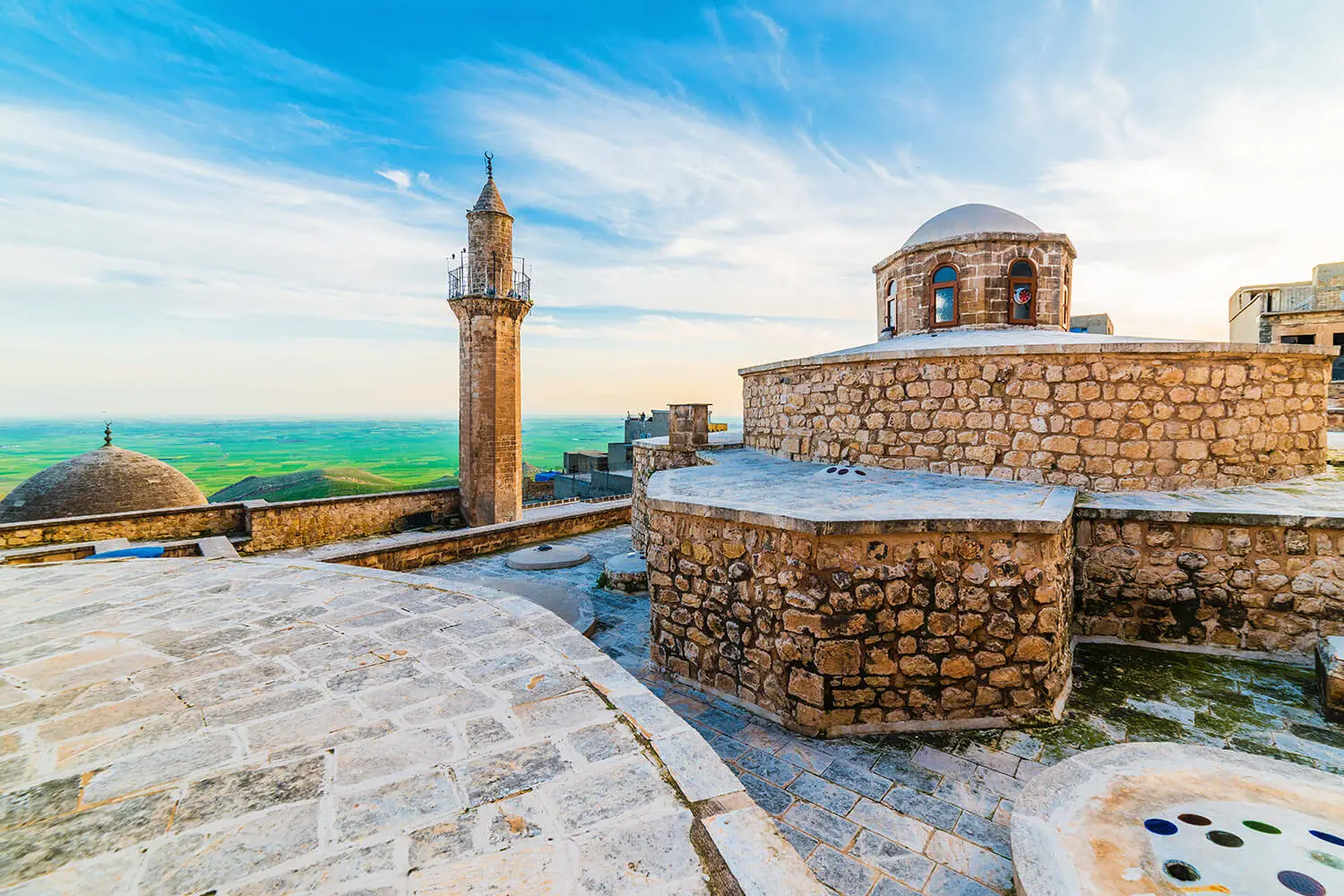
The view. Few cities in Türkiye have a skyline like Mardin’s. By day the terraces look out over Mesopotamia, and at night the lights of the plain spread out below the old town.
Telkari and almond sweets. Mardin is known for silver filigree and for badem şekeri, sugar-coated almonds that received geographical-indication status in 2021.
What are the historical places of Mardin?
In Mardin old town
Great Mosque (Ulu Cami). The 2002 inventory calls it the oldest of Mardin’s mosques. Its dome, resting on six piers, dominates the interior, and its fluted minaret was built under the Artuqid ruler Kutbeddin İlgazi in 1176. The Artuqid ruler Melik Salih endowed it with 38 shops, a bathhouse, a garden near Bab-ı Cedid and many vineyards in Mardin’s villages.
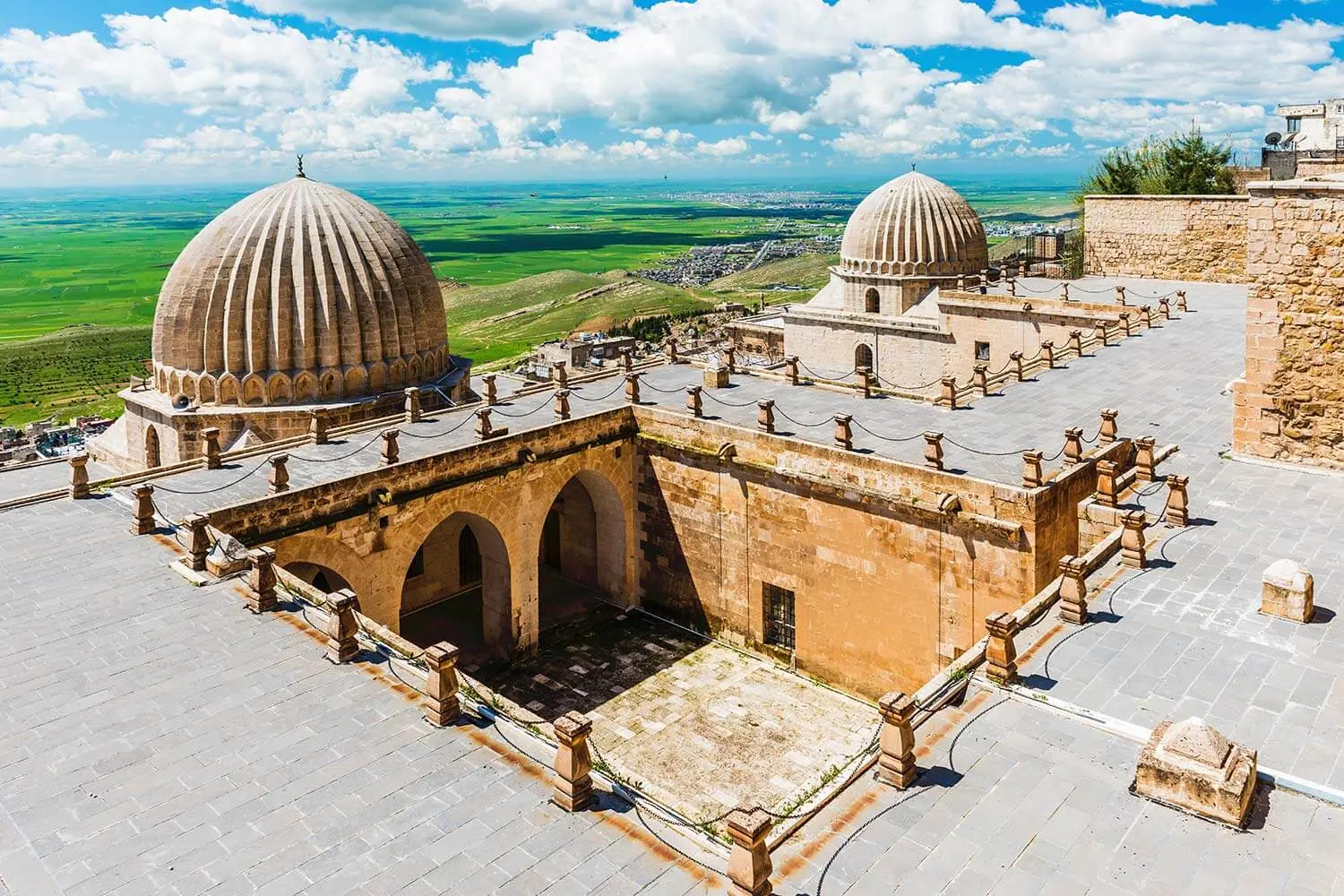
Zinciriye (Sultan İsa) Madrasa. Built in 1385 by Melik Necmeddin İsa in the north of the Medrese quarter. Melik İsa, who fought Timur and his army, was for a time imprisoned in this madrasa. It is known for the carved stone of its portal and its ribbed domes, and it has two courtyards and two storeys. The tomb of Sultan İsa and many old inscriptions are inside, and because it was also used as an observatory, it was built high on the slope.
Kasımiye Madrasa. Below the hills southwest of the city, begun under the Artuqids and finished by the Akkoyunlu in the 15th century. See our Kasımiye Madrasa guide.
Latifiye Mosque. Built by the Artuqid Melik Abdullatif in 1371, south of Cumhuriyet Meydanı. Its minaret was added later by Muhammed Ziya Tayyar Pasha, governor of Egypt.
Şehidiye Mosque and Madrasa. In the Şehidiye quarter, generally dated to the first half of the 13th century. The minaret standing today was added in 1916.
Bedesten and the bazaars. The covered market behind the Great Mosque, with four gates, is said to have been built by the Akkoyunlu ruler Kasım between 1480 and 1500. The coppersmiths’ bazaar (Bakırcılar Çarşısı) nearby still works.
Mardin Museum. Housed in the former Syriac Catholic Patriarchate, built in 1895 by Patriarch Ignatios Behnam Banni, next to the Church of the Virgin Mary (Meryemana Kilisesi). The museum opened in this building in 2000. Its collection includes the Sürekli Treasure, gold and silver pieces found in Kızıltepe.
Sakıp Sabancı Mardin City Museum. In an 1889 cavalry barracks, it presents the city’s everyday life, crafts and faith communities, with the Dilek Sabancı Art Gallery on the same site.
Mardin Castle. The citadel above the old town is still a military radar site and closed to visitors, according to the provincial culture and tourism directorate.
Around the province
Dara. In Oğuz village, 30 km southeast of Mardin. The inventory describes a city of rock-cut structures spread over 8–10 km, with rock tombs reaching as far as Kuruçay, a 4 km wall with gates to the north and south, and an inner citadel on a 50-metre hill. Remains of a church, palace, bazaar, dungeon, armoury and a dam cut into the rock, which still holds water, can be seen. Excavations are ongoing, and the vast cisterns under the city and the necropolis are the highlights. Entry is free and the site is closed on Mondays.
Deyrulzafaran Monastery. About 4–5 km east of the city, the former seat of the Syriac Orthodox Patriarchate. See our Deyrulzafaran guide.
Midyat and Mor Gabriel. Midyat’s stone mansions and church towers are about 60 km east, and Mor Gabriel, founded in 397, is a short drive further. See Midyat and Mor Gabriel Monastery.
Nusaybin. On the Syrian border, ancient Nisibis. The church of Mor Yakup, built over the tomb of St Jacob of Nisibis in the 4th century, is in the town centre. The inventory records that it was known for the perfection of its stonework and that monks lived there until the 19th century.
Kızıltepe Great Mosque. Begun in 1184 by the Artuqid Yavlak Arslan and completed by his brother Artuk Arslan between 1200 and 1239. The inventory notes that its interior, mihrab and walls are decorated with fine carving and inscriptions.
Rabbat (İprhim) Castle. In Hisaraltı village, 15 km west of Derik, on a hill rising from a narrow valley. The inventory calls it one of the largest works of the Artuqid period.
What are the best things to do in Mardin?
- Walk the old town from top to bottom. Start on Cumhuriyet Caddesi and drop down through the abbaras and stairways to the bazaars; the lanes are a better guide than any map.
- Watch sunset from a terrace. The plain turns gold, then the lights come on across Mesopotamia.
- Join a monastery tour. Deyrulzafaran and Mor Gabriel are visited with a monastery guide, who explains the liturgy, the patriarchs’ thrones and the burial chambers.
- Spend a day in Tur Abdin. Combine Midyat’s mansions, the Midyat Guesthouse and the telkari workshops with Mor Gabriel.
- Walk in the Zinnar vineyards. The inventory notes that the Zinnar vineyards, close to the city centre, are suitable for camping and nature walks because of their landscape and climate.
- Visit Dara early. The cisterns and rock-cut tombs are best seen before the midday heat.
- Taste Syriac wine. Syriac families in Mardin and Midyat still make wine from local grapes, and shops on the main street sell it.
What are the best places to visit in Mardin?
Deyrulzafaran Monastery is the “Saffron Monastery” on the hillside east of the city, seat of the Syriac Orthodox patriarchs for more than six centuries, with an underground chamber said to predate Christianity.
Kasımiye Madrasa is the finest of Mardin’s madrasas: two storeys of arcades around a courtyard pool, on a terrace looking over the plain.
Mor Behnam (Kırklar) Church is a 6th-century Syriac Orthodox church in the old town that still serves the Mardin congregation.
Midyat, the old capital of Tur Abdin, is a town of carved stone mansions and church towers, and a centre of silver filigree.
Mor Gabriel Monastery, founded in 397, is one of the oldest Christian monasteries still in use anywhere, seat of the Metropolitan of Tur Abdin.
Also worth your time: Dara, the Zinciriye Madrasa, the Great Mosque, the Mardin Museum and the Sakıp Sabancı City Museum. Further afield, the restored Roman frontier fort of Zerzevan lies across the provincial border in Diyarbakır province, on the road north.
What is the traditional food of Mardin?
The 2002 inventory explains that Mardin’s own dishes took on a traditional character through the plants that grow in the region and the local way of life, and that the richness of the cuisine comes from the cultural legacy of the civilisations that passed through and the people’s ability to renew themselves. Dishes prepared for the religious ceremonies of different faiths, and charity meals made for weddings, births and the traditional days after a death, are part of the local table.
Dishes to look for include ikbebet (boiled stuffed bulgur balls), sembusek (a folded flatbread filled with spiced minced meat), kibe, irok, kitel raha, kaburga dolması (lamb ribs stuffed with spiced rice), lebeniyye (a yoghurt soup) and zerde, a saffron-coloured rice pudding. Kaburga dolması, ikbebet, kibe, sembusek and badem şekeri were registered with geographical indications in 2021.
What should you buy in Mardin?
Telkari (silver filigree). The inventory describes telkari as decoration made by inlaying silver or gold wire into grooves cut in wood. Gold and silver drawn into wire are worked loop by loop with the delicacy of canvas embroidery and turned into ornaments and jewellery. The craft is particular to central Mardin and Midyat.
Copperware. The inventory notes that copper working has survived for centuries in its own bazaar, and that the work is done entirely by hand in very hard conditions. Trays, bowls, ladles, pots and ewers are still made, but fewer craftsmen practise it every year.
Soap, almonds and wine. Bıttım (wild pistachio) soap, badem şekeri and Syriac wine are the usual souvenirs from the shops along the main street.



Frequently asked questions about Mardin
Is Mardin worth visiting?
Yes. Its terraced old town of yellow limestone, Artuqid madrasas and working Syriac monasteries such as Deyrulzafaran and Mor Gabriel have no equivalent elsewhere in Türkiye.
How many days do you need in Mardin?
Two full days cover the old town, Deyrulzafaran and Dara. Add a third day for Midyat and Mor Gabriel in Tur Abdin.
What is the nearest airport to Mardin?
Mardin Prof. Dr. Aziz Sancar Airport (MQM), about 20 km south of the old town, with direct flights from Istanbul, Ankara, İzmir and Antalya. Diyarbakır Airport, about 95 km north, is an alternative.
Is Mardin a UNESCO World Heritage Site?
Not yet. The Mardin Cultural Landscape has been on UNESCO’s Tentative List since 2000, and the churches and monasteries of Tur Abdin were added to the list in 2021.
Can you visit Mardin Castle?
No. The citadel above the old town is still used as a military radar site and is closed to visitors, though you can see it from almost everywhere in town.
What food is Mardin known for?
Kaburga dolması (stuffed lamb ribs), ikbebet, sembusek and kibe, plus badem şekeri sugared almonds. All five have geographical-indication status.
When is the best time to visit Mardin?
April to May and late September to October. Summer afternoons often approach 40°C.
What do the official records say about Mardin?
Mardin, with its architectural, archaeological, ethnographic and visual values, is one of the poetic cities of the Southeast, giving the impression that time has stood still. With its settlement adorned with vineyards and gardens of striking natural beauty, stretching from the mountains on which it stands down as far as the eye can see, Mardin stands guard over Mesopotamia, and it carries on its different religious beliefs, traditions and customs with a contemporary understanding.
The mosques, tombs, churches, monasteries and similar works that have stood on this land for centuries, reflecting the character of the period in which they were built and valuable artistically as well as religiously, add to the cultural richness of the region. Mardin lies on the historic Silk Road and has many hans and caravanserais. (Ministry of Culture and Tourism, Mardin Provincial Tourism Inventory, 2002)
Ready to see Mardin?
Hand-picked tours with good reviews and clear prices.
Partner listings via GetYourGuide · free cancellation on most
Before or after: Istanbul
Most trips start or end in Istanbul. Our own experiences there:
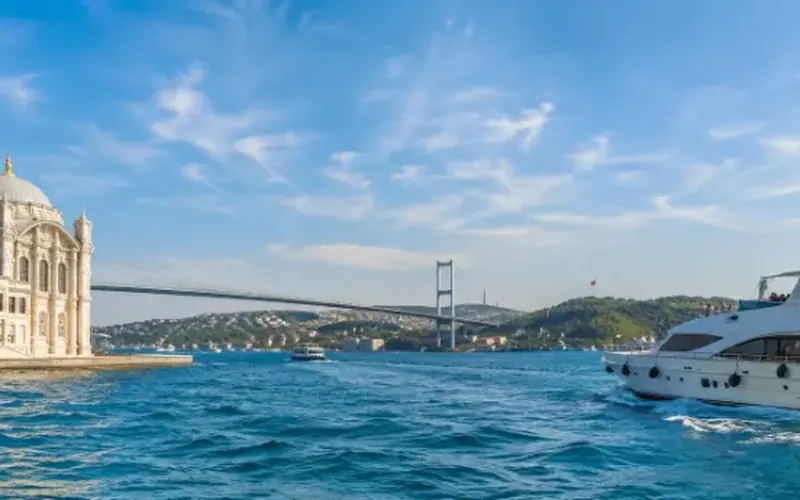
 Dinner, sunset and day cruises between Europe and Asia.See cruises bosporuscruise.com
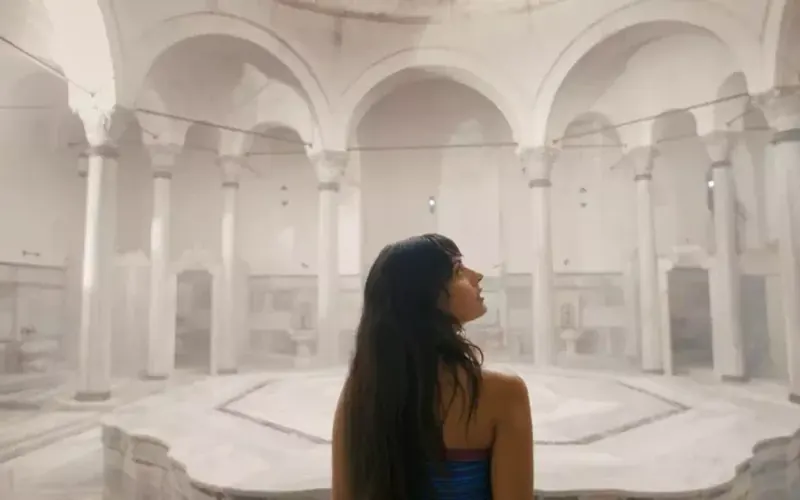
 Historic Turkish baths in the old city — hand-picked hamams, booked direct.Book a hamam istanbulhamam.com
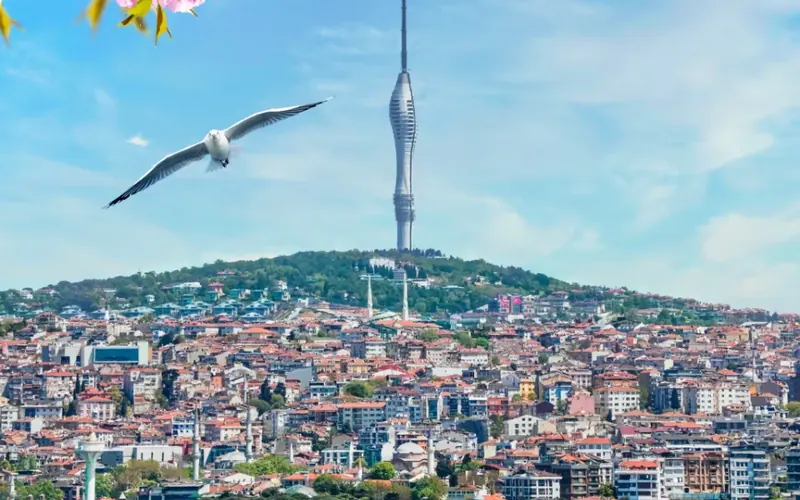
 Istanbul’s tallest viewpoint: both continents from 369 metres.Get tickets camlicatower.com
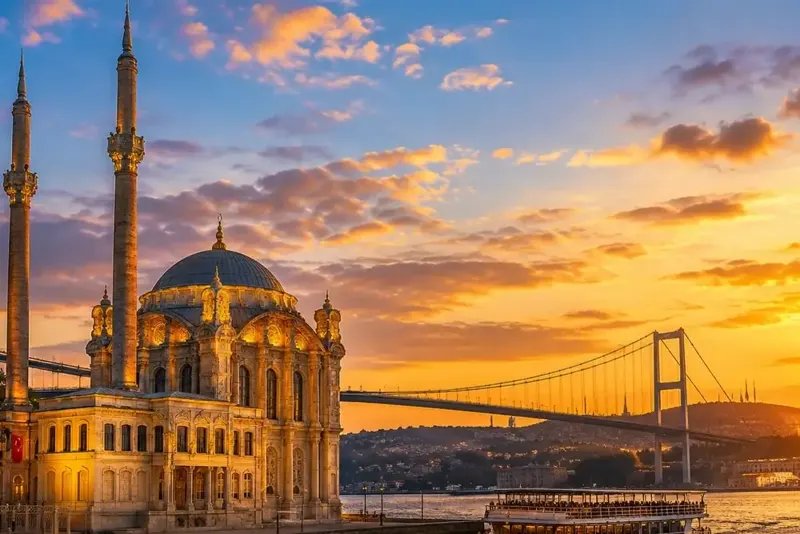
 Free audio guides in 15 languages, safe routes and local tips — plus 5% off GetYourGuide.Open the free guide localada.com