
Deyrulzafaran Monastery: The Saffron Monastery of Mardin
On this page
- What is Deyrulzafaran Monastery?
- How do you get to Deyrulzafaran Monastery?
- When is the best time to visit Deyrulzafaran Monastery?
- What is the history of Deyrulzafaran Monastery?
- What is Deyrulzafaran Monastery famous for?
- What can you see at Deyrulzafaran Monastery?
- Common misconceptions about Deyrulzafaran Monastery
- Frequently asked questions about Deyrulzafaran Monastery
- What do the official records say about Deyrulzafaran Monastery?
Key facts: Deyrulzafaran Monastery
- What it is: A working Syriac Orthodox monastery, also called Mor Hananyo or the Saffron Monastery, and the seat of the Syriac Orthodox Patriarchate from 1293 to 1932.
- Where: On a hillside about 4–5 km east of Mardin old town, Artuklu district, Mardin province (Mardin Culture and Tourism Directorate).
- UNESCO: A component of “Late Antique and Medieval Churches and Monasteries of Midyat and Surrounding Area (Tur ʿAbdin)”, on the Tentative List since 2021 (UNESCO). Not yet inscribed.
What is Deyrulzafaran Monastery?
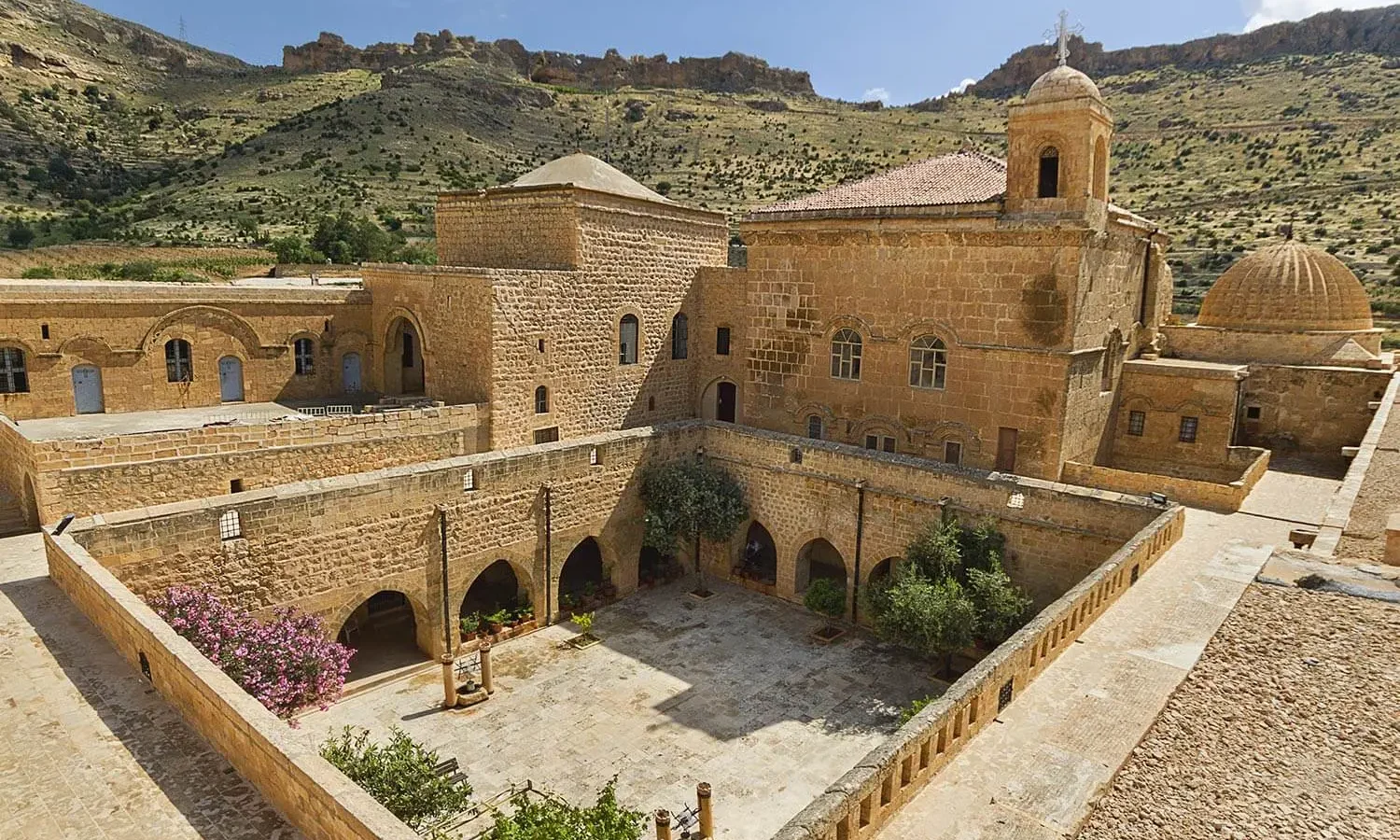
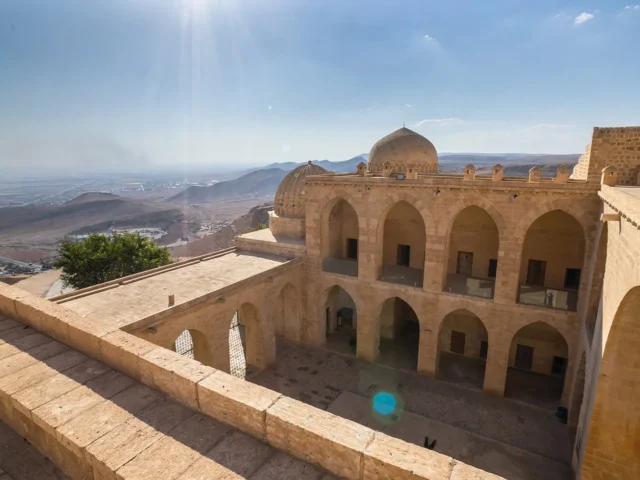
Deyrulzafaran is a Syriac Orthodox monastery on the slopes east of Mardin, looking down over the Mesopotamian plain. For more than six centuries it was the seat of the Syriac Orthodox patriarchs, and it is still a living religious centre: a metropolitan bishop lives here, services are held in Classical Syriac, and Syriac Christians from around the world come to pray and receive blessings.
It is built from the same yellow limestone as Mardin itself, and in low afternoon light the walls take on a warm, almost orange colour. Its formal name is Mor Hananyo, after the 8th-century bishop who restored it, and “Deyrulzafaran” means the Saffron Monastery.
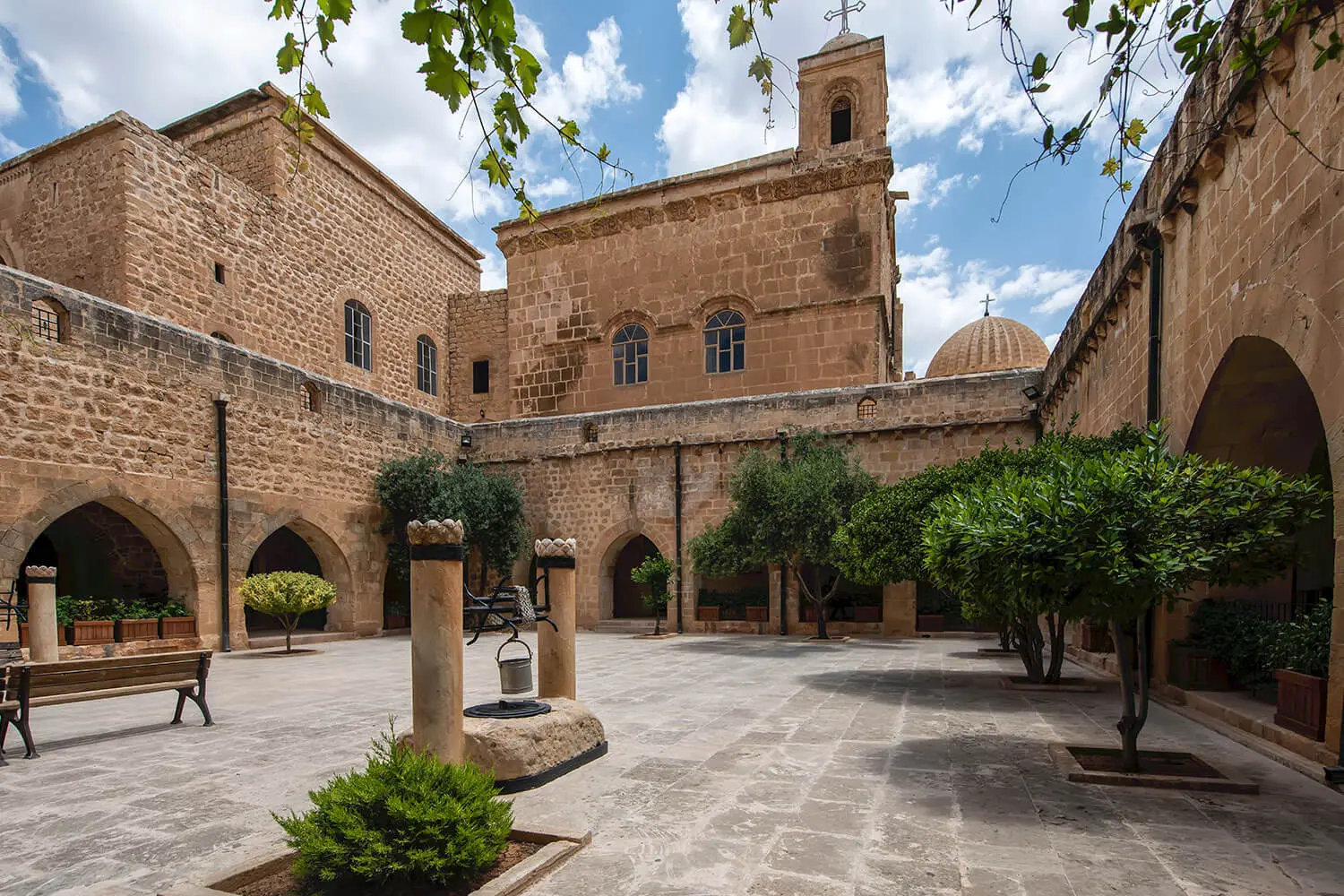
Visits are by guided tour only, led by the monastery’s own guides, and take in the underground chamber, the main church, the patriarchs’ thrones and the burial room of the patriarchs and metropolitans.

How do you get to Deyrulzafaran Monastery?
The monastery is about 4–5 km east of Mardin old town. There is no public transport, so the options are a taxi from the old town, your own car, or walking: the road is quiet but has no pavement for much of the way, and it is uphill on the return. Agree a price with a taxi driver to wait while you take the tour.
From Mardin Prof. Dr. Aziz Sancar Airport, about 20 km south of the city, allow 30–40 minutes by car. There are toilets, a café and souvenir shops at the entrance.
Book a Deyrulzafaran Monastery tour
−5% Istambul readers save 5% on every tour below — applied at checkout.
Partner listings via GetYourGuide · free cancellation on most
When is the best time to visit Deyrulzafaran Monastery?
Spring (April–May) and autumn (late September–October) are the most comfortable seasons. The courtyards have little shade, and in July and August temperatures approach 40°C, so in summer aim for the first tours of the morning. Opening hours change through the year, so check them before you visit.
The monastery is a short drive from the old town, so it fits easily into the morning before a day in Mardin, or the afternoon before sunset on a terrace.
What is the history of Deyrulzafaran Monastery?
According to the Mardin Provincial Directorate of Culture and Tourism, the site was first a sun temple, then a Roman fortress. After the Romans withdrew, St Shlemon (Şleymun) brought the relics of several saints here and turned the fortress into a monastery, which was first known as the Monastery of Mor Shlemon.
In 793 Hananyo, metropolitan of Mardin and Kafartut, bought the ruined site and carried out a major restoration, and the monastery took his name: Mor Hananyo. In the 15th century it became known as Deyrulzafaran, the Saffron Monastery, from the saffron plants that grew around it.
In 1293 the monastery became the seat of the Syriac Orthodox Patriarchate, a role it held until 1932, when the patriarchate moved to Syria, first to Homs and later to Damascus. The 2002 inventory gives the patriarchal period as 639 years. Its buildings were added in several stages from the 5th century onwards, and the monastery reached its present three-storey form in the 18th century.
What is Deyrulzafaran Monastery famous for?
- The patriarchate. For more than six centuries this was the centre of the Syriac Orthodox Church, and the thrones of the patriarchs and the tombs of patriarchs and metropolitans are still here.
- The underground chamber. A vault below the courtyard is traditionally described as a temple of the sun, built of large stones fitted without mortar.
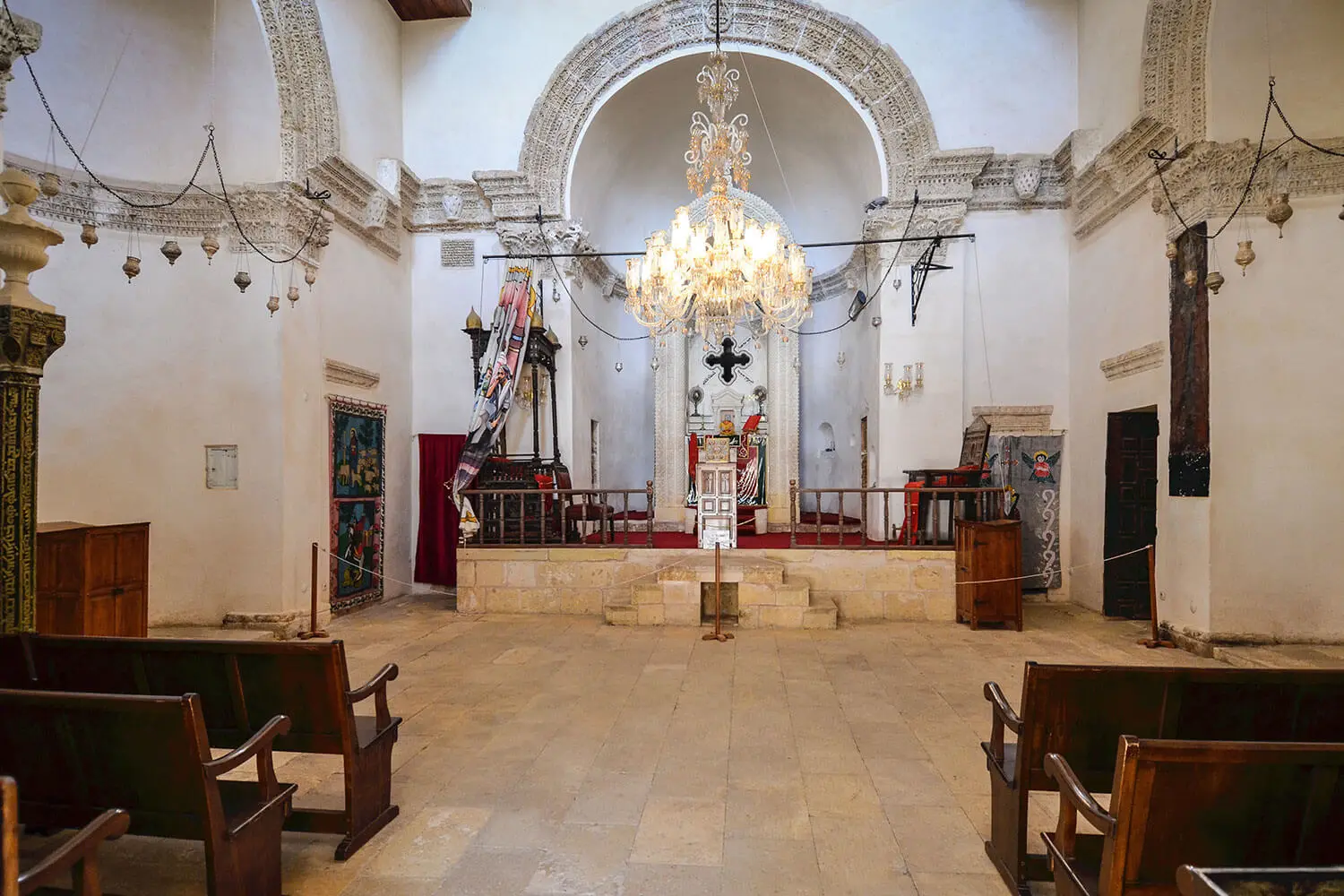
- A living liturgy. Services are still held in Classical Syriac, the language of the Syriac church since late antiquity.
- The colour of the stone. Its yellow limestone takes on a warm tone in the late-afternoon light.
What can you see at Deyrulzafaran Monastery?
The underground chamber. The tour usually begins here. The 2002 inventory notes that the most striking feature of this oldest part is its ceiling: stones about 20 × 0.5 m, set in 13 rows and locked together in a geometric pattern without mortar. The other notable feature, the inventory says, is the arched niches on both sides of the sanctuary, where offerings were made. A small window in the east wall faces the sunrise.
The main church. Dedicated to Mor Hananyo, with a carved stone altar area and the thrones of the patriarchs.
The tombs of the patriarchs. A burial chamber holds the remains of the patriarchs and metropolitans who served here.
The courtyards and terraces. The monastery’s three storeys step up the slope, and the upper terraces look over the plain
Common misconceptions about Deyrulzafaran Monastery
Has the monastery always been called Deyrulzafaran?
What people often assume: That “Saffron Monastery” is its original name.
What the record says: It was first known as the Monastery of Mor Shlemon, then as Mor Hananyo after the restoration of 793, and only from the 15th century as Deyrulzafaran (Mardin Culture and Tourism Directorate).



Frequently asked questions about Deyrulzafaran Monastery
How far is Deyrulzafaran Monastery from Mardin?
About 4–5 km east of the old town. There is no public transport, so take a taxi or drive; the ride takes around 10 minutes.
Can you visit Deyrulzafaran Monastery on your own?
Visits are by guided tour with the monastery’s own guides, which start regularly through the day. Tours generally run from 09:00 to 17:00.
Is Deyrulzafaran still an active monastery?
Yes. It is the residence of the Syriac Orthodox Metropolitan of Mardin, and services are still held in Classical Syriac.
Why is it called the Saffron Monastery?
According to the Mardin Culture and Tourism Directorate, the name came in the 15th century from the saffron plants that grew around it.
What should you wear to Deyrulzafaran?
Shoulders and knees should be covered, as in any working church. A light scarf is useful in summer.
What do the official records say about Deyrulzafaran Monastery?
Deyrulzafaran Monastery, 5 kilometres east of Mardin, lies on the slopes overlooking Upper Mesopotamia. An exceptional monument that has survived to this day among the historical and religious treasures of the Syriacs, the monastery served for 639 years as the “Patriarchal Centre of the World’s Syriacs”.
Deyrulzafaran, which contains what is held to be the oldest known temple of Shamash worship, one of the pagan beliefs, reached its present imposing form through architectural additions made in the line of the Christian faith. (Ministry of Culture and Tourism, Mardin Provincial Tourism Inventory, 2002)
Ready to see Deyrulzafaran Monastery?
Hand-picked tours with good reviews and clear prices.
Partner listings via GetYourGuide · free cancellation on most
Before or after: Istanbul
Most trips start or end in Istanbul. Our own experiences there:

 Dinner, sunset and day cruises between Europe and Asia.See cruises bosporuscruise.com

 Historic Turkish baths in the old city — hand-picked hamams, booked direct.Book a hamam istanbulhamam.com

 Istanbul’s tallest viewpoint: both continents from 369 metres.Get tickets camlicatower.com

 Free audio guides in 15 languages, safe routes and local tips — plus 5% off GetYourGuide.Open the free guide localada.com
Nearby
All destinations
Mor Behnam (Kırklar) Church
Mor Behnam, Mardin's Kırklar Church: the 6th-century Syriac Orthodox church…

Midyat
Midyat, the old capital of Tur Abdin: carved stone mansions,…

Mor Gabriel Monastery
Mor Gabriel (Deyrulumur), the Syriac monastery near Midyat founded in…
Kasımiye Madrasa
Kasımiye Madrasa in Mardin: the Artuqid-Akkoyunlu college with its courtyard…
