
Kasımiye Madrasa: Mardin’s Courtyard Over Mesopotamia
On this page
- What is Kasımiye Madrasa?
- How do you get to Kasımiye Madrasa?
- When is the best time to visit Kasımiye Madrasa?
- What is the history of Kasımiye Madrasa?
- What is Kasımiye Madrasa famous for?
- What can you see at Kasımiye Madrasa?
- Frequently asked questions about Kasımiye Madrasa
- What do the official records say about Kasımiye Madrasa?
Key facts: Kasımiye Madrasa
- What it is: A two-storey medieval madrasa (theological college) with a mosque and tomb, one of the largest historic buildings in Mardin.
- Where: Below the hills on the southwest edge of Mardin old town, Artuklu district (Mardin Culture and Tourism Directorate).
- Period: Begun under the Artuqids and completed in the 15th century by the Akkoyunlu ruler Kasım, son of Cihangir, after whom it is named.
What is Kasımiye Madrasa?
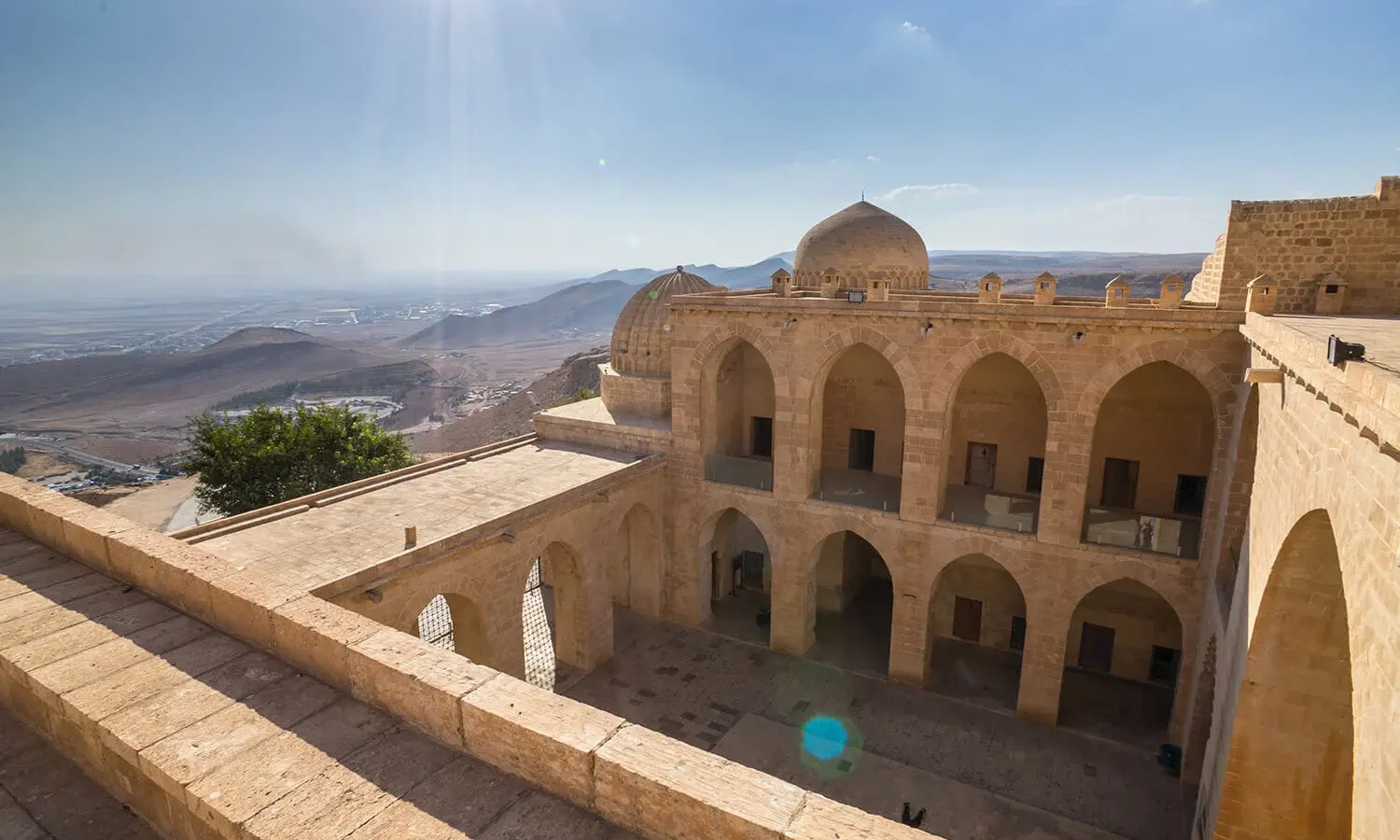
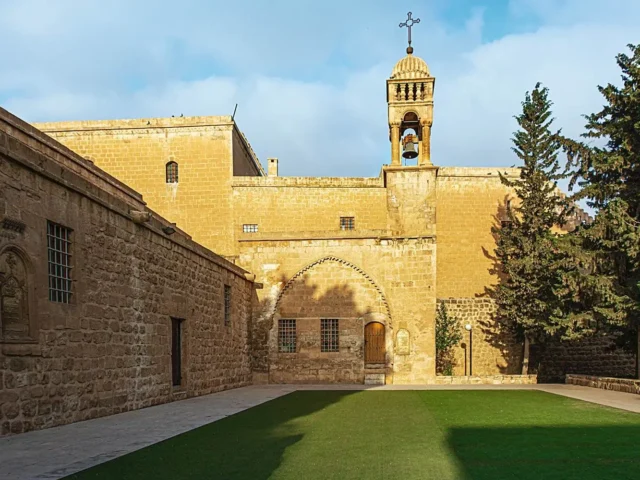
The Kasımiye Madrasa is a 15th-century college of Islamic learning on a terrace below the southwest side of Mardin’s old town. It is built from finely dressed limestone around an arcaded courtyard with a long pool, and its south front opens over the Mesopotamian plain. Many visitors find it the most beautiful building in Mardin.
It is still a place of learning. Since 2020 Mardin Artuklu University has used it as an Islamic Science and Arts Centre, and in 2026 classes in tourism, architecture, theology and fine arts were being taught in its rooms. The building remains open to visitors.
How do you get to Kasımiye Madrasa?
The madrasa sits on the southwestern edge of the city, below the main old-town ridge. From the old town it is a walk downhill, or a few minutes by taxi; the walk back is steep, so many visitors take a taxi one way.
It combines well with the Zinciriye Madrasa and the Great Mosque in the same half-day.
Book a Kasımiye Madrasa tour
−5% Istambul readers save 5% on every tour below — applied at checkout.
Partner listings via GetYourGuide · free cancellation on most
When is the best time to visit Kasımiye Madrasa?
Late afternoon is the best time: the low sun lights the courtyard arcades and the south terrace looks over the plain as the colours change. Spring and autumn are the most comfortable seasons. In summer the stone courtyard holds the heat, so go early or late. Opening hours change through the year, so check them before you visit.
Because it is also a teaching space, some rooms may be closed during class hours, but the courtyard and terraces are generally open.
What is the history of Kasımiye Madrasa?
The 2002 inventory explains that the building’s architectural style shows its construction began in the Artuqid period and was completed under the Akkoyunlu. Even though its plan, stone carving and decorative motifs do not fully match the features of the period, the inventory says it is possible to call this monumental building one of the last works of the Artuqid era in Mardin. Perhaps because it was completed by the Akkoyunlu, it is known by the name of Kasım, son of Cihangir.
Sources differ on exact dates. Construction is generally attributed to the Artuqid ruler İsa Bey, who was killed fighting the Kara Koyunlu in 1407 before it was finished. The Mardin directorate dates its completion to the reign of the Akkoyunlu ruler Kasım, between 1457 and 1502.
The madrasa taught religious sciences, and reportedly medicine, astronomy and mathematics, until the early 20th century. After the First World War it was used as military quarters until 1940, was later restored and served for a time as a museum. Since 2020 it has been an Islamic Science and Arts Centre run by Mardin Artuklu University.
What is Kasımiye Madrasa famous for?
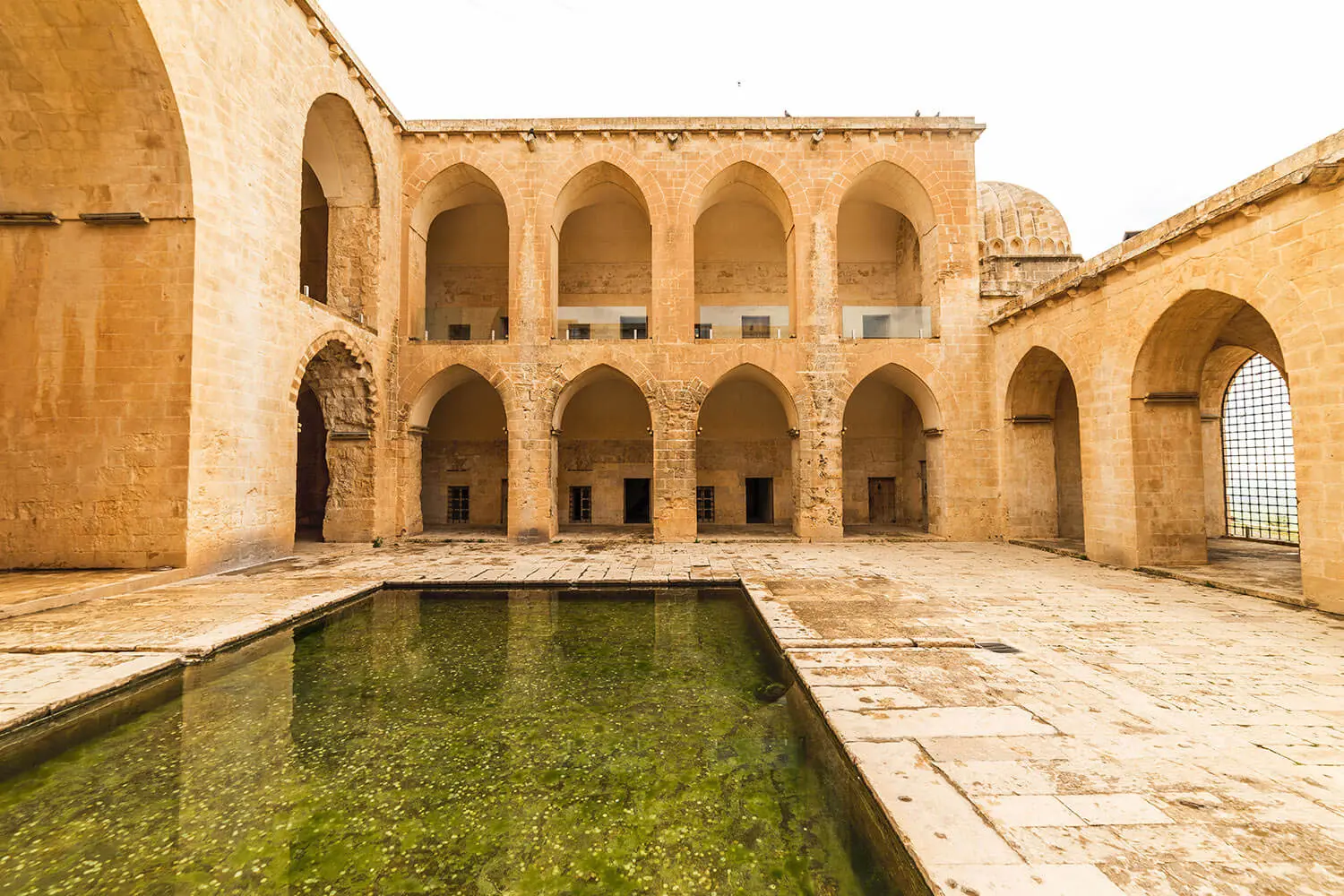
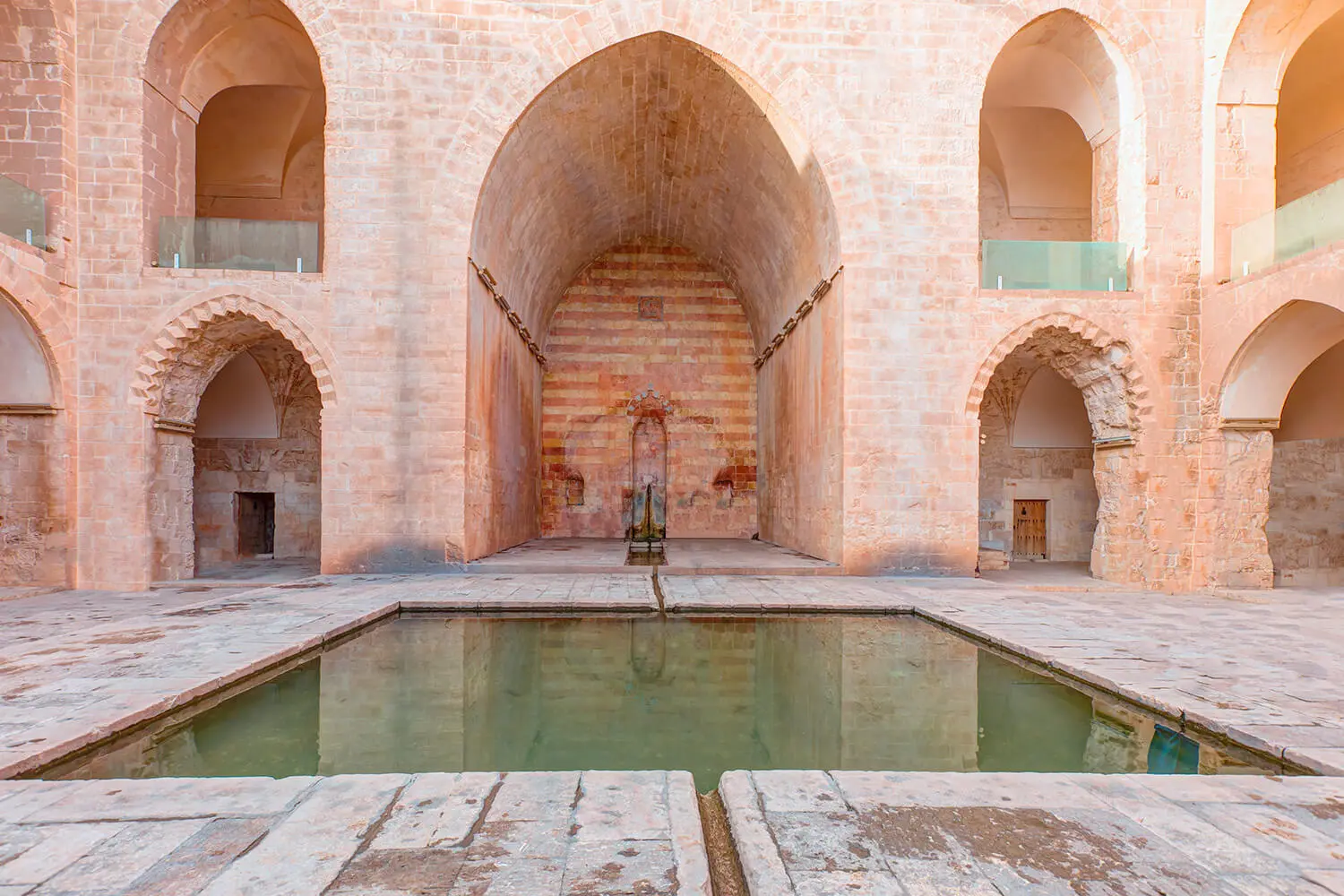
- The courtyard pool. Water flows from a channel in the great iwan into a long pool in the middle of the courtyard. Local guides often describe the flow as a metaphor for life, from birth to death.
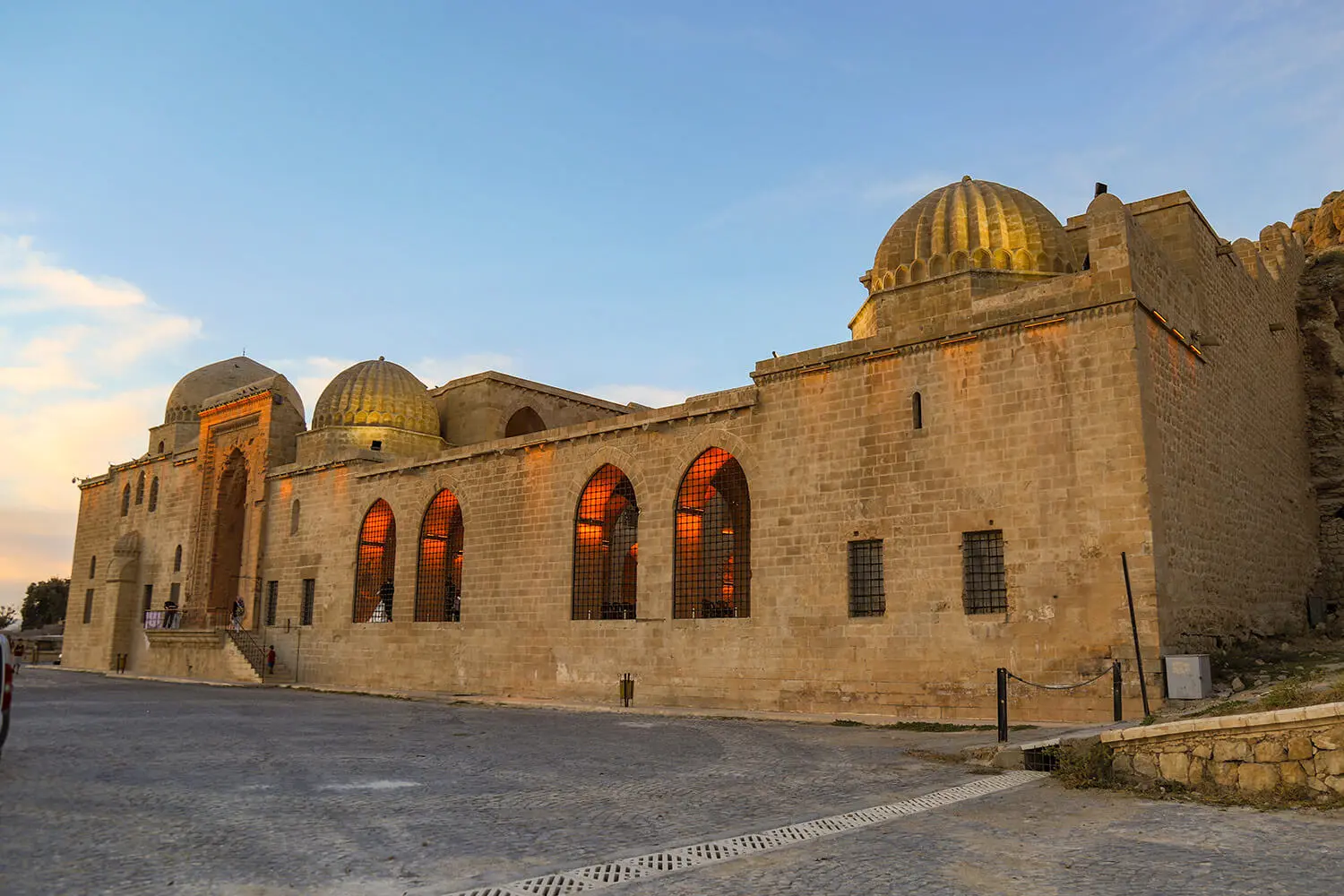
- Stonework. Dressed limestone and a carved crown portal, in the same yellow stone as the old town.
- The view. The south front and roof terraces look straight out over the Mesopotamian plain.
- Scale. The Mardin directorate calls it one of the largest structures in the city.
What can you see at Kasımiye Madrasa?
The courtyard. The inventory describes a mosque with a squinch dome, widened at the sides by brick barrel-vaulted arcades and deep vaults, connected by channels from the great iwan of the arcaded courtyard to the pool in the centre. The madrasa was built on two terraces in two storeys, and together with the mosque and tomb it forms a complex (külliye).
The great iwan. A large iwan on the north side rises through both storeys, with the pool in front of it.
The cells. Students’ rooms are arranged on two levels around the courtyard. Their doors are low, and guides explain that students had to bow as they entered.
The portal and south front. The south front is entered through a carved portal and a barrel-vaulted corridor and faces the plain.
The mosque and tomb. The two-storey mosque is on the east side, and a tomb completes the complex.



Frequently asked questions about Kasımiye Madrasa
Is Kasımiye Madrasa open to visitors?
Yes. It is open daily; the Mardin Culture and Tourism Directorate lists 08:30–17:30 in winter and 08:30–19:00 in summer.
Who built Kasımiye Madrasa?
It was begun under the Artuqids and completed in the 15th century under the Akkoyunlu ruler Kasım, son of Cihangir, whose name it carries.
How do you get to Kasımiye Madrasa from Mardin old town?
It is on the southwestern edge of the city, below the old town: a steep walk downhill or a short taxi ride.
Is the madrasa still used for teaching?
Yes. Since 2020 Mardin Artuklu University has used it as an Islamic Science and Arts Centre, with classes held in its rooms.
How long should you spend at Kasımiye Madrasa?
Allow 45 minutes to an hour, longer if you want to watch the light change over the plain from the terrace.
What do the official records say about Kasımiye Madrasa?
The building, which stands below the hills to the southwest of the city, uses smooth dressed stone. Its architectural style shows that construction began in the Artuqid period and was completed in the Akkoyunlu period. Although its plan features, stone workmanship and decorative motifs do not match the characteristics of the period, it is possible to say that this monumental building is one of the last works of the Artuqid era in Mardin. Perhaps because it was completed by the Akkoyunlu, the madrasa is known by the name of Kasım, son of Cihangir.
Built in two storeys on two terraces, the madrasa forms a complex together with its mosque and tomb. (Ministry of Culture and Tourism, Mardin Provincial Tourism Inventory, 2002)
Ready to see Kasımiye Madrasa?
Hand-picked tours with good reviews and clear prices.
Partner listings via GetYourGuide · free cancellation on most
Before or after: Istanbul
Most trips start or end in Istanbul. Our own experiences there:

 Dinner, sunset and day cruises between Europe and Asia.See cruises bosporuscruise.com

 Historic Turkish baths in the old city — hand-picked hamams, booked direct.Book a hamam istanbulhamam.com

 Istanbul’s tallest viewpoint: both continents from 369 metres.Get tickets camlicatower.com

 Free audio guides in 15 languages, safe routes and local tips — plus 5% off GetYourGuide.Open the free guide localada.com
Nearby
All destinations
Deyrulzafaran Monastery
Deyrulzafaran (Mor Hananyo), seat of the Syriac Orthodox patriarchs from…

Mor Gabriel Monastery
Mor Gabriel (Deyrulumur), the Syriac monastery near Midyat founded in…
Mor Behnam (Kırklar) Church
Mor Behnam, Mardin's Kırklar Church: the 6th-century Syriac Orthodox church…

Midyat
Midyat, the old capital of Tur Abdin: carved stone mansions,…
