Malatya: Apricot Orchards and the World’s First Palace
On this page
- What is Malatya?
- How do you get to Malatya?
- Where should you stay in Malatya?
- What type of climate does Malatya have?
- When is the best time to visit Malatya?
- What is the history of Malatya?
- What is Malatya famous for?
- What are the historical places of Malatya?
- What are the best things to do in Malatya?
- What are the best places to visit in Malatya?
- What should you buy in Malatya?
- Frequently asked questions about Malatya
- What do the official records say about Malatya?
Key facts: Malatya
- UNESCO World Heritage: Arslantepe Mound, 7 km north-east of the city, was inscribed in 2021 for its Late Chalcolithic palace complex, one of the earliest known seats of state power (UNESCO).
- Region: Eastern Anatolia, on the upper Euphrates basin, bordering Adıyaman, Elazığ, Sivas and Kahramanmaraş.
- Best known for: Apricots (around half of Türkiye’s fresh apricots and most of its dried apricots, according to the provincial culture directorate), Arslantepe, the Seljuk Great Mosque of Battalgazi, and the northern approach to Mount Nemrut.
- 2023 earthquake: The province was among the worst hit by the earthquakes of 6 February 2023; reconstruction of the city centre is still a visible part of any visit.
What is Malatya?
Malatya is a province in Eastern Anatolia and the name of its capital, a city on a broad, irrigated plain on the western side of the upper Euphrates. The plain is covered with apricot orchards, and Malatya is to apricots what Champagne is to sparkling wine: the name alone sells the fruit across Türkiye.
The city has moved more than once. Its first site was the mound of Arslantepe, now a UNESCO World Heritage Site on the edge of town. The Roman and medieval city of Melitene stood a few kilometres away at Battalgazi, today called Eski Malatya (“Old Malatya”), with its Seljuk Great Mosque and walls. The present city was laid out in the 19th century among the gardens of Aspuzu, where the townspeople had spent their summers.
On 6 February 2023 two large earthquakes centred in neighbouring Kahramanmaraş struck the region, and Malatya was among the hardest hit provinces. Official figures list 1,393 deaths in the province, and a large part of the city centre, including the old apricot market, was destroyed or had to be demolished. Rebuilding is under way and the city is open to visitors, but expect construction sites in the centre and some monuments and museums still closed for repair. We note the status of each place below where the provincial culture directorate has published it.
Places to visit in Malatya
Arslantepe Mound
Arslantepe Mound near Malatya: UNESCO-listed in 2021, with a palace of c.…
Battalgazi (Eski Malatya)
Battalgazi (Eski Malatya), old Melitene: the Seljuk Great Mosque of 1224, a…
Somuncu Baba Complex
Somuncu Baba Complex in Darende, Malatya: tomb mosque of Şeyh Hamid-i Veli…
How do you get to Malatya?
By air: Malatya Erhaç Airport (MLX) is about 26 km west of the city, with daily flights from Istanbul and Ankara and services from İzmir. Overseas visitors connect via Istanbul Airport or Sabiha Gökçen.
By rail: Malatya is a junction of the railway between Syria and the Black Sea. The station is about 3 km west of the centre, and long-distance trains link it with Ankara and run east to Elazığ and Diyarbakır.
By road: Coaches connect Malatya with Istanbul, Ankara and the main cities of eastern and southeastern Türkiye. Elazığ is the nearest large city to the east. For Mount Nemrut, the route from Malatya runs about 100 km via Pütürge, Tepehan and Büyüköz to the northern side of the summit, according to the provincial culture directorate.
Getting around: Arslantepe and Battalgazi are a short taxi or bus ride from the centre. Darende, Levent and Arapgir need a car or an intercity minibus.
Where should you stay in Malatya?
Stay in Malatya city, which has the widest choice of hotels in the province and is the base for Arslantepe, Battalgazi and day trips to Darende and Mount Nemrut. Two hotels collapsed in the 2023 earthquake, so it is reasonable to ask a hotel when its building was built or inspected. Seeing sunrise on Mount Nemrut from Malatya means a very early start, since the summit is about 100 km away by mountain road.
Tours in Mount Nemrut
−5% Istambul readers save 5% on every tour below — applied at checkout.
Partner listings via GetYourGuide · free cancellation on most
What type of climate does Malatya have?
Malatya has a dry continental climate. Summers are hot and dry, with afternoon temperatures often well above 30°C (the record is 42.7°C, set in August 2019); winters are cold and snowy, with frost common from December to February. Annual rainfall is low, around 370 mm, most of it falling between November and May, and the city gets plenty of sunshine. Mount Nemrut, at over 2,100 m, is much colder than the city and is usually under snow in winter.
When is the best time to visit Malatya?
Late May to early October. Apricot blossom covers the plain in late March and April, and the harvest runs from late June into July, when the city holds its annual apricot festival. For Mount Nemrut from the Malatya side, June to September is the dependable season; the summit road is often closed by snow in winter. Spring and autumn are best for walking in the Levent Valley and the Tohma canyon at Darende.
What is the history of Malatya?
The 2002 inventory introduces Malatya as a province on the upper Euphrates that has been settled since the Neolithic because of its location, its position on the historic caravan routes (the Royal Road and the Silk Road) and its rich water resources. Research and excavations show that its history goes back to the Palaeolithic and that settlement began here around 7000 BC. The region later lived under Hittite, Assyrian, Urartian, Persian, Roman, Byzantine, Arab, Seljuk and Ottoman rule.
The first site of the city was the mound of Arslantepe. Excavations there show that a palace complex and an early form of state administration existed around 3400–3100 BC, more than five thousand years ago. In the Late Hittite period Arslantepe, then called Melid, was the capital of a kingdom; the colossal statue of a king and the lion sculptures that decorated the palace gate, found in excavations in the 1930s, are now in the Museum of Anatolian Civilizations in Ankara.
The name has survived for a very long time. The inventory notes that Malatya appears as “Melita” in the Kültepe texts and as “Maldia” in Hittite sources; Assyrian and Urartian sources write Maldiya, Melitea, Melid, Melide and Meliddu, and sometimes Malita. In the Late Hittite city-states it was “Milidia”, the Romans called it Melitene, and the Arabs Malatiyye. When the Turks took it, it received its present name, so the city has kept essentially the same name for some 3,500 years.
Under Rome, Melitene became a legionary base on the Euphrates frontier, and the walls of the later city at Battalgazi were begun under the emperor Titus and completed under Justinian, according to the inventory. The city changed hands repeatedly between Byzantium and the Arab caliphate, then passed to Turkish dynasties after the 11th century. The Anatolian Seljuks built its Great Mosque in the 13th century, and the Ottomans took it in the early 16th century.
In 1838 the population moved to the summer quarter of Aspuzu, the site of the modern city, and the old town became Eski Malatya. In the 20th century Malatya grew into a regional centre, the hometown of the Turkish president Turgut Özal and seat of İnönü University.
What is Malatya famous for?
Apricots. According to the provincial culture directorate, Malatya produces about half of Türkiye’s fresh apricots and 85–90 per cent of its dried apricots. The Malatya Apricot Festival and Fair is held every July.
Arslantepe. The mound where archaeologists found a 4th-millennium BC palace, more than 2,000 seal impressions and the earliest known swords in the world.
Seljuk architecture. The Great Mosque of Battalgazi, built in 1224, is a rare Anatolian example of the iwan-plan mosque of the Great Seljuks of Iran.
Horses and cirit. The inventory describes cirit, the traditional mounted javelin game, as an essential part of Malatya’s festivals, played with horses bred locally. The Sultansuyu stud farm, founded in 1865 and today run by the state farms agency TİGEM, breeds purebred Arabian horses about 27 km west of the city.
What are the historical places of Malatya?
In and around Malatya city
Arslantepe Mound. The UNESCO-listed prehistoric and Hittite mound at Orduzu. See our Arslantepe guide.
Battalgazi (Eski Malatya). The walled Roman and medieval city with the Great Mosque, the Silahtar Mustafa Pasha Caravanserai and the Kanlı Kümbet. See our Battalgazi guide.
Yeni Cami. The inventory describes the city’s “New Mosque”, built of cut stone in 1912 by Mustafaoğlu Yusuf, covered with a large dome and with two minarets with two balconies each. It partly collapsed in the 2023 earthquake.
Taşhoran Church. An Armenian church of 1893 in the Çavuşoğlu quarter, described by the directorate as one of the most important single-domed churches in eastern Anatolia. It was restored in 2021 and reopened as the Taşhoran Culture and Art Centre.
Atatürk House and Ethnography Museum. A building begun in 1926 as a Turkish Hearth (Türk Ocağı), where Atatürk stayed in 1931 and 1937. Closed by earthquake damage, it reopened on 13 February 2025.
Malatya Museum. The archaeology museum in the Kernek quarter holds finds from Arslantepe and the rescue excavations before the Karakaya Dam, including Caferhöyük, Pirot, Değirmentepe and İmamoğlu. The official museum listing showed it closed at the time of writing, so check before you go.
Beşkonaklar Ethnography Museum. Ottoman and Republican-era household objects in two historic mansions; closed for repairs after the 2023 earthquake.
Venk Church. In Çamurlu village, a 13th-century church of cut stone with a barrel vault, 12.5 × 6.9 m, according to the inventory.
Around the province
Darende. The Somuncu Baba complex and the Tohma canyon. See our Somuncu Baba guide.
Arapgir. The old town of Arapgir has a Seljuk castle on hard rock, with lookout loopholes along the approach, according to the inventory. Its Great Mosque, built together with the neighbouring Henikah as an educational complex, has no inscription, but its plan and decoration suggest a date of 1334 under the Ilkhanids; its oversized mihrab is decorated with geometric motifs. The Molla Eyüp Mescidi in the Osman Paşa quarter has an entrance set below ground level and a north wall leaning against the rock.
Melik Sunullah Mosque. Known locally as Vaiz Ocağı or Vaiz Baba, built in 1394 by Çerkez, son of Abdullah Hüsnü. Only its brick minaret survives in original form.
Doğanşehir Castle. A pentagonal fortress of the Roman period in Doğanşehir district.
What are the best things to do in Malatya?
- Watch sunrise or sunset on Mount Nemrut. The Malatya side gives a quieter approach to the colossal heads of Antiochus I of Commagene; see our Mount Nemrut guide.
- Walk the Levent Valley. In Akçadağ district, a valley formed by various geological events with caves of different sizes along its length and rock reliefs thought to belong to the Late Hittite period. The inventory calls it an attractive place for adventurous walkers, where historical remains can be seen in place.
- See the Günpınar waterfall. 10 km west of Darende, where the Günpınar stream drops from a considerable height between rocks after leaving its source, in a wooded valley laid out for visitors.
- Visit Sultansuyu. The state stud farm breeds Arabian horses, and the inventory notes that the farm and its race horses are a favourite subject for photographers.
- Fish the reservoirs. The inventory recommends the Karakaya, Sultansuyu and Sürgü dam lakes for angling.
- Go to a festival. The Apricot Festival and Fair is held in July. The 2002 inventory also lists the Yeşilyurt Cherry Festival in June, Zengibar karakucak wrestling at the end of August, and grape-harvest festivities in Arapgir in September; check locally for current dates.
What are the best places to visit in Malatya?
Arslantepe Mound is Malatya’s UNESCO World Heritage Site, a 30 m mound with a mud-brick palace of around 3300 BC, its walls still plastered and painted, and a new visitor centre opened in October 2025.
Battalgazi (Eski Malatya) is the old walled city of Melitene, with the Seljuk Great Mosque of 1224 and a vast 17th-century caravanserai, both damaged in 2023.
Somuncu Baba Complex in Darende is the tomb mosque of the Sufi master Şeyh Hamid-i Veli, beside the Tohma canyon, one of the most visited places of pilgrimage in eastern Türkiye.
Also worth your time: Mount Nemrut from the northern side, the Levent Valley, the Günpınar waterfall, Arapgir’s old town and, across the border in Elazığ province, the old hilltop town of Harput.
What should you buy in Malatya?
Apricots, in every form: sun-dried whole apricots (the darker, unsulphured kind is called gün kurusu), apricot kernels, apricot paste and sweets. Before the earthquake the place to buy them was the Şire Pazarı, the old apricot market in the city centre within walking distance of the main square. It was completely destroyed in 2023 and the government has pledged support for its rebuilding; in the meantime, apricot shops have reopened elsewhere in the centre.



Frequently asked questions about Malatya
Is Malatya safe to visit after the 2023 earthquake?
Yes, the city is open and rebuilding. Expect construction in the centre and check before visiting museums and monuments, since several were closed for repairs.
What is Malatya famous for?
Apricots: the province grows about half of Türkiye’s fresh apricots and most of its dried apricots. It is also home to the UNESCO-listed Arslantepe Mound.
Is Arslantepe a UNESCO World Heritage Site?
Yes. Arslantepe Mound was inscribed on the World Heritage List in 2021 for its Late Chalcolithic palace complex of around 3400–3100 BC.
Can you visit Mount Nemrut from Malatya?
Yes. The route runs about 100 km via Pütürge, Tepehan and Büyüköz to the northern side of the summit. The road is usually only reliable from June to September.
What is the airport for Malatya?
Malatya Erhaç Airport (MLX), about 26 km west of the city, with daily flights from Istanbul and Ankara.
When is the Malatya apricot festival?
The Malatya Apricot Festival and Fair is held every July, around harvest time.
How many days do you need in Malatya?
Two days cover Arslantepe, Battalgazi and the city. Add a day for Mount Nemrut and another for Darende.
What do the official records say about Malatya?
Malatya province, in the Upper Euphrates Basin of the Eastern Anatolia Region, has been the scene of settlement since the Neolithic Age because of its geographical position, its location on the historic caravan routes, the famous Royal Road and Silk Road, and its rich water resources. As a result of research and excavations, it is understood that in Malatya, whose history reaches back to the Palaeolithic Age, settlement began around 7000 BC.
The first site of the city of Malatya is Aslantepe Mound, in the town of Orduzu, 7 km north-east of today’s Malatya. Excavations here showed that a city-state was founded in Malatya about 6,000 years ago. The giant stone statue of Tarhunza, the king of Malatya of this period, and the lion statues that decorated the palace gate were found in excavations carried out in the 1930s. These statues and stone reliefs are displayed in the Museum of Anatolian Civilizations in Ankara. (Ministry of Culture and Tourism, Malatya Provincial Tourism Inventory, 2002)
Ready to see Malatya?
Hand-picked tours with good reviews and clear prices.
Partner listings via GetYourGuide · free cancellation on most
Before or after: Istanbul
Most trips start or end in Istanbul. Our own experiences there:
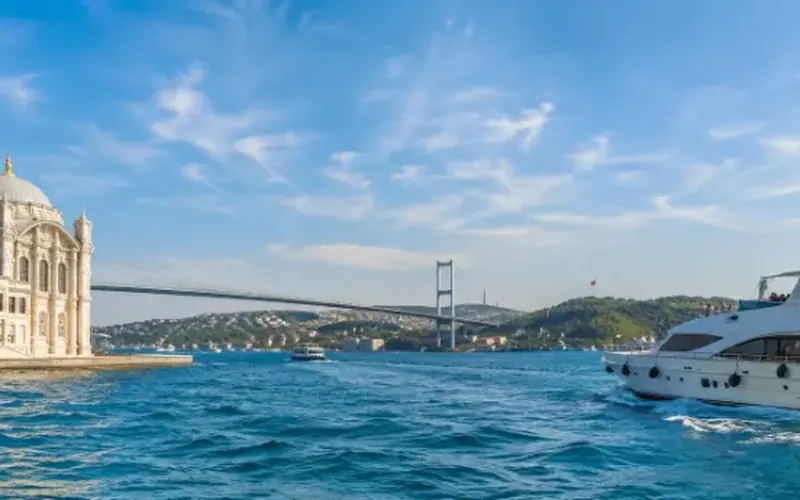
 Dinner, sunset and day cruises between Europe and Asia.See cruises bosporuscruise.com
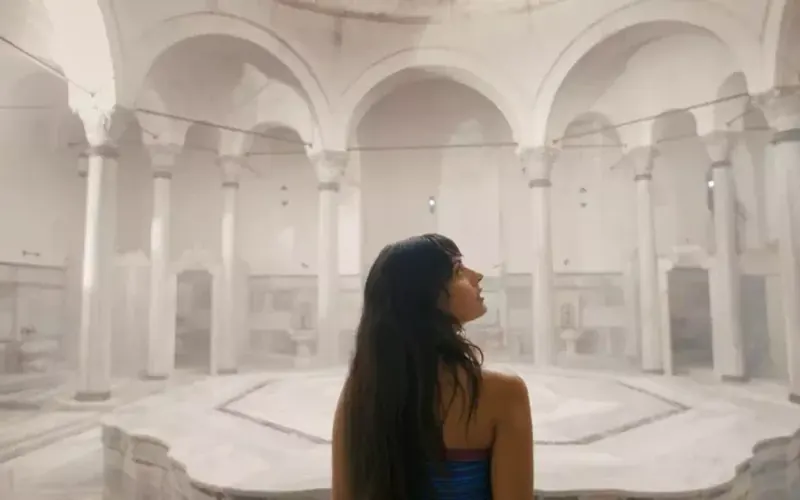
 Historic Turkish baths in the old city — hand-picked hamams, booked direct.Book a hamam istanbulhamam.com
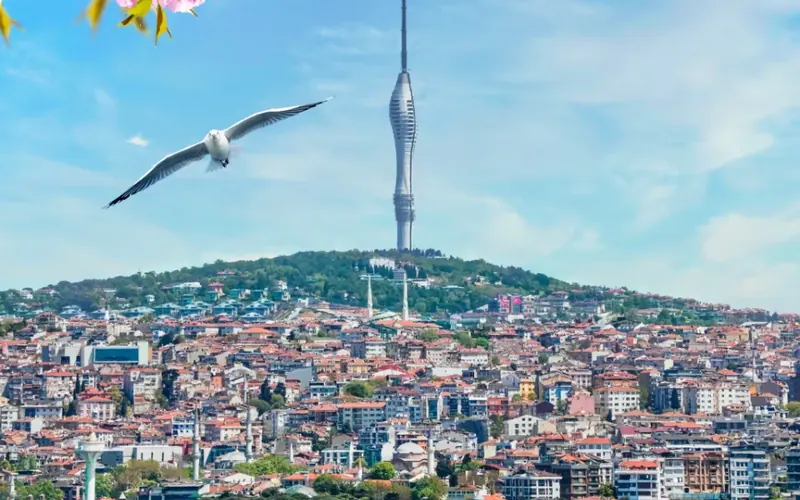
 Istanbul’s tallest viewpoint: both continents from 369 metres.Get tickets camlicatower.com
 Free audio guides in 15 languages, safe routes and local tips — plus 5% off GetYourGuide.Open the free guide localada.com
Nearby
All destinations
Kayseri
Kayseri, ancient Mazaca and Caesarea, at the foot of Mount…
Niğde
Niğde travel guide: Gümüşler Monastery, the Alaaddin Mosque, Hüdavend Hatun…
Bartın
Bartın travel guide: Amasra's harbours and castle, the Roman Kuşkayası…
Erzincan
Erzincan travel guide: Kemaliye and the Dark Canyon, Urartian Altıntepe,…