
Kahramanmaraş: Ice Cream, Dulkadirid Maraş and a City Rebuilt
On this page
- What is Kahramanmaraş?
- How do you get to Kahramanmaraş?
- Where should you stay in Kahramanmaraş?
- What type of climate does Kahramanmaraş have?
- When is the best time to visit Kahramanmaraş?
- What is the history of Kahramanmaraş?
- What is Kahramanmaraş famous for?
- What are the historical places of Kahramanmaraş?
- What are the best things to do in Kahramanmaraş?
- What are the best places to visit in Kahramanmaraş?
- What is the traditional food of Kahramanmaraş?
- What should you buy in Kahramanmaraş?
- Frequently asked questions about Kahramanmaraş
- What do the official records say about Kahramanmaraş?
Key facts: Kahramanmaraş
- UNESCO Tentative List: The Eshab-ı Kehf complex at Afşin, on the list since 2015 (UNESCO); not yet inscribed.
- Region: The north-eastern corner of the Mediterranean Region, where it meets Central and Eastern Anatolia; the city lies at about 610 m below Ahır Dağı.
- Best known for: Maraş ice cream and red pepper, the Dulkadirid monuments of the old city, the 1920 resistance that gave it the title “Kahraman”, and the epicentres of the February 2023 earthquakes.
What is Kahramanmaraş?
Kahramanmaraş is a province and city in south-central Türkiye, at the point where the Mediterranean Region meets the mountains of Central and Eastern Anatolia. The city, usually just called Maraş, spreads across the plain below Ahır Dağı, while the province runs north through the Taurus ranges to the high plateaus of Göksun, Elbistan and Afşin.
Most Turks know it for its food: the stretchy, beaten Maraş dondurması (ice cream), the flaked Maraş red pepper and tarhana. Its history is long too. Maraş was the capital of the Neo-Hittite kingdom of Gurgum, the Roman city of Germanicia and the seat of the Dulkadirid emirate, and in 1920 its people drove out the French occupying force, which is why the city was renamed Kahramanmaraş, “Heroic Maraş”, in 1973.
On 6 February 2023 two earthquakes struck the province within hours: a magnitude 7.8 quake centred near Pazarcık in the early morning and a magnitude 7.5 quake centred near Elbistan in the afternoon. They devastated Kahramanmaraş city and much of the wider region, from Hatay to Malatya. Since then the city has been largely rebuilt and many of its monuments restored: the Ulu Mosque reopened in March 2026 and the castle in September 2026. Visitors will find a city still recovering, and a warm welcome.
Places to visit in Kahramanmaraş
Kahramanmaraş Castle
Kahramanmaraş Castle: the city-centre citadel with Late Hittite roots, its role in…
Kahramanmaraş Ulu Mosque
Kahramanmaraş Ulu Mosque: the 15th-century Dulkadirid great mosque, its role in 1920,…
Eshab-ı Kehf Complex
Eshab-ı Kehf at Afşin: the Seven Sleepers cave and its Byzantine, Seljuk,…
How do you get to Kahramanmaraş?
By air: Kahramanmaraş Airport (KCM) is about 5 km from the city centre. Turkish Airlines flies from Istanbul Airport, Pegasus from Sabiha Gökçen and AJet from Ankara. There are no international flights, so overseas visitors connect in Istanbul or Ankara. Gaziantep Airport, to the south-east, has more flights and is a useful alternative.
By road: Kahramanmaraş is linked by fast roads to Gaziantep, Adana and Osmaniye, and coaches run from Istanbul, Ankara and most cities of the south and east. Within the province, minibuses and coaches serve Göksun, Elbistan, Afşin, Pazarcık and Andırın.
Getting around: The castle, Ulu Mosque, Taş Medrese and market streets are walkable in the centre. For Afşin, the caves and the plateaus, you need a car or a tour.
Where should you stay in Kahramanmaraş?
Stay in Kahramanmaraş city, which has business and mid-range hotels, many of them new or rebuilt since 2023. Choose a central location if you want to walk to the castle and the Ulu Mosque. For the Eshab-ı Kehf complex, either make a long day trip or stay in Afşin or Elbistan. Check recent reviews before booking, as the hotel landscape has changed since the earthquakes.
Book a Kahramanmaraş tour
−5% Istambul readers save 5% on every tour below — applied at checkout.
Partner listings via GetYourGuide · free cancellation on most
What type of climate does Kahramanmaraş have?
The 2002 inventory describes Kahramanmaraş as lying in the Mediterranean climate zone but bordering the climate belts of Central and Eastern Anatolia, and notes that it is cooler than the provinces further south. In practice the city has hot, dry summers and cool, wet winters, while the northern districts such as Göksun, Elbistan and Afşin, on high plateaus, have cold, snowy winters. The province is rich in rivers and springs.
When is the best time to visit Kahramanmaraş?
Spring (April–June) and autumn (September–October) are best for the city and its monuments. Summer is the season for the plateaus, which the inventory says serve as a second summer home for people from Adana, Hatay and Mersin from late spring onwards. Winter brings skiing at Yedikuyular on Ahır Dağı above the city.
The city celebrates the anniversary of its liberation on 12 February every year. Late summer and autumn are the season for karakucak wrestling festivals in Afşin, Göksun and the city.
What is the history of Kahramanmaraş?
In the early first millennium BC, Maraş, then called Marqasi (Markasi), was the capital of Gurgum, one of the Neo-Hittite kingdoms that succeeded the Hittite Empire; Hittite-period finds from that era are among the treasures of the city museum. Under Rome the city was renamed Germanicia, after the general Germanicus, and in the Byzantine period it was known as Marasion. Excavations since 2007 in the Dulkadiroğlu district have revealed Roman and early Byzantine villas of Germanicia with floor mosaics of the 3rd to 7th centuries.
From the 7th century onwards Maraş stood on the frontier between Byzantium and the Arab caliphates and changed hands many times. After the Seljuks and the Crusaders, it became the seat of the Dulkadirid emirate, a Turkmen dynasty whose mosques, madrasas and baths still define the old city. The Ottomans took Maraş in 1515 and made it the centre of the province of Zulkadriye in 1522.
After the First World War, British and then French troops occupied the city. French forces entered on 30 October 1919, and the people of Maraş, led by figures such as Sütçü İmam, rose against them; after weeks of street fighting the French withdrew in February 1920. In recognition, the Turkish parliament renamed the city Kahramanmaraş on 7 February 1973.
What is Kahramanmaraş famous for?
- Maraş ice cream. Made with goat’s milk and salep, beaten with long paddles until it becomes thick and elastic. The inventory calls it unrivalled in the world.
- Maraş pepper. The dried red pepper flakes used across Turkish cooking.
- Crafts. Hand embroidery, oya lace, gold and silver thread work (sim sırma), copperwork and wood carving.
- The 1920 resistance. The origin of the city’s “Heroic” title.
- The 2023 earthquakes. Both main shocks were centred in this province.
What are the historical places of Kahramanmaraş?
Kahramanmaraş Castle. The citadel on a mound in the city centre, with Late Hittite foundations, restored after 2023 and reopened on 16 September 2026.
Ulu Mosque and Taş Medrese. The 15th-century Dulkadirid great mosque, reopened on 16 March 2026, and the stone madrasa beside it, built in the name of the daughter of Alaüddevle Bey.
Hatuniye Mosque. In the Kurtuluş neighbourhood, built in 1519.
Kahramanmaraş Archaeology Museum. The city’s first museum was founded in 1947 in the Taş Medrese, moved to the castle in 1961 and to its present building on Azerbaycan Bulvarı in 1975. Its halls cover the Palaeolithic to the Byzantine period, with Hittite-period finds, material from the Domuztepe excavations, the skeleton of an Anatolian elephant and mosaics from Germanicia. It was open to visitors in 2025.
Germanicia. The Roman and Byzantine city found in 2007 in the Dulkadiroğlu district, known for house mosaics showing daily life, animals and geometric designs. Some mosaics are shown in the museum and others in a display area on site; check locally which areas are open.
Eshab-ı Kehf Complex. The cave of the Seven Sleepers near Afşin, with Byzantine, Seljuk, Dulkadirid and Ottoman buildings.
Hurman Castle. On a sheer rock north of the Hurman stream at Marabız village, Afşin. Its date is unknown, but its technique suggests the Byzantine period, and it contains water and food stores, soldiers’ quarters and a church.
Ceyhan Bridge. On the old Kahramanmaraş–Göksun road, thought to date from the 16th century.
What are the best things to do in Kahramanmaraş?
Eat ice cream in Maraş. Watch it being beaten and cut with a knife, and try it with baklava or on its own.
Go up to the plateaus. The inventory names Başkonuş, Yavşan and Tekir as the most worth seeing, among many others such as Karagöl, Yedikuyu, Binboğa and Bertiz, all known for clean air and cold springs. Başkonuş is also the end of a trekking route from the city.
Walk the mountains. The inventory lists Ayşepınarı–Karbasan, Türkmenler–Hacınınoğlu, Ilıca–Suçatı, Suçatı–Bulutoğlu, the summit of Engizek and Kahramanmaraş–Başkonuş as good trekking routes.
Explore the caves. Döngel Cave, 57 km from the city on the Kayseri road, was inhabited in prehistory, and the Döngel stream runs through it in a large cascade. Bulut Deliği, south-west of Pazarcık, is a mature fossil cave with fine stalactites, stalagmites and columns.
Ski at Yedikuyular. The ski centre on the slopes of Ahır Dağı is close enough to the city for a day on the snow.
Watch karakucak wrestling. The traditional style of wrestling, held at festivals in Afşin, Göksun and the city.
What are the best places to visit in Kahramanmaraş?
Kahramanmaraş Castle. The restored citadel, the best viewpoint in the city.
Kahramanmaraş Ulu Mosque. The Dulkadirid great mosque, back in use since March 2026.
Eshab-ı Kehf Complex. The cave of the Seven Sleepers at Afşin, on UNESCO’s Tentative List.
Kahramanmaraş Archaeology Museum. Hittite-period finds, Germanicia mosaics and the Anatolian elephant.
Yedikuyular and the plateaus. Snow in winter, cool air in summer.
What is the traditional food of Kahramanmaraş?
- Maraş dondurması: goat’s-milk ice cream thickened with salep, beaten until elastic.
- Tarhana: Maraş tarhana is made from yoghurt and wheat, dried in thin sheets, and eaten as soup or broken and eaten as a snack.
- Maraş biberi: sun-dried red pepper flakes, sprinkled on almost everything.
What should you buy in Kahramanmaraş?
Maraş pepper flakes and dried tarhana travel well. The inventory highlights the province’s handicrafts: embroidery, oya, sim sırma (gold and silver thread work), jewellery, copper and wood carving.



Frequently asked questions about Kahramanmaraş
Is Kahramanmaraş safe to visit after the 2023 earthquakes?
Yes. The city has been largely rebuilt, transport and hotels are running, and key monuments such as the Ulu Mosque and the castle have reopened after restoration.
What is Kahramanmaraş famous for?
Maraş ice cream, Maraş red pepper and tarhana, its Dulkadirid mosques, and the 1920 resistance against the French that gave it the title “Kahraman” (Heroic).
What is the nearest airport?
Kahramanmaraş Airport (KCM), about 5 km from the centre, with direct flights from Istanbul Airport, Sabiha Gökçen and Ankara. Gaziantep Airport is an alternative.
Why is it called Kahramanmaraş?
In recognition of the city’s resistance to French occupation in 1919–20, the Turkish parliament renamed Maraş “Kahramanmaraş” (Heroic Maraş) on 7 February 1973.
What makes Maraş ice cream different?
It is made with goat’s milk and salep and beaten with paddles, which makes it dense, stretchy and slow to melt.
Where were the 2023 earthquakes centred?
Both main shocks of 6 February 2023 were in Kahramanmaraş province: magnitude 7.8 near Pazarcık and magnitude 7.5 near Elbistan.
What do the official records say about Kahramanmaraş?
Kahramanmaraş and its surroundings hold a special place in culture and tourism. Although Kahramanmaraş is in the Mediterranean climate belt, it borders the climate belts of Central and Eastern Anatolia. It is cool compared with our southern provinces. There are many plateaus in the province, and among them Başkonuş, Yavşan and Tekir plateaus are worth seeing. It is rich in rivers and springs, and this creates a great tourism potential for Kahramanmaraş.
In the province, hand embroidery, oya lace, sim sırma, jewellery, and copper and wood carving are crafts that stir everyone’s feelings. Its famous red pepper and its ice cream are unrivalled in the world. (Ministry of Culture and Tourism, Kahramanmaraş Provincial Tourism Inventory, 2002)
Ready to see Kahramanmaraş?
Hand-picked tours with good reviews and clear prices.
Partner listings via GetYourGuide · free cancellation on most
Before or after: Istanbul
Most trips start or end in Istanbul. Our own experiences there:

 Dinner, sunset and day cruises between Europe and Asia.See cruises bosporuscruise.com

 Historic Turkish baths in the old city — hand-picked hamams, booked direct.Book a hamam istanbulhamam.com

 Istanbul’s tallest viewpoint: both continents from 369 metres.Get tickets camlicatower.com

 Free audio guides in 15 languages, safe routes and local tips — plus 5% off GetYourGuide.Open the free guide localada.com
Nearby
All destinations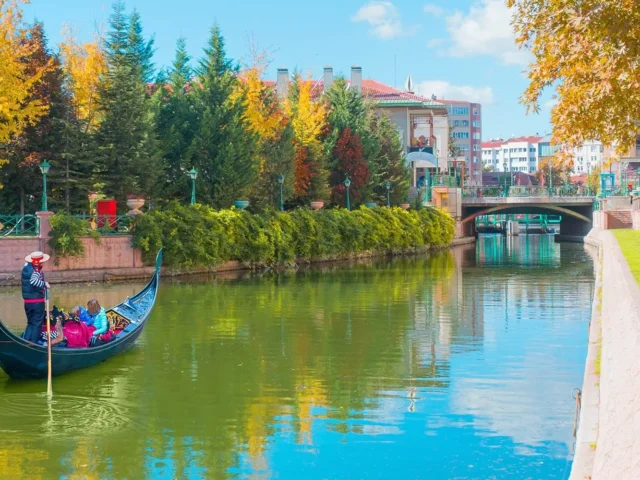
Eskişehir
Eskişehir travel guide: the Ottoman houses of Odunpazarı, meerschaum, Sazova…
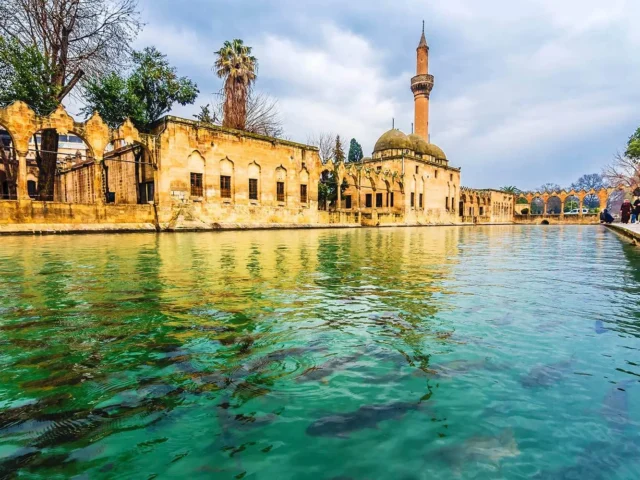
Şanlıurfa
Şanlıurfa travel guide: Göbeklitepe, Balıklıgöl, Harran’s beehive houses, Halfeti, the…

Ankara
Ankara, Türkiye's capital: Anıtkabir, the Museum of Anatolian Civilizations, and…
Kırklareli
Kırklareli travel guide: Dupnisa Cave, İğneada floodplain forests, Kıyıköy, Vize…
