
Harput: The Old Fortress Town Above Elazığ
On this page
Key facts: Harput
- What it is: The old fortress town on the hill above Elazığ, seat of the region for millennia, with a castle, Artuqid and Akkoyunlu mosques and a Syriac church.
- Where: On the hill north of Elazığ city centre, about 5 km from the centre, Elazığ province.
- Period: Settled since at least 2000 BC; Urartian fortress; Artuqid principality in the 12th century; provincial seat until 1834.
What is Harput?
Harput is the old town on the hilltop above Elazığ, about 5 km by road from the modern city and well above it. For most of recorded history this was the capital of the region: an Urartian fortress, the stronghold of Byzantine and Artuqid rulers, an Akkoyunlu and Ottoman town. In the 19th century the administration moved down to the plain, the town below grew into Elazığ, and Harput slowly emptied.
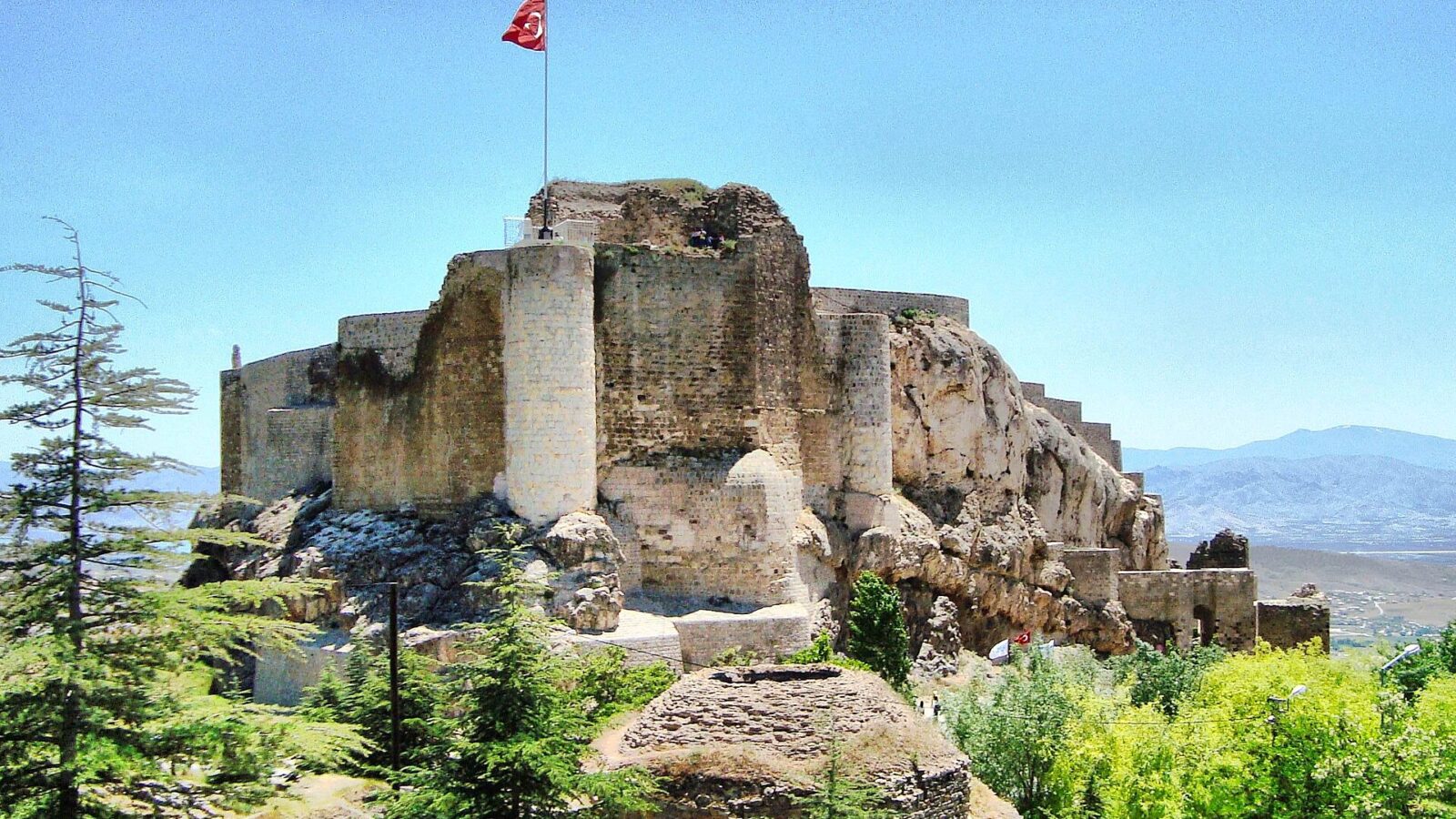
Today Harput is a quiet district of Elazığ, part open-air museum and part park. Its castle, mosques, tombs and church stand among restored houses, tea gardens and open ground where whole quarters once stood. On a clear day the view takes in the Elazığ plain, the Keban reservoir and the mountains round Lake Hazar.
How do you get to Harput?
Harput is about 5 km from Elazığ city centre by road, a short taxi ride or a ride on the city buses that climb the hill. Elazığ Airport (EZS), about 12 km from the city, has daily flights from Istanbul and Ankara, and long-distance trains link Elazığ with Ankara. Buzluk Cave is on the north-eastern side of the same hill, 11 km from Elazığ.
Tours in Anatolia
−5% Istambul readers save 5% on every tour below — applied at checkout.
Partner listings via GetYourGuide · free cancellation on most
When is the best time to visit Harput?
From May to October. Harput is cooler than the plain in summer, and many people from Elazığ come up for the evening breeze and the view; late afternoon into sunset is the best time. In winter the hill is often under snow and much quieter. Avoid the mosques at prayer times.
What is the history of Harput?
The 2002 inventory gives the Hurrians, who settled in eastern Anatolia from around 2000 BC, as Harput’s oldest inhabitants, and one proposed origin of the name is a Hurrian word for “road”. From the 12th to the 7th century BC the hill was a fortress of Urartu. In the Hellenistic period the region was the kingdom of Sophene, and later Rome, the Sasanians, Byzantium and the Arab caliphate fought over it.
Turkish rule began after the Battle of Malazgirt in 1071; the Çubukoğulları took Harput in 1085. In the early 12th century the Artuqid Belek captured it, and under the Artuqids it was the capital of an independent principality until 1234. Fahrettin Karaaslan, who ruled from 1148 to 1174, built the Great Mosque. After the Seljuks came the Ilkhanids, the Dulkadir beylik and the Akkoyunlu; Uzun Hasan took the city in 1465, and his mother Sara Hatun built a mosque here the same year. The Ottomans took Harput after the Battle of Çaldıran in 1514, and their first census in 1518 counted about 6,000 inhabitants.
From the 17th century the town declined. In 1834 the governor moved to Mezre on the plain, which became Mamuretülaziz and later Elazığ. Harput remained a large town with a strong Armenian community: in the second half of the 19th century it had six Armenian churches, and American missionaries founded schools that became Euphrates College. In 1915 the Armenians of the province were deported and massacred. By the 1930s and 1940s Harput was largely a ruin; restoration of its monuments began in the 1950s.
What is Harput famous for?
- The Milk Castle, Harput’s castle, with its legends.
- The leaning minaret of the Great Mosque of 1156.
- Harput music, a classical tradition of songs and melodies sung in the Harput dialect.
- Food. Harput köftesi, among other dishes, carries the town’s name across Türkiye.
- Legends. A sleeping maiden and a giant are said to lie inside the castle.
What can you see at Harput?
Harput Castle. The fortress on a rock outcrop at the south-east of the old town.
Great Mosque (Ulu Cami). The Artuqid mosque of 1156 with its leaning brick minaret.
Church of the Virgin Mary. The inventory describes it as standing on the left side of Harput Castle, with the rock of the castle forming its back walls, so that it looks as though it is buried in the cliff. It is also called the Red Church, the Syriac Church and the Jacobite Church. It is the only church still standing in Harput and was renovated in the early 2000s.
Sara Hatun Mosque. A small mosque built in 1465 by Sara Hatun, mother of Uzun Hasan, renovated in 1585 and 1843, with a plain niche mihrab and a finely carved stone minbar.
Cimşit Hamamı. The 16th-century bathhouse attached to the Sara Hatun Mosque, built by Cemşit Bey, a cavalry officer of Selim I.
Arap Baba Mescidi and Tomb. A small shrine much visited by local people, where a mummified body is kept in the tomb.
Kurşunlu, Alacalı and Ağa mosques. The lead-domed Ottoman Kurşunlu Mosque, the small Artuqid Alacalı Mosque with its 19th-century wooden ceiling, and the Ağa Mosque at the entrance to the town, of which only the slender minaret stands.
The view. Walk to the edge of the hill near the castle for the panorama over the plain.



Frequently asked questions about Harput
How far is Harput from Elazığ?
About 5 km by road, uphill from the city centre. Taxis and city buses make the trip.
Why did people leave Harput?
In 1834 the governor moved the administration to Mezre on the plain, which became Elazığ. The town declined further after the deportation and massacre of its Armenian population in 1915.
What is there to see in Harput?
The castle, the Great Mosque of 1156 with its leaning minaret, the Sara Hatun Mosque, the Church of the Virgin Mary, the Arap Baba shrine and views over the plain.
Is there a church in Harput?
Yes. The Syriac Orthodox Church of the Virgin Mary, built against the castle rock, is the only church still standing in Harput.
When is the best time to visit Harput?
Late afternoon from May to October, when it is cooler than the plain and the sunset view is best.
What do the official records say about Harput?
The mosque in Harput shows traces of various building periods. It is small and rectangular in plan. Although it was built in the Artuqid period, it underwent a major repair in the 19th century. The woodwork of the ceiling belongs to the repair of that period.
The Church of the Virgin Mary stands on the left side of Harput Castle. Because its back walls are formed by the rock masses of the castle, the church looks as if it were buried in the castle’s crags. The church is also known by the names Red Church, Syriac Church and Jacobite Church. (Ministry of Culture and Tourism, Elazığ Provincial Tourism Inventory, 2002)
Main photo: HALUK COMERTEL, CC BY 3.0, via Wikimedia Commons.
Ready to see Harput?
Hand-picked tours with good reviews and clear prices.
Partner listings via GetYourGuide · free cancellation on most
Before or after: Istanbul
Most trips start or end in Istanbul. Our own experiences there:

 Dinner, sunset and day cruises between Europe and Asia.See cruises bosporuscruise.com

 Historic Turkish baths in the old city — hand-picked hamams, booked direct.Book a hamam istanbulhamam.com

 Istanbul’s tallest viewpoint: both continents from 369 metres.Get tickets camlicatower.com

 Free audio guides in 15 languages, safe routes and local tips — plus 5% off GetYourGuide.Open the free guide localada.com
Nearby
All destinationsBuzluk Cave
Buzluk Cave near Harput, 11 km from Elazığ: a natural…
Harput Castle
Harput Castle, the Milk Castle above Elazığ: Urartian origins, Artuqid…
Harput Great Mosque
Harput Great Mosque (Ulu Cami), built in 1156 by the…
Lake Hazar
Lake Hazar near Elazığ: a 22 km rift lake at…
