
Harput Castle: The Milk Castle Above Elazığ
On this page
- What is Harput Castle?
- How do you get to Harput Castle?
- When is the best time to visit Harput Castle?
- What is the history of Harput Castle?
- What is Harput Castle famous for?
- What can you see at Harput Castle?
- Frequently asked questions about Harput Castle
- What do the official records say about Harput Castle?
Key facts: Harput Castle
- What it is: A medieval fortress on a rock outcrop at Harput, with inner and outer sections, known locally as Süt Kalesi, the “Milk Castle”.
- Where: South-east edge of the old town of Harput, about 5 km from Elazığ city centre, Elazığ province.
- Period: Attributed to the Urartians; repaired by the Artuqids (1205), the Dulkadir (14th century), the Akkoyunlu (1465) and the Ottomans.
What is Harput Castle?
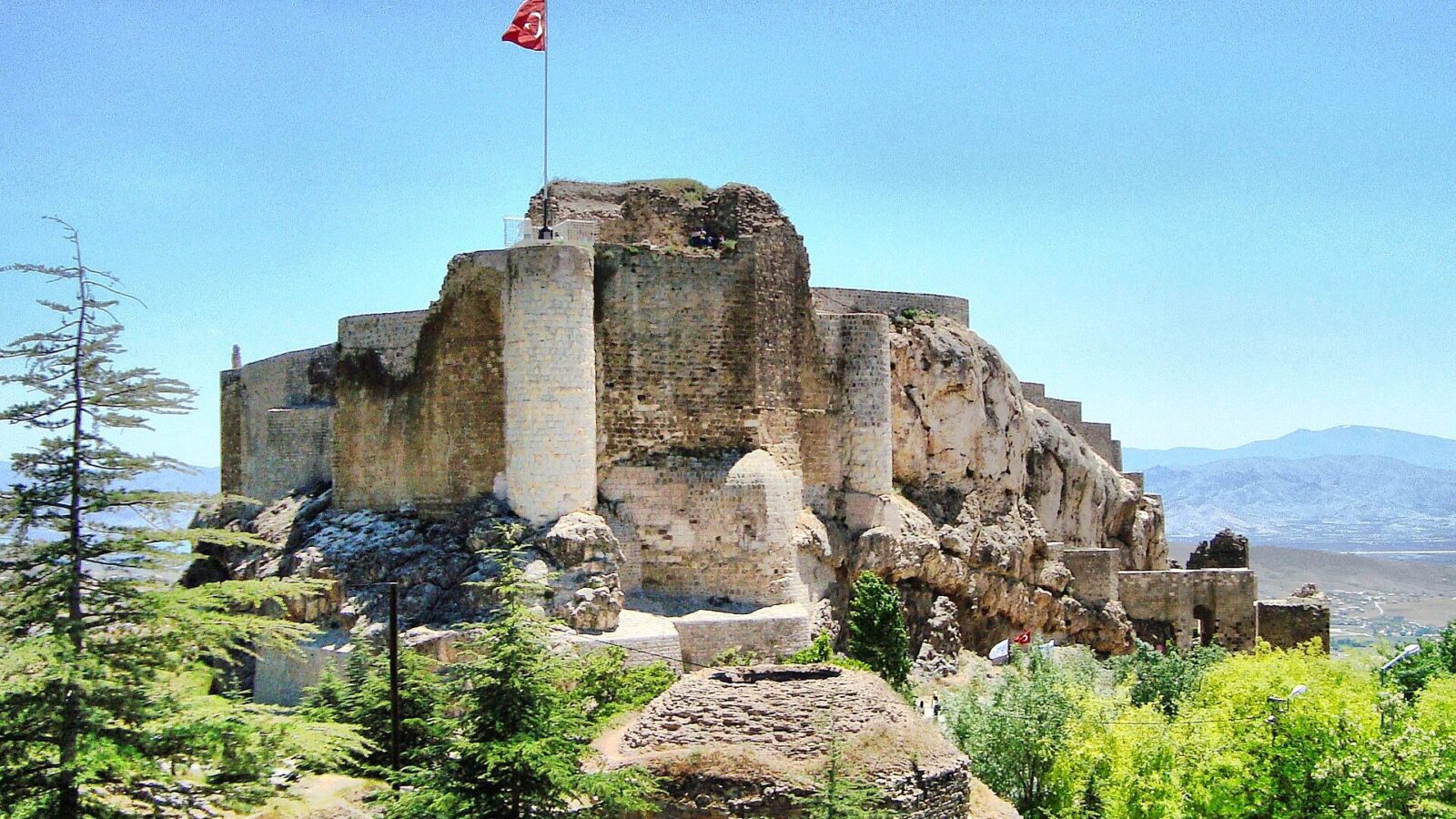
Harput Castle (Harput Kalesi) is the fortress at the south-east of the old town of Harput, built on a rock outcrop that dominates the Elazığ plain. It is rectangular in plan, divided into an inner and an outer castle, and its towers still stand above the cliffs. The interior has filled up over the centuries.
Locally it is called Süt Kalesi, the Milk Castle, after a legend about how its mortar was made. It is the symbol of Harput and of Elazığ, and from its walls you can see the whole plain to the mountains around Lake Hazar.
How do you get to Harput Castle?
Take a taxi or city bus up the hill from Elazığ to Harput, about 5 km, and walk to the castle from the centre of the old town. Elazığ Airport (EZS), about 12 km from the city, has daily flights from Istanbul and Ankara. The ground around the castle is uneven, so wear sturdy shoes. Excavation and restoration work has been going on at the castle in recent years, and parts may be fenced off.
Tours in Anatolia
−5% Istambul readers save 5% on every tour below — applied at checkout.
Partner listings via GetYourGuide · free cancellation on most
When is the best time to visit Harput Castle?
Late afternoon between May and October, when the light falls across the plain and the hilltop is cooler than the city. In winter the castle is often snowbound and the paths can be slippery.
What is the history of Harput Castle?
The 2002 inventory states that the castle is known to have been built in the Urartian period, and that historical documents record it passing to Rome, Byzantium and the Arabs. After the Byzantines took Harput again in the 10th century it became a military base with an imposing fortress.
In the early 12th century the Artuqid Belek Gazi took the castle. Its most famous episode came soon after: Belek held the crusader leaders Joscelin of Courtenay and King Baldwin II of Jerusalem prisoner here in 1123, and an Armenian raid briefly seized the fortress to free them before Belek retook it.
The inventory lists the known repairs since then: in 1205 by the Artuqid ruler Nizamettin İbrahim, in 1370 by Dulkadiroğlu İbrahim and in 1465 by the Akkoyunlu ruler Bahadır Han (Uzun Hasan), while the masonry technique in the walls shows that it was repaired again in the Ottoman period.
What is Harput Castle famous for?
The Milk Castle legend. According to the story told in Harput, during the building of the castle there was a drought, but the animals gave plenty of milk, so the mortar was mixed with milk instead of water. Locals credit this with the castle’s long life.
Other legends. The provincial culture directorate records several more. Inside the castle, it is said, there are water tunnels, and in one of them a jug hangs from a single thread; as long as the jug stays up, the castle will not fall. In a chamber a beautiful girl lies on a throne above a treasure: once a year she wakes and asks whether the castle has fallen, whether the Dere Hamamı has collapsed and whether the mule has given birth. And a giant called Cınıvız, as long as the fortress itself, lies inside in a commander’s armour and helmet; once a year he lifts his head to ask whether the end of the world has come, and finding no answer, lies down again.
The crusader prisoners of 1123.
The view over the Elazığ plain.
What can you see at Harput Castle?
The walls and towers. The inventory describes the castle as rectangular, built in two parts, inner and outer, with its imposing towers still standing.
The rock. The castle uses the natural cliff as part of its defences; walk around the outside to see how the walls grow out of the rock.
The Church of the Virgin Mary. On the left side of the castle, the Syriac church is built against the castle rock, which forms its back wall.
The view. From the edge of the castle hill you look straight down onto the Elazığ plain, with the Keban reservoir to the north and the Hazar Baba massif to the south-east.
Nearby. The Great Mosque, the Sara Hatun Mosque and the Arap Baba shrine are a short walk away, and Buzluk Cave is on the other side of the hill.



Frequently asked questions about Harput Castle
Why is Harput Castle called the Milk Castle?
A legend says that during a drought the builders mixed the mortar with milk instead of water. Locals credit this with the castle’s long survival.
Who built Harput Castle?
It is attributed to the Urartians. It was repaired by the Artuqids in 1205, the Dulkadir in 1370, the Akkoyunlu in 1465 and later the Ottomans.
Where is Harput Castle?
At the south-east edge of the old town of Harput, about 5 km up the hill from Elazığ city centre.
What happened at Harput Castle in 1123?
The Artuqid Belek held King Baldwin II of Jerusalem and Joscelin of Courtenay prisoner here; an Armenian raid briefly seized the castle before Belek retook it.
Can you visit Harput Castle?
Yes, the walls and the view are open to visitors, though excavation and restoration work may close some parts.
What do the official records say about Harput Castle?
The castle, in a position dominating the Elazığ plain south-east of the historic city of Harput, is known to have been built in the Urartian period. Historical documents show that it passed into the hands of Rome, Byzantium and the Arabs. Since Artukoğlu Belek Gazi took the castle in 1115, it is known to have been repaired for the first time in 1205 by the Artuqid ruler Nizamettin İbrahim, in 1370 by Dulkadiroğlu İbrahim and in 1465 by the Akkoyunlu ruler Bahadır Han, and the masonry technique of the castle walls shows that it was repaired again in the Ottoman period.
The rectangular castle was built in two sections, the inner castle and the outer castle. The interior of the castle is filled in. Its imposing towers are still standing. Various legends are told about the castle. According to one, milk was used instead of water when the mortar was prepared during its construction, and for this reason one of the names of Harput Castle is said to be Süt Kalesi, the Milk Castle. (Ministry of Culture and Tourism, Elazığ Provincial Tourism Inventory, 2002)
Main photo: HALUK COMERTEL, CC BY 3.0, via Wikimedia Commons.
Ready to see Harput Castle?
Hand-picked tours with good reviews and clear prices.
Partner listings via GetYourGuide · free cancellation on most
Before or after: Istanbul
Most trips start or end in Istanbul. Our own experiences there:

 Dinner, sunset and day cruises between Europe and Asia.See cruises bosporuscruise.com

 Historic Turkish baths in the old city — hand-picked hamams, booked direct.Book a hamam istanbulhamam.com

 Istanbul’s tallest viewpoint: both continents from 369 metres.Get tickets camlicatower.com

 Free audio guides in 15 languages, safe routes and local tips — plus 5% off GetYourGuide.Open the free guide localada.com
Nearby
All destinationsBuzluk Cave
Buzluk Cave near Harput, 11 km from Elazığ: a natural…
Lake Hazar
Lake Hazar near Elazığ: a 22 km rift lake at…
Harput
Harput, the old fortress town above Elazığ: castle, Great Mosque…
Harput Great Mosque
Harput Great Mosque (Ulu Cami), built in 1156 by the…
