
Ordu: Hazelnut Capital of the Black Sea
On this page
- What is Ordu?
- How do you get to Ordu?
- Where should you stay in Ordu?
- What type of climate does Ordu have?
- When is the best time to visit Ordu?
- What is the history of Ordu?
- What is Ordu famous for?
- What are the historical places of Ordu?
- What are the best things to do in Ordu?
- What are the best places to visit in Ordu?
- What is the traditional food of Ordu?
- What should you buy in Ordu?
- Frequently asked questions about Ordu
- What do the official records say about Ordu?
Key facts: Ordu
- Region: Central-eastern Black Sea coast of Türkiye, between Samsun to the west and Giresun to the east.
- Best known for: Hazelnuts (Ordu is Türkiye’s largest producer), the Boztepe cable car, Cape Jason, long beaches around Ünye and summer yaylas such as Perşembe and Çambaşı.
- Ancient name: Kotyora (Cotyora), where Xenophon’s Ten Thousand rested for 45 days around 400 BC.
What is Ordu?
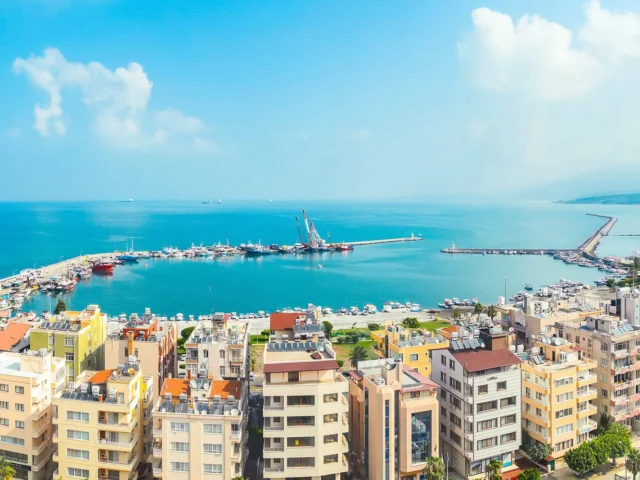
Ordu is a province on the Black Sea coast and the name of its capital, a port city of a quarter of a million people stretched along a bay at the foot of a steep green hill. That hill is Boztepe, and the cable car that climbs it from the city centre is the first thing most visitors do.
The province is a strip of coast with forested mountains close behind it. Almost every slope below the forest line is planted with hazelnuts: Ordu grows more of them than any other province in Türkiye, and hazelnut orchards cover most of its farmland. Above the orchards are the yaylas, summer pastures such as Perşembe and Çambaşı, where families from the coast still spend July and August.
The 2002 provincial inventory is frank that Ordu has fewer monuments than some of its neighbours, and says the province owes its value to the Black Sea, calm in summer and rough with foaming waves in winter, and to its coast, yaylas and forests. What it does have is well worth seeing: the Paşaoğlu Mansion, the 19th-century church on Cape Jason, and Ünye Castle on its volcanic hill.
Places to visit in Ordu
Boztepe
Boztepe, the hill above Ordu: the cable car opened in 2012, tea…
Paşaoğlu Mansion
Paşaoğlu Mansion in Ordu: an 1896 stone house built with Ünye stone…
Cape Jason
Cape Jason (Yason Burnu) near Perşembe, Ordu: a 19th-century church and lighthouse…
Ünye Castle
Ünye Castle near Ünye, Ordu: a Pontic and Trebizond fortress on an…
Perşembe Plateau
Perşembe Yaylası in Aybastı, Ordu: a 1,350 m summer pasture famous for…
How do you get to Ordu?
By air: Ordu-Giresun Airport (OGU), built on land reclaimed from the sea off Gülyalı and opened in 2015, is about 19 km east of Ordu city centre. Turkish Airlines flies from Istanbul Airport; AJet and Pegasus fly from Sabiha Gökçen, and AJet from Ankara. In summer there are seasonal flights to and from Germany. Samsun Çarşamba Airport, west of Ünye, is an alternative for the western half of the province.
By road: The Black Sea coastal highway runs the length of the province, linking Ünye, Fatsa, Ordu and Giresun, and continuing west to Samsun and east to Trabzon. Intercity coaches arrive from Istanbul, Ankara and most large cities. Ünye is 76 km west of Ordu.
Getting around: Minibuses link the coastal towns frequently. For the yaylas, Cape Jason and inland villages, a car gives you much more freedom.
Where should you stay in Ordu?
Ordu city is the best base, with hotels along the seafront and in the centre, close to the cable car and the Paşaoğlu Mansion. Ünye, at the western end of the province, is a good alternative for beach time: it has its own hotels and is close to Uzunkum beach and Ünye Castle. In July and August, guesthouses and rented houses open on the yaylas, especially at Çambaşı and Perşembe, for those who want to stay up in the cool.
Tours in Anatolia
−5% Istambul readers save 5% on every tour below — applied at checkout.
Partner listings via GetYourGuide · free cancellation on most
What type of climate does Ordu have?
Ordu has a humid, mild climate. Summers are warm and humid, winters cool, and rain falls throughout the year, with the heaviest totals in autumn and winter; the annual average is about 1,070 mm. Snow on the coast is occasional and rarely lasts. Sea temperatures range from about 8°C in winter to about 20°C in late summer. The yaylas, at 1,300–1,900 m, are much cooler, and Çambaşı has a ski centre in winter.
When is the best time to visit Ordu?
June to September. The sea is warm enough for swimming from July, the yaylas are open, and most of the summer festivals take place, including the highland festivals at Perşembe and Çambaşı. Late August and September are hazelnut harvest time, when the orchards are full of pickers and the nuts are spread out to dry. Spring brings green slopes and fewer visitors; winter is quiet on the coast and snowy in the mountains.
What is the history of Ordu?
Ordu began as Kotyora, a Greek colony on the coast. Xenophon, who passed through around 400 BC with the Ten Thousand, describes it as a colony of Sinope and records that the army rested there for 45 days. The 2002 inventory places the remains of Cotyora on the shore 2 km from the city centre on the Samsun road, now a registered archaeological site; research there found that the fort itself was a small Byzantine watch post of the 11th century.
The coast passed from the Kingdom of Pontus to Rome and Byzantium, then to the Empire of Trebizond. Inland, the Danishmendids and Seljuks held parts of the region, and the Ottomans took the coast in 1461. The modern city grew from Bayramlı, an Ottoman military outpost about 5 km west of today’s centre, and the name was changed to Ordu, Turkish for “army”, in 1869. Ordu became a province in its own right in 1921, separated from Trabzon.
Older traces survive inland. The 2002 inventory describes Kurul Kayası, 20 km from the city in Bayadı village, a settlement on a sharp rock with underground galleries, walls two metres thick and a cistern carved 8 m deep into the bedrock, used as early as the 5th century BC. At Turnalık Yaylası, it notes remains of fire-pits and ironworking attributed to the Chalybes, the iron-working people of the ancient Black Sea coast.
What is Ordu famous for?
- Hazelnuts. Ordu is Türkiye’s chief producer, and the crop dominates the province’s economy and landscape.
- Boztepe, the hill above the city, with its cable car and view along the coast.
- Beaches. The 2002 inventory notes that in summer the coast is practically one long natural beach, with Uzunkum near Ünye the best known.
- Cape Jason, named after the Argonaut leader.
- Yaylas and their summer festivals: Perşembe, Çambaşı, Keyfalan, Topçam.
What are the historical places of Ordu?
Paşaoğlu Mansion and Ethnography Museum. A three-storey mansion of 1896 in the Selimiye quarter, with stone from Ünye and timber from Romania, now the city’s ethnography museum.
Taşbaşı. A former church in the city centre, later used as a prison and now the Taşbaşı Culture Centre.
Atik İbrahim Paşa Mosque. Known locally as the Orta Cami (Middle Mosque) because it stands in the middle of town, built by Atik İbrahim Paşa around 1800 (some sources give 1770). Its original Seljuk-style mihrab was later moved to the Selimiye Mosque and replaced with a richly carved Empire-style mihrab of soft stone. It has a single minaret with two balconies.
Cape Jason (Yason Burnu). A small peninsula in Perşembe district with a 19th-century Greek church, a lighthouse and traces of an ancient harbour.
Ünye Castle. A hilltop fortress on an old volcanic cone near Ünye, with a rock-cut tomb below the walls.
Bolaman Castle. In Bolaman, Fatsa district, a castle probably built by the Pontic Greeks; the wooden mansion built on its walls about two centuries ago by the Hazinedaroğlu family is, according to the inventory, one of the most original examples of civil architecture in the Black Sea region.
Kevgürk Castle. About 30 km south-west of Akkuş, on a sheer rock some 300 m above the valley floor near the Tifi stream. From a distance it looks like a plain rock; up close the gate, half buried in earth, leads into a large courtyard with houses of mortar and brick.
Churches of Topçam. On Topçam Yaylası in Mesudiye district stand the remains of the Şaraphane, Melena and Musadere churches, probably Byzantine, with unusual architectural features.
What are the best things to do in Ordu?
- Ride the cable car to Boztepe and stay for the sunset over the bay.
- Swim at Uzunkum near Ünye, a long, shallow sandy beach, or at the beaches east of Ordu city.
- Drive the coast road west to Cape Jason and on to Ünye and its castle.
- Spend a day on a yayla. Perşembe in Aybastı district is known for its meandering streams; Çambaşı in Kabadüz district is the highest and has a ski centre.
- Visit the lakes of Ulugöl Nature Park in Gölköy district and Gaga Gölü near Fatsa.
- Try the springs. The 2002 inventory names the Sarmaşık hot springs east of Fatsa, reached by a side road after the Bolaman stream, as the most important healing water in the province, its iron and sulphur content long used for rheumatic complaints.
- Go to a festival. The 2002 inventory lists the Ericek Wild Strawberry Festival in June, the Hazelnut Festival in July and highland festivals at Perşembe, Çambaşı and Topçam through the summer.
What are the best places to visit in Ordu?
Boztepe is the hill above Ordu city, reached by cable car since 2012, with tea gardens and a view over the whole bay.
Paşaoğlu Mansion and Ethnography Museum is an 1896 merchant’s mansion, open as a museum since 1987, with costumes, weapons, jewellery and furnished period rooms.
Cape Jason is a headland named after the Argonaut leader, with a 19th-century church on the site of an ancient sanctuary.
Ünye Castle stands on an extinct volcano above the Ünye valley, with a long stair to the stream and a painted rock-cut tomb.
Perşembe Plateau is a yayla at 1,350 m above Aybastı, famous for the meanders of its streams and its summer fair.
Also worth your time: Çambaşı Yaylası and its ski centre, the Bolaman Castle mansion near Fatsa, the old town of Ünye, and waterfalls such as Kapılı (Cıngırt) Kazankaya in Çaybaşı district.
What is the traditional food of Ordu?
Ordu’s cooking is classic eastern Black Sea, built on corn, greens, anchovies and butter. The 2002 inventory lists the province’s local dishes as pancar çorbası (black cabbage soup), pancar sarması (stuffed black cabbage leaves), melocan kavurması (sautéed wild sarsaparilla shoots), sakarca mıhlaması, galdirik kavurması (sautéed eastern borage), keşkek, tirmit kavurması (sautéed wild mushrooms), corn bread, turşu kavurması (fried pickled vegetables), su böreği, and anchovies fried (hamsi tava), steamed (hamsi buğulama) or baked in a pan with a filling (hamsili içli tava).
Hazelnuts appear everywhere, from chocolate-coated nuts to hazelnut paste and baklava.
What should you buy in Ordu?
Hazelnuts, raw, roasted or chocolate-coated, from shops in the city centre; hazelnut paste and hazelnut oil; and yayla honey and butter in summer.



Frequently asked questions about Ordu
Is Ordu worth visiting?
Yes, especially in summer. The Boztepe cable car, Cape Jason, Ünye Castle and a day on Perşembe yayla make a good two- or three-day trip.
What is the nearest airport to Ordu?
Ordu-Giresun Airport (OGU), about 19 km east of the city, with flights from Istanbul and Ankara.
What is Ordu famous for?
Hazelnuts above all: Ordu is Türkiye’s largest producer. It is also known for Boztepe, its beaches and its yaylas.
Can you swim in the sea at Ordu?
Yes, from about July to September. Uzunkum near Ünye is a long, shallow sandy beach, and there are beaches east of Ordu city.
How long does the Boztepe cable car take?
About six and a half minutes from the city to the top of the hill.
When is the best time to visit Ordu?
June to September, for swimming, open yaylas and summer festivals. Late summer is hazelnut harvest time.
What do the official records say about Ordu?
Ordu province, which holds every natural beauty in its bosom and where green and blue embrace, has a place and value of its own in tourism. Ordu undoubtedly owes this value to the Black Sea, which is very calm in summer and turns wild with foaming waves in winter, and to its lovely coasts, yaylas and forests. Although it has few historic monuments, its naturally beautiful coasts become one long natural beach from end to end throughout the summer.
Ordu province, where all the beauties of nature are generously displayed, is one of the few fast-developing provinces of the Black Sea region. It is also counted among the provinces that produce the most hazelnuts, a crop that brings great income to the country, and from which the most is exported despite having no port. In parallel with this place in the national economy, it has great cultural and tourism potential. (Ministry of Culture and Tourism, Ordu Provincial Tourism Inventory, 2002)
Ready to see Ordu?
Hand-picked tours with good reviews and clear prices.
Partner listings via GetYourGuide · free cancellation on most
Before or after: Istanbul
Most trips start or end in Istanbul. Our own experiences there:

 Dinner, sunset and day cruises between Europe and Asia.See cruises bosporuscruise.com

 Historic Turkish baths in the old city — hand-picked hamams, booked direct.Book a hamam istanbulhamam.com

 Istanbul’s tallest viewpoint: both continents from 369 metres.Get tickets camlicatower.com

 Free audio guides in 15 languages, safe routes and local tips — plus 5% off GetYourGuide.Open the free guide localada.com
Nearby
All destinationsKarabük
Karabük travel guide: UNESCO-listed Safranbolu, Yörük Village, Tokatlı Canyon, Bulak…
Bolu
Bolu travel guide: Lake Abant, Yedigöller National Park, Gölcük, Ottoman…

Amasya
Amasya in the narrow Yeşilırmak valley: the rock-cut tombs of…
Hatay
Hatay travel guide: Antakya (Antioch) after the 2023 earthquake, St…
