
Hatay: Antioch, Mosaics and a City Rebuilding
On this page
- What is Hatay?
- How do you get to Hatay?
- Where should you stay in Hatay?
- What type of climate does Hatay have?
- When is the best time to visit Hatay?
- What is the history of Hatay?
- What is Hatay famous for?
- What are the historical places of Hatay?
- What are the best things to do in Hatay?
- What are the best places to visit in Hatay?
- What is the traditional food of Hatay?
- What should you buy in Hatay?
- Frequently asked questions about Hatay
- What do the official records say about Hatay?
Key facts: Hatay
- UNESCO: Hatay joined the UNESCO Creative Cities Network as a City of Gastronomy in 2017. Two sites are on Türkiye’s World Heritage Tentative List, not yet inscribed: the Church of St Peter (2011, UNESCO) and the Vespasianus Titus Tunnel (2014, UNESCO).
- Region: The eastern end of the Mediterranean Region, between the Nur (Amanos) Mountains, the Amik plain and the Syrian border; capital Antakya, ancient Antioch on the Orontes.
- Best known for: Antioch’s mosaics, early Christian and Islamic sites, a cuisine that mixes Anatolian and Levantine cooking, and the long recovery from the February 2023 earthquakes.
What is Hatay?
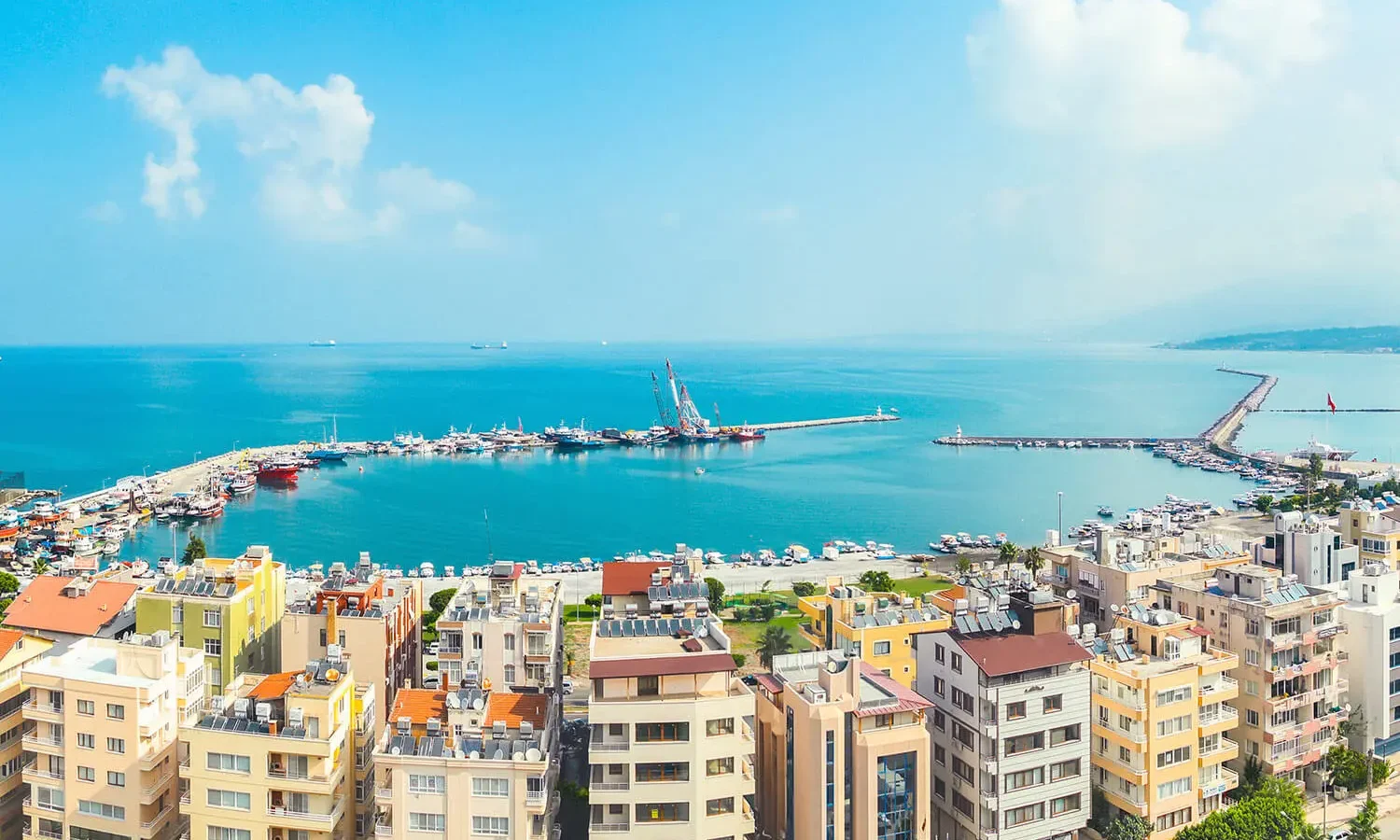
Hatay is Türkiye’s southernmost province on the Mediterranean, a finger of land running down between the Nur Mountains and the Syrian border. Its capital, Antakya, is ancient Antioch on the Orontes, founded by one of Alexander’s generals and for centuries one of the largest cities of the Roman East. The Asi river (the Orontes) flows through it on its way to the sea at Samandağ.
This has always been a meeting place. Sunni and Alawite Muslims, Greek Orthodox and Catholic Christians and, for most of its history, a Jewish community lived side by side in Antakya, and the food, with its pomegranate molasses, za’atar, hummus and künefe, sits halfway between Anatolia and the Levant. The ministry’s 2002 inventory sums up the province’s appeal as its mosaic museum, the Church of St Peter as a Christian place of pilgrimage, the shrines of many Islamic saints around Antakya, the Roman remains by the sea at Samandağ and the clean coastline of Arsuz.
On 6 February 2023 two earthquakes, of magnitude 7.8 and 7.5 and centred in neighbouring Kahramanmaraş province, struck the region, followed on 20 February by a magnitude 6.4 quake centred in Defne, just south of Antakya. Hatay was among the worst-hit provinces. Most of old Antakya, including the Long Bazaar, Kurtuluş Caddesi and many historic mosques and churches, collapsed or was badly damaged, and İskenderun’s seafront sank and flooded. In 2026 the province is a vast building site. Some landmarks have been rebuilt, others are under restoration, and some are gone. This guide says which is which wherever we could confirm it. Please travel with patience and respect: many of the people you meet lost family and homes.
Places to visit in Hatay
Hatay Archaeology Museum
Hatay Archaeology Museum in Antakya: its Antioch and Daphne mosaics, the Antakya…

Church of St Peter
St Peter’s cave church above Antakya: where Christians were first named, its…

Habib-i Neccar Mosque
Habib-i Neccar Mosque in Antakya: its legend, history, destruction in the 2023…
Harbiye (Daphne)
Harbiye, ancient Daphne near Antakya: the waterfalls of Daphne’s tears, the Apollo…

Titus Tunnel
Vespasianus Titus Tunnel at Çevlik, Samandağ: the Roman channel that saved Seleucia…
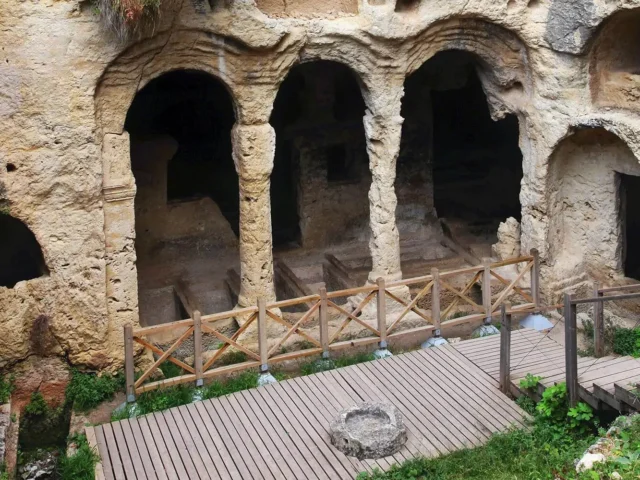
Beşikli Cave
Beşikli Cave at Çevlik, Samandağ: the largest rock-cut tomb of Seleucia Pieria,…
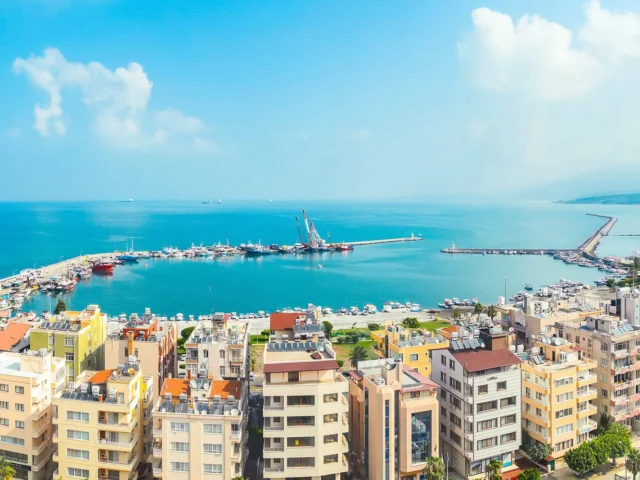
İskenderun
İskenderun travel guide: Alexander’s Alexandretta, the port city’s post-2023 rebuilding, the new…
How do you get to Hatay?
By air: Hatay Airport (HTY) lies on the drained bed of Lake Amik, about 25 km from Antakya and 45 km from İskenderun. Its runway was wrecked in the 2023 earthquake, but the airport reopened and handled more than 430,000 passengers in the first eleven months of 2025, with further rebuilding due to finish in 2026. Turkish Airlines flies from Istanbul Airport; AJet and Pegasus fly from Sabiha Gökçen; AJet flies from Ankara, and Pegasus and SunExpress from İzmir. There are also flights from Ercan in Northern Cyprus, seasonal Flynas flights from Riyadh and SunExpress services from Düsseldorf. Gaziantep Airport and Çukurova International Airport near Tarsus (which replaced Adana’s Şakirpaşa Airport in August 2024) are alternatives.
By road: The motorway from Adana reaches İskenderun, and the road to Antakya crosses the Amanos range at the Belen Pass, the historic gateway between Cilicia and Syria. Coaches link Antakya and İskenderun with Istanbul, Ankara, Mersin, Adana and the cities of the southeast. Minibuses connect Antakya with Harbiye, Samandağ, Reyhanlı and Yayladağı.
By rail: There is no passenger railway to Antakya. Regional trains run from İskenderun to Adana and Mersin.
Where should you stay in Hatay?
Most of the boutique hotels in old Antakya’s stone houses were destroyed or closed by the 2023 earthquakes, and the city centre is still a construction zone. New and reopened hotels are concentrated in the newer districts and along the main roads out of the city, and a few hotels near Harbiye offer a quieter base. Check recent reviews and confirm the exact location before you book, as street names and access change as reconstruction moves on.
İskenderun has more working hotel capacity and a rebuilt seafront, and is the better base if you are travelling on to Adana or Osmaniye. For the beach, Samandağ and Arsuz have seaside hotels and guesthouses, mainly busy in summer.
Book a Hatay tour
−5% Istambul readers save 5% on every tour below — applied at checkout.
Partner listings via GetYourGuide · free cancellation on most
What type of climate does Hatay have?
Hatay has a Mediterranean climate with hot, humid summers and mild, rainy winters. Antakya, 22 km inland in the Asi valley, is hotter in summer than the coast, and July and August afternoons often pass 35°C. Most rain falls between November and March. The mountains, especially the Amanos above Belen and Güzelyayla, are noticeably cooler, which is why the plateau (yayla) tradition is so strong here.
When is the best time to visit Hatay?
April to early June and late September to November are the most comfortable months for Antakya, the coast and the mountains alike. Spring is when Harbiye’s springs are fullest and the hills are green. In summer, plan the morning for sightseeing, the afternoon for a beach at Samandağ or Arsuz or a plateau in the Amanos, and the evening for eating.
On 29 June the Church of St Peter holds the feast-day service of Saints Peter and Paul. Note also that the Hatay Archaeology Museum is due to reopen in stages from the end of 2026, so later visits will see more of the collection.
What is the history of Hatay?
The 2002 inventory explains why this corner of the Mediterranean has drawn people for so long: besides a climate that makes life easy and fertile land, it sits at the crossroads of the routes linking Anatolia, by way of Çukurova, to Syria and Palestine, and it holds the best harbours for reaching the Mediterranean from Mesopotamia.
Settlement on the Amik plain is far older than Antioch. The mound of Tell Atçana, ancient Alalakh, on the road to Reyhanlı, has, according to the inventory, 17 settlement layers going back to around 3400 BC, with two palaces: the older one, of the 18th century BC, was built by Yarim-Lim, a contemporary of Hammurabi of Babylon, and the later one, of the 15th century BC, belonged to King Niqmepa. Nearby Tell Tayinat produced a Hittite palace and temple, and the colossal statue of King Suppiluliuma.
The inventory traces the first settlement at Antakya itself back to around 8000 BC. The city was founded around 300 BC by Seleucus, one of the generals who divided Alexander’s empire after his death, who also founded its port, Seleucia Pieria. Antioch then passed to Rome, Parthia and Sasanian Persia for brief periods, Byzantium, the Abbasids, the Tulunids, the Ikhshidids, the Hamdanids, the Seljuks, the Crusaders and the Mamluks. It was one of the great cities of the Roman Empire and the place where, according to the Book of Acts, the followers of Jesus were first called Christians. The Crusaders held it as the Principality of Antioch until the Mamluk sultan Baybars took the city in 1268.
The city came under Ottoman rule during Sultan Selim I’s campaign to Egypt, and became the central sanjak of the province of Aleppo. After the First World War it was occupied by the British in 1918 and then passed to the French mandate. In 1938 the Hatay State was established, and in 1939 Hatay joined the Republic of Türkiye. The rebuilt Hatay State Parliament building in Cumhuriyet Alanı, which reopened in December 2025, recalls that short period.
What is Hatay famous for?
- Mosaics. The Roman and Byzantine floors of Antioch and Daphne, held by the Hatay Archaeology Museum, form one of the world’s great mosaic collections.
- Early Christianity. The Church of St Peter, the monasteries of the Stylites and the Barlaam monastery on Mount Kel (ancient Mount Cassius).
- Islamic shrines. Habib-i Neccar Mosque and many tombs of revered figures around Antakya.
- Food. UNESCO named Hatay a Creative City of Gastronomy in 2017. Künefe, hummus, oruk and kağıt kebabı are only the start.
- Roman engineering. The Titus Tunnel at Seleucia Pieria.
- Resilience. Since 2023, Hatay has also become known for the scale of its loss and its rebuilding.
What are the historical places of Hatay?
The walls of Antioch. The inventory describes Antakya’s walls, built in the Hellenistic, Roman and Byzantine periods, as the longest in the country after those of Istanbul. They ran from Mount Silpius (Habib-i Neccar) down to the Orontes. Evliya Çelebi wrote in the 17th century that they were 44,000 paces long, built of great blocks, with a tower every 70–80 paces. The sections on the slopes of the mountain are the best preserved, and a citadel stood on the summit.
Demirkapı (the Iron Gate). A high, solid wall built across the deep, narrow gorge between Mount Habib-i Neccar and Mount Staurin to control the violent floods of the Hacıkürüş stream. It continued the line of the walls and also served as one of the city gates.
Bakras Castle. Above Bakras village at the 27th kilometre of the Antakya–İskenderun road. The inventory says it first guarded the approach to the Belen Pass, then the Seleucid capital, and in the Crusader period was the principality’s most important northern defence. After changing hands several times it passed to the Templars, and was taken by Baybars in 1268. Large enough to hold a regiment, it is ruined but many rooms still stand.
Payas. The Sokullu Mehmed Paşa complex of 1574, built under Sinan, and the moated Ottoman castle beside it, north of İskenderun. The complex came through the 2023 earthquakes undamaged and is open again.
Monastery of St Simeon. On a hill of 479 m between Antakya and Samandağ, about 18 km from Antakya, are the ruins of a 6th-century monastery around the column of a stylite saint, with a church, baptistery and cisterns over an area of about 100 × 150 m.
Barlaam Monastery. On Mount Kel (Keldağ, ancient Cassius) in Yayladağı. The inventory explains that the mountain was sacred in Seleucid and Roman times, with a Doric temple of the 3rd century BC. In the 4th century AD St Barlaam came here, destroyed the statue of Zeus and founded a community of monks; the monastery was rebuilt between 950 and 1050 and abandoned after 1268. Reaching it means a two-and-a-half-hour climb on foot from Bezge, along a narrow path among steep rocks.
Kızlar Sarayı (Qasr al-Banat). A Byzantine control post on the Reyhanlı–Aleppo road, in the border zone, with a square tower, soldiers’ rooms, tombs, a cistern and a church with an acanthus relief over its door. The inventory places it in the border buffer zone, so it is not open to casual visits.
What are the best things to do in Hatay?
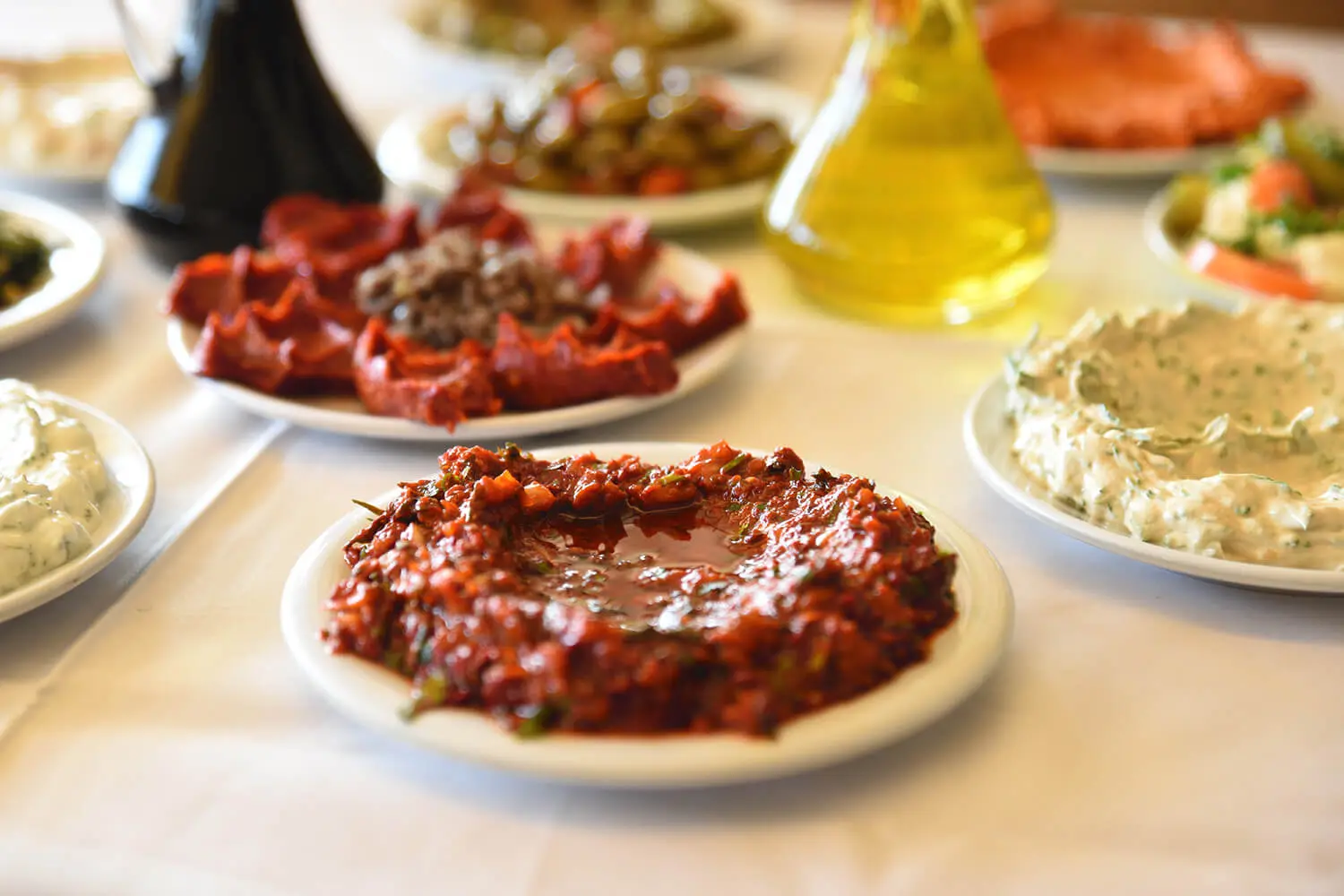
Eat. Hatay’s kitchen is the best reason to come in any season. Start the day with künefe, hot and stringy with cheese; order a spread of hummus, muhammara, spiced olives and herb salads; try oruk (baked bulgur shells filled with meat) and kağıt kebabı, minced meat cooked on paper. Restaurants are reopening across Antakya, many of them in temporary premises.
Head for the plateaus. The province’s yayla culture is strong. The inventory lists Teknepınar (Batıayaz), 20 km from Antakya by asphalt road, with its ice-cold springs and camping and picnic areas; Güzelyayla (Soğukoluk) above Belen, the “viewing terrace of the Gulf of İskenderun”; Atık near Belen, source of the well-known Atık water; Çataloluk above Delibekirli village near Kırıkhan, among century-old plane trees; Çökek near Dörtyol; and the cluster of plateaus above Erzin, among pine and fir, good for trekking.
Go to the sea. Samandağ’s long beach at Çevlik combines a swim with the Roman remains of Seleucia Pieria, and the Arsuz coast south of İskenderun is the main resort area.
Mark the feast of St Peter. The service at the cave church on 29 June is the province’s best-known religious event.
What are the best places to visit in Hatay?
Hatay Archaeology Museum. The mosaics of Antioch and Daphne. Closed since 2023; the first section is due to reopen by the end of 2026.
Church of St Peter. The cave church above Antakya, on the UNESCO Tentative List. It survived the earthquakes and is open.
Habib-i Neccar Mosque. Antakya’s historic mosque and shrine, destroyed in 2023 and rebuilt from salvaged stone, reopened in December 2025.
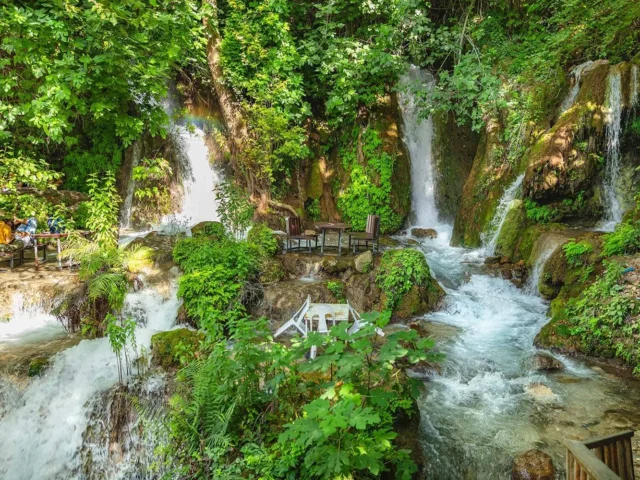
Harbiye (Daphne). The springs and waterfalls of ancient Daphne, Antakya’s summer retreat.
Titus Tunnel. The Roman flood channel at Çevlik, undamaged and open, with about 40,000 visitors in 2025.
Beşikli Cave. The largest rock tomb of Seleucia Pieria, next to the tunnel.
İskenderun. The port city on the gulf, with its new seafront, Payas and Belen nearby.
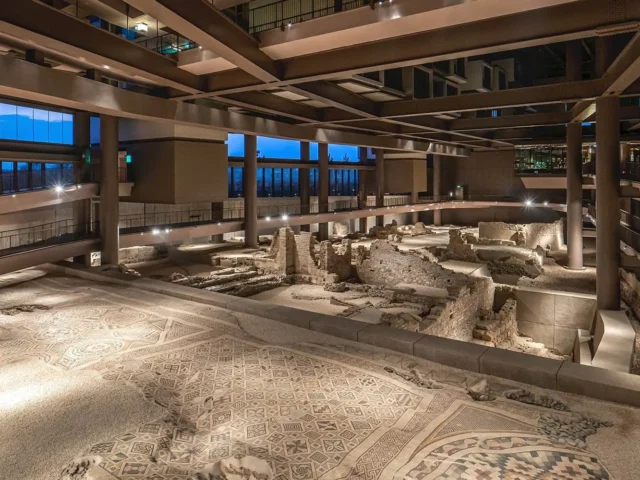
Necmi Asfuroğlu Archaeology Museum. A private museum built over excavated Roman streets and a 1,050 m² mosaic inside a hotel in Antakya; it reopened on 11 June 2024.
What is the traditional food of Hatay?
Hatay counts hundreds of local dishes, and its UNESCO City of Gastronomy title in 2017 recognised a cuisine shaped by the many communities that have lived here side by side. The essentials:
- Künefe: shredded kadayıf pastry around a soft unsalted cheese, baked in a round tray and soaked in syrup.
- Hummus and muhammara: chickpea purée, and a paste of red pepper, walnuts and pomegranate molasses.
- Oruk: Hatay’s baked version of içli köfte, a bulgur shell around spiced meat.
- Kağıt kebabı: spiced minced lamb cooked on greaseproof paper.
- Zahter salad: wild thyme (za’atar) leaves with onion, olive oil and pomegranate molasses.
- Tepsi kebabı: minced meat with peppers and tomatoes, baked in a tray at the local bakery.
What should you buy in Hatay?
Laurel (defne) soap, olive oil and olives, pomegranate molasses (nar ekşisi), dried za’atar, red pepper paste and spices are the classic things to take home. The 2002 inventory singles out the natural silk woven on the looms of Harbiye. Since the earthquake many traders work from temporary bazaars set up near the old Long Bazaar, and buying from them directly supports the city’s recovery.



Frequently asked questions about Hatay
Is it a good time to visit Hatay after the earthquake?
Yes, if you go with realistic expectations. The airport, hotels in the newer districts, the Church of St Peter, the Titus Tunnel and many restaurants are open, but old Antakya is still a construction zone and the Archaeology Museum is closed until its phased reopening from late 2026.
What is Antakya called in English?
Antioch, or Antioch on the Orontes. Antakya is the capital of Hatay province.
Is Hatay Archaeology Museum open?
Not as of autumn 2026. It has been closed since February 2023, and the first section is due to reopen by the end of 2026.
What is the nearest airport to Antakya?
Hatay Airport (HTY), about 25 km from the city, with direct flights from Istanbul Airport, Sabiha Gökçen, Ankara and İzmir.
What food is Hatay known for?
Künefe, hummus, muhammara, oruk, kağıt kebabı and zahter salad. UNESCO made Hatay a Creative City of Gastronomy in 2017.
How many days do you need in Hatay?
Two days cover Antakya, the Church of St Peter, Harbiye and the Titus Tunnel. Add a day for İskenderun, Payas and the Belen plateaus.
Does Hatay have any UNESCO World Heritage Sites?
None are inscribed yet. The Church of St Peter (2011) and the Vespasianus Titus Tunnel (2014) are on the Tentative List.
What do the official records say about Hatay?
What makes the Antakya area attractive, and has kept it open to migration throughout its history, is not only the climatic conditions that make life easy and its fertile land, but also its position at the junction of the roads linking Anatolia, by way of Çukurova, to Syria and Palestine. In addition, the most suitable harbours for reaching the Mediterranean from Mesopotamia are also in this region.
Antakya lies at the eastern end of the Mediterranean Region. It is the administrative centre of Hatay, one of the border provinces of the Republic of Türkiye. The city was founded 22 km inland from the sea, on the bank of the Asi river, at the foot of Mount Habib-i Neccar, and stands about 80 metres above sea level. (Ministry of Culture and Tourism, Hatay Provincial Tourism Inventory, 2002)
Ready to see Hatay?
Hand-picked tours with good reviews and clear prices.
Partner listings via GetYourGuide · free cancellation on most
Before or after: Istanbul
Most trips start or end in Istanbul. Our own experiences there:

 Dinner, sunset and day cruises between Europe and Asia.See cruises bosporuscruise.com

 Historic Turkish baths in the old city — hand-picked hamams, booked direct.Book a hamam istanbulhamam.com

 Istanbul’s tallest viewpoint: both continents from 369 metres.Get tickets camlicatower.com

 Free audio guides in 15 languages, safe routes and local tips — plus 5% off GetYourGuide.Open the free guide localada.com
Nearby
All destinationsBalıkesir
Balıkesir travel guide: Ayvalık and Cunda Island, Mount Ida’s national…
Tokat
Tokat travel guide: Gök Medrese, Taşhan and the Seljuk old…
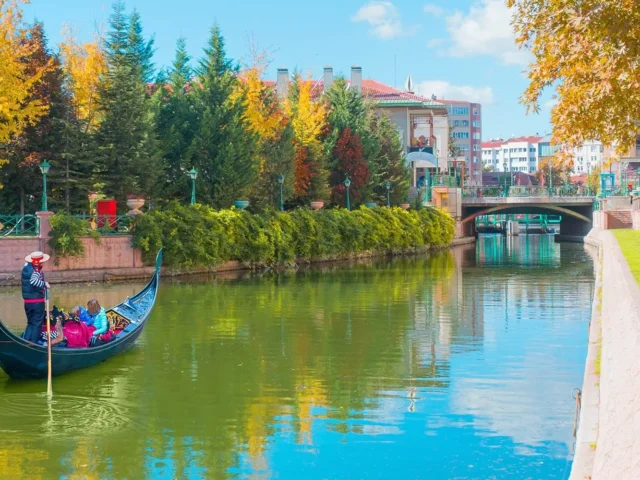
Eskişehir
Eskişehir travel guide: the Ottoman houses of Odunpazarı, meerschaum, Sazova…
Osmaniye
Osmaniye travel guide: Karatepe-Aslantaş and its Hittite bilingual, Kastabala, Toprakkale…
