
Titus Tunnel: Rome’s Flood Channel at Seleucia Pieria
On this page
- What is the Titus Tunnel?
- How do you get to the Titus Tunnel?
- When is the best time to visit the Titus Tunnel?
- What is the history of the Titus Tunnel?
- What is the Titus Tunnel famous for?
- What can you see at the Titus Tunnel?
- Frequently asked questions about the Titus Tunnel
- What do the official records say about the Titus Tunnel?
Key facts: Titus Tunnel
- What it is: A Roman flood-diversion channel cut through solid rock to protect the harbour of Seleucia Pieria, the port of ancient Antioch; begun under Vespasian in the 1st century AD.
- Where: Çevlik, about 5 km north of Samandağ, Hatay province, part of the Çevlik archaeological site with Beşikli Cave.
- UNESCO Tentative List: “Vespasianus Titus Tunnel”, on the Tentative List since 2014 (UNESCO). Not an inscribed World Heritage Site.
What is the Titus Tunnel?
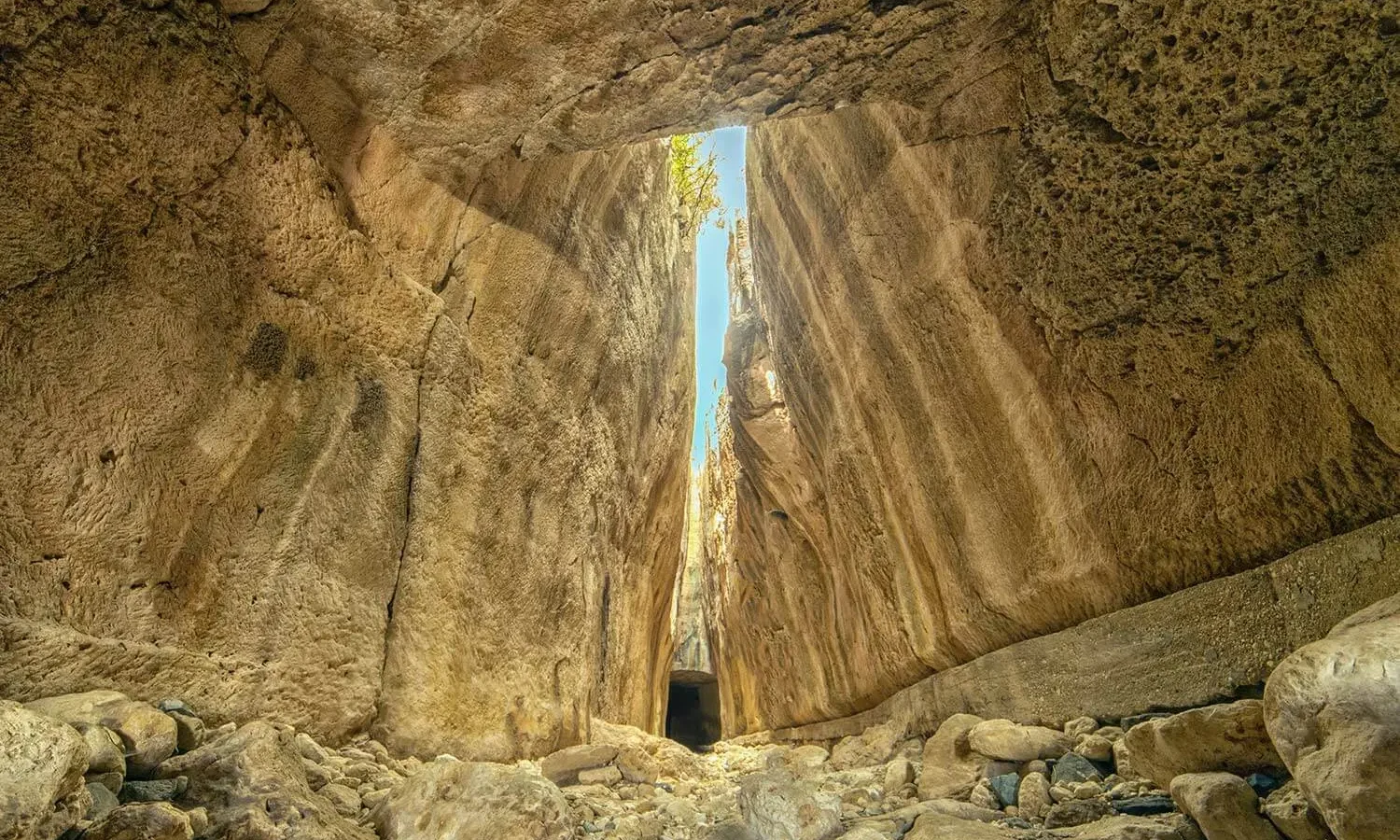
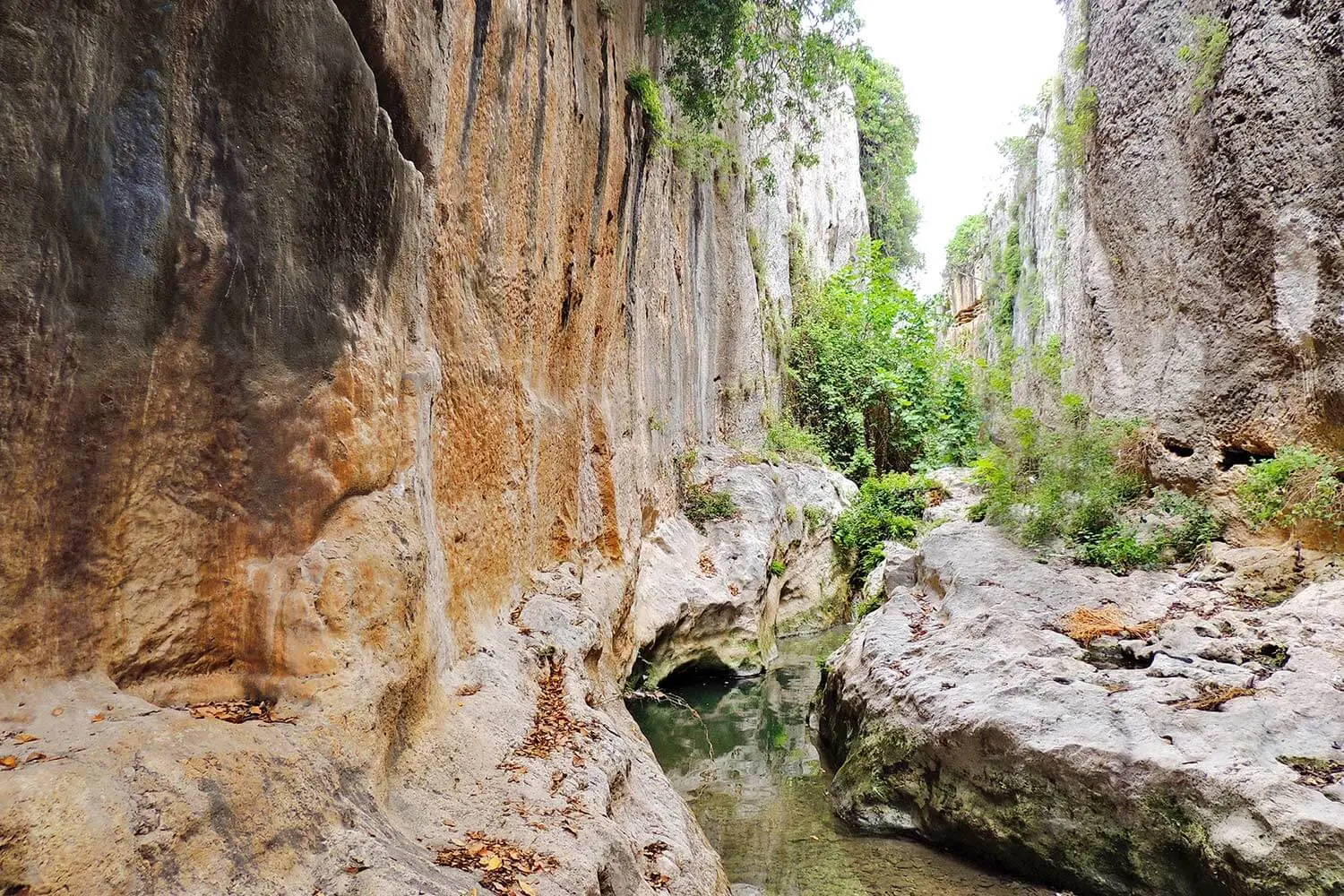
The Titus Tunnel, officially the Vespasianus Titus Tunnel, is one of the most impressive pieces of Roman engineering in Türkiye: a channel cut by hand through the mountain above Çevlik so that floodwater from the hills would bypass the harbour of Seleucia Pieria instead of filling it with silt. It is about 7 m high and 6 m wide, and from its entrance to the sea at Çevlik it runs for about 1,380 m, partly as tunnel and partly as a deep open cut.
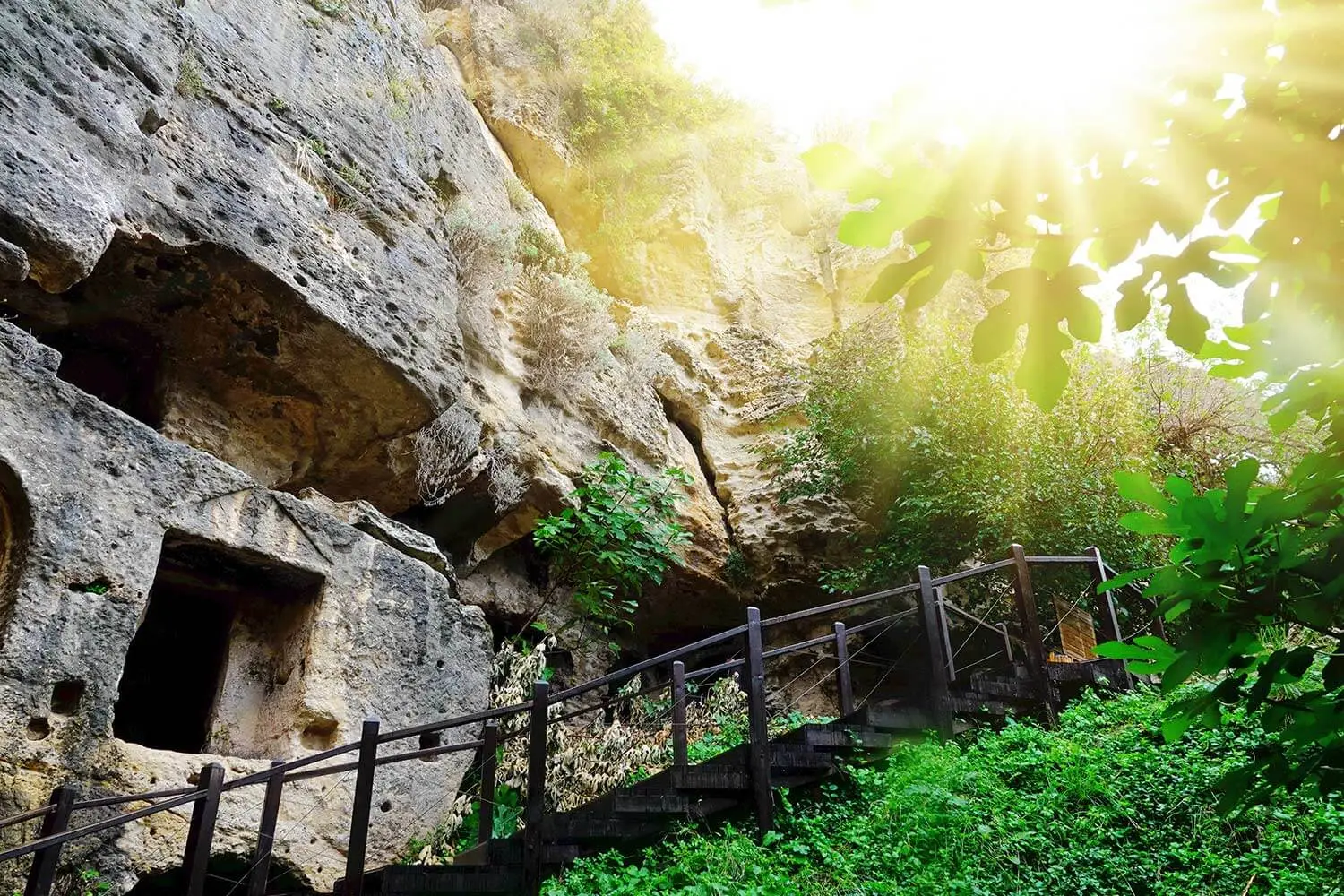
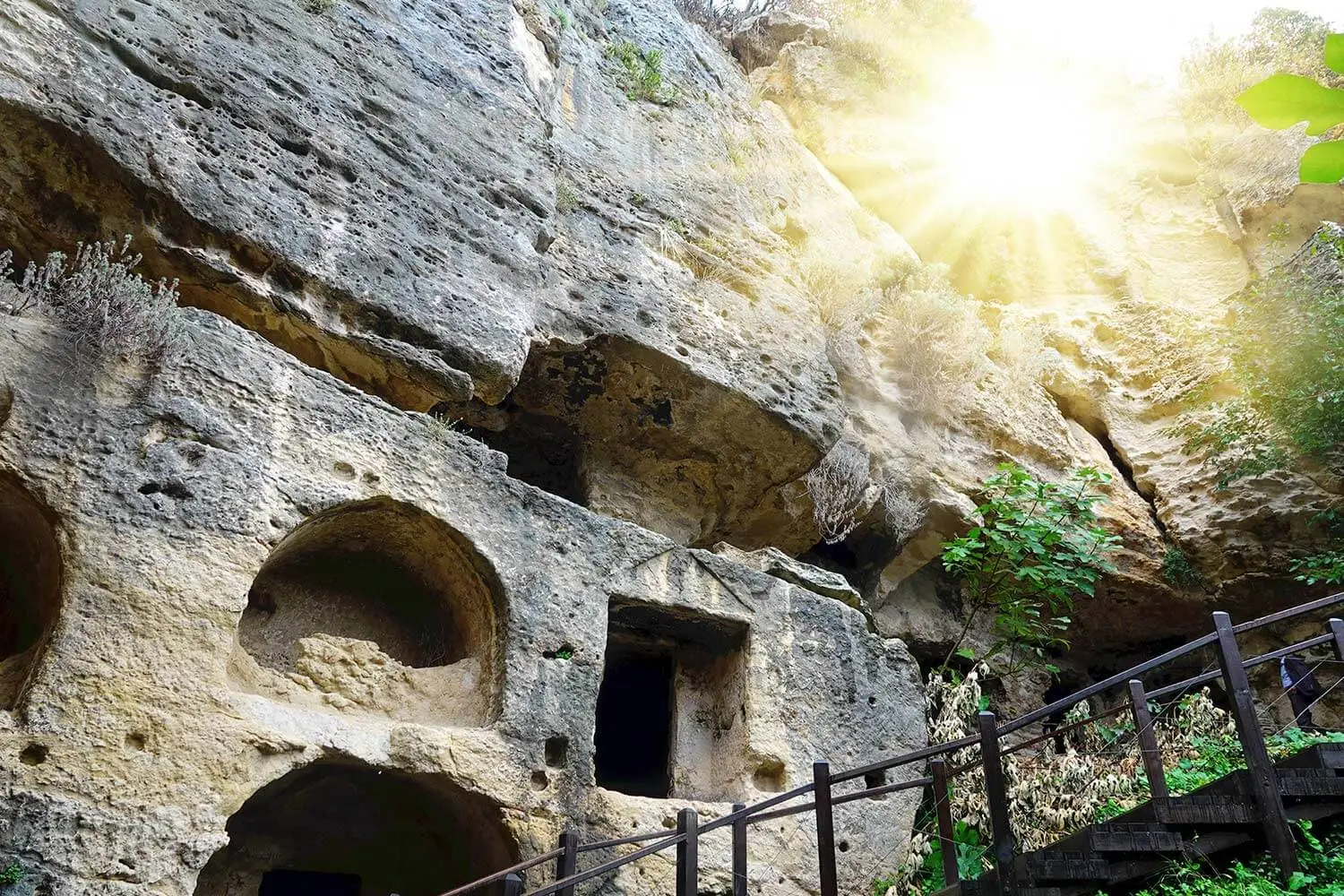
You walk through it today on the dry rock floor, past the marks of the chisels, and out to the hillside of rock tombs above the sea. Beşikli Cave, the largest of those tombs, is about 100 m from the seaward end.
The tunnel and Beşikli Cave came through the February 2023 earthquakes without damage, and the site has been open since. Around 40,000 people visited in 2025.
How do you get to the Titus Tunnel?
The tunnel is at Çevlik, on the coast about 5 km north of Samandağ, which is about 20 km south-west of Antakya. Minibuses run from Antakya to Samandağ, and from there local minibuses or a taxi reach Çevlik. By car the drive from Antakya takes around 40 minutes, and it is easy to combine with Harbiye in the same day.
From the car park and ticket office near the beach, a path climbs past the rock tombs to the lower end of the channel. Hatay Airport (HTY) is the nearest airport.
Book a Titus Tunnel tour
−5% Istambul readers save 5% on every tour below — applied at checkout.
Partner listings via GetYourGuide · free cancellation on most
When is the best time to visit the Titus Tunnel?
Opening hours change through the year, so check them before you visit. Check before you travel.
Spring and autumn are the most comfortable seasons. The path up to the tunnel is exposed and the climb can be hot in summer, though the tunnel itself is shaded and cool. Avoid the site after heavy rain, when the channel may carry water and the rock is slippery. In summer, arrive early and finish with a swim at Çevlik beach.
What is the history of the Titus Tunnel?
Seleucia Pieria was founded around 300 BC by Seleucus I Nicator, the general of Alexander who founded Antioch, as the port of his new capital. The city was named after its founder, and its inner harbour lay at the foot of the mountain, at the mouth of the streams coming down from it.
Floods from those streams threatened to fill the harbour with mud. Under the emperor Vespasian (AD 69–79) the decision was made to cut a channel through the mountain, and work continued under his son Titus (AD 79–81). An inscription carved at the entrance of the first tunnel section names Vespasian and Titus, and a second inscription in the downstream channel names Antoninus Pius, which is why the UNESCO file dates the completion of the system to the 2nd century AD. Tradition and modern reports say that the work was done by prisoners and slaves.
The system included a dam that blocked the stream, an approach channel, two tunnel sections, an open channel between them and a discharge channel to the sea. Despite the effort, the harbour eventually silted up and Seleucia declined in late antiquity.
What is the Titus Tunnel famous for?
- Scale. A 7 m high, 6 m wide channel cut by hand through rock, often called one of the largest Roman tunnels.
- Inscriptions. Carved dedications naming Vespasian, Titus and Antoninus Pius.
- Seleucia Pieria. The tunnel is the best-preserved monument of Antioch’s ancient port.
- The rock tombs. Beşikli Cave and the necropolis on the slope below.
What can you see at the Titus Tunnel?
The open cut and tunnel sections. Walk the length of the channel on its rock floor. Look for the inscription near the entrance of the first tunnel section.
The dam. At the upper end, the remains of the wall that diverted the stream into the channel.
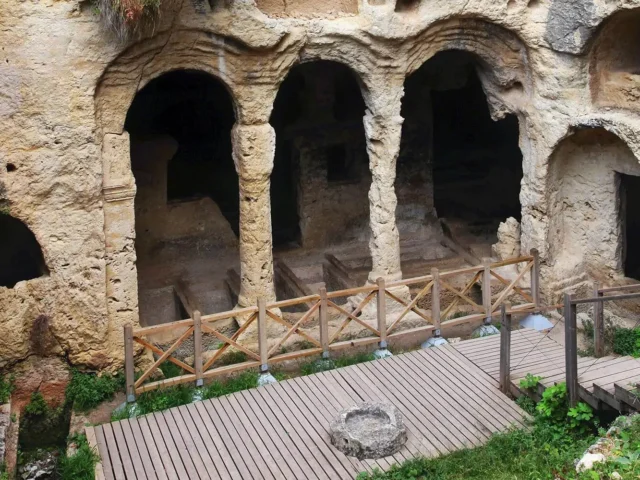
Beşikli Cave and the necropolis. Rock-cut chamber tombs line the slope near the seaward end; Beşikli Cave is the largest.
Çevlik and the ancient harbour. Below the site, the outline of the silted harbour of Seleucia lies behind the modern beach. The 2002 inventory also notes temple remains in the upper parts of the ancient city and many caves around Mağaracık village.



Frequently asked questions about the Titus Tunnel
Was the Titus Tunnel damaged in the 2023 earthquake?
No. The tunnel and the neighbouring Beşikli Cave came through without damage and the site is open, with about 40,000 visitors in 2025.
How long does a visit take?
Allow 1.5–2 hours to walk the channel, see Beşikli Cave and return. Wear shoes with grip, as the rock floor is uneven.
Who built the Titus Tunnel?
Work began under Vespasian and continued under Titus in the 1st century AD; an inscription naming Antoninus Pius shows work into the 2nd century. Reports say prisoners and slaves did the digging.
How do I get there from Antakya?
Drive or take a minibus to Samandağ, about 20 km south-west, then continue about 5 km north to Çevlik. By car the trip takes around 40 minutes.
Is it a UNESCO World Heritage Site?
Not yet. It has been on UNESCO’s Tentative List since 2014.
What do the official records say about the Titus Tunnel?
It is the city founded around 300 BC by Seleucus Nicator on the slopes overlooking the sea, 5 km north of Samandağ, and named after its founder. The city had an inner harbour right at the end of the mountain, at the mouth of the streams coming down from it. When the danger arose that floods would fill this harbour, it was decided in the time of the emperor Vespasian to pierce the mountain and open a tunnel.
The tunnel was completed in the time of Titus. The front of the stream was closed with a wall, and the floodwaters were carried away through this tunnel, 7 metres high and 6 metres wide, so that the harbour was kept from being buried. 130 metres of it is tunnel and the rest an open channel, and its length from the entrance to Çevlik is 1,380 metres. (Ministry of Culture and Tourism, Hatay Provincial Tourism Inventory, 2002)
Ready to see Titus Tunnel?
Hand-picked tours with good reviews and clear prices.
Partner listings via GetYourGuide · free cancellation on most
Before or after: Istanbul
Most trips start or end in Istanbul. Our own experiences there:

 Dinner, sunset and day cruises between Europe and Asia.See cruises bosporuscruise.com

 Historic Turkish baths in the old city — hand-picked hamams, booked direct.Book a hamam istanbulhamam.com

 Istanbul’s tallest viewpoint: both continents from 369 metres.Get tickets camlicatower.com

 Free audio guides in 15 languages, safe routes and local tips — plus 5% off GetYourGuide.Open the free guide localada.com
Nearby
All destinations
Church of St Peter
St Peter’s cave church above Antakya: where Christians were first…

Habib-i Neccar Mosque
Habib-i Neccar Mosque in Antakya: its legend, history, destruction in…
Beşikli Cave
Beşikli Cave at Çevlik, Samandağ: the largest rock-cut tomb of…
Hatay Archaeology Museum
Hatay Archaeology Museum in Antakya: its Antioch and Daphne mosaics,…
