
İskenderun: Alexander’s Port on the Gulf
On this page
Key facts: İskenderun
- What it is: Hatay’s main port and second city, on the Gulf of İskenderun at the foot of the Nur (Amanos) Mountains; historically Alexandretta.
- Where: Northern Hatay province, across the Belen Pass from Antakya; Hatay Airport is about 45 km away by road.
- In 2026: Rebuilding after the February 2023 earthquakes, which brought heavy damage, a port fire and flooding of the low seafront. The first phase of a new coastal park opened on 29 October 2025.
What is İskenderun?
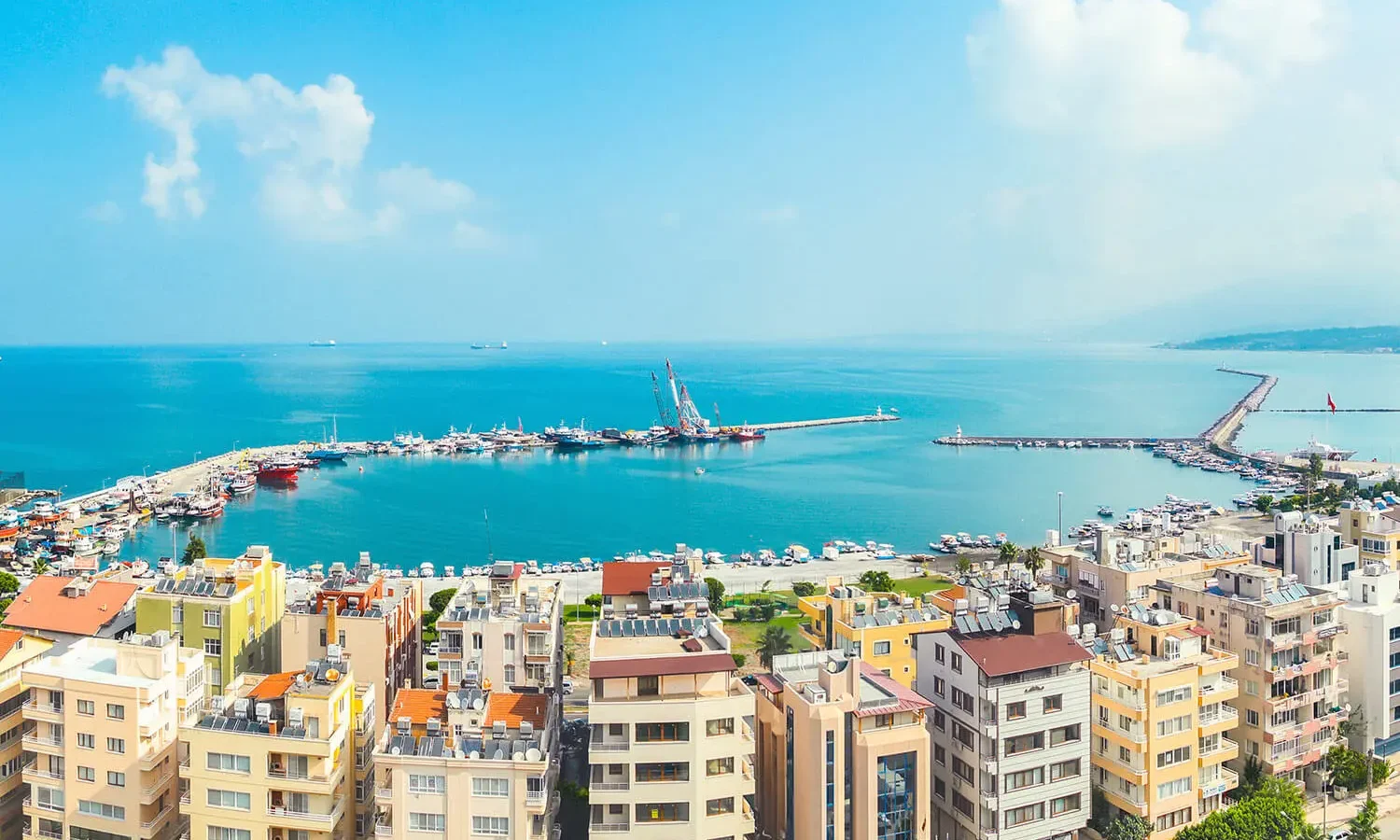
İskenderun is the port city of Hatay, spread along a flat strip of coast between the Gulf of İskenderun and the steep green wall of the Nur Mountains (the Amanos). It is a working city, built around its harbour, steelworks and the citrus groves of the coastal plain, with a long seafront promenade facing west across the gulf.
Its old name, Alexandretta, recalls Alexander the Great, whose victory over the Persian king Darius III at Issus in 333 BC was fought a short distance up the coast. For centuries it was the Mediterranean outlet for caravans from Aleppo and Baghdad, and before 2023 its churches and stone houses of that era still stood in the centre.
The earthquakes of 6 February 2023 hit İskenderun hard. Many buildings collapsed, a fire burned for days in the port, and parts of the seafront sank by around 80 cm and were flooded by the sea. The Catholic Cathedral of the Annunciation, the seat of the Apostolic Vicariate of Anatolia, collapsed, leaving only its bell tower and part of the clergy house standing. Reconstruction has been under way since, and on 29 October 2025 the first phase of a new 303,000 m² coastal park opened on the raised and rebuilt shoreline.
How do you get to İskenderun?
By air: Hatay Airport (HTY), on the Amik plain, is about 45 km from İskenderun by road. It has direct flights from Istanbul Airport (Turkish Airlines), Sabiha Gökçen (AJet and Pegasus), Ankara (AJet) and İzmir (Pegasus and SunExpress), and some international routes. Adana and Mersin are served by Çukurova International Airport near Tarsus, which replaced Adana’s Şakirpaşa Airport in August 2024.
By road: İskenderun is on the coastal highway from Adana and Osmaniye, and the road to Antakya climbs over the Belen Pass. Intercity coaches connect it with Istanbul, Ankara and most cities in southern Türkiye, and minibuses run frequently to Antakya, Belen, Arsuz and Dörtyol.
By rail: Regional trains link İskenderun with Adana and Mersin. Check current times with TCDD before you travel.
Book an İskenderun tour
−5% Istambul readers save 5% on every tour below — applied at checkout.
Partner listings via GetYourGuide · free cancellation on most
When is the best time to visit İskenderun?
April to June and September to November are the most comfortable months. Summers are hot and very humid at sea level, which is why local people head up to the plateaus of Belen and Güzelyayla in July and August. Winters are mild and fairly wet. If you want to swim, the coast at Arsuz to the south-west is the place to go from June to October.
What is the history of İskenderun?
Tradition says Alexander founded the city in 333 BC to commemorate his victory at Issus; historians think one of his successors is the more likely founder. It passed to the Seleucids, Romans and Byzantines, then the Abbasids, the Crusader Principality of Antioch, the Mamluks and, by the 16th century, the Ottomans.
Under the Ottomans İskenderun became the main Mediterranean port for the overland trade with Aleppo, Baghdad and India. The English Levant Company kept an agency here until 1825, and a railway reached the port in 1912. After the First World War the town was part of the autonomous Sanjak of Alexandretta under the French mandate in Syria, then of the short-lived Hatay State from 1938, and it joined Türkiye with the rest of Hatay in 1939.
The 2002 inventory notes two later markers of the city’s role in tourism: the declaration of the İskenderun coastal strip as a tourism centre in 1998, and an annual İskenderun Culture and Tourism Festival in early July.
What is İskenderun famous for?
- Alexander and Issus. The city carries his name, and the battlefield of Issus lies to the north near Dörtyol.
- The port. Long the gateway between the Mediterranean and inland Syria and Mesopotamia.
- The seafront. A long promenade along the gulf, now being rebuilt after the 2023 subsidence.
- Citrus. The surrounding plain is covered in orange, tangerine and lemon groves.
What can you do in İskenderun?
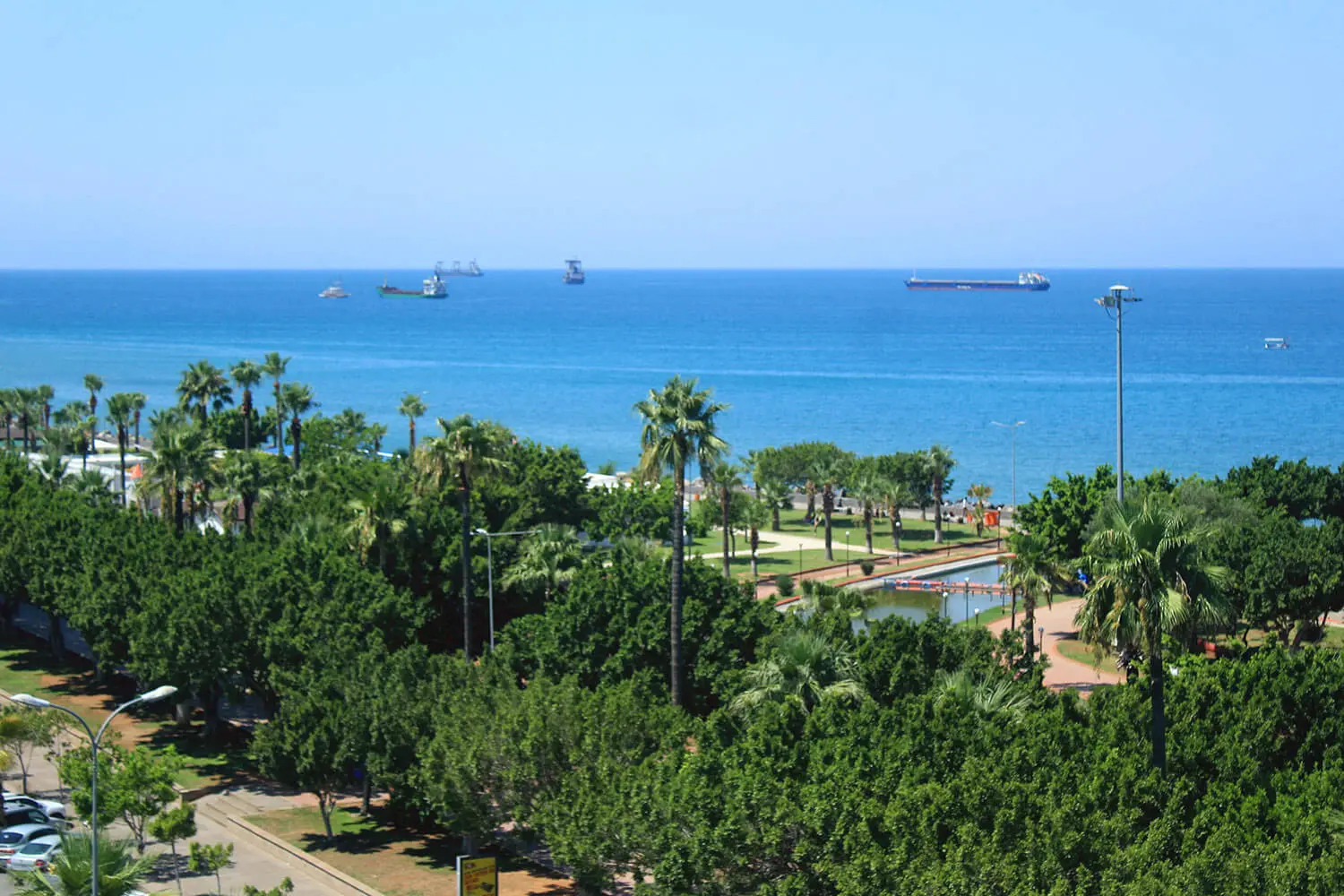
Walk the new seafront. The first phase of the coastal project includes walking and cycling paths, sports areas, viewing terraces facing the sunset over the gulf, and gardens of pomegranate and bitter orange.
Visit Payas. North along the coast towards Dörtyol, the Sokullu Mehmed Paşa complex at Payas came through the earthquakes undamaged and sheltered thousands of survivors, before reopening to visitors. According to the 2002 inventory, the complex, completed in 1574 according to its inscription, was built by the grand vizier Sokullu Mehmed Paşa through the chief architect Sinan and the imperial architects’ corps, and turned Payas into an important landing place and lodging centre. In its original form it had a mosque, a hanikah (madrasa), a primary school, an arasta (covered market), a prayer dome, a caravanserai and a tabhane (guest apartments), covering about 15 dönüm. Today its 48 restored shops, bath, madrasa and mosque are in use again. Near it stands Payas Castle, which the inventory describes as a moated Ottoman fortress, restored in 1567 and used as a prison before 1919.
Go up to the plateaus. Belen, on the pass to Antakya, has a single-domed mosque built in 1553 for Sultan Süleyman the Magnificent. Higher up, Güzelyayla (Soğukoluk) looks down over the whole gulf.
See Bakras Castle. At the 27th kilometre of the Antakya road, above Bakras village, stand the ruins of a castle that guarded the Belen Pass and was later held by the Templars.
Swim at Arsuz. The 2002 inventory describes the Arsuz coastline as clean and suited to sea tourism, and it remains the main beach area for İskenderun.



Frequently asked questions about İskenderun
Is İskenderun safe to visit after the earthquake?
Yes, the city is functioning and rebuilding, with hotels, transport and a new coastal park open. Expect construction sites and some closed streets, especially near the old centre and seafront.
Is İskenderun named after Alexander the Great?
Yes. İskenderun is the Turkish form of Alexander, and the city was known as Alexandretta, founded to commemorate the Battle of Issus in 333 BC.
What is the nearest airport to İskenderun?
Hatay Airport (HTY), about 45 km by road, with direct flights from Istanbul, Ankara and İzmir.
What happened to the Catholic cathedral in İskenderun?
The Cathedral of the Annunciation collapsed in the February 2023 earthquakes; only the bell tower and part of the adjoining buildings remained standing.
Where can you swim near İskenderun?
At Arsuz, on the coast south-west of the city, which has the area’s main beaches.
What do the official records say about İskenderun?
Belen–Güzelyayla (Soğukoluk) can be reached by an 8-kilometre asphalt road winding through greenery and forest from the Sarımazı junction in Belen district, and minibuses run to it from Belen and İskenderun. The plateau tradition has continued at Güzelyayla for centuries.
A viewing terrace over the Gulf of İskenderun, set among pine trees and wild flowers, with its old and new buildings worth walking around and seeing, it is a plateau about which folk songs and poems have been written. You can camp, picnic and take short walks in the forest. (Ministry of Culture and Tourism, Hatay Provincial Tourism Inventory, 2002)
Ready to see İskenderun?
Hand-picked tours with good reviews and clear prices.
Partner listings via GetYourGuide · free cancellation on most
Before or after: Istanbul
Most trips start or end in Istanbul. Our own experiences there:

 Dinner, sunset and day cruises between Europe and Asia.See cruises bosporuscruise.com

 Historic Turkish baths in the old city — hand-picked hamams, booked direct.Book a hamam istanbulhamam.com

 Istanbul’s tallest viewpoint: both continents from 369 metres.Get tickets camlicatower.com

 Free audio guides in 15 languages, safe routes and local tips — plus 5% off GetYourGuide.Open the free guide localada.com
Nearby
All destinations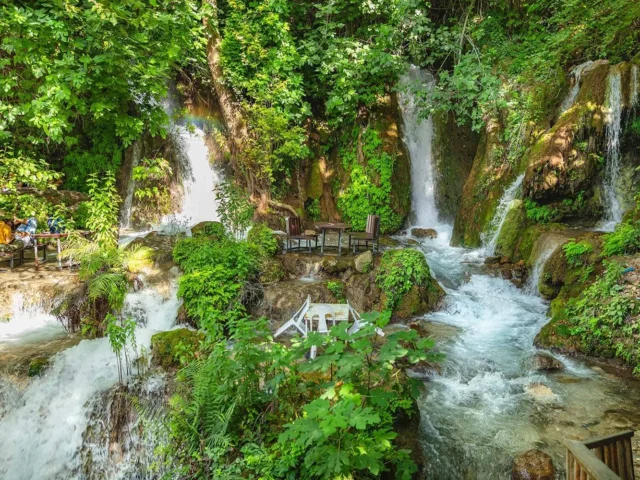
Harbiye (Daphne)
Harbiye, ancient Daphne near Antakya: the waterfalls of Daphne’s tears,…

Habib-i Neccar Mosque
Habib-i Neccar Mosque in Antakya: its legend, history, destruction in…
Hatay Archaeology Museum
Hatay Archaeology Museum in Antakya: its Antioch and Daphne mosaics,…
Beşikli Cave
Beşikli Cave at Çevlik, Samandağ: the largest rock-cut tomb of…
