
Beşikli Cave: The Great Rock Tomb of Seleucia Pieria
On this page
Key facts: Beşikli Cave
- What it is: The largest rock-cut chamber tomb in the necropolis of Seleucia Pieria, the ancient port of Antioch, with 12 burial places inside.
- Where: About 100 m from the seaward end of the Titus Tunnel at Çevlik, Samandağ, Hatay province.
- UNESCO: Part of the Çevlik site; the neighbouring Vespasianus Titus Tunnel has been on the Tentative List since 2014 (UNESCO).
What is Beşikli Cave?
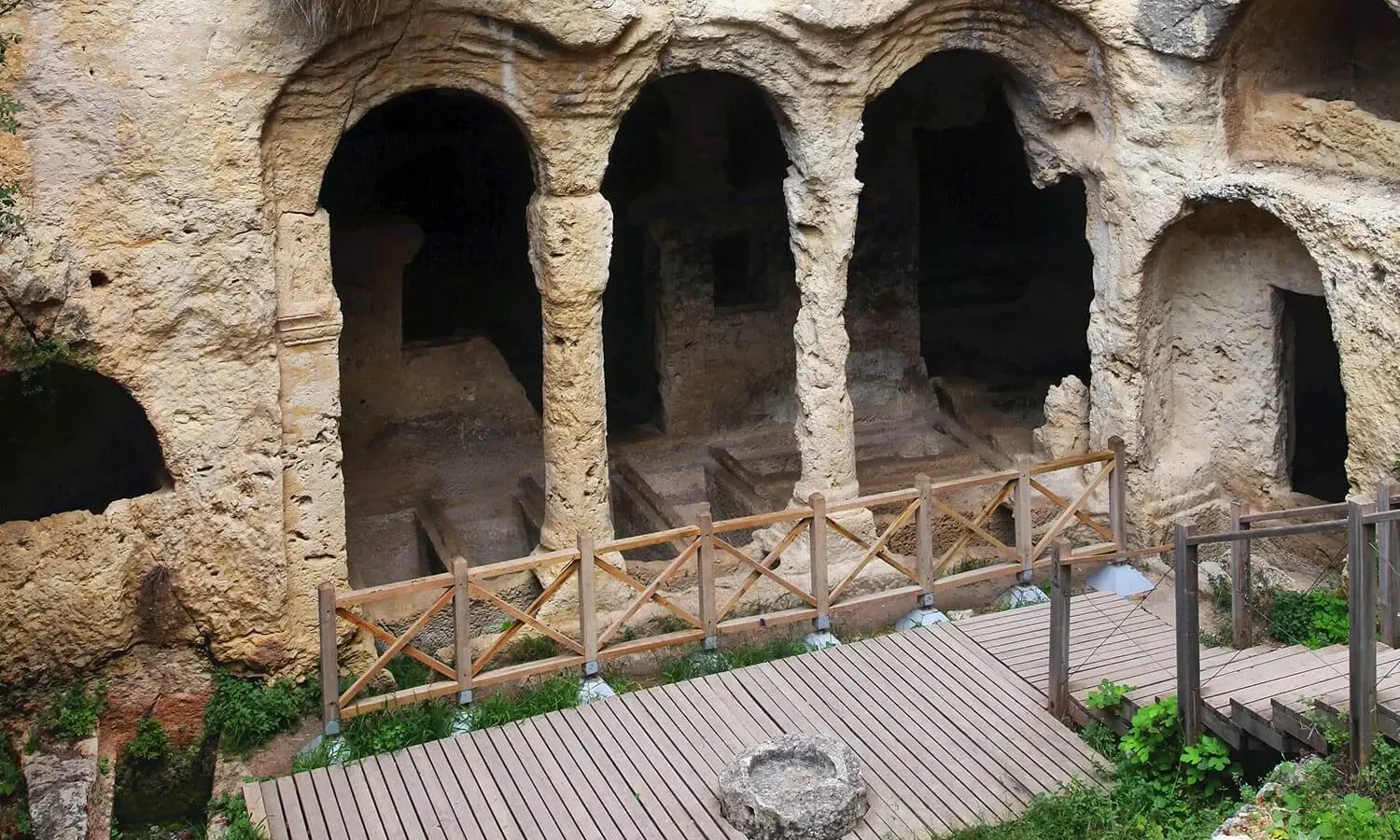
Beşikli Cave (Beşikli Mağara) is a monumental tomb carved into the limestone hillside above Çevlik, on the coast of Samandağ. It belongs to the necropolis of Seleucia Pieria, the harbour city of ancient Antioch, and stands a short walk from the seaward end of the Titus Tunnel.
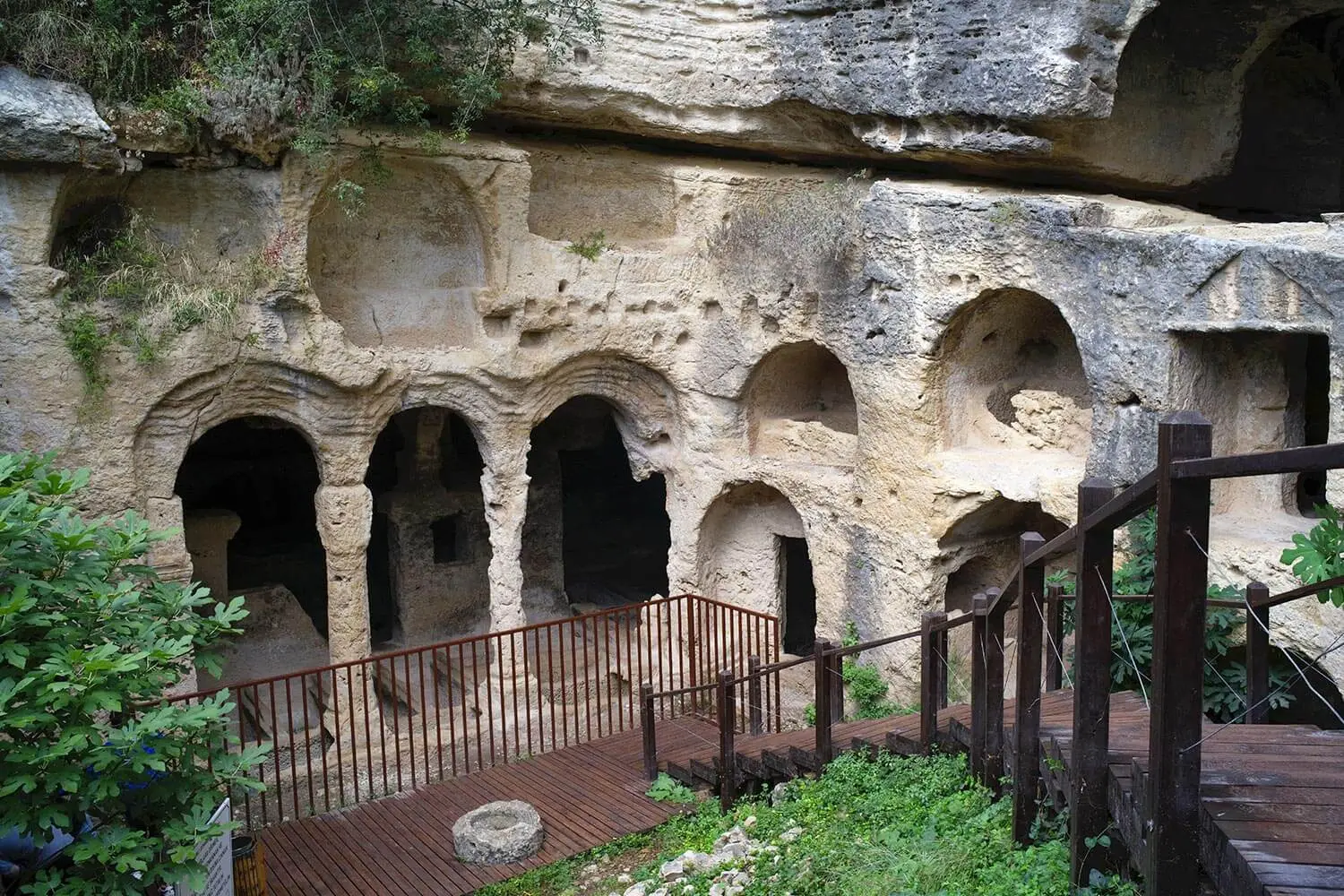
Behind a columned entrance, the cave opens into a large chamber with 12 tombs set in sections, linked by rock-cut arches and pillars, with stone steps between levels. The name means “the cave with the cradle”: local people named it after one tall, elaborate tomb inside that resembles a cradle.
The cave and the tunnel came through the February 2023 earthquakes undamaged, and both are visited on the same ticket as part of the Çevlik archaeological site.
How do you get to Beşikli Cave?
Beşikli Cave is at Çevlik, about 5 km north of Samandağ and about 20 km south-west of Antakya. From the site entrance near the beach, a path climbs the slope; the cave is about 100 m from the seaward end of the tunnel, to the right as you face the sea-side entrance. Minibuses run from Antakya to Samandağ, then on to Çevlik, or you can drive from Antakya in about 40 minutes.
Book a Beşikli Cave tour
−5% Istambul readers save 5% on every tour below — applied at checkout.
Partner listings via GetYourGuide · free cancellation on most
When is the best time to visit Beşikli Cave?
Opening hours change through the year, so check them before you visit. Spring and autumn are the most pleasant times; in summer, go early in the morning, as the slope has little shade. The cave interior stays cool. Allow about 20 minutes for the cave itself, or 1.5–2 hours if you also walk the length of the Titus Tunnel and back.
What is the history of Beşikli Cave?
Seleucia Pieria was founded around 300 BC by Seleucus I Nicator as the port of Antioch. It became one of the most important harbours of the eastern Mediterranean and a base for the Roman fleet in the region. The Book of Acts records that Paul and Barnabas sailed from Seleucia to Cyprus at the start of their first missionary journey. Its people cut tombs into the rock of the slopes around the city, as was common across the Roman East.
Beşikli Cave is the grandest of these tombs. Its carved columns, capitals and arches show that it was an expensive commission. A local official quoted in 2018 said that tradition holds that clergy were buried here, but the cave has no inscription naming its owners, so treat that as local belief. Many other caves in the area, especially around Mağaracık village, were noted in the ministry’s 2002 inventory.
What is Beşikli Cave famous for?
- Size. One of the largest and best-known rock tombs in the area.
- The “cradle” tomb. The tall, decorated tomb that gave the cave its name.
- Its setting. It sits on the same walk as the Titus Tunnel, above the bay of Çevlik.
What can you see at Beşikli Cave?
The columned entrance. Pillars carved from the living rock frame the opening.
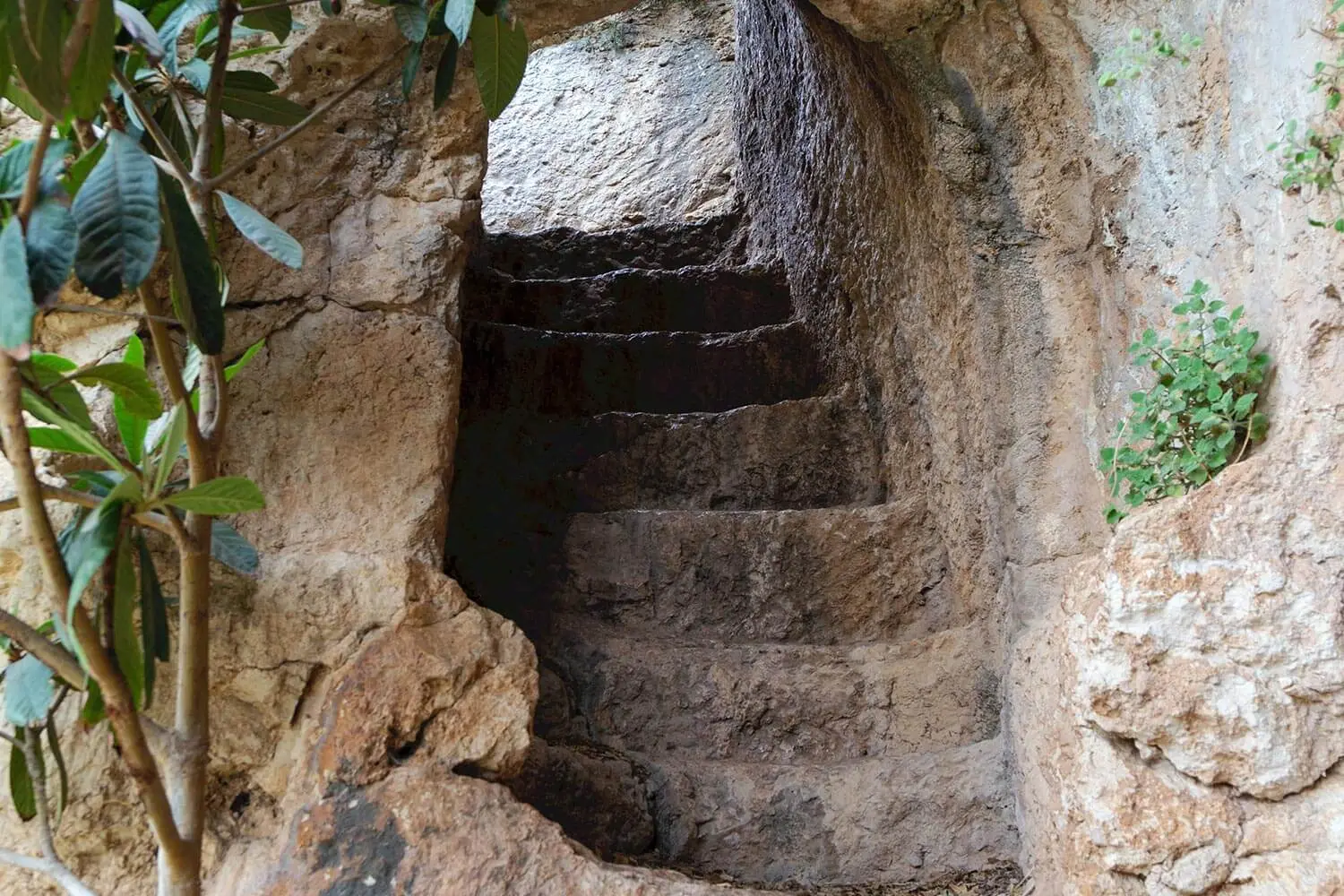
The burial chamber. Twelve tombs arranged in sections and connected by arches and rock-cut pillars, with stairs between levels.
The cradle tomb. The tall, showy tomb from which the cave takes its name.
Details in the stone. Look at the carved column capitals and decorative mouldings around the entrance and inside: they are the clearest sign of how much money went into this tomb compared with the plain chambers nearby.
The view. From the slope outside you look down over Çevlik and the flat ground behind the beach where the silted harbour of Seleucia once lay.
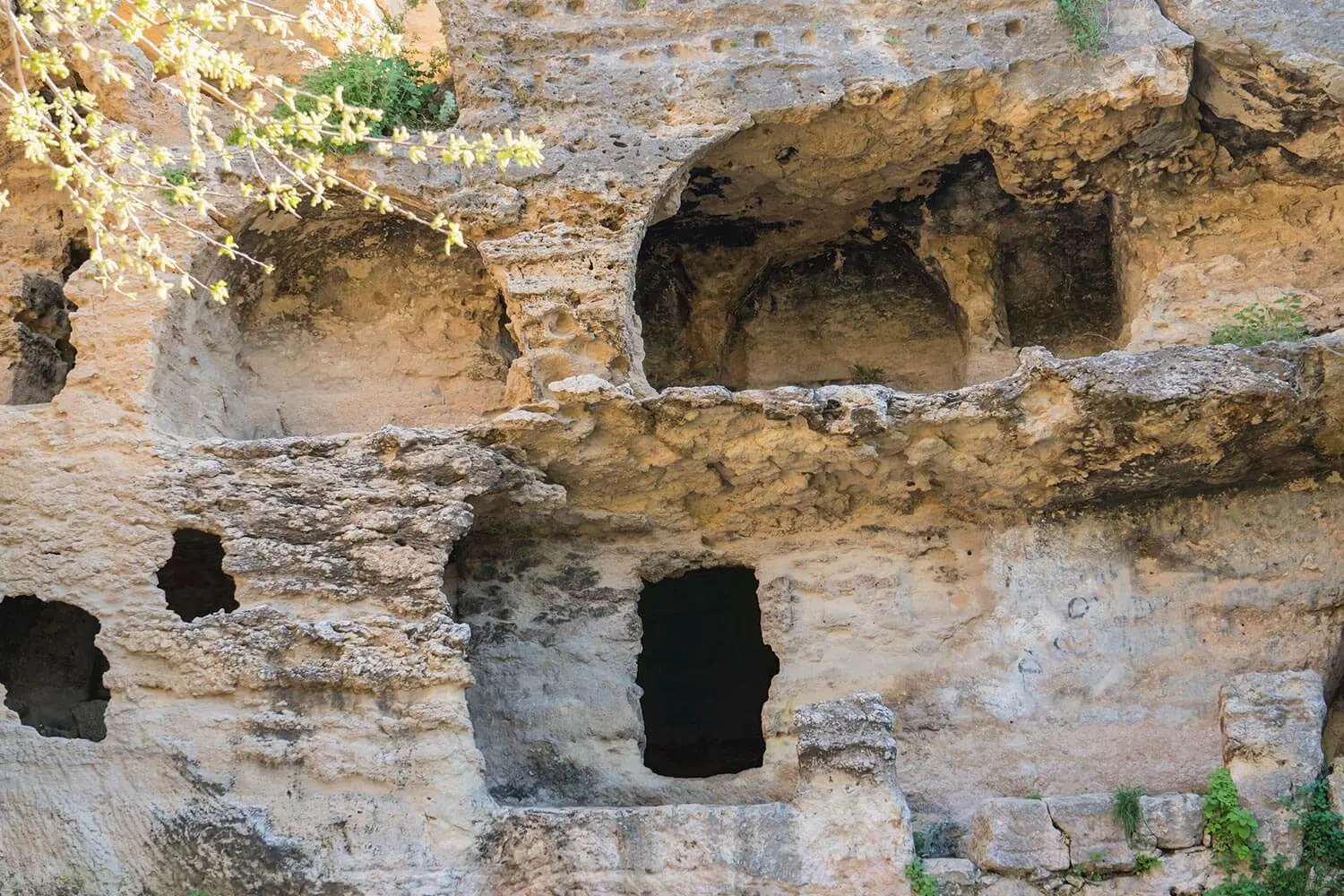
The necropolis. Smaller chamber tombs are cut into the slope all around, and the Titus Tunnel is a few minutes’ walk away.



Frequently asked questions about Beşikli Cave
What does Beşikli mean?
Roughly “with a cradle”. Local people named the cave after one tall, ornate tomb inside it that looks like a cradle.
Is Beşikli Cave a natural cave?
No. It is a chamber tomb carved into the limestone, with a columned entrance and 12 burial places inside.
Do I need a separate ticket?
No. Beşikli Cave and the Titus Tunnel form the Çevlik archaeological site and are visited together.
Was it damaged in the 2023 earthquakes?
No. Both the cave and the Titus Tunnel came through undamaged and are open to visitors.
What do the official records say about Beşikli Cave?
About 100 metres to the right of the sea-side entrance of the tunnel there are rock tombs. Of the many tombs inside the caves carved into the rocks here, the one that attracts most interest is the large cave at the bottom of the hollow. This cave, which holds many tombs, was made differently from the others, and because of a high and ornate tomb inside it, it is known among local people as “Beşikli Mağara” (the Cave with the Cradle). (Ministry of Culture and Tourism, Hatay Provincial Tourism Inventory, 2002)
Ready to see Beşikli Cave?
Hand-picked tours with good reviews and clear prices.
Partner listings via GetYourGuide · free cancellation on most
Before or after: Istanbul
Most trips start or end in Istanbul. Our own experiences there:

 Dinner, sunset and day cruises between Europe and Asia.See cruises bosporuscruise.com

 Historic Turkish baths in the old city — hand-picked hamams, booked direct.Book a hamam istanbulhamam.com

 Istanbul’s tallest viewpoint: both continents from 369 metres.Get tickets camlicatower.com

 Free audio guides in 15 languages, safe routes and local tips — plus 5% off GetYourGuide.Open the free guide localada.com
Nearby
All destinations
Habib-i Neccar Mosque
Habib-i Neccar Mosque in Antakya: its legend, history, destruction in…
Harbiye (Daphne)
Harbiye, ancient Daphne near Antakya: the waterfalls of Daphne’s tears,…
İskenderun
İskenderun travel guide: Alexander’s Alexandretta, the port city’s post-2023 rebuilding,…

Church of St Peter
St Peter’s cave church above Antakya: where Christians were first…
