
Bolu: Lakes and Forests Between Istanbul and Ankara
On this page
- What is Bolu?
- How do you get to Bolu?
- Where should you stay in Bolu?
- What type of climate does Bolu have?
- When is the best time to visit Bolu?
- What is the history of Bolu?
- What is Bolu famous for?
- What are the historical places of Bolu?
- What are the best things to do in Bolu?
- What are the best places to visit in Bolu?
- What is the traditional food of Bolu?
- What should you buy in Bolu?
- Frequently asked questions about Bolu
- What do the official records say about Bolu?
Key facts: Bolu
- Region: Western Black Sea region, in the forested mountains roughly halfway between Istanbul and Ankara, on the O-4 motorway and the old D-100 highway.
- Best known for: Mountain lakes and forest (Lake Abant, Yedigöller, Gölcük), skiing at Kartalkaya, and the Ottoman towns of Mudurnu and Göynük.
- Protected areas: Two national parks, Yedigöller (1965) and Lake Abant (2022), plus ten nature parks.
What is Bolu?
Bolu is a province in the mountains of the western Black Sea region, and also the name of its capital, a market town on a broad plain ringed by forested ridges. It sits roughly halfway between Istanbul and Ankara, and for most Turks it is a name on the road: the place where the motorway goes through the Bolu Mountain tunnel on the way between the two cities.
It deserves more than a stop. The 2002 inventory calls Bolu one of the most beautiful provinces of the Black Sea region and one of the country’s richest in tourism potential, and the reasons are mostly outdoors: lakes set in beech and fir forest, such as Lake Abant, Lake Gölcük and the seven landslide lakes of Yedigöller National Park; hundreds of summer pastures; the ski slopes of Kartalkaya on the Köroğlu Mountains; and hot springs along one of the country’s great fault lines.
Bolu also has a long human history, from the Bithynian and Roman city under today’s centre to early Ottoman mosques and baths, and the old wooden-and-plaster towns of Mudurnu and Göynük. And it is known across Türkiye for its food: the province has 26 products with geographical indication status (Bolu Culture and Tourism Directorate).
Places to visit in Bolu
Lake Abant
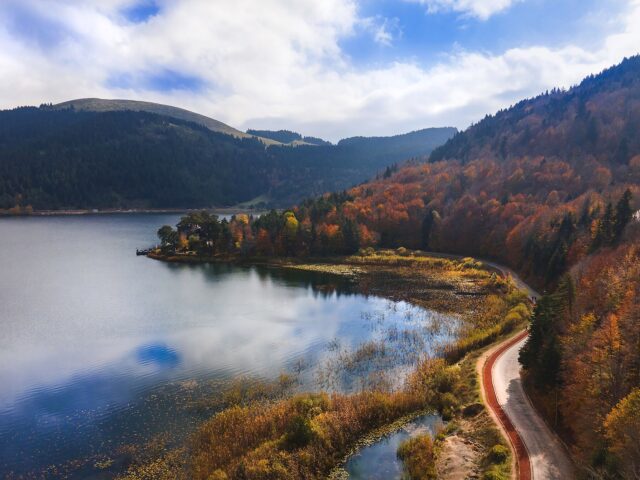
Lake Abant near Bolu: a 1,328 m mountain lake and national park…
Yedigöller National Park
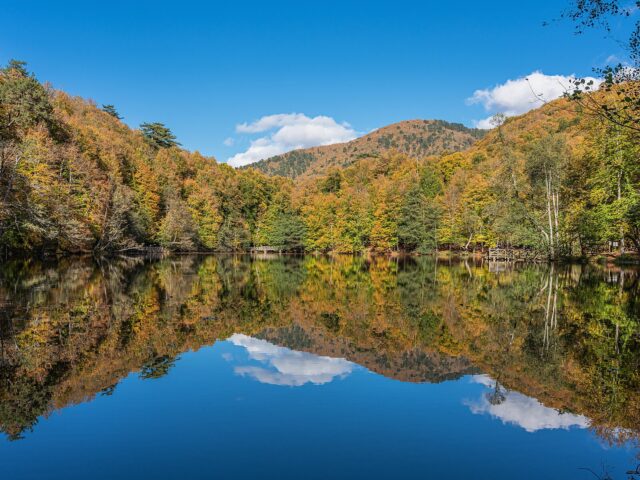
Yedigöller National Park near Bolu: seven landslide lakes in beech forest, famous…
Lake Gölcük
Lake Gölcük, 10 km from Bolu: a small lake in fir and…
Mudurnu
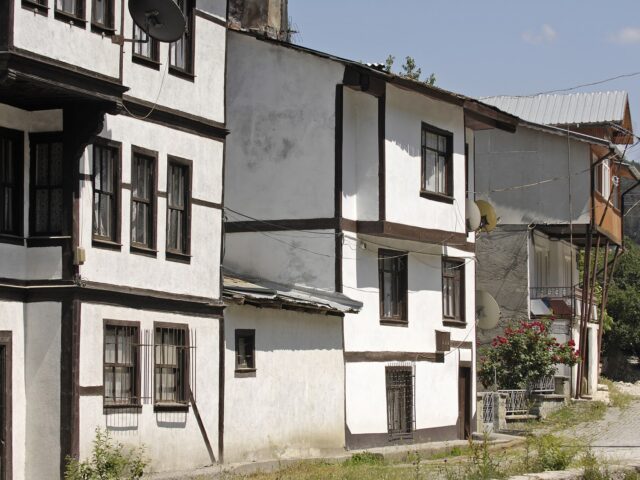
Mudurnu near Bolu: protected Ottoman houses, the 14th-century Yıldırım Bayezid mosque and…
Kartalkaya
Kartalkaya ski resort near Bolu: runs from 1,850 to 2,255 m, the…
How do you get to Bolu?
By air: Bolu has no airport. The nearest are Istanbul Sabiha Gökçen, on the Asian side of Istanbul, and Ankara Esenboğa; Zonguldak Airport (ONQ), on the coast to the north, has flights from Istanbul Airport. From Sabiha Gökçen or Esenboğa, continue by coach or hire car.
By road: Bolu is on the main Istanbul–Ankara corridor. The O-4 motorway passes through the Bolu Mountain Tunnel a short distance from town, while the older D-100 highway climbs over Bolu Mountain (Wikipedia). Intercity coaches connect Bolu with Istanbul, Ankara and most large cities. For scale, Lake Abant is 225 km from Ankara and 258 km from Istanbul (Bolu Culture and Tourism Directorate).
Getting around: A car makes the lakes and plateaus much easier. Buses run from central Bolu to Abant, but Yedigöller and most plateaus are best reached by car.
Where should you stay in Bolu?
Bolu town has hotels for every budget and is the practical base for Gölcük, Abant, the museum and the old mosques and baths. Hotels on the shore of Lake Abant let you see the lake early in the morning before the day visitors arrive. In winter, skiers stay in the hotels at Kartalkaya, 54 km from town.
For nature, Yedigöller National Park has bungalows and a camping area, and Gölcük has a guesthouse and bungalows run within the nature park (Bolu Culture and Tourism Directorate). Karacasu, 5 km from the centre, is the spa district around the Bolu hot springs.
Book a Bolu tour
−5% Istambul readers save 5% on every tour below — applied at checkout.
Partner listings via GetYourGuide · free cancellation on most
What type of climate does Bolu have?
Bolu sits on the line between oceanic and continental climates: chilly, snowy winters and warm summers with cool nights. It is fairly cloudy and foggy, with about 1,750–1,800 hours of sunshine a year (Wikipedia). The lakes and plateaus are higher and cooler than the town; Abant is at 1,328 m and Gölcük at about 1,217 m, and snow can close upland roads in winter.
When is the best time to visit Bolu?
May to October for the lakes and plateaus. The directorate gives May to September as the best period for Abant. October is the month for autumn colour, when the beech forests of Yedigöller turn yellow and red and the park is at its busiest with photographers.
December to March is ski season at Kartalkaya, and Abant and Gölcük under snow have their own following. Weekends and public holidays bring crowds from Istanbul and Ankara to Abant in particular, so come midweek if you can.
What is the history of Bolu?
According to archaeological evidence, the first settlement on the Bolu plain goes back to the 3rd millennium BC. Finds from the 1978 excavation at Hisartepe take the history of the city of Bithynion on the hills of today’s centre back to the 7th century BC. Bithynion was a leading city of the Hellenistic kingdom of Bithynia, known for its pastures and cheese; after the kingdom passed to Rome in 74 BC, it was renamed Claudiopolis after the emperor Claudius (Wikipedia). It was the birthplace of Antinous, the favourite of the emperor Hadrian.
Because the modern town is built over the ancient one, no standing buildings survive. Excavations in different years have found pieces thought to belong to a temple of Antinous and a theatre, along with coins, vessels, bottles, statues and grave stelae now in the Bolu Museum. The 2002 inventory points out that the statues show how rich Claudiopolis was in sculpture.
Claudiopolis kept its name and its role as a metropolitan see through the Byzantine centuries. Turkmen groups occupied it after the Battle of Manzikert in 1071, the Byzantines recaptured it in 1097, and under the Seljuks of Rum it became known as Boli, from the Greek polis. The Ottomans took Bolu in 1325, under Orhan Gazi (Wikipedia).
The early Ottoman period left the province its finest buildings. Yıldırım Bayezid, who became sultan in 1389, is named as builder of Bolu’s Great Mosque, the Orta Hamam in the centre, and the mosque and bath in Mudurnu, and Gazi Süleyman Paşa, Orhan’s son, of the mosque and bath in Göynük in the 1330s. Göynük is also the burial place of Akşemseddin, the teacher of Mehmed the Conqueror.
What is Bolu famous for?
- Lakes in the forest. Abant, Gölcük, the seven lakes of Yedigöller and smaller ones such as Sünnet, Sülüklü and Karagöl, each now a national or nature park.
- Skiing. Kartalkaya, on the Köroğlu Mountains, has been a ski resort since the 1970s.
- Food and cooks. From buffalo-milk kaymak and Mengen cheese to kabaklı gözleme and Gerede şakşak helvası. Mengen district holds its own cooks’ festival.
- Hot springs. The inventory notes that Bolu sits on the country’s most important fault zone, which gives it many geothermal springs.
- Köroğlu. The mountains north of the plain carry the name of the folk hero of Turkish epic, and Bolu holds a Köroğlu festival in October.
What are the historical places of Bolu?
Bolu Museum. On the ground floor of the Culture Centre, opened on 14 November 1981, with an archaeology hall running from the Neolithic to the Byzantine period and an ethnography hall. Highlights are two 2nd-century AD marble busts from Kargatepe, an over-life-size Artemis that still shows traces of red-brown paint and gilding, and a Hermes, plus Roman sculpture and glass and a reconstructed henna night with Mudurnu needle lace (Bolu Culture and Tourism Directorate).
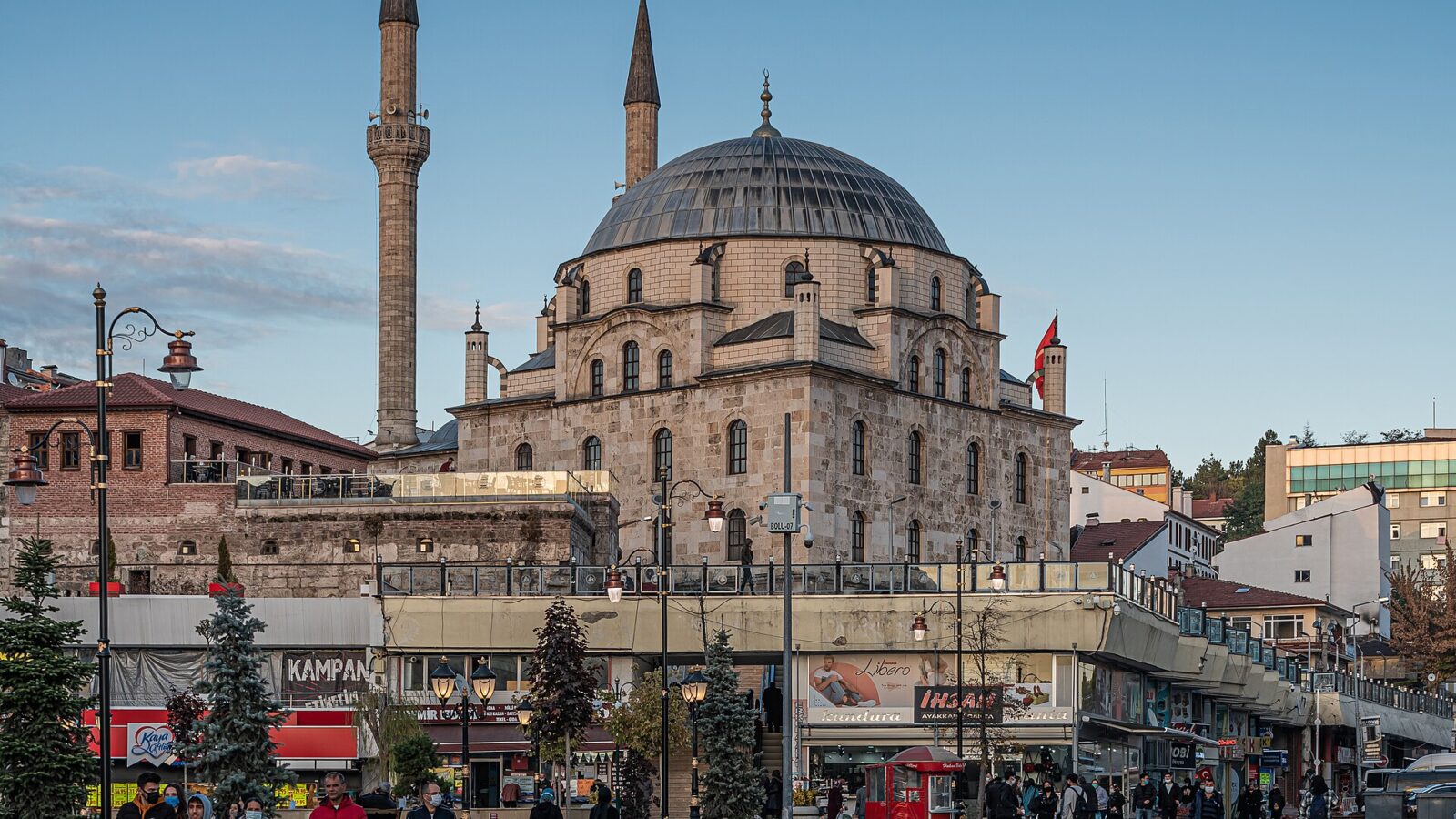
Great Mosque (Yıldırım Bayezid Mosque). In the Büyük Cami district, built by Yıldırım Bayezid; the present mosque, with twin minarets and a single dome, replaced the one that burned in 1899.
Mosques of the centre. The Kadı Mosque was built in 1499 by Mehmet Bey, son of Demirtaş Paşa, in cut stone with a carved wooden door and a five-sided apse projecting outwards. The Saraçhane Mosque (1750) is known for the pointed-arch fountains set in its east and south walls. The İmaret Mosque dates from the 16th century. The Ilıca Mosque at Karacasu (1510–11) and the Karaköy Mosque (1562–63), with tiles and fine work on its mihrab and minbar, are just outside town.
Hamams. The Orta Hamam, built by Yıldırım Bayezid in 1389 as a double bath with richly decorated interiors, was restored in 1993. The Tabaklar Hamamı (16th century, Tavil Mehmet Paşa) and the Sultan Hamamı (16th century, Sokullu Mehmet Paşa) are also in the centre.
Yukarı Taşhan. A two-storey han around an open courtyard, built by Abdullah Ağa in 1804, with 30 rooms and still used for shops and offices; the Aşağı Taşhan stands beside it.
Mudurnu and Göynük. Both are protected urban sites with streets of old Turkish houses. Göynük’s houses date from the early 20th century, with hipped roofs of local tile, painted ceilings and courtyards called hayat; the town also has the tomb of Akşemseddin in the courtyard of the Gazi Süleyman Paşa Mosque and the Süleyman Paşa Hamamı of 1335.
Seben rock houses. In the villages of Çeltikdere, Hoçaş, Kaşbıyıklar and Yuva, multi-storey dwellings are carved into the rock faces along deep valleys. Research shows the area was densely settled in the early Christian period, and there are church remains in the Çeltikdere area.
Eskiçağa and Gerede. In Eskiçağa village (Yeniçağa) a mosque and a bath were built for Yıldırım Bayezid in 1388. Near Gerede, the Asar Castle above Örencik village is dated to the Byzantine period by the pottery scattered around it.
What are the best things to do in Bolu?
- Walk round Lake Abant. A 7 km loop on the shore at 1,328 m, with the visitor centre and nature museum at the entrance.
- See Yedigöller in autumn. Climb to the Kapankaya viewpoint above the seven lakes.
- Ski at Kartalkaya. Between 1,850 and 2,255 m on the Köroğlu Mountains, from late December to March.
- Soak in a hot spring. The Bolu hot springs at Karacasu, 5 km from town, Babas near Mudurnu, Sarot (66°C) northwest of Mudurnu and Bağlum near Seben are all listed in the inventory.
- See the Akkaya travertines. White terraces of travertine 10 km south of Bolu on the Mudurnu road, which the inventory calls “Bolu’s Pamukkale”, now a protected area. The mineral water from Akkaya is bottled.
- Go up to the plateaus. The inventory counts about 300 yayla in the province. The Aladağ plateaus, 25 km south of Bolu, include Değirmenözü, Sarıalan, Gölcük, Ardıçtepe and Üstyaka. At Kızık Yaylası near Seben, houses are built of interlocking pine timbers without a single nail. At At Yaylası, north of town, a cherry festival is held among the orchards.
- Fish for trout. Abant, Gölcük, Gölköy reservoir, Yedigöller and Aladağ pond have trout, carp and other fish; at Yedigöller, fishing in Büyükgöl and Deringöl is allowed for a fee from May to September.
- Time a festival. The 2002 inventory listed the Abant Festival (July), the At Yaylası Cherry Festival (July), the Mengen Cooks’ and Tourism Festival (early August), oil wrestling at Esentepe near Gerede (August), Mudurnu’s Ahilik and Culture Week (October) and the Köroğlu Culture, Art and Tourism Festival in Bolu (October). Check current dates locally.
What are the best places to visit in Bolu?
Lake Abant is the province’s best-known lake, 1,328 m up in the Abant Mountains, a national park since 2022 with endemic trout, newts and water lilies.
Yedigöller National Park protects seven landslide-dammed lakes in deep beech forest north of Bolu, Türkiye’s classic autumn-colour destination.
Lake Gölcük is a small lake in fir forest just 10 km from town, with a level path around the shore.
Mudurnu is an old Ottoman town of timber-framed houses with one of the earliest Ottoman mosques and a 14th-century bath still in use.
Kartalkaya is Bolu’s ski resort, on the Köroğlu Mountains 54 km from town.
Also worth your time: Göynük and its houses, the Bolu Museum, the Akkaya travertines and Sünnet Lake near Göynük. To the north, the waterfalls and the ancient city of Prusias ad Hypium are in neighbouring Düzce; to the west, Lake Sapanca is on the road to Istanbul.
What is the traditional food of Bolu?
Bolu’s geographically indicated products give a good list of what to eat (Bolu Culture and Tourism Directorate):
- Bolu manda kaymağı, clotted cream made from buffalo milk.
- Kabaklı gözleme, a flatbread filled with grated, roasted black squash; Mudurnu has its own pumpkin-and-onion version.
- Mengen kedibatmaz, a soft cornmeal-and-wheat dish topped with fried liver, walnuts or keş, and Mengen kaldırık dolması, wild leaves stuffed with cornmeal.
- Mudurnu kaşık sapı, dough shaped with the handle of a wooden spoon and served with walnuts and butter or cream.
- Bolu patatesli ekmeği, a bread made with boiled Bolu potatoes and baked in stone ovens.
- Desserts: Gerede şakşak helvası, a hard halva made with walnuts and soapwort root, cooked in copper pans; Mudurnu basma helva; Göynük uğut tatlısı, made from sprouted wheat; and Göynük kabaklı yufka tatlısı, pumpkin rolled in thin pastry and soaked in milk syrup.
- Kanlıca mushrooms, which grow under the fir trees after the autumn rains.
What should you buy in Bolu?
Fındık şekeri, hazelnuts coated in hard sugar, made in Bolu since the 1920s; it is the classic thing to bring back.
Cheese and dairy: Mengen cheese, Bolu and Gerede keş (salted, dried strained yoghurt) and buffalo kaymak.
Göynük tokalı örtme, a two-piece cotton headscarf with red tassels woven in Göynük, and the needle lace of Mudurnu.



Frequently asked questions about Bolu
Is Bolu worth visiting?
Yes, for nature. Lake Abant, Yedigöller and Gölcük are among the best-known lake and forest landscapes in Türkiye, and Mudurnu and Göynük keep streets of old Ottoman houses.
How far is Bolu from Istanbul?
Bolu lies roughly midway between Istanbul and Ankara on the O-4 motorway. Lake Abant, near the town, is 258 km from Istanbul and 225 km from Ankara.
Does Bolu have an airport?
No. The nearest airports are Istanbul Sabiha Gökçen, Ankara Esenboğa and Zonguldak (ONQ); continue by coach or car.
When is the best time to see Yedigöller?
October, when the beech forests turn colour. The park is open in summer too, but in winter the road from Bolu is often closed by snow.
What food is Bolu famous for?
Buffalo kaymak, kabaklı gözleme, Mengen cheese and dishes, Mudurnu kaşık sapı and hazelnut sugar (fındık şekeri). The province has 26 geographically indicated products.
Can you ski in Bolu?
Yes, at Kartalkaya on the Köroğlu Mountains, 54 km from town, from late December to March. Check the current season’s operations before booking.
What do the official records say about Bolu?
Bolu, one of the most beautiful provinces of the Black Sea Region, is with its distinguished position between Istanbul and Ankara, its extraordinary nature and its facilities that allow every kind of tourism, one of the provinces with the highest tourism potential in our country.
With around 300 plateaus, Bolu is an important province for highland life. Bolu’s plateaus are spread over mountains covered with forests, across lush, fertile flats crossed by abundant streams. (Ministry of Culture and Tourism, Bolu Provincial Tourism Inventory, 2002)
Ready to see Bolu?
Hand-picked tours with good reviews and clear prices.
Partner listings via GetYourGuide · free cancellation on most
Before or after: Istanbul
Most trips start or end in Istanbul. Our own experiences there:

 Dinner, sunset and day cruises between Europe and Asia.See cruises bosporuscruise.com

 Historic Turkish baths in the old city — hand-picked hamams, booked direct.Book a hamam istanbulhamam.com

 Istanbul’s tallest viewpoint: both continents from 369 metres.Get tickets camlicatower.com

 Free audio guides in 15 languages, safe routes and local tips — plus 5% off GetYourGuide.Open the free guide localada.com
Nearby
All destinations
Kütahya
Kütahya travel guide: the Roman city of Aizanoi, hand-painted tiles,…
Karaman
Karaman travel guide: Binbirkilise on Karadağ, Karaman Castle, the Hatuniye…
Eskişehir
Eskişehir travel guide: the Ottoman houses of Odunpazarı, meerschaum, Sazova…
Konya
Konya, home of the Mevlana Museum and Rumi's tomb: a…
