
Düzce: Roman Konuralp, Waterfalls and the Black Sea
On this page
- What is Düzce?
- How do you get to Düzce?
- Where should you stay in Düzce?
- What type of climate does Düzce have?
- When is the best time to visit Düzce?
- What is the history of Düzce?
- What is Düzce famous for?
- What are the historical places of Düzce?
- What are the best things to do in Düzce?
- What are the best places to visit in Düzce?
- What is the traditional food of Düzce?
- What should you buy in Düzce?
- Frequently asked questions about Düzce
- What do the official records say about Düzce?
Key facts: Düzce
- UNESCO Tentative List: The Genoese Castle at Akçakoca is part of the nomination of castles and walled settlements on the Genoese trade route from the Mediterranean to the Black Sea, added to Türkiye’s Tentative List on 15 April 2013 (Düzce Culture and Tourism Directorate). It is not an inscribed World Heritage Site.
- Region: Western Black Sea, on the Istanbul–Ankara highway, 228 km east of Istanbul and 240 km west of Ankara.
- Best known for: The Roman city of Prusias ad Hypium at Konuralp, forest waterfalls, the beaches and hazelnuts of Akçakoca, and its status as Türkiye’s newest province, created in 1999.
What is Düzce?
Düzce is a province in the western Black Sea region, and also the name of its capital, a town on a fertile plain between forested mountains and the sea. The Istanbul–Ankara highway runs straight through it, and the TEM motorway passes around it, so most travellers know Düzce as a junction on the road to Bolu, Abant and the coast.
It is the newest of Türkiye’s 81 provinces. Until 1999 Düzce was a district of Bolu. After two earthquakes that year destroyed much of the town, the government made it a province to speed up rebuilding (Wikipedia).
The 2002 inventory calls Düzce a “tourism paradise” to be thought of as a whole, with its plateaus, lakes, sea, forests, rivers and historical and natural monuments. The highlights are the Roman city of Prusias ad Hypium at Konuralp, with its theatre and museum; waterfalls in the forest, such as Güzeldere Waterfall and Samandere Waterfall; Efteni Lake, a stopover for migrating birds; and the seaside town of Akçakoca.
Places to visit in Düzce
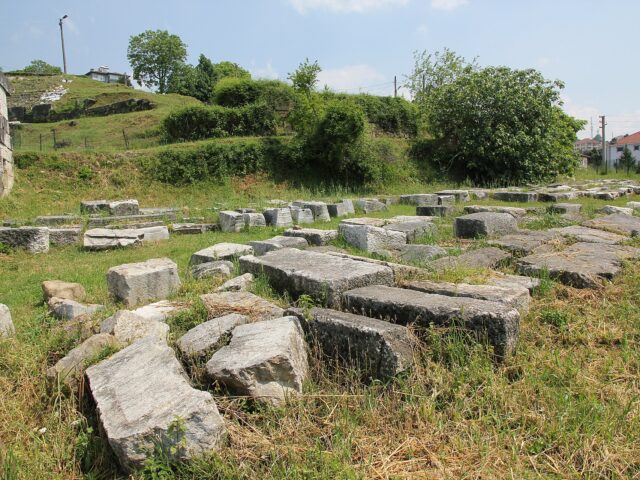
Prusias ad Hypium
Prusias ad Hypium at Konuralp, Düzce: the Forty Steps theatre for 10,000…
Güzeldere Waterfall
Güzeldere Waterfall near Düzce: a 120 m fall in a forest nature…
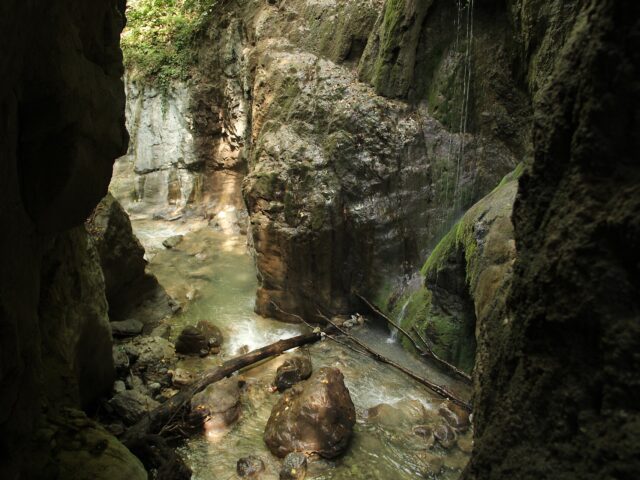
Samandere Waterfall
Samandere Waterfall near Düzce: three falls, monumental trees and the Witch’s Cauldron…
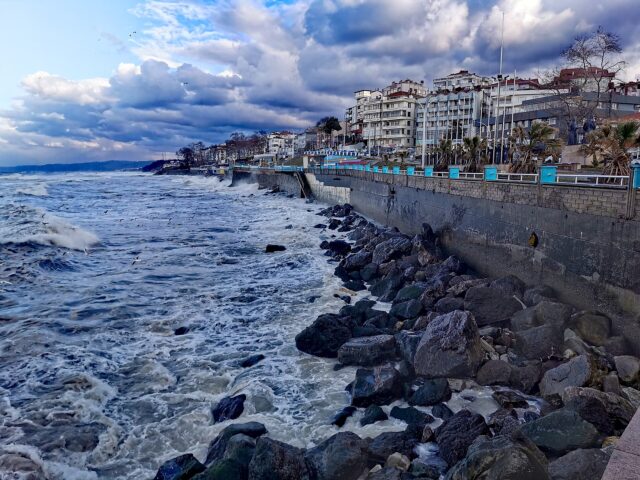
Akçakoca
Akçakoca on Düzce’s Black Sea coast: sandy beaches, the Genoese Castle, Fakıllı…
How do you get to Düzce?
By air: Düzce has no airport. Istanbul Sabiha Gökçen is the most convenient international airport; Istanbul Airport is further away on the European side. Zonguldak Airport (ONQ), on the coast to the northeast, has flights from Istanbul. Ankara Esenboğa is the alternative from the east.
By road: Düzce is 228 km east of Istanbul and 240 km west of Ankara (Wikipedia). The D-100 passes through the town and the TEM (O-4) motorway around it. Intercity coaches between Istanbul and Ankara serve Düzce, and there are direct buses from many other cities.
Getting around: Konuralp and Akçakoca are linked to Düzce by local public transport, but for the waterfalls and plateaus a car is far more practical.
Where should you stay in Düzce?
Düzce town, rebuilt after 1999, has modern hotels and is the practical base for Konuralp, the waterfalls and Efteni. In summer, Akçakoca on the coast is the better choice, with hotels and pensions near the beaches; the 2002 inventory notes that it has been a summer resort for people from the surrounding provinces since the 1950s.
For a different night, the 2002 inventory recorded guesthouses and pensions at the Efteni hot springs and a small hotel at Derdin, and campers head for the plateaus, such as Odayeri above Beyköy.
Tours in Anatolia
−5% Istambul readers save 5% on every tour below — applied at checkout.
Partner listings via GetYourGuide · free cancellation on most
What type of climate does Düzce have?
Düzce lies at only 120–180 m above sea level, and the 2002 inventory describes its climate as a transition between the Black Sea and Central Anatolia. Under the Köppen system it is humid subtropical: winters are chilly and occasionally snowy, summers warm to very warm, and rain falls through the year, about 823 mm on average (Wikipedia). The coast at Akçakoca is milder and more humid; the plateaus are much cooler.
When is the best time to visit Düzce?
Spring and autumn are the best seasons for the waterfalls, which are fullest after rain and snowmelt; the provincial directorate calls spring and autumn Güzeldere’s most splendid time. June to September is the beach season at Akçakoca. July and August are plateau-festival months: the inventory lists the Kardüz Plateau Festival on 20 July and the Odayeri Plateau Festival on 8 August. Winter is wet, but good for the hot springs.
What is the history of Düzce?
The 2002 inventory traces Düzce’s known history back to around 1390 BC and notes that, because many peoples and states invaded the region, it carries traces of the Phrygian, Lydian, Persian, Roman, Byzantine, Seljuk and Ottoman civilisations.
The most important ancient site is at Konuralp, 8 km north of the modern town. According to the Düzce Culture and Tourism Directorate, Thracian peoples lived in the area between about 1200 and 700 BC, and Megarians founded a city here called Kieros. In the 2nd century BC the Bithynian king Prusias I took it and renamed it Prusias, after himself, “on the Hypios” (the Melen river). Rome took over in 74 BC, and the city reached its greatest prosperity in the 2nd and 3rd centuries AD, visited by the emperors Hadrian, Caracalla and Elagabalus (Wikipedia). The inventory notes that around 535 Prusias was the second city of the region after Claudiopolis (Bolu).
In 1323 Konur Alp, one of the commanders of Orhan Gazi, took the area for the Ottomans, and the town of Konuralp is named after him. Under the Ottomans, Düzce supplied timber for the navy and was a transport stop between Istanbul and the east. In the 19th century, under Sultans Abdülmecid and Abdülaziz, the state settled immigrants from the Caucasus, the Black Sea coast, Transcaucasia and the Balkans here on free land (Wikipedia), and Düzce’s mixed population and cooking still reflect that.
Earthquakes have shaped modern Düzce. The town was hit in 1944, 1957 and 1967, and in 1999 the 17 August İzmit earthquake and the 12 November Düzce earthquake, of magnitude 7.2 on the North Anatolian Fault, destroyed much of the town (Wikipedia). The province was created the same year. The 2002 inventory, written while rebuilding was under way, notes that Düzce had just begun to make a name in tourism and attract foreign visitors when the earthquakes struck.
What is Düzce famous for?
- Prusias ad Hypium. A Roman theatre for some 10,000 spectators, city walls and a museum at Konuralp.
- Hazelnuts. Akçakoca is the regional centre of hazelnut growing, with a hazelnut festival every July.
- Waterfalls and forest. Güzeldere, Samandere, Aydınpınar and Aktaş are all within an hour of town.
- Efteni Lake. A wetland on the migration route of birds, with hot springs on its shore.
- The 1999 earthquakes, and the rebuilding that followed.
What are the historical places of Düzce?
Prusias ad Hypium (Konuralp). The theatre, known locally as Kırk Basamaklar (“Forty Steps”), the western city walls, the Atlı Kapı (Horse Gate), a Roman bridge of white marble blocks and the piers of the Kemerkasım aqueduct (Düzce Culture and Tourism Directorate).
Konuralp Museum. Opened in 2003 to preserve the heritage of Prusias ad Hypium, with a statue of Tyche, a two-faced Janus figure, an Orpheus mosaic, sarcophagi, coins and an ethnography section (Düzce Culture and Tourism Directorate).
Tomb of Konur Alp. Next to the historic mosque in Konuralp is the tomb of Konur Alp, who took the town from the Byzantines in 1323. The building looks new today; of the three graves inside, one is known to belong to Ali Hamza, a relative of Konur Alp.
Karaköy tombs. In Karaköy, in Çilimli district, are the tombs of Şeyh Aliyyül Müslihiddin, Çoban Dede and Yabalı Hasan Dede, followers of the Kastamonu sheikh Şaban-ı Veli. The dervishes are thought to have settled here in the 16th century.
Ahmet Dede. 3 km southeast of Cumayeri, on the Arabacı village road, the tomb of Ahmet Dede stands with a historic wooden mosque and the ruins of a stone bath among century-old plane trees on the bank of a clear stream, with hazelnut groves along the water.
Genoese Castle, Akçakoca. On a cliff between two coves 2.5 km west of Akçakoca, with a tall tower and a cistern in the inner courtyard; on the UNESCO Tentative List as part of the Genoese trade-route nomination.
What are the best things to do in Düzce?
- Walk to the waterfalls. Güzeldere Waterfall, where the water drops about 120 m, and Samandere Waterfall, one of the country’s first registered natural monuments, are both nature reserves with picnic areas and trails. The directorate also lists the Aydınpınar Waterfalls Nature Park and Aktaş Waterfall near Akçakoca.
- Watch birds at Efteni Lake. The inventory describes the Efteni Lake bird paradise as home to about 150 species of water birds, with observation terraces around the lake and an information centre.
- Soak in hot springs. Efteni, 18 km west of Düzce on the shore of the lake, and Derdin (Dolay), 17 km south in the forest at 400 m, both have spring water at about 42°C, according to the inventory.
- Go up to the plateaus. Kocayayla-Şehirli, Odayeri, Torkul, Topuk and Kardüz are the main yayla. The inventory recommends Güzeldere and Topuk plateaus for trekking and Odayeri, above Beyköy, for camping.
- Explore the canyons. The directorate lists Kurugöl Canyon near Akçakoca and the Yılancatı Canyon Nature Park.
- Raft or sail. The inventory names the Büyük Melen river for rafting and the Hasanlar reservoir for sailing races and angling.
- Join a festival. The inventory lists the International Folk Dance and Tourism Festival in June, with performances at night in the Konuralp theatre; Akçakoca’s hazelnut festival in July; oil wrestling at Balatlı village near Akçakoca on the last day of Kurban Bayramı; and the plateau festivals at Kardüz (20 July) and Odayeri (8 August). Check current dates locally.
What are the best places to visit in Düzce?
Prusias ad Hypium, at Konuralp 8 km north of Düzce, is the Bithynian and Roman city with the theatre called the Forty Steps, city walls and the Konuralp Museum.
Güzeldere Waterfall in Gölyaka district is the province’s most spectacular waterfall, a nature park in forest 18 km from Düzce.
Samandere Waterfall, 24 km southeast of Düzce, protects a 500 m stretch of stream with three falls, monumental trees and a deep pool called the Witch’s Cauldron.
Akçakoca is the province’s seaside town: beaches, a fishing harbour, a Genoese castle on the cliffs and the hazelnut capital of the region.
Also worth your time: Efteni Lake, the Fakıllı Cave near Akçakoca and the Aydınpınar Waterfalls. Lake Abant, in Bolu province, is 60 km from Düzce, and Lake Sapanca is on the way to Istanbul.
What is the traditional food of Düzce?
Düzce’s cooking reflects the communities who settled here from the Caucasus and the Balkans as well as the Black Sea kitchen. The 2002 inventory lists, as local dishes, Albanian börek (arnavut böreği), şıl börek, göbete and its mantı, katlama, sarı burma and su böreği, Bosnian börek and dessert, gözleme, höşmerim, chicken keşkek, lepsi, mamursa and halujlar, black-cabbage dishes and cornbread.
On the coast, Akçakoca adds fresh fish in season, with an anchovy (hamsi) festival in winter (Düzce Culture and Tourism Directorate).
What should you buy in Düzce?
Hazelnuts. Düzce and Akçakoca hazelnuts, raw, roasted or as paste.
Chestnut honey and mountain strawberries from Akçakoca, sold at the local market in the historic Yukarı Mahalle quarter.



Frequently asked questions about Düzce
Is Düzce worth visiting?
Yes, as part of a Black Sea or Bolu trip. The Roman theatre and museum at Konuralp, the Güzeldere and Samandere waterfalls and the beaches of Akçakoca fill one or two days.
How far is Düzce from Istanbul?
About 228 km east of Istanbul on the D-100 and TEM motorway, and 240 km west of Ankara.
What is the nearest airport to Düzce?
Istanbul Sabiha Gökçen is the most convenient. Zonguldak Airport (ONQ), to the northeast, has flights from Istanbul.
When did Düzce become a province?
In 1999, after the 17 August and 12 November earthquakes. It had been a district of Bolu, and it is Türkiye’s 81st and newest province.
What is Düzce famous for?
Hazelnuts, the Roman city of Prusias ad Hypium at Konuralp, its forest waterfalls and the beaches of Akçakoca.
Does Düzce have a beach?
Yes, at Akçakoca on the Black Sea coast, with beaches such as Melen Ağzı, Karaburun, Kumpınar and Edilli Ağzı and one below the Genoese Castle.
What do the official records say about Düzce?
The known history of Düzce goes back to around 1390 BC. Over this time the region was exposed to the invasion of many peoples and states. For this reason the area bears traces of the Phrygian, Lydian, Persian, Roman, Byzantine, Seljuk and Ottoman civilisations, before and after recorded history. The passing of the region into Ottoman hands was achieved in 1323 by Konuralp Bey, one of the commanders of Orhan Gazi, and the area was given the name Konuralp after him.
Düzce, on the Ankara–Istanbul road, is surrounded by tourism centres such as Abant, Kartalkaya, Yedigöller, Gölcük and Akçakoca. In this sense Düzce, with its plateaus, lakes, sea, forests, rivers and historical and natural monuments, is a “tourism paradise” that should be considered as a whole. (Ministry of Culture and Tourism, Düzce Provincial Tourism Inventory, 2002)
Ready to see Düzce?
Hand-picked tours with good reviews and clear prices.
Partner listings via GetYourGuide · free cancellation on most
Before or after: Istanbul
Most trips start or end in Istanbul. Our own experiences there:

 Dinner, sunset and day cruises between Europe and Asia.See cruises bosporuscruise.com

 Historic Turkish baths in the old city — hand-picked hamams, booked direct.Book a hamam istanbulhamam.com

 Istanbul’s tallest viewpoint: both continents from 369 metres.Get tickets camlicatower.com

 Free audio guides in 15 languages, safe routes and local tips — plus 5% off GetYourGuide.Open the free guide localada.com
Nearby
All destinations
Niğde
Niğde travel guide: Gümüşler Monastery, the Alaaddin Mosque, Hüdavend Hatun…
Eskişehir
Eskişehir travel guide: the Ottoman houses of Odunpazarı, meerschaum, Sazova…
Erzurum
Erzurum travel guide: the Yakutiye and Double Minaret madrasas, Three…
Mersin
Mersin is a city located in southern Turkey, on the…
