
Prusias ad Hypium: The Roman City at Konuralp
On this page
- What is Prusias ad Hypium?
- How do you get to Prusias ad Hypium?
- When is the best time to visit Prusias ad Hypium?
- What is the history of Prusias ad Hypium?
- What is Prusias ad Hypium famous for?
- What can you see at Prusias ad Hypium?
- Common misconceptions about Prusias ad Hypium
- Frequently asked questions about Prusias ad Hypium
- What do the official records say about Prusias ad Hypium?
Key facts: Prusias ad Hypium
- What it is: Ancient city with a Hellenistic–Roman theatre for about 10,000 spectators (“Kırk Basamaklar”), city walls, a gate, a Roman bridge and aqueduct piers; finds displayed in the Konuralp Museum.
- Where: Konuralp, 8 km north of Düzce town, Düzce province.
- Period: Founded as Kieros; renamed Prusias by King Prusias I of Bithynia (2nd century BC); Roman from 74 BC, most prosperous in the 2nd–3rd centuries AD; Ottoman from 1323.
What is Prusias ad Hypium?
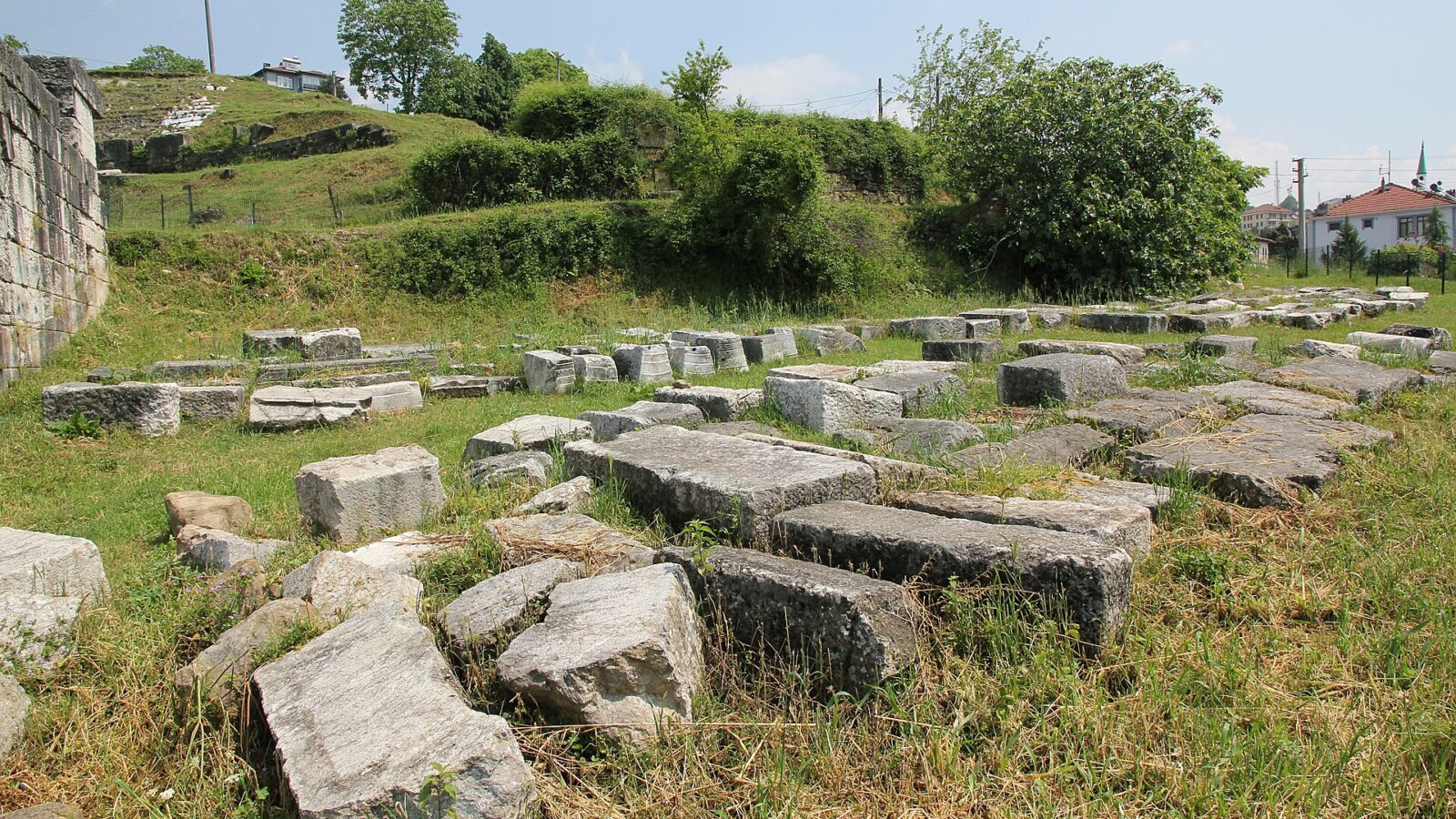
Prusias ad Hypium is the ancient city under the town of Konuralp, just north of Düzce. Its best-preserved monument is the theatre, built into a hillside and known locally as Kırk Basamaklar, the “Forty Steps”. Around it are stretches of city wall, a gateway with a carved horse, a Roman bridge of marble blocks and the piers of an aqueduct, and in the town centre the Konuralp Museum displays the statues, mosaics and coins found here.
The city stood on a hill ending in the plain, near the Küçük Melen and Tabak streams. Its Roman name means “Prusias on the Hypios”, the ancient name of the Melen river, to tell it apart from the other cities King Prusias founded or renamed, such as Bursa and Gemlik.
How do you get to Prusias ad Hypium?
Konuralp is about 8 km north of Düzce town (Wikipedia). A taxi from the centre of Düzce is a short ride, and local buses also serve Konuralp. Plan to see both the theatre and the Konuralp Museum.
Düzce is 228 km east of Istanbul on the D-100 and TEM motorway; the most convenient airport is Istanbul Sabiha Gökçen.
Tours in Anatolia
−5% Istambul readers save 5% on every tour below — applied at checkout.
Partner listings via GetYourGuide · free cancellation on most
When is the best time to visit Prusias ad Hypium?
Any time of year, but spring and early autumn are the most comfortable for walking around the site. Rain is frequent in winter. In June, the 2002 inventory places the International Folk Dance and Tourism Festival, whose second night is held in the Konuralp theatre with all the visiting troupes; check whether it still uses the theatre. Check the museum’s opening hours before visiting.
What is the history of Prusias ad Hypium?
Konuralp first appears in history as Hypios, and later as Kieros, a town belonging to Herakleia Pontike (today’s Karadeniz Ereğli). The Düzce Culture and Tourism Directorate records that Megarians founded Kieros (Düzce Culture and Tourism Directorate).
The 2002 inventory tells what happened next. The Bithynians, moving against the Mariandynians and the state of Herakleia, captured Kieros, east of the Sangarios (Sakarya), under their king Prusias I. He settled a Bithynian colony there, soon made it more prosperous than before, adorned it with monuments, fortified it and changed its name. Kieros thus left the stage of history, and the town took the king’s name, Prusias. To distinguish it from the other cities named Prusias, at Bursa and Gemlik, it was called Prusias pros Hypios, “Prusias on the Melen”.
It stayed under Bithynia until 74 BC, apart from a period when Mithridates of Pontus overran it. When the last Bithynian king, Nicomedes IV, left his kingdom to Rome, it became Prusias ad Hypium, a city of the province of Bithynia and Pontus. An inscription published by the French archaeologist Georges Perrot shows that it had twelve tribes, each with two heads. Coins and buildings from almost every reign show that economic life was lively throughout the Roman era, and the emperors Hadrian, Caracalla and Elagabalus visited the city (Wikipedia).
Under Theodosius I, Prusias became part of the new province of Honorias, and around 535 it was the second city of the region after Claudiopolis (Bolu). Marble gravestones with crosses survive from this Christian period. In 1323 Konur Alp, a commander of Orhan Gazi, took the town for the Ottomans, and it has carried his name since. Excavations have been carried out by the archaeology department of Düzce University (Wikipedia).
What is Prusias ad Hypium famous for?
- The “Forty Steps” theatre, Hellenistic in origin and enlarged by the Romans, with room for around 10,000 people.
- Tyche. A statue of the goddess Tyche, the city’s symbol, now in the Konuralp Museum.
- Konur Alp. The early Ottoman commander whose tomb stands next to the town’s historic mosque.
What can you see at Prusias ad Hypium?
The theatre (Kırk Basamaklar). Built in the Hellenistic period with Roman additions; the seating dates from the 1st century AD and the stage building was added in 190 AD (Wikipedia). It covers about 5,978 m², roughly 100 by 74 m. The stage-building wall and part of the upper seating survive; there were about 36 rows in all (Düzce Culture and Tourism Directorate).
The city walls. The western walls stand 4.70 m high and run for 118 m, built of cut stone without mortar in the Hellenistic and Roman periods, with reused blocks in later Byzantine repairs.
Atlı Kapı (the Horse Gate). The main entrance to the site. Its lintel carries a horse relief and a Greek inscription; the block was originally part of a grave stele that a man of Prusias had made for his mother.
The Roman bridge. Built of white marble blocks without mortar. The inventory notes that it had three arches and lies in the bed of the Tabak stream, half buried in earth.
The Kemerkasım aqueduct. Eleven rubble-stone piers survive from the city’s water system.
The Konuralp Museum. Opened in 2003, with three exhibition halls. It holds about 6,237 objects, among them the Tyche statue, a two-faced Janus figure, an Orpheus mosaic, sarcophagi, a tomb complex and ethnographic and coin collections (Düzce Culture and Tourism Directorate).
The tomb of Konur Alp, beside the historic mosque in Konuralp.
Common misconceptions about Prusias ad Hypium
Is Konuralp the only ancient city on the western Black Sea?
What people often assume: Local tourism material, including the 2002 provincial inventory, describes Konuralp as “the only ancient city of the Western Black Sea”.
What the record says: Prusias was not alone. Its own early history ties it to Herakleia Pontike, today’s Karadeniz Ereğli, a 6th-century BC Greek city (source), and Tios at Filyos was a 7th-century BC Milesian colony (source). Both are in neighbouring Zonguldak province.



Frequently asked questions about Prusias ad Hypium
Where is Prusias ad Hypium?
At Konuralp, about 8 km north of Düzce town in Düzce province, northwest Türkiye.
Why is the theatre called Kırk Basamaklar?
Kırk Basamaklar means “Forty Steps”, the local name for the rows of seating. The theatre had about 36 rows and held around 10,000 spectators.
What is in the Konuralp Museum?
Finds from Prusias ad Hypium, including a statue of Tyche, a two-faced Janus figure and an Orpheus mosaic, plus coins and ethnographic collections. It opened in 2003.
Who was Prusias?
Prusias I, king of Bithynia, who captured the town of Kieros and renamed it after himself. The Romans called it Prusias ad Hypium, “Prusias on the Hypios”.
Who was Konur Alp?
A commander of Orhan Gazi who took the town for the Ottomans in 1323. Konuralp is named after him, and his tomb stands beside the historic mosque.
What do the official records say about Prusias ad Hypium?
The history of the ancient city in the town of Konuralp, attached to Düzce, goes back to the 3rd century BC. Konuralp first appears on the stage of history with the name Hypios. The town, founded on a hill that stretches from east to west and ends in the plain near the Küçük Melen and Tabak streams, began to be called Kieros after Hypios. The history of Kieros has not been fully clarified.
The symbol of the city, the statue of the goddess Tyche, and the Roman bridge, today almost covered with earth in the bed of the Tabak stream, with three arches and 10 metres long, survive. No definite trace remains of the walls from the earliest periods of Prusias ad Hypium. The main works brought out of the ancient city are the theatre (Forty Steps), the marble bridge, mosaics, walls, aqueducts, the Tyche statue, the bust of Antoninus Pius, a sarcophagus, grave stelae and statue bases. (Ministry of Culture and Tourism, Düzce Provincial Tourism Inventory, 2002)
Main photo: Ingeborg Simon, CC BY-SA 3.0, via Wikimedia Commons.
Ready to see Prusias ad Hypium?
Hand-picked tours with good reviews and clear prices.
Partner listings via GetYourGuide · free cancellation on most
Before or after: Istanbul
Most trips start or end in Istanbul. Our own experiences there:

 Dinner, sunset and day cruises between Europe and Asia.See cruises bosporuscruise.com

 Historic Turkish baths in the old city — hand-picked hamams, booked direct.Book a hamam istanbulhamam.com

 Istanbul’s tallest viewpoint: both continents from 369 metres.Get tickets camlicatower.com

 Free audio guides in 15 languages, safe routes and local tips — plus 5% off GetYourGuide.Open the free guide localada.com
Nearby
All destinations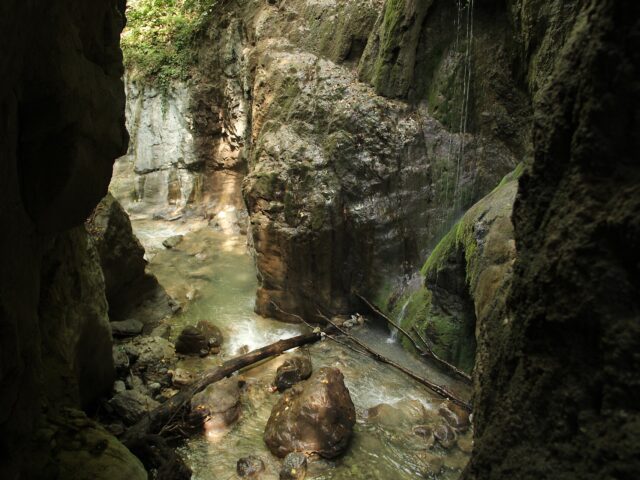
Samandere Waterfall
Samandere Waterfall near Düzce: three falls, monumental trees and the…
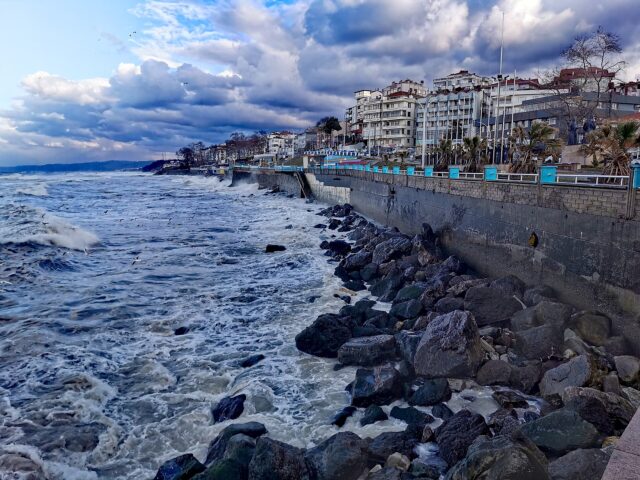
Akçakoca
Akçakoca on Düzce’s Black Sea coast: sandy beaches, the Genoese…
Güzeldere Waterfall
Güzeldere Waterfall near Düzce: a 120 m fall in a…
Düzce
Düzce travel guide: the Roman theatre and museum at Konuralp,…
