
Yedigöller National Park: Seven Lakes in the Beech Forest
On this page
- What is Yedigöller National Park?
- How do you get to Yedigöller National Park?
- When is the best time to visit Yedigöller National Park?
- What is the history of Yedigöller National Park?
- What is Yedigöller National Park famous for?
- What can you do at Yedigöller National Park?
- Frequently asked questions about Yedigöller National Park
- What do the official records say about Yedigöller National Park?
Key facts: Yedigöller National Park
- What it is: National park protecting seven lakes dammed by landslides, in dense beech forest; declared in 1965.
- Where: About 42 km north of Bolu, near the border with Zonguldak, in the Mengen area of Bolu province; around 900 m above sea level.
- Area: About 1,600 ha.
What is Yedigöller National Park?
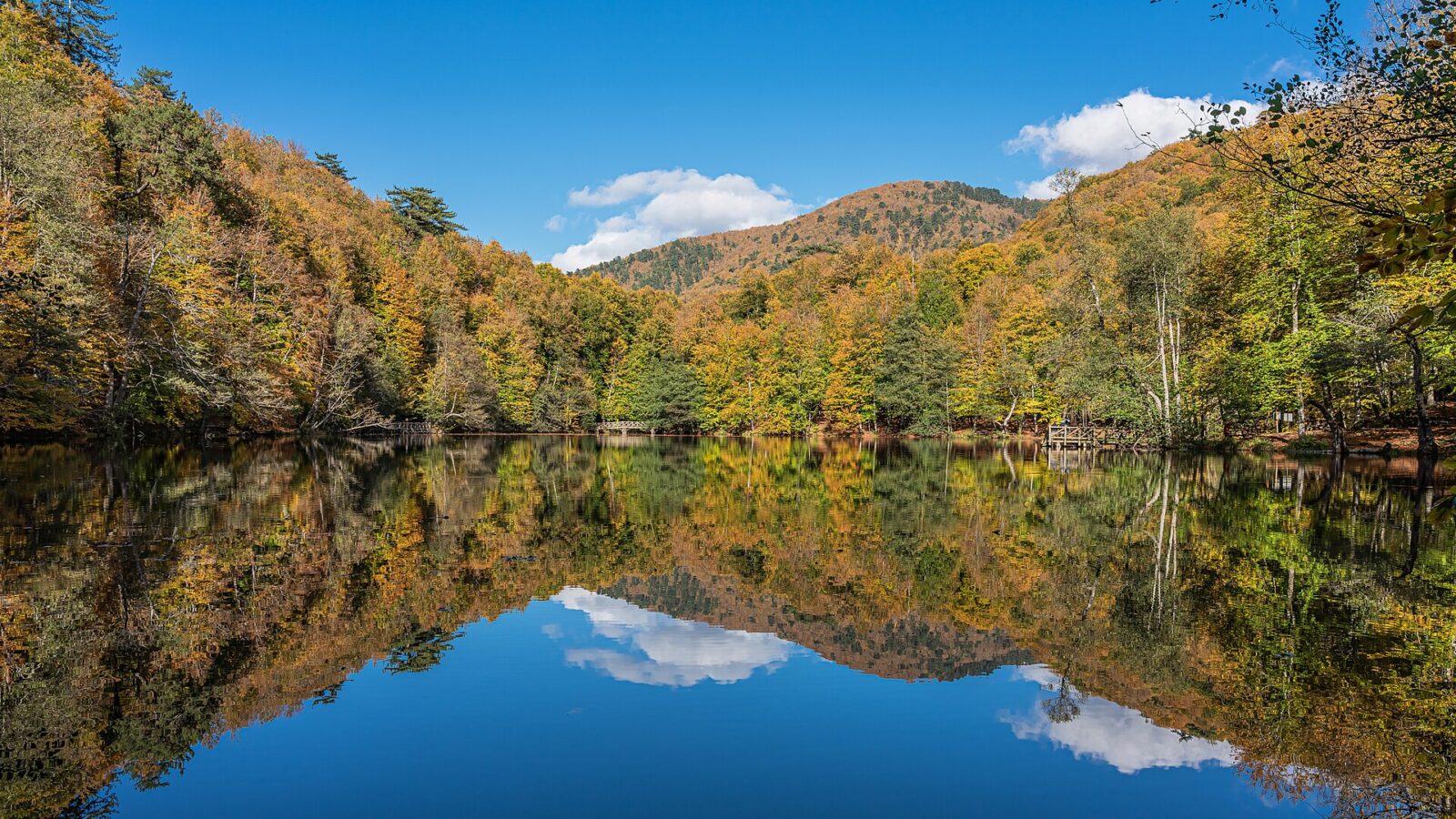
Yedigöller (“Seven Lakes”) is a national park in the mountains north of Bolu. Seven small lakes lie in a chain along a forested valley: from north to south, Büyükgöl, Seringöl, Deringöl, Nazlıgöl, Küçükgöl, İncegöl and Sazlıgöl. Büyükgöl is the largest (Bolu Culture and Tourism Directorate). The basin covers 1,642 ha and was taken under protection as a national park in 1965.
The forest is the main attraction as much as the lakes. Beech dominates, mixed with oak, hornbeam, alder, black pine, Scots pine, fir, elm, lime and yew, and in October the whole valley turns yellow, orange and red.
How do you get to Yedigöller National Park?
The park is about 42 km north of Bolu (Wikipedia). There are two roads, which branch north from the Ankara–Istanbul highway at Yeniçağa (km 152) and at Bolu (km 190). The Bolu road is the shorter and climbs through forest.
In winter the Bolu road is often closed by snow and ice, and access is then only via Yeniçağa–Mengen–Yazıcık (Bolu Culture and Tourism Directorate). Come by car, by taxi from Bolu or with an organised trip.
Book a Yedigöller National Park tour
−5% Istambul readers save 5% on every tour below — applied at checkout.
Partner listings via GetYourGuide · free cancellation on most
When is the best time to visit Yedigöller National Park?
October is the classic month, for the autumn colours. Late spring and summer are green, cool and quieter, and the fishing season runs from May to September. In winter, snow makes the park beautiful but hard to reach, and some facilities may be closed. Weekends in October are crowded; go on a weekday and arrive early.
What is the history of Yedigöller National Park?
The lakes are young in geological terms. The 2002 inventory explains that the ground here is largely serpentine and volcanic rock, prone to slumping and sliding. Landslides blocked the valley in several places, and water collected behind each natural dam; some of the lakes are connected to each other underground through leaks in their beds.
The area was protected as a national park in 1965. Turkey’s first cultured trout production station was set up in the park in 1969, which in turn made the lakes a place for recreational fishing. Protection has also let wildlife numbers grow, and the park has a deer breeding area.
What is Yedigöller National Park famous for?
- Autumn colours on beech forest around a chain of still lakes.
- Landslide lakes, seven of them in a single valley.
- Wildlife. Red deer, roe deer, brown bear, wild boar, wolf, fox and squirrel live in and around the park, and Wikipedia adds lynx, jungle cat and otter to the list (Wikipedia).
- Trout. The first cultured trout station in Türkiye was set up here in 1969.
What can you do at Yedigöller National Park?
Walk the lakeshores. The seven lakes lie close together along one valley, so you can walk from one to the next.
Climb to the Kapankaya viewpoint. From the Kapankaya Manzara Seyir Yeri you look down over the lakes and the forest. On the way, a roadside sign marks the path to a monumental tree.
See the deer. The deer breeding area can be visited.
Fish. Sport fishing is allowed in Büyükgöl and Deringöl for a fee, every year from May to September.
Picnic, camp and stay. There are picnic areas, a 1 ha tent camping area, bungalows and a restaurant (Bolu Culture and Tourism Directorate).
Learn the names. Most of the lakes are named for what they look like: Büyükgöl means “big lake”, Deringöl “deep lake”, Küçükgöl “small lake”, İncegöl “narrow lake” and Sazlıgöl “reedy lake”. Nazlıgöl is the “coy lake”.
Photograph. Early morning, when mist lies on the water and the light comes through the beech leaves, is the best time.
Nearby. Back in Bolu, Lake Gölcük is a smaller, easier forest lake, and Lake Abant is the province’s largest.



Frequently asked questions about Yedigöller National Park
How far is Yedigöller from Bolu?
About 42 km north. The direct road from Bolu is partly unpaved and often closed by snow in winter, when access is via Yeniçağa, Mengen and Yazıcık.
What are the seven lakes of Yedigöller?
From north to south: Büyükgöl, Seringöl, Deringöl, Nazlıgöl, Küçükgöl, İncegöl and Sazlıgöl.
When is the best time to visit Yedigöller?
October for autumn colours. Late spring and summer are green and quieter.
Can you stay overnight at Yedigöller?
Yes. The park has bungalows, a restaurant and a tent camping area.
Can you fish at Yedigöller?
Yes, in Büyükgöl and Deringöl, for a fee, from May to September.
What do the official records say about Yedigöller National Park?
In the national park, located in a rather rugged part of the Western Black Sea area, the lakes formed by landslides, the rich vegetation resembling a “sea of forest”, the trout living in the lakes and the recreational potential these create are the main resources. In this area, where the ground generally consists of serpentines and volcanic rocks, occasional subsidence and land ready to slide are the main factors that prepared the formation of the lakes. The lakes are barrier lakes, in which water collected behind masses that slid down and closed off the valleys. Some of them are connected to each other by leaks through their beds.
The dominant vegetation of the national park is beech. Oak, hornbeam, alder, black pine, Scots pine, fir, elm, lime and yew are also seen. Thanks to effective protection, deer, roe deer, bear, wild boar, wolf, fox and squirrel, whose numbers have increased, are found within the park and in the areas close to it.
While recreational activities such as camping, day picnics, walking and photography are carried out in the national park, accommodation and food needs can be met from the rest houses, country restaurant and kiosk that have been built. In the national park you can stay in a tent or caravan, and you can also use the guesthouse and bungalows. (Ministry of Culture and Tourism, Bolu Provincial Tourism Inventory, 2002)
Ready to see Yedigöller National Park?
Hand-picked tours with good reviews and clear prices.
Partner listings via GetYourGuide · free cancellation on most
Before or after: Istanbul
Most trips start or end in Istanbul. Our own experiences there:

 Dinner, sunset and day cruises between Europe and Asia.See cruises bosporuscruise.com

 Historic Turkish baths in the old city — hand-picked hamams, booked direct.Book a hamam istanbulhamam.com

 Istanbul’s tallest viewpoint: both continents from 369 metres.Get tickets camlicatower.com

 Free audio guides in 15 languages, safe routes and local tips — plus 5% off GetYourGuide.Open the free guide localada.com
Nearby
All destinationsLake Gölcük
Lake Gölcük, 10 km from Bolu: a small lake in…
Kartalkaya
Kartalkaya ski resort near Bolu: runs from 1,850 to 2,255…
Lake Abant
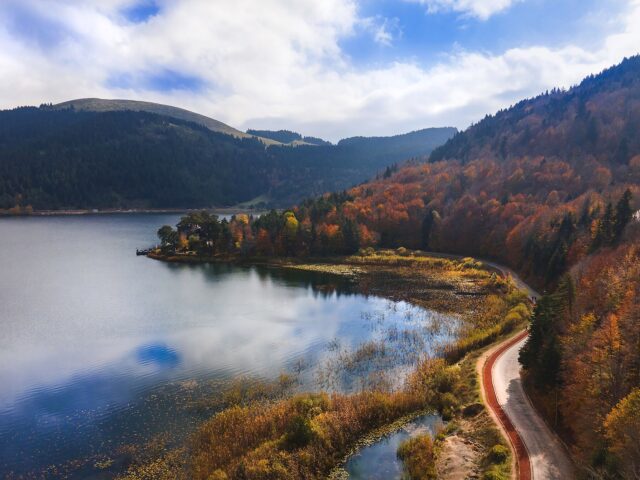
Lake Abant near Bolu: a 1,328 m mountain lake and…
Mudurnu
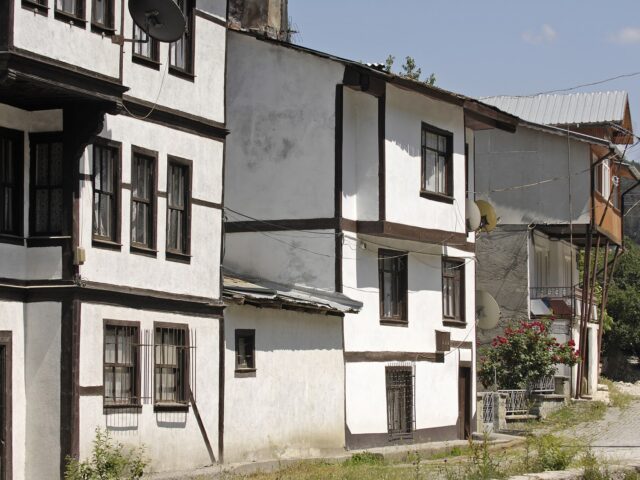
Mudurnu near Bolu: protected Ottoman houses, the 14th-century Yıldırım Bayezid…
