
Mudurnu: Ottoman Houses and a 14th-Century Hamam
On this page
Key facts: Mudurnu
- What it is: A historic district town and protected urban site with Ottoman houses, an early Ottoman mosque and a 14th-century bath still in use.
- Where: About 52 km southwest of Bolu, Mudurnu district, Bolu province.
- Period: Byzantine origins; Ottoman from the 14th century; Yıldırım Bayezid Hamam built in 1382.
What is Mudurnu?
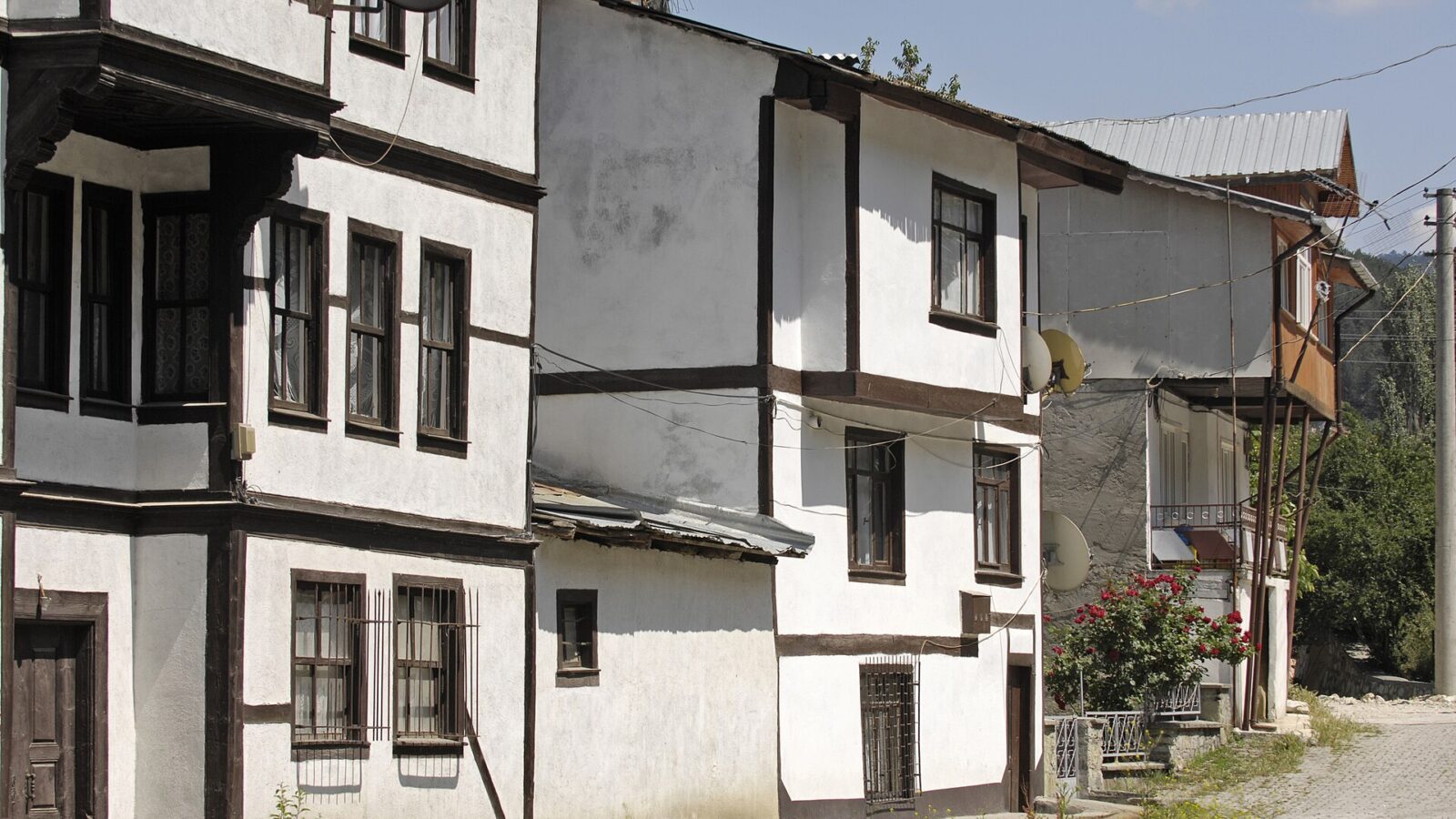
Mudurnu is a small town in the hills southwest of Bolu, in a valley below the remains of a Byzantine castle. Its centre is a protected urban site of old Turkish houses: timber-framed, plastered, overhanging the street on upper floors, many of them restored. The 2002 inventory counted 173 buildings of high architectural value under protection, 165 houses and 8 mosques, fountains and baths, with the Armutçular Mansion standing out among them.
At the centre is the early Ottoman complex of Yıldırım Bayezid: a mosque and a bath built in the second half of the 14th century. The bath still works.
How do you get to Mudurnu?
Mudurnu is about 52 km southwest of Bolu (Wikipedia). By car, the road from Bolu passes the Akkaya travertines, 10 km south of town. Public transport from Bolu is limited, so ask at the bus terminal for current departures.
Coming from Istanbul or Ankara, leave the O-4 motorway at Bolu. The nearest airports are Istanbul Sabiha Gökçen and Ankara Esenboğa.
Book a Mudurnu tour
−5% Istambul readers save 5% on every tour below — applied at checkout.
Partner listings via GetYourGuide · free cancellation on most
When is the best time to visit Mudurnu?
Spring and autumn are best for walking the streets, and in October the 2002 inventory placed Mudurnu’s Ahilik and Culture Week, a festival of the town’s guild traditions. Summer is pleasant at this altitude; winter is cold and quiet, a good time for the hamam. Weekends bring day-trippers, especially from Istanbul and Ankara.
What is the history of Mudurnu?
Local tradition links the town’s name to a Byzantine princess, Modrene, and Byzantine castle ruins remain above the town. In the 8th century the forces of the usurper Artabasdos were defeated near Mudurnu (Wikipedia).
Under the early Ottomans, Yıldırım Bayezid built here a complex of a mosque, dervish lodges, a bath and a madrasa. Sources give the mosque’s date variously as 1372 and 1382. It is noted as one of the first Ottoman mosques covered by a single large dome without columns. The bath beside it was built in 1382 by the architect Ömer bin İbrahim. Kanuni Sultan Süleyman later added a single-domed mosque in the centre, noted for its painted ceiling.
In the late Ottoman period Mudurnu belonged to the province of Kastamonu. Its houses were taken under protection as an urban site, and in recent years many have been restored, some as restaurants serving local food.
What is Mudurnu famous for?
- Old houses. Streets of Ottoman-era timber-framed houses, similar in style to those of Göynük.
- Yıldırım Bayezid Hamam, one of the most original early Ottoman baths, still in use.
- Ahilik. The town celebrates the medieval Ahi craft-guild tradition in an annual week of events.
- Food. Mudurnu basma helva, Mudurnu kaşık sapı and Mudurnu’s pumpkin gözleme all have geographical indication status (Bolu Culture and Tourism Directorate).
- Needle lace. Mudurnu oya, displayed in the Bolu Museum’s ethnography hall.
What can you see in Mudurnu?
Yıldırım Bayezid Mosque. The 14th-century mosque in the centre, built of cut stone, marble and brick, with classical Ottoman decoration inside.
Yıldırım Bayezid Hamam. Next to the mosque. The inventory calls it one of the most beautiful baths of its time and one of the most original examples of early Ottoman bath architecture, notable for its portal and the transitions to its domes. It still operates as a bath.
Kanuni Mosque. Single-domed, single-minaret mosque built in the name of Süleyman the Magnificent, with a fine painted ceiling.
The old houses. Walk the streets around the centre; the Armutçular Mansion is the most notable of the protected houses.
The castle ruins above the town, from the Byzantine period.
Hot springs nearby. The inventory lists the Babas spring, 5 km from Mudurnu, where water at 40°C emerges among travertines, and the Sarot spring, 30 km northwest in Ilıca village, at 66°C, used for more than 1,500 years and with a historic bath.
Göynük. The province’s other old town has a similar townscape. The inventory describes its early 20th-century houses with hipped roofs of local tile, painted ceilings in the sitting rooms, inner staircases and front courtyards called hayat. Göynük also has the tomb of Akşemseddin, teacher of Mehmed the Conqueror, in the courtyard of the Gazi Süleyman Paşa Mosque, and the Süleyman Paşa Hamamı of 1335.
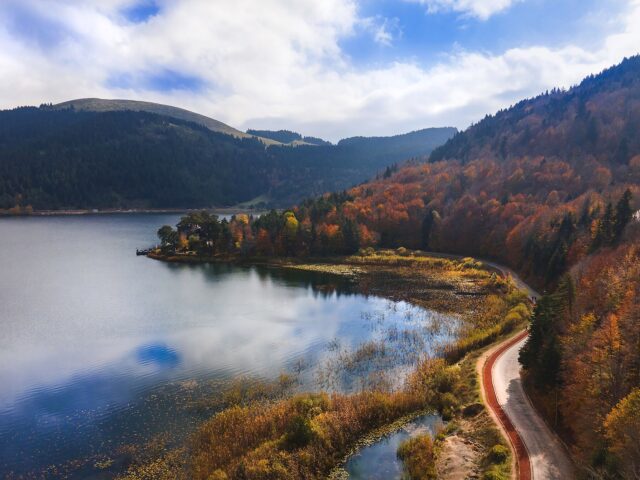
Lakes nearby. Sülüklü Lake, a nature park on the road towards Akyazı, and Karamurat Lake are in Mudurnu district; Lake Abant lies on the other side of the Abant Mountains, north of the town.



Frequently asked questions about Mudurnu
How far is Mudurnu from Bolu?
About 52 km southwest, roughly an hour by car via the Akkaya travertines.
Is the Yıldırım Bayezid Hamam in Mudurnu still open?
Yes, the 1382 bath still works as a public hamam. Men’s and women’s hours may differ, so ask locally.
What is Mudurnu famous for?
Its protected Ottoman houses, the 14th-century Yıldırım Bayezid mosque and bath, Ahi guild traditions, needle lace and dishes such as basma helva and kaşık sapı.
Can you combine Mudurnu with Abant?
Yes. Lake Abant lies across the Abant Mountains between Mudurnu and the D-100, so the two make a natural day trip from Bolu.
What should you eat in Mudurnu?
Mudurnu kaşık sapı, pumpkin gözleme and basma helva, all with geographical indication status.
What do the official records say about Mudurnu?
Mudurnu, declared an Urban Protected Area, has an important character in terms of old Turkish houses. These houses, which resemble the Göynük houses in their civil architecture and reflect the history and culture of the district, have been taken under protection. In the district there are 173 buildings of high architectural value in total: 165 houses and 8 mosques, fountains and baths. The Armutçular Mansion stands out among these buildings.
The Yıldırım Beyazıt Hamam, in Mudurnu district, is next to the mosque of the same name. Its architect was Ömer bin İbrahim, and it is among the most beautiful baths built in the same period. It was built in 1382. It is one of the most original examples of early Ottoman baths, and attracts attention with its portal and dome transitions. (Ministry of Culture and Tourism, Bolu Provincial Tourism Inventory, 2002)
Main photo: Dosseman, CC BY-SA 4.0, via Wikimedia Commons.
Ready to see Mudurnu?
Hand-picked tours with good reviews and clear prices.
Partner listings via GetYourGuide · free cancellation on most
Before or after: Istanbul
Most trips start or end in Istanbul. Our own experiences there:

 Dinner, sunset and day cruises between Europe and Asia.See cruises bosporuscruise.com

 Historic Turkish baths in the old city — hand-picked hamams, booked direct.Book a hamam istanbulhamam.com

 Istanbul’s tallest viewpoint: both continents from 369 metres.Get tickets camlicatower.com

 Free audio guides in 15 languages, safe routes and local tips — plus 5% off GetYourGuide.Open the free guide localada.com
Nearby
All destinationsLake Gölcük
Lake Gölcük, 10 km from Bolu: a small lake in…
Lake Abant
Lake Abant near Bolu: a 1,328 m mountain lake and…
Kartalkaya
Kartalkaya ski resort near Bolu: runs from 1,850 to 2,255…
Yedigöller National Park
Yedigöller National Park near Bolu: seven landslide lakes in beech…
