
Eskişehir: Odunpazarı, Meerschaum and the Phrygian Highlands
On this page
- What is Eskişehir?
- How do you get to Eskişehir?
- Where should you stay in Eskişehir?
- What type of climate does Eskişehir have?
- When is the best time to visit Eskişehir?
- What is the history of Eskişehir?
- What is Eskişehir famous for?
- What are the historical places of Eskişehir?
- What are the best things to do in Eskişehir?
- What are the best places to visit in Eskişehir?
- What is the traditional food of Eskişehir?
- What should you buy in Eskişehir?
- Frequently asked questions about Eskişehir
- What do the official records say about Eskişehir?
Key facts: Eskişehir
- UNESCO World Heritage: The Great Mosque of Sivrihisar is one of the five “Wooden Hypostyle Mosques of Medieval Anatolia” inscribed in 2023 (UNESCO).
- UNESCO Tentative List: Odunpazarı Historical Urban Site (2012) and Mountainous Phrygia, shared with Afyonkarahisar and Kütahya (2015) (UNESCO). Neither is yet inscribed.
- Region: Northwestern Central Anatolia, on the Porsuk River, about 233 km west of Ankara and 323 km southeast of Istanbul by road.
- Best known for: The Ottoman houses of Odunpazarı, meerschaum carving, the Phrygian highlands and a large student population.
What is Eskişehir?
Eskişehir is a province in northwestern Central Anatolia and the name of its capital, a university city of about 820,000 people built on both banks of the Porsuk River. The name means “old city”, and it fits: people have lived here since at least the 4th millennium BC, and the Phrygian highlands to the south hold some of the most important rock monuments in Anatolia.
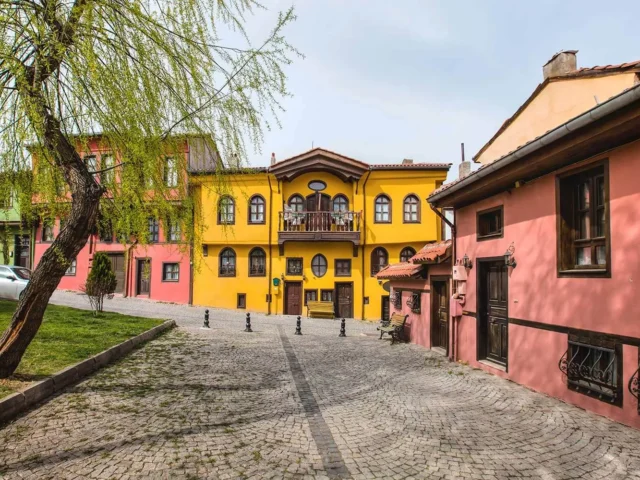
Day to day, though, Eskişehir feels young. Three universities, Anadolu, Eskişehir Osmangazi and Eskişehir Technical, fill the city with students, and the centre is organised around trams, riverside parks and footbridges over the Porsuk. On the hill south of the river is Odunpazarı, the restored Ottoman quarter of timber-framed houses with projecting upper floors, now also home to a museum designed by Kengo Kuma.
The province reaches south into Mountainous Phrygia, shared with Afyonkarahisar and Kütahya, and east towards Sivrihisar, whose Great Mosque is one of Türkiye’s newest World Heritage components. Eskişehir was Cultural Capital of the Turkic World in 2013.
Places to visit in Eskişehir
Odunpazarı
Odunpazarı, Eskişehir’s Ottoman quarter: painted timber houses, Kengo Kuma’s Modern Museum, the…
Kurşunlu Mosque Complex
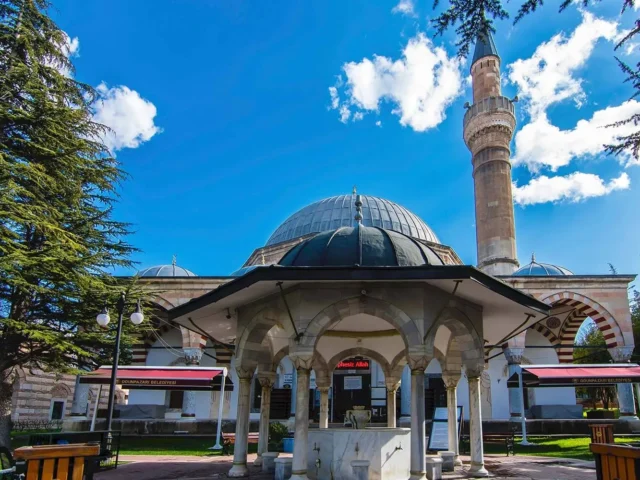
Kurşunlu Mosque Complex in Odunpazarı, Eskişehir: the 1517–1525 külliye of Çoban Mustafa…
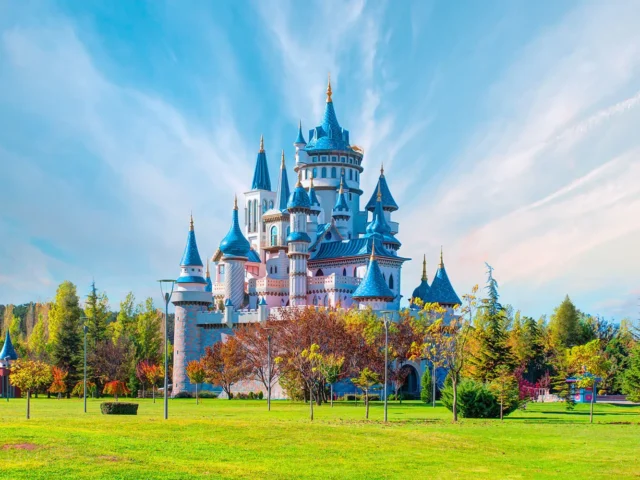
Sazova Park
Sazova Park in Eskişehir: the Fairy Tale Castle, pirate ship, zoo, planetarium,…
Sivrihisar Great Mosque
Sivrihisar Great Mosque, Eskişehir: a 1274 wooden hypostyle mosque with 67 columns…
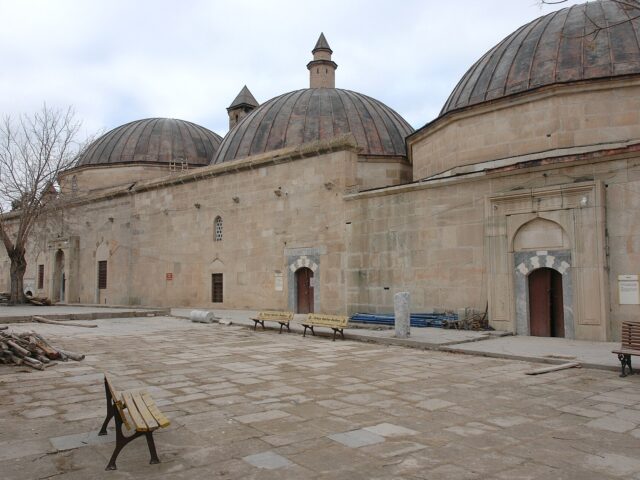
Seyyid Battal Gazi Complex
Seyyid Battal Gazi Complex at Seyitgazi: a 1207 Seljuk shrine enlarged by…
How do you get to Eskişehir?
By rail: The high-speed train (YHT) is the easiest way in. Eskişehir was the first stage of Türkiye’s high-speed network, opened from Ankara in 2009, and it now sits on the Ankara–Istanbul and Istanbul–Konya lines. Ankara is about an hour and a half away and Istanbul roughly three hours. The station is on the northwestern edge of the centre, and the Estram tram runs from outside the station into town. Regional trains also run to Kütahya, Tavşanlı and Afyonkarahisar, and the İzmir Blue Train stops here.
By air: Hasan Polatkan Airport (AOE), run by Eskişehir Technical University, has a very limited schedule, mostly flights to Brussels. Most visitors fly into Istanbul or Ankara and continue by train.
By road: Coaches run from almost every Turkish city to the city bus station. Road distances are about 152 km to Bursa, 233 km to Ankara, 323 km to Istanbul and 342 km to Konya.
Getting around: Trams cover the centre, the station, Odunpazarı and the universities. For the Phrygian valleys, Seyitgazi and Sivrihisar you need a car or a tour, as rural buses are infrequent.
Where should you stay in Eskişehir?
Most visitors stay in the centre, near the Porsuk and the Adalar area, where hotels, cafés and tram stops are all within walking distance. A few boutique hotels and guesthouses occupy restored houses in Odunpazarı, which is the quietest and most atmospheric base for a short stay. For the Phrygian valleys, Eskişehir works as a base for day trips, though some travellers move on to Afyonkarahisar or Kütahya, closer to the southern monuments.
Book an Eskişehir tour
−5% Istambul readers save 5% on every tour below — applied at checkout.
Partner listings via GetYourGuide · free cancellation on most
What type of climate does Eskişehir have?
Eskişehir has a cold semi-arid climate. Summers are warm and dry, with average July highs around 30°C and cool nights of about 14°C. Winters are cold and often snowy: January averages range from about −4°C at night to 4°C by day. Rain is light all year and falls mostly in spring and late autumn.
When is the best time to visit Eskişehir?
May, June and September are the most comfortable months, warm enough for the riverside and the parks and cool enough for walking Odunpazarı’s hills. Spring is also the time to see the Phrygian highlands green. July and August are hot but dry, and the city is quieter when the students leave. Winter visits work for the museums and Odunpazarı, but snow can close minor roads in Phrygia.
What is the history of Eskişehir?
The 2002 provincial inventory traces the first settlement at Eskişehir, ancient Dorylaeum, to around 3500 BC. According to the inventory, the city passed to the Hittites around 2000 BC, to the Phrygians around 1200 BC and to the Persians in 546 BC, and later came under Roman rule. The Phrygians, who settled along the banks of the Porsuk in the 1st millennium BC, left the deepest mark: their religious centre at Midas City (Yazılıkaya) lies in the south of the province.
In 1097 the armies of the First Crusade defeated the Seljuk sultan Kılıç Arslan I near Dorylaeum. After the Seljuks took the city from Byzantium it was known as Sultanönü. The area then became the cradle of the Ottoman state: Karacahisar Castle, just outside the city, is described by the provincial directorate as the first castle the Ottomans conquered, and Sheikh Edebali, the father-in-law of Osman Gazi, is closely associated with the city.
The inventory notes that Eskişehir was a sanjak attached to the Ankara principality until the early reign of Mehmed the Conqueror, was attached to the beylerbeylik of Kütahya in 1451 and to the Hüdavendigar province of Bursa in 1841, and became a province in its own right in 1925. In between, the War of Independence passed through it: the two Battles of İnönü were fought in the province in 1921, Greek forces occupied the city later that year, and Eskişehir was retaken on 2 September 1922, still celebrated as its liberation day.
In the 20th century the city grew around its railway workshops and industry. Türkiye’s first domestically designed car, the Devrim, was built here in 1961 at the factory now known as TÜRASAŞ.
What is Eskişehir famous for?
- Odunpazarı, the restored Ottoman quarter of timber houses with bay windows, painted in white, indigo blue and brick red.
- Meerschaum (lületaşı), the soft white mineral mined around the city and carved into pipes and ornaments. The 2002 inventory calls it the region’s “white gold”.
- Phrygian monuments, above all the Midas Monument at Yazılıkaya.
- A student city of trams, riverside cafés and gondola-style boats on the Porsuk.
- Çibörek, the fried Crimean Tatar meat pastry that is the city’s signature dish.
What are the historical places of Eskişehir?
Midas City (Yazılıkaya) and the Phrygian Valley. The inventory describes Midas City, beside Yazılıkaya village in the Han district about 90 km from Eskişehir, as the religious centre of the Phrygians. Excavations by the French Archaeological Institute in 1937–1939, continued later by Halet Çambel, showed that the site was settled from the Chalcolithic and Early Bronze Age and had three separate building phases in the Phrygian, Lydian and Persian periods. The inventory counts 33 works there: fortification walls, houses, rock reliefs, rock monuments, cisterns, altars, rock tombs, stepped monuments, niches and ancient roads. The Midas Monument itself, a temple façade cut into volcanic tuff, is covered in our guide to Phrygia.
Pessinus (Ballıhisar). Near Sivrihisar, about 13 km from the town, Pessinus was the main cult centre of the Mother Goddess Cybele. In 204 BC the Romans carried its sacred black stone to Rome. The inventory notes the remains of a stadium, theatre, temple, canal and necropolis, and describes a water channel with stepped sides and a dam wall at its north end that also served as a bridge. Belgian archaeologists from Ghent University have excavated here since 1967.
Karacaşehir and Karacahisar. The inventory describes the ruins at Karacaşehir village, 6 km from the city, as a castle town of the Roman and Byzantine periods reinforced by the Ottomans, with traces of barracks, a cistern, streets and houses inside the walls.
Phrygian rock monuments around Seyitgazi. Doğanlı Kale near Burhaniye village is a rock carved out in Phrygian times and filled with tombs and passages; the Gerdek Kaya monument nearby imitates a Doric temple front; and the Arslanlı Mabet at Kümbet village, dated by the inventory to the 6th century BC, is a Phrygian tomb monument cut into a single rock.
Mosques and tombs. The Kurşunlu Mosque Complex (1517–1525) is the finest classical Ottoman building in the city. The Alaeddin Mosque, built in 1267 under Gıyaseddin Keyhüsrev III, has lost its original Seljuk form through restorations and served as a museum from 1944 to 1951. The Sivrihisar Great Mosque, rebuilt in 1274 with 67 wooden columns, and the Seyyid Battal Gazi Complex at Seyitgazi are the two great medieval monuments in the countryside. The tomb of the poet Yunus Emre stands in the Mihalıççık district.
What are the best things to do in Eskişehir?
Walk Odunpazarı and its museums. Start at the Kurşunlu complex and its Meerschaum Museum, then climb through the lanes to the Odunpazarı Modern Museum and the Atlıhan crafts bazaar.
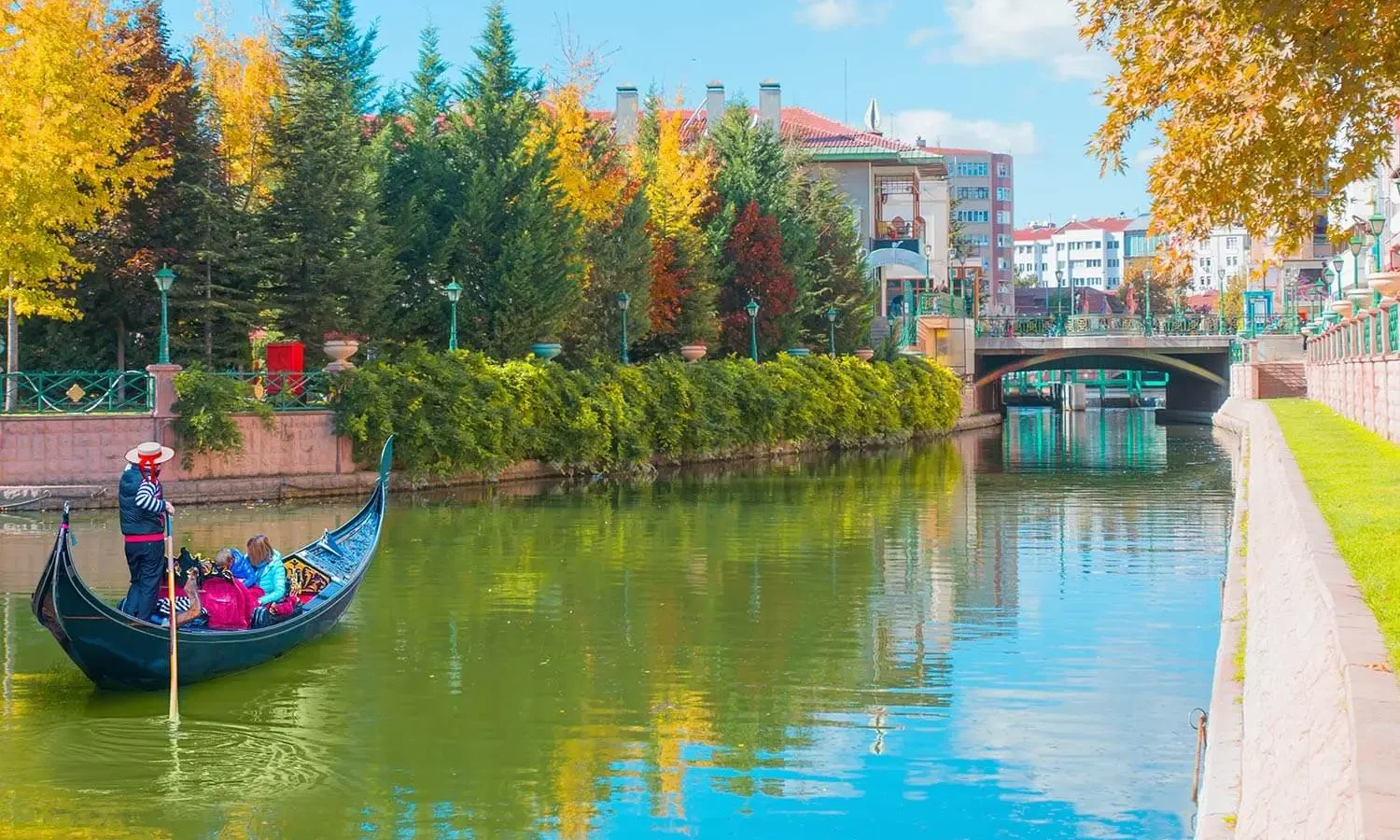
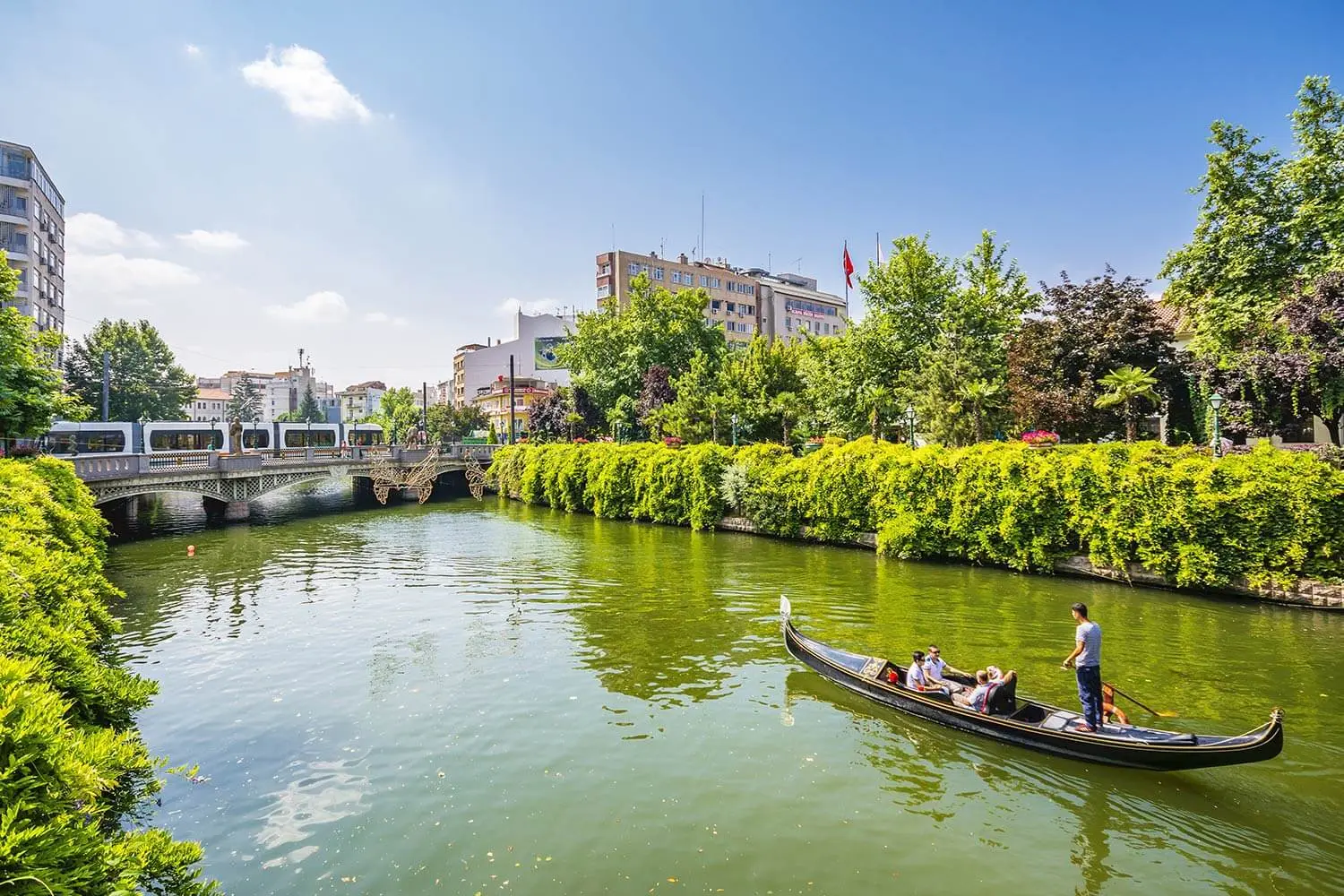
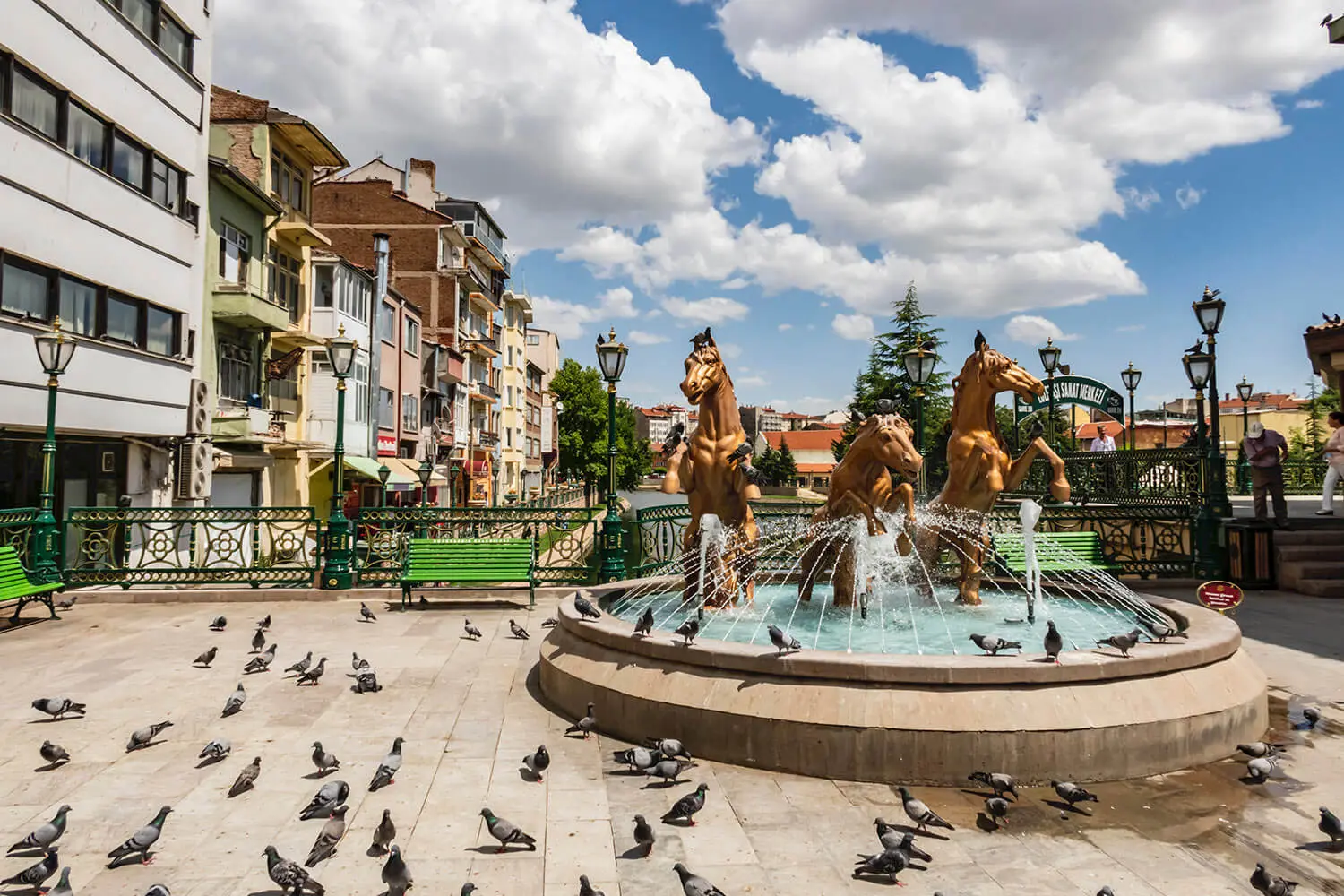
Ride along the Porsuk. Boats and gondolas run along the river through the centre, and the Adalar area is lined with cafés.
Take children to Sazova. Sazova Park has a fairy-tale castle, a pirate ship on an artificial lake, a zoo, a science centre and a planetarium.
Drive through Phrygia. The rock monuments around Yazılıkaya, Kümbet and Doğanlı Kale are best seen on a full-day drive.
Go caving or soak in a spa. The inventory lists the Yelini and Yelinüstü caves on the southeastern side of the Sivrihisar mountains near Kayakent, and Sarıkaya Cave, reached by an hour’s walk up the Domya stream canyon from Yalınkaya village. Hot springs at Sakarı Ilıca (Sarıcakaya), Hasırca and Hamamkarahisar are used mainly by Turkish visitors.
Time your visit to a festival. Local events listed in the inventory include the Yunus Emre Culture and Art Week in May, Nasreddin Hoca festivities in Sivrihisar in early June, commemorations of Seyyid Battal Gazi in Seyitgazi on 1 September, and the city’s liberation day on 2 September.
What are the best places to visit in Eskişehir?
Odunpazarı is the old Ottoman hill quarter, protected as a historic urban site and on UNESCO’s Tentative List since 2012. Around 300 houses were restored or rebuilt, and the Odunpazarı Modern Museum opened among them in 2019.
The Kurşunlu Mosque Complex, built for the vizier Çoban Mustafa Paşa, groups a lead-domed mosque, a madrasa now housing the Meerschaum Museum, an imaret, a guesthouse and a caravanserai with a glass-blowing workshop.
Sazova Park, the city’s Science, Culture and Art Park, opened in 2008 and is the most popular family day out in Eskişehir.
The Sivrihisar Great Mosque, about 100 km east of the city, is one of the largest wooden-columned mosques in Anatolia and part of the UNESCO-inscribed group of medieval wooden mosques.
The Seyyid Battal Gazi Complex at Seyitgazi is a hillside complex of tombs, a mosque, a madrasa and dervish lodge buildings grown up around the grave of a legendary Arab warrior.
Also worth your time: the Midas Monument and Phrygian Valley (see our Phrygia guide), Pessinus, the Yunus Emre tomb at Mihalıççık, the TÜRASAŞ Devrim Cars Museum, and the provincial roots of the Ottoman state just over the border in Bilecik. Kütahya and its Roman city of Aizanoi are an easy day trip by train or car.
What is the traditional food of Eskişehir?
The provincial directorate describes Eskişehir as historically the “grain store” of Anatolia, with a cuisine shaped by migrants from the Balkans and the Caucasus. That mix shows on the table.
Çibörek is the dish to try first: a thin half-moon of dough filled with minced meat and onion and fried until it blisters, brought by Crimean Tatar settlers. Balaban kebabı is meatballs laid on toasted bread with tomato sauce, yoghurt and browned butter. Poppy seeds turn up everywhere, in haşhaşlı bükme and poppy-seed and walnut breads. Other local dishes include leek börek, kıvırma böreği, göceli tarhana soup and the Circassian abısta.
For dessert, met helvası (also sold as nuga helvası) is a chewy white halva, and halkalı şeker is a ring-shaped sweet sold at the city’s old confectioners. Cherries from Mihalıççık are a summer speciality.
What should you buy in Eskişehir?
Meerschaum. Pipes, jewellery and small carvings in lületaşı are sold in Odunpazarı and the Atlıhan crafts bazaar. The material is soft when wet from the mine and hardens as it dries, which is why it can be carved so finely.
Glass. The hot-glass workshop in the Kurşunlu complex and shops in Odunpazarı sell hand-blown pieces.
Food. Met helvası, halkalı şeker and poppy-seed pastries travel well.



Frequently asked questions about Eskişehir
Is Eskişehir worth visiting?
Yes. Odunpazarı’s Ottoman houses, the Kurşunlu complex and its Meerschaum Museum, and Kengo Kuma’s Odunpazarı Modern Museum make a full day, and the Phrygian monuments and Sivrihisar’s UNESCO-listed mosque justify a second.
How do you get from Istanbul to Eskişehir?
The high-speed train (YHT) takes roughly three hours from Istanbul and about an hour and a half from Ankara. Coaches also run frequently from both cities.
Does Eskişehir have an airport?
Hasan Polatkan Airport (AOE) has only a very limited schedule, mostly to Brussels. Most visitors fly into Istanbul or Ankara and take the train.
How many days do you need in Eskişehir?
One day covers Odunpazarı, the Kurşunlu complex and the river. Add a day for Sivrihisar and Seyitgazi or the Phrygian Valley.
What is Eskişehir famous for?
Odunpazarı’s Ottoman houses, meerschaum pipes, the Phrygian Midas Monument, its universities and çibörek.
What food should you try in Eskişehir?
Çibörek, the fried Crimean Tatar meat pastry, plus balaban kebabı, poppy-seed bükme and met helvası.
Is there a UNESCO site in Eskişehir?
Yes. The Great Mosque of Sivrihisar was inscribed in 2023 as part of the Wooden Hypostyle Mosques of Medieval Anatolia. Odunpazarı and Mountainous Phrygia are on the Tentative List.
What do the official records say about Eskişehir?
Founded by the Phrygians on the banks of the Porsuk River in the first millennium before Christ, Eskişehir is one of Türkiye’s most important crossroads. With its natural beauty, cuisine and shopping as much as its cultural richness, Eskişehir aims to become an important centre of tourism.
Eskişehir is a city adorned with greenery fed by the Porsuk Stream and dozens of other watercourses. Its rivers, flowing with abundant cold water, offer many opportunities for those interested in alternative tourism. The “Odunpazarı houses”, which form living examples of Turkish and Ottoman architecture, are very famous. (Ministry of Culture and Tourism, Eskişehir Provincial Tourism Inventory, 2002)
Ready to see Eskişehir?
Hand-picked tours with good reviews and clear prices.
Partner listings via GetYourGuide · free cancellation on most
Before or after: Istanbul
Most trips start or end in Istanbul. Our own experiences there:

 Dinner, sunset and day cruises between Europe and Asia.See cruises bosporuscruise.com

 Historic Turkish baths in the old city — hand-picked hamams, booked direct.Book a hamam istanbulhamam.com

 Istanbul’s tallest viewpoint: both continents from 369 metres.Get tickets camlicatower.com

 Free audio guides in 15 languages, safe routes and local tips — plus 5% off GetYourGuide.Open the free guide localada.com
Nearby
All destinations
Siirt
Siirt travel guide: İbrahim Hakkı's tomb at Tillo, the Veysel…
Bingöl
Bingöl travel guide: the floating islands of Solhan, the lakes…
Kırklareli
Kırklareli travel guide: Dupnisa Cave, İğneada floodplain forests, Kıyıköy, Vize…
Hatay
Hatay travel guide: Antakya (Antioch) after the 2023 earthquake, St…
