
Odunpazarı: Eskişehir’s Ottoman Hill Quarter
On this page
Key facts: Odunpazarı
- What it is: The historic Ottoman quarter of Eskişehir, a protected historic urban site of timber-framed houses, mosques, bazaars and museums.
- Where: On the hills south of the Porsuk River, Odunpazarı district, Eskişehir city centre.
- UNESCO Tentative List: “Odunpazarı Historical Urban Site” since 2012 (UNESCO); not yet inscribed.
What is Odunpazarı?
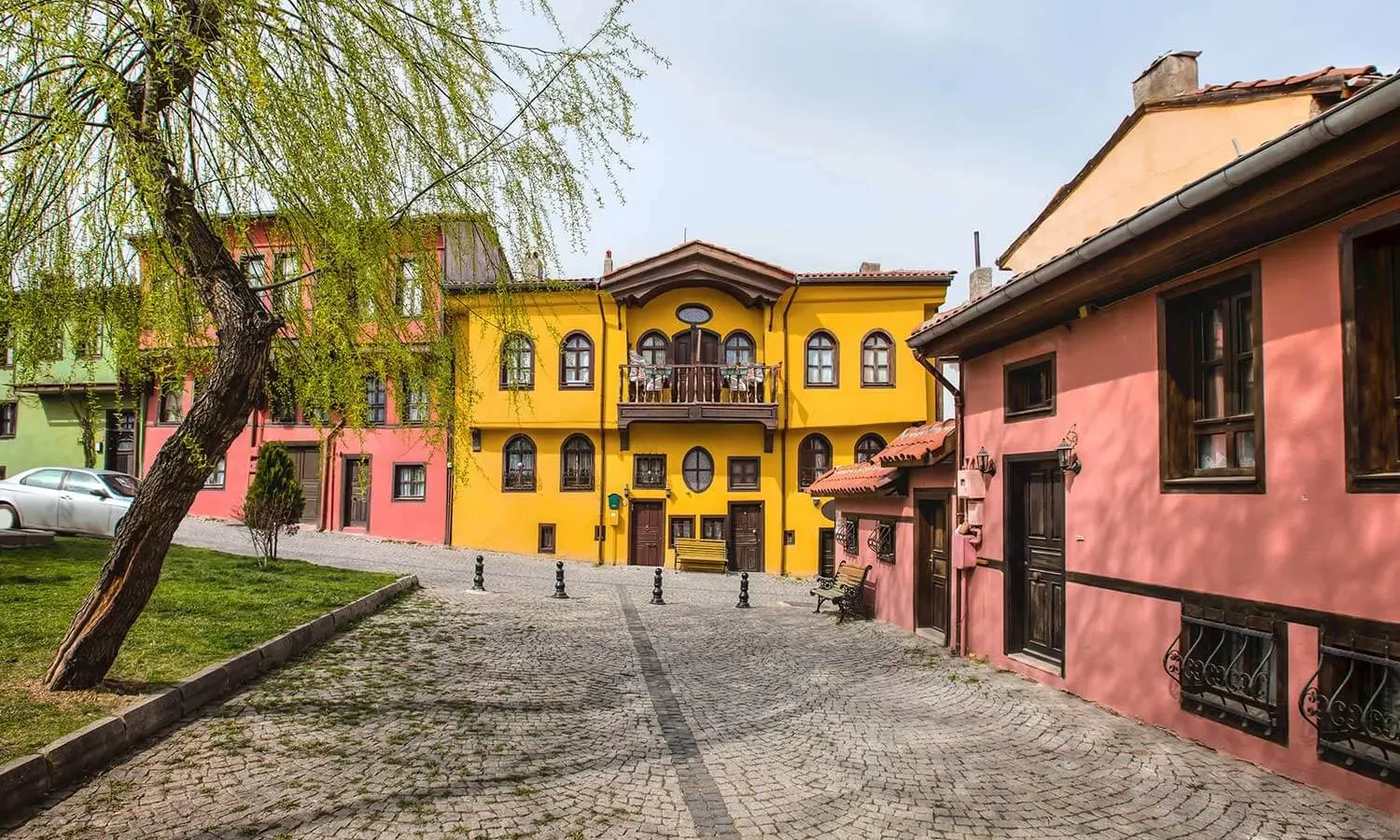
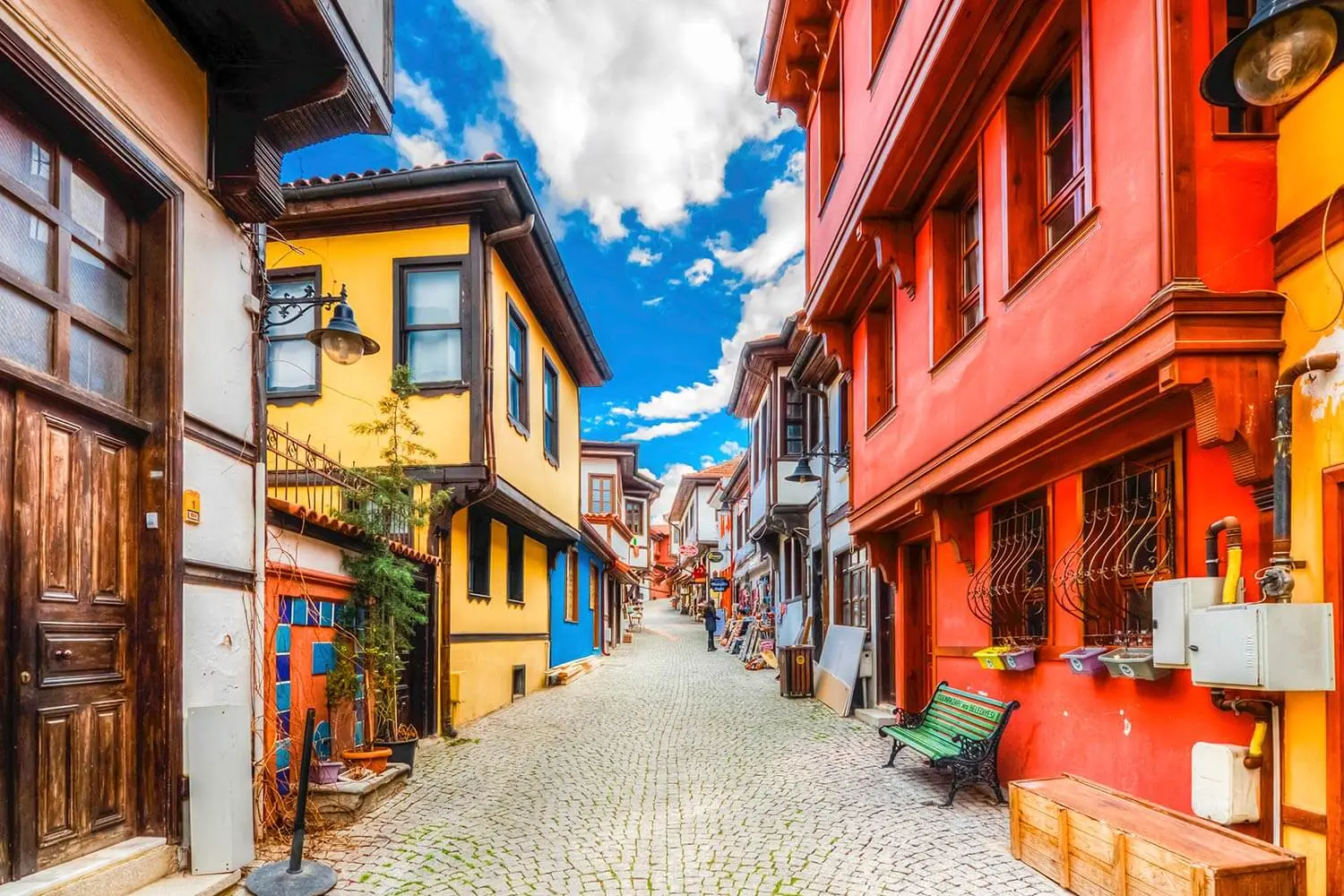
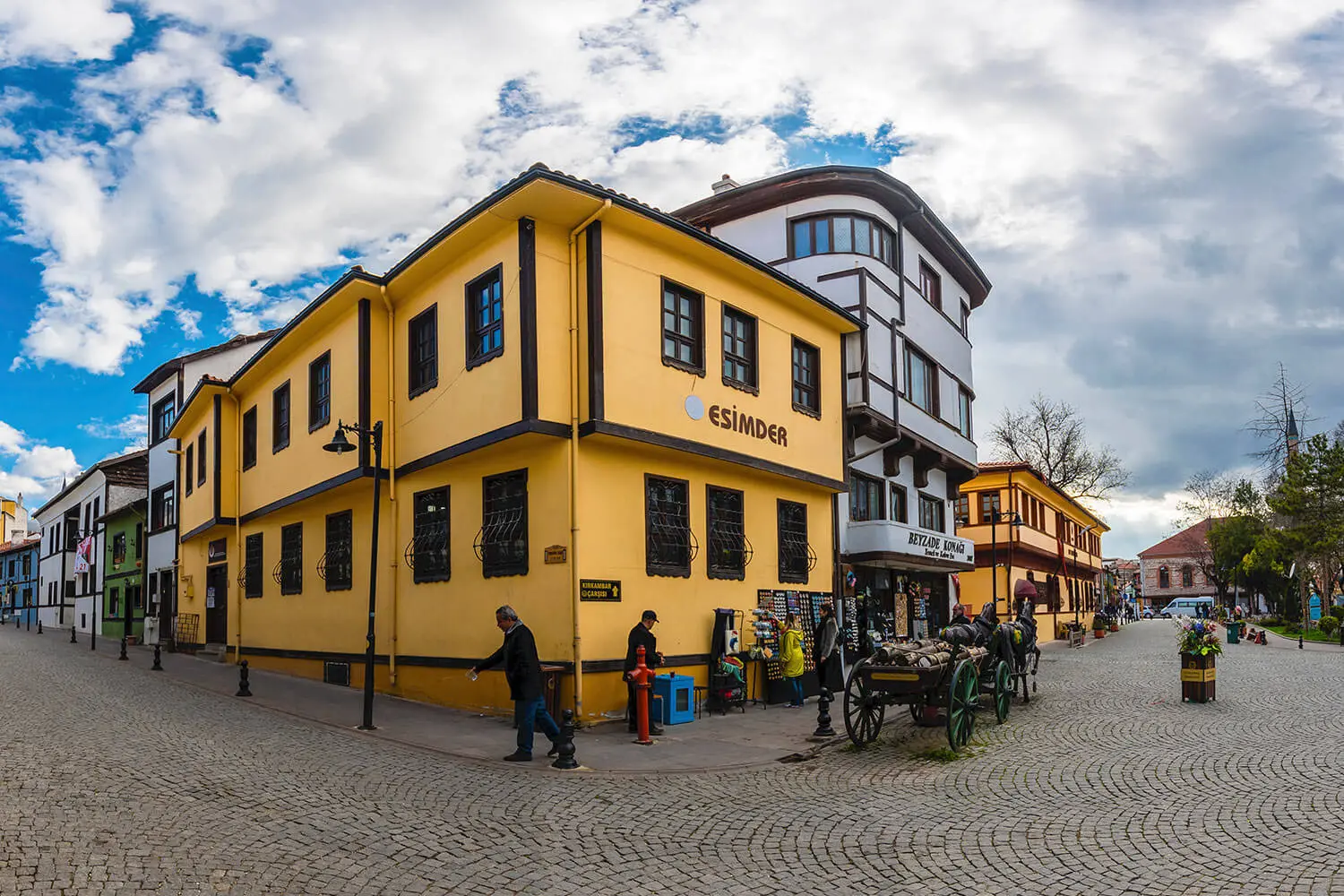
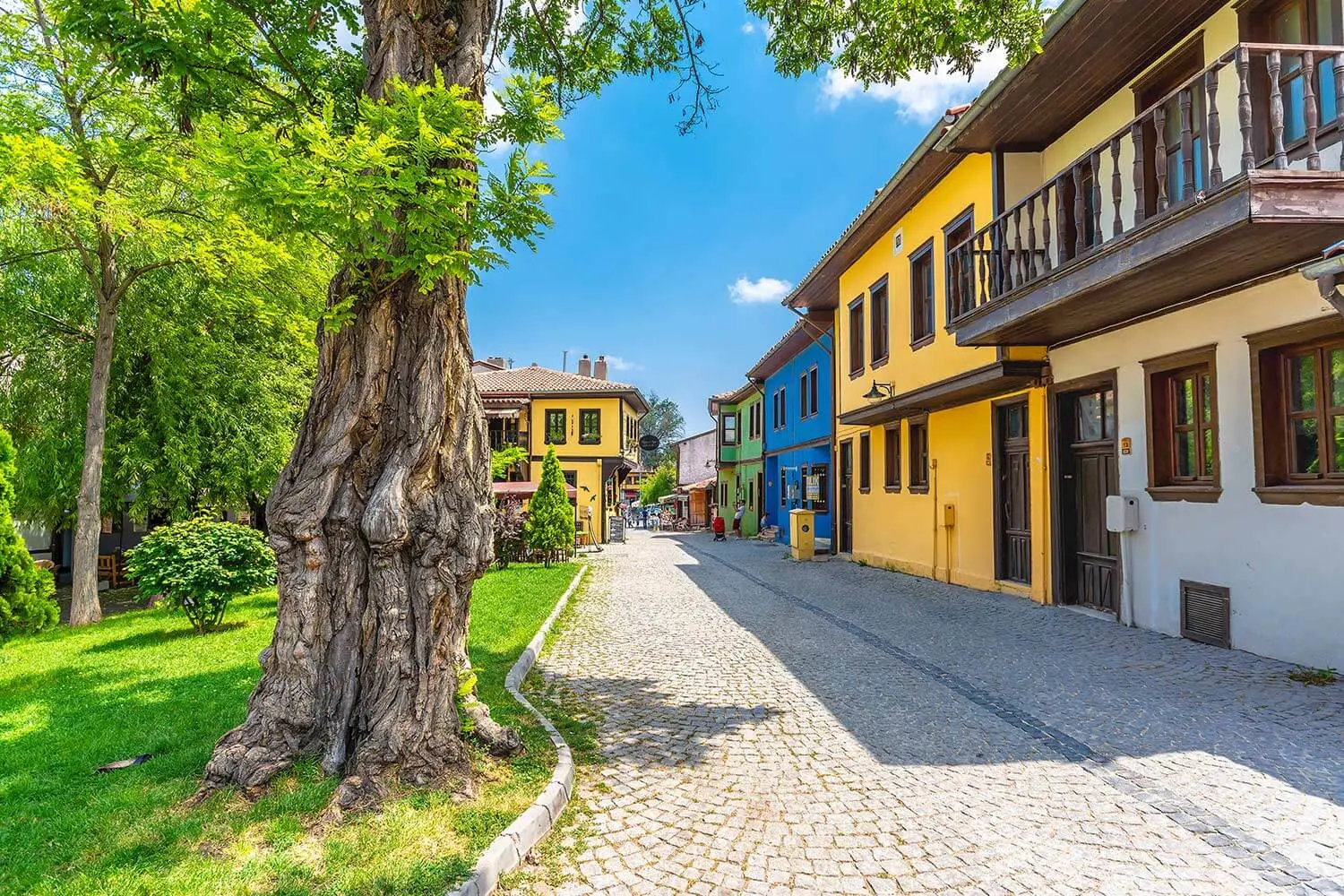
Odunpazarı is the old hill quarter of Eskişehir, rising south of the river from the modern centre. The name means “firewood market”. Its narrow, winding lanes and dead-end alleys are lined on both sides with attached two- and three-storey houses whose upper floors project over the street on wooden brackets, with bay windows and wooden decoration. Most are white with brown timber frames; others are painted indigo blue or brick red.
The provincial directorate of culture and tourism describes the houses as important examples of Ottoman urban architecture and of traditional Anatolian Turkish building. The quarter is protected as a historic and urban site, and it has been on UNESCO’s Tentative List since 2012.
Today Odunpazarı is also Eskişehir’s museum district. The Kurşunlu Mosque Complex sits at its foot, the Odunpazarı Modern Museum stands among the houses, and small museums, craft shops, cafés and boutique hotels occupy restored buildings along the lanes.
How do you get to Odunpazarı?
Odunpazarı is a short walk or tram ride south of the Porsuk and the central shopping streets. From the YHT station, take the Estram tram into the centre and continue on foot uphill. The lanes are steep in places and partly cobbled, so wear comfortable shoes. Drivers will find the quarter’s inner streets narrow; it is easier to park on the edge and walk in.
Book an Odunpazarı tour
−5% Istambul readers save 5% on every tour below — applied at checkout.
Partner listings via GetYourGuide · free cancellation on most
When is the best time to visit Odunpazarı?
Spring and early autumn are best for walking the hills. Weekday mornings are quietest: on weekends and holidays the lanes fill with domestic visitors, especially around the Modern Museum and the Kurşunlu complex. Opening hours change through the year, so check them before you visit. Winter is cold, but the houses look striking under snow.
What is the history of Odunpazarı?
Odunpazarı was the core of Ottoman Eskişehir. The provincial directorate notes that five streets mentioned in Evliya Çelebi’s 17th-century Seyahatname (Book of Travels) still carry the same names. The Kurşunlu complex, built for the vizier Çoban Mustafa Paşa between 1517 and 1525, anchored the quarter, and the houses that survive today represent the late Ottoman period.
The houses follow a practical plan: the ground floor held the kitchen, stable, laundry or storage, and families lived on the upper floors, whose projecting rooms gained space and light over the narrow streets.
By the late 20th century many houses were in poor condition. Under the Odunpazarı Municipality’s project to preserve the Odunpazarı houses, work focused on 30 streets, and 300 houses, 3 mosques, 1 complex, 2 caravanserais, 15 fountains and 1 han were restored or faithfully rebuilt. In 2019 the Odunpazarı Modern Museum, designed by Kengo Kuma and Associates, opened in the middle of the quarter.
What is Odunpazarı famous for?
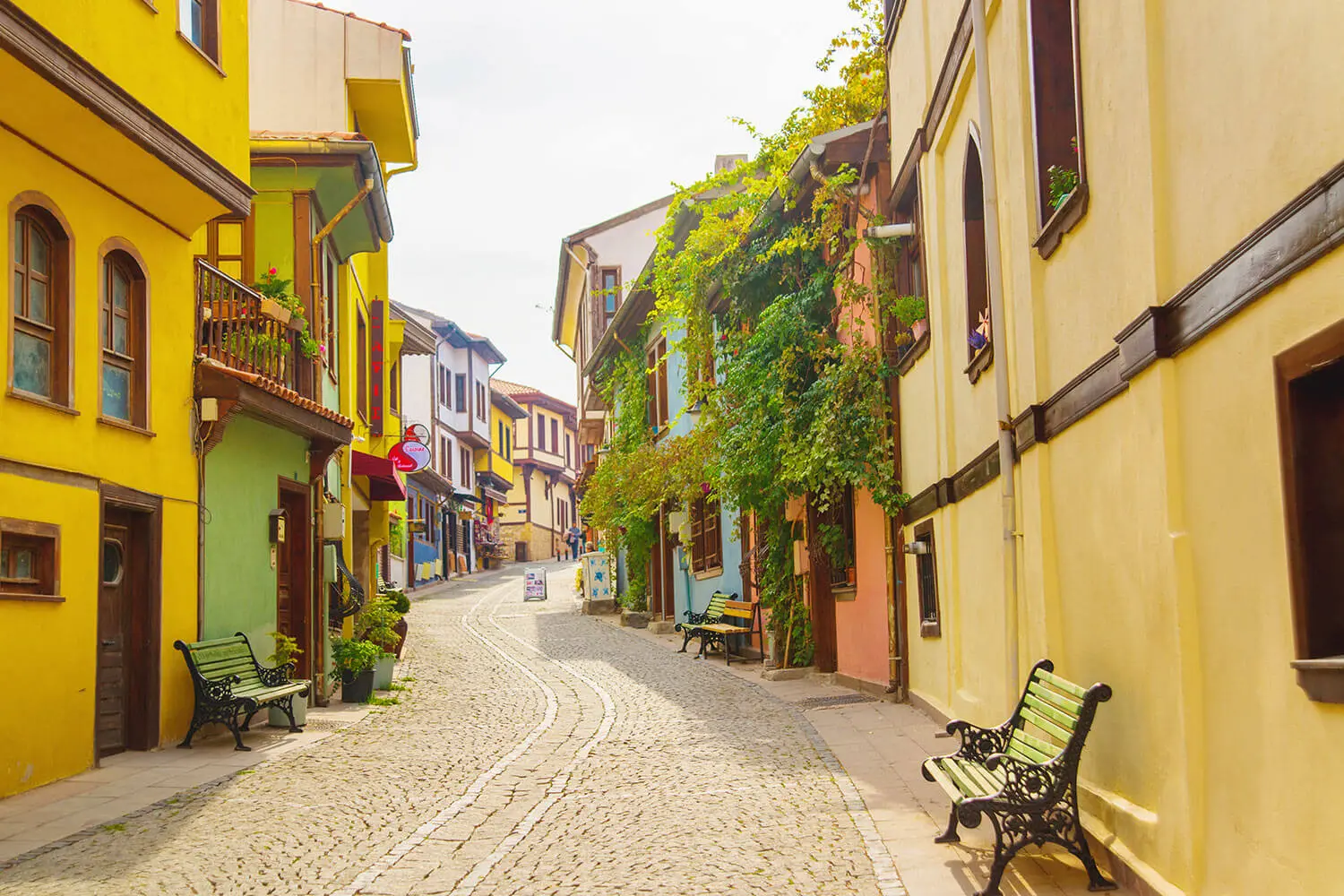
- Ottoman timber houses with projecting upper storeys and bay windows, painted white, indigo and brick red.
- The Odunpazarı Modern Museum (OMM), Kengo Kuma’s stack of timber boxes, a modern echo of the houses around it.
- Meerschaum. The Meerschaum Museum in the Kurşunlu complex and the workshops of carvers.
- Glass and crafts. Glass-blowing workshops and the Atlıhan crafts bazaar.
What can you see at Odunpazarı?
The houses and lanes. Simply walking the streets is the main reason to come. The directorate also lists an Ottoman House open to visitors.
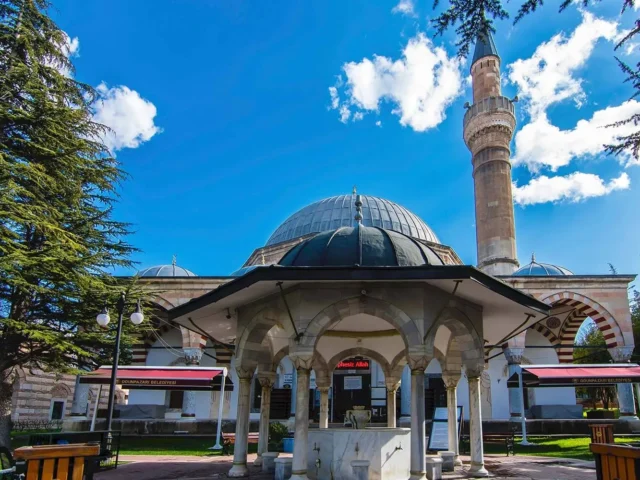
The Kurşunlu Mosque Complex. The lead-domed mosque, madrasa, imaret and caravanserai at the bottom of the quarter, with the Meerschaum Museum and a hot-glass workshop.
Odunpazarı Modern Museum. Founded by the Eskişehir-born architect and collector Erol Tabanca, OMM shows modern and contemporary art from Türkiye and abroad in about 4,500 m² of galleries and event spaces (Eskişehir Culture and Tourism Directorate).
Smaller museums. The provincial directorate lists, among others, the Museum of Contemporary Glass Arts, the Yılmaz Büyükerşen Wax Sculpture Museum, the City Memory Museum (Kent Belleği), the Liberation Museum, the Hamam Museum and the İmren Erşen Oya Museum of needle lace.
Mosques and tombs. The Alaeddin Mosque (1267), the İshak Fakih (Ak) Mosque and the Akoğlan Mosque, and the tomb of Sheikh Şehabeddin Sühreverdi, known as the Salı Tekkesi.
Bazaars. Atlıhan, a restored han now used as a crafts bazaar for meerschaum and other handicrafts, plus the Arasta and Kırk Ambar bazaars.
A simple walking route. Start at the Kurşunlu complex at the bottom of the hill and see the Meerschaum Museum and the glass workshop first. From there, climb through the lanes to the Odunpazarı Modern Museum, then continue up to the Alaeddin Mosque and its park. Atlıhan and the craft shops are along the way, and the cafés in restored houses make good stopping points. The whole circuit is compact: the distances are short, but the lanes are steep enough that it pays to go slowly and look up at the projecting upper floors and carved window frames.



Frequently asked questions about Odunpazarı
What is Odunpazarı known for?
Its Ottoman timber houses with projecting upper floors and bay windows, the Odunpazarı Modern Museum by Kengo Kuma, meerschaum carving and glass workshops.
Is Odunpazarı a UNESCO World Heritage Site?
Not yet. The Odunpazarı Historical Urban Site has been on UNESCO’s Tentative List since 2012.
How long should you spend in Odunpazarı?
Half a day for the lanes, the Kurşunlu complex and one museum; a full day if you want OMM and several smaller museums.
When is the Odunpazarı Modern Museum open?
Tuesday to Friday 10:00–17:00, Saturday 10:00–18:00 and Sunday 11:00–18:00; it is closed on Mondays.
Can you stay in Odunpazarı?
Yes. Several restored houses operate as boutique hotels and guesthouses inside the quarter.
What do the official records say about Odunpazarı?
The “Odunpazarı houses”, which form living examples of Turkish and Ottoman architecture, are very famous. The Kurşunlu Mosque in the Odunpazarı quarter was built in 1515, in the time of Çoban Mustafa Paşa, vizier of Süleyman the Magnificent, and the mosque is the finest example of the classical Ottoman architectural style in Eskişehir. (Ministry of Culture and Tourism, Eskişehir Provincial Tourism Inventory, 2002)
The inventory’s date of 1515 has since been revised: the provincial directorate now dates the complex to 1517–1525.
Ready to see Odunpazarı?
Hand-picked tours with good reviews and clear prices.
Partner listings via GetYourGuide · free cancellation on most
Before or after: Istanbul
Most trips start or end in Istanbul. Our own experiences there:

 Dinner, sunset and day cruises between Europe and Asia.See cruises bosporuscruise.com

 Historic Turkish baths in the old city — hand-picked hamams, booked direct.Book a hamam istanbulhamam.com

 Istanbul’s tallest viewpoint: both continents from 369 metres.Get tickets camlicatower.com

 Free audio guides in 15 languages, safe routes and local tips — plus 5% off GetYourGuide.Open the free guide localada.com
Nearby
All destinations
Sazova Park
Sazova Park in Eskişehir: the Fairy Tale Castle, pirate ship,…
Seyyid Battal Gazi Complex
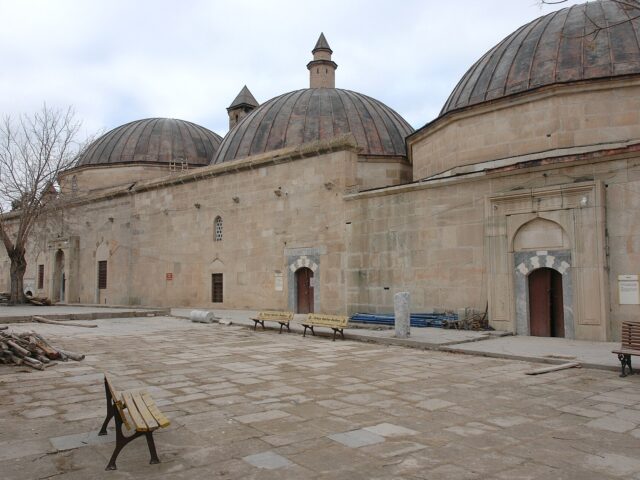
Seyyid Battal Gazi Complex at Seyitgazi: a 1207 Seljuk shrine…
Sivrihisar Great Mosque
Sivrihisar Great Mosque, Eskişehir: a 1274 wooden hypostyle mosque with…
Kurşunlu Mosque Complex
Kurşunlu Mosque Complex in Odunpazarı, Eskişehir: the 1517–1525 külliye of…
