
Seyyid Battal Gazi Complex: Seljuk and Ottoman Shrine at Seyitgazi
On this page
- What is the Seyyid Battal Gazi Complex?
- How do you get to the Seyyid Battal Gazi Complex?
- When is the best time to visit the Seyyid Battal Gazi Complex?
- What is the history of the Seyyid Battal Gazi Complex?
- What is the Seyyid Battal Gazi Complex famous for?
- What can you see at the Seyyid Battal Gazi Complex?
- Frequently asked questions about the Seyyid Battal Gazi Complex
- What do the official records say about the Seyyid Battal Gazi Complex?
Key facts: Seyyid Battal Gazi Complex
- What it is: A hillside complex of tombs, mosque, madrasa, kitchens and dervish-lodge buildings around the grave of the legendary warrior Seyyid Battal Gazi.
- Where: Seyitgazi town, Seyitgazi district, about 43 km south of Eskişehir.
- Period: Founded 1207–1208 under the Seljuk sultan Gıyaseddin Keyhüsrev I; enlarged by Ottoman sultans in the 15th and 16th centuries.
What is the Seyyid Battal Gazi Complex?
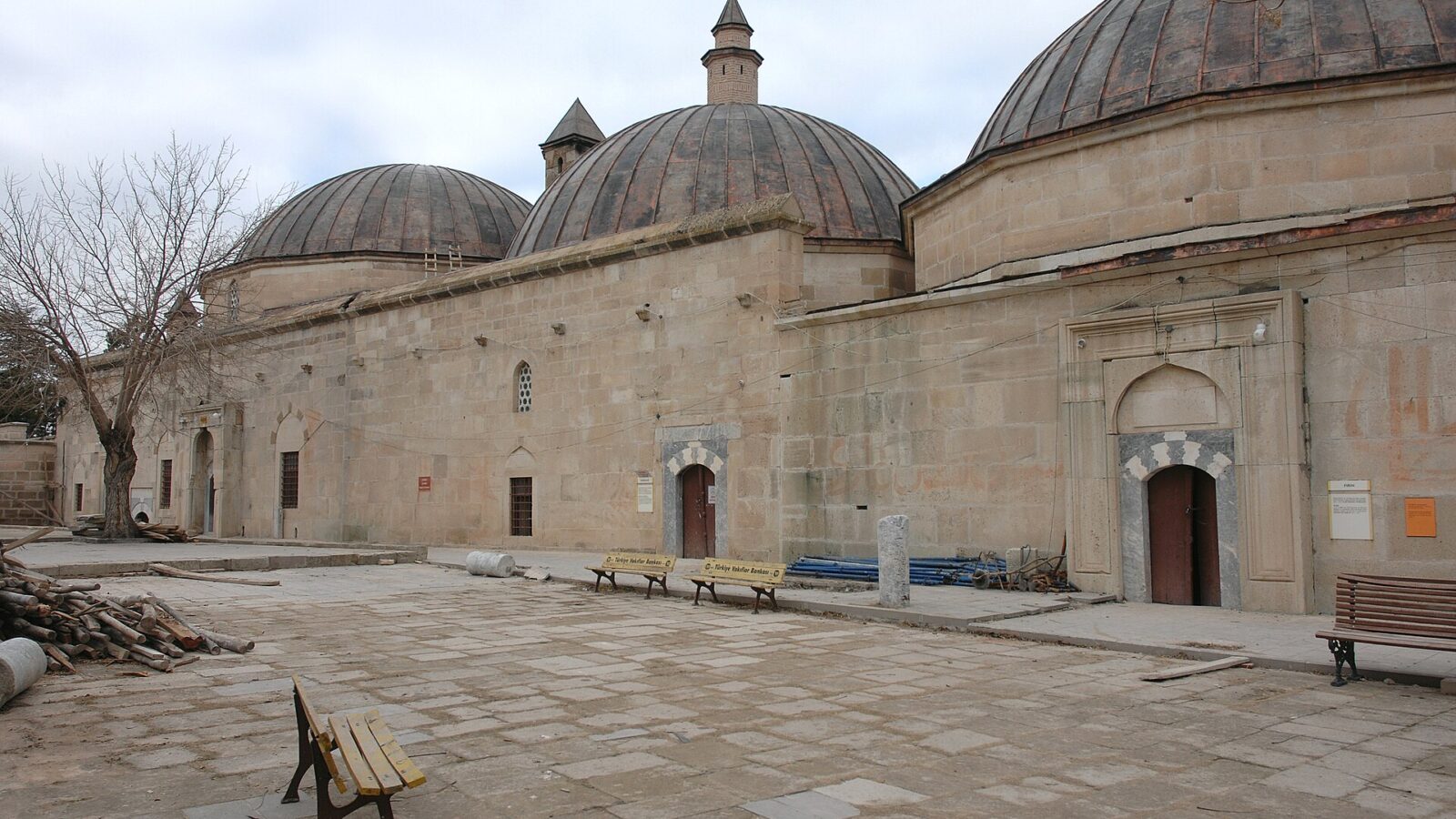
The Seyyid Battal Gazi Complex (Seyyid Battal Gazi Külliyesi) is a group of Seljuk and Ottoman buildings stepping up the east-facing slope of Üçler Tepesi above the town of Seyitgazi. At its heart is the tomb of Seyyid Battal Gazi, a semi-legendary Muslim warrior of the 8th century whose exploits against Byzantium were retold in Anatolian epics for centuries.
Around the tomb grew a mosque, a madrasa, kitchens, a bakery, dervish rooms and further tombs. The complex was first a centre for Kalenderi dervishes and later for the Bektashi order, and it remains one of the most visited pilgrimage sites in central Anatolia.
How do you get to the Seyyid Battal Gazi Complex?
Seyitgazi is about 43 km south of Eskişehir on the road towards Afyonkarahisar. Local buses run from Eskişehir, and by car the drive takes under an hour. The complex is on the hillside above the town centre and is signposted. Seyitgazi is also the gateway to the Phrygian rock monuments of the Kümbet and Yazılıkaya area, so it combines well with a day in Phrygia.
Book a Seyyid Battal Gazi Complex tour
−5% Istambul readers save 5% on every tour below — applied at checkout.
Partner listings via GetYourGuide · free cancellation on most
When is the best time to visit the Seyyid Battal Gazi Complex?
Spring and early autumn are the most comfortable seasons. The commemoration of Seyyid Battal Gazi and the town’s liberation day, which the 2002 inventory lists on 1 September, brings crowds. Visit outside prayer times, dress modestly, and remember that the tombs are places of pilgrimage. The buildings are lit at night, and the view of the complex from the town after dark is worth a short stop.
What is the history of the Seyyid Battal Gazi Complex?
The 2002 provincial inventory explains the background. Around AD 700, while Anatolia was under Byzantine rule, the Umayyads made frequent raids from the east into the interior. In one of these raids, which grew more frequent between 720 and 740, the folk hero remembered as Seyyid Battal Gazi was killed in 740 near the place known as Mesih Kalesi, the site of present-day Seyitgazi (ancient Nakoleia).
According to legend, his grave was found through a dream and through a shepherd, Çoban Baba (also called Kutluca Baba), who saw a miraculous light where his sheep gathered. Ümmühan Hatun, wife of the Seljuk sultan Gıyaseddin Keyhüsrev I and mother of Alaeddin Keykubad I, first had a tomb and then a mosque built over it, the mosque in 1207–1208. She later asked to be buried here, and her son brought her body from Konya to the madrasa she had founded.
The Ottomans enlarged and repaired the complex repeatedly. The tomb inscription gives a repair date of 1464 under Mehmed the Conqueror; a dhikr room was built and the mosque renewed in 1511 under Bayezid II; the imaret (public kitchen) dates from the reign of Selim I; Süleyman the Magnificent visited during his Persian campaigns and built the Bektashi lodge; and Murad IV added a caravanserai during the Yerevan campaign. Archival records show a madrasa operating in 1556–1559 (Eskişehir Culture and Tourism Directorate).
The complex was used for religious teaching and ceremonies until the Republic. It belongs to the General Directorate of Foundations and, according to the inventory, was in ruins until a major restoration in 1954. During restoration work in 1958, seven headless bodies were found in what is now called the Kesikbaşlar Türbesi (Tomb of the Beheaded).
What is the Seyyid Battal Gazi Complex famous for?
- The tomb of Seyyid Battal Gazi, with a sarcophagus 5.5 m long.
- Bektashi heritage: the Halife Meydanı where cem ceremonies were held, the Kırklar Odası and the Bektashi lodge.
- The imaret kitchen, with eight hearths and chimneys rising above its dome, described by Evliya Çelebi.
What can you see at the Seyyid Battal Gazi Complex?
The main tomb. Battal Gazi’s 5.5 m sarcophagus, a size the directorate attributes to the reputation of the man buried in it. Also buried here is Elenora, described as a king’s daughter; whether she was Battal Gazi’s wife or beloved is disputed.
The mosque. The original mosque of 1207–1208, renewed in 1511.
Tombs of the founders. The tomb of Ümmühan Hatun, a two-storey iwan-shaped structure without a dated inscription, and that of her attendant Ayni Ana (Kadıncık Ana); the tombs of the Mihaloğlu commanders Ahmed and Mehmed Bey; and the tomb of Çoban Baba.
The dervish spaces. The Halife Meydanı with the seat of the halife, the Kırklar Odası, the windowless çilehane for spiritual retreat, the dhikr room of 1511 and the semahane.
The service buildings. The bakery (Ekmek Evi) with two ovens on basements cut into the slope, and the domed kitchen with eight hearths.
The madrasa. Founded as a zaviye, later a dervish lodge, then a madrasa again after the 16th century, and an army depot in the early 20th century.



Frequently asked questions about the Seyyid Battal Gazi Complex
Who was Seyyid Battal Gazi?
A semi-legendary 8th-century Muslim warrior who fought Byzantium; the 2002 inventory says he was killed in 740 near present-day Seyitgazi.
When was the Seyyid Battal Gazi Complex built?
The tomb and mosque were founded in 1207–1208 by Ümmühan Hatun, mother of Alaeddin Keykubad I. Ottoman sultans added buildings into the 17th century.
How far is Seyitgazi from Eskişehir?
About 43 km south, under an hour by car. Local buses also run from Eskişehir.
Why is the sarcophagus so long?
Battal Gazi’s sarcophagus is 5.5 m long; the provincial directorate attributes the size to his legendary stature and reputation.
Is the complex connected to the Bektashis?
Yes. It was a Kalenderi and later Bektashi centre, with a cem hall, the Kırklar Odası and a lodge built under Süleyman the Magnificent.
What do the official records say about the Seyyid Battal Gazi Complex?
For Seyyid Battal Gazi, the legendary folk hero who performed great deeds in the wars against Byzantium, contributed greatly to the spread of Islam in Anatolia, and whose heroism has been told from generation to generation for years, a tomb and a mosque were built in 1207–1208 by Ümmühan Hatun, mother of the Anatolian Seljuk sultan Alaeddin Keykubad I. Later a two-storey, iwan-shaped tomb was added here for Ümmühan Hatun herself. Through repairs, rebuilding and additions during the founding and rise of the Ottoman state, the group of buildings became a complex.
Owned today by the General Directorate of Foundations, the complex was in a ruined state until 1954, when an extensive restoration and landscaping brought it to its present condition. It is lit at night by an illumination system, and its striking appearance and its visitors, both tourists and pilgrims, bring life to the district of Seyitgazi. (Ministry of Culture and Tourism, Eskişehir Provincial Tourism Inventory, 2002)
Main photo: Dosseman, CC BY-SA 4.0, via Wikimedia Commons.
Ready to see Seyyid Battal Gazi Complex?
Hand-picked tours with good reviews and clear prices.
Partner listings via GetYourGuide · free cancellation on most
Before or after: Istanbul
Most trips start or end in Istanbul. Our own experiences there:

 Dinner, sunset and day cruises between Europe and Asia.See cruises bosporuscruise.com

 Historic Turkish baths in the old city — hand-picked hamams, booked direct.Book a hamam istanbulhamam.com

 Istanbul’s tallest viewpoint: both continents from 369 metres.Get tickets camlicatower.com

 Free audio guides in 15 languages, safe routes and local tips — plus 5% off GetYourGuide.Open the free guide localada.com
Nearby
All destinationsSivrihisar Great Mosque
Sivrihisar Great Mosque, Eskişehir: a 1274 wooden hypostyle mosque with…
Kurşunlu Mosque Complex
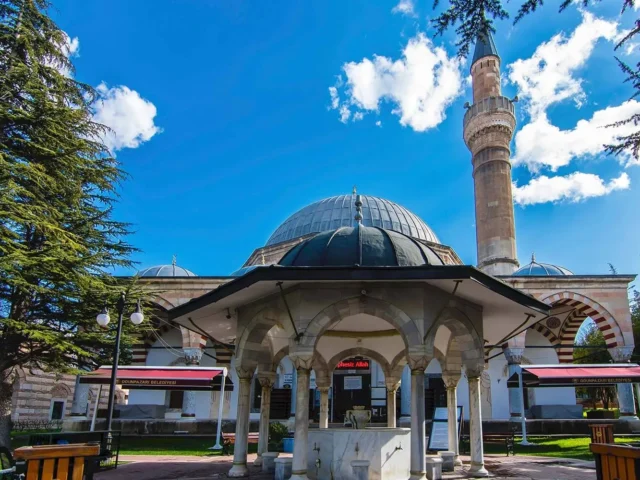
Kurşunlu Mosque Complex in Odunpazarı, Eskişehir: the 1517–1525 külliye of…

Sazova Park
Sazova Park in Eskişehir: the Fairy Tale Castle, pirate ship,…
Odunpazarı
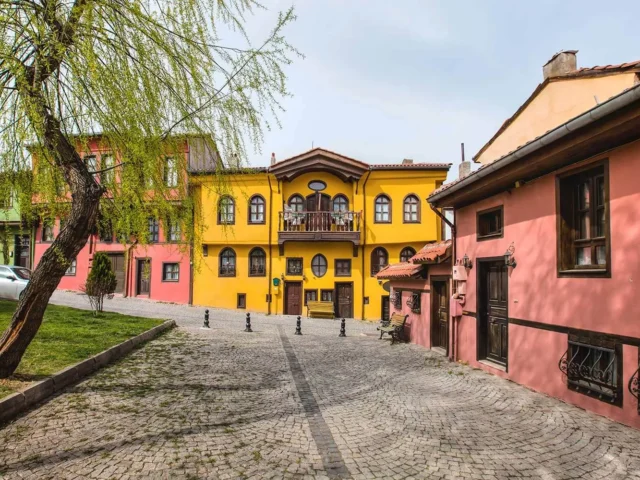
Odunpazarı, Eskişehir’s Ottoman quarter: painted timber houses, Kengo Kuma’s Modern…
