
Kars: Ani, Snow and the Eastern Express
On this page
- What is Kars?
- How do you get to Kars?
- Where should you stay in Kars?
- What type of climate does Kars have?
- When is the best time to visit Kars?
- What is the history of Kars?
- What is Kars famous for?
- What are the historical places of Kars?
- What are the best things to do in Kars?
- What are the best places to visit in Kars?
- What is the traditional food of Kars?
- What should you buy in Kars?
- Frequently asked questions about Kars
- What do the official records say about Kars?
Key facts: Kars
- UNESCO World Heritage: The Archaeological Site of Ani, inscribed in 2016 (UNESCO).
- Region: Eastern Anatolia, on a high plateau at about 1,768 m, on Türkiye’s border with Armenia (the land crossing has been closed since 1993).
- Best known for: The medieval city of Ani, Russian-era “Baltic” stone architecture, skiing at Sarıkamış, the Eastern Express railway, and kaşar and gravyer cheese.
What is Kars?
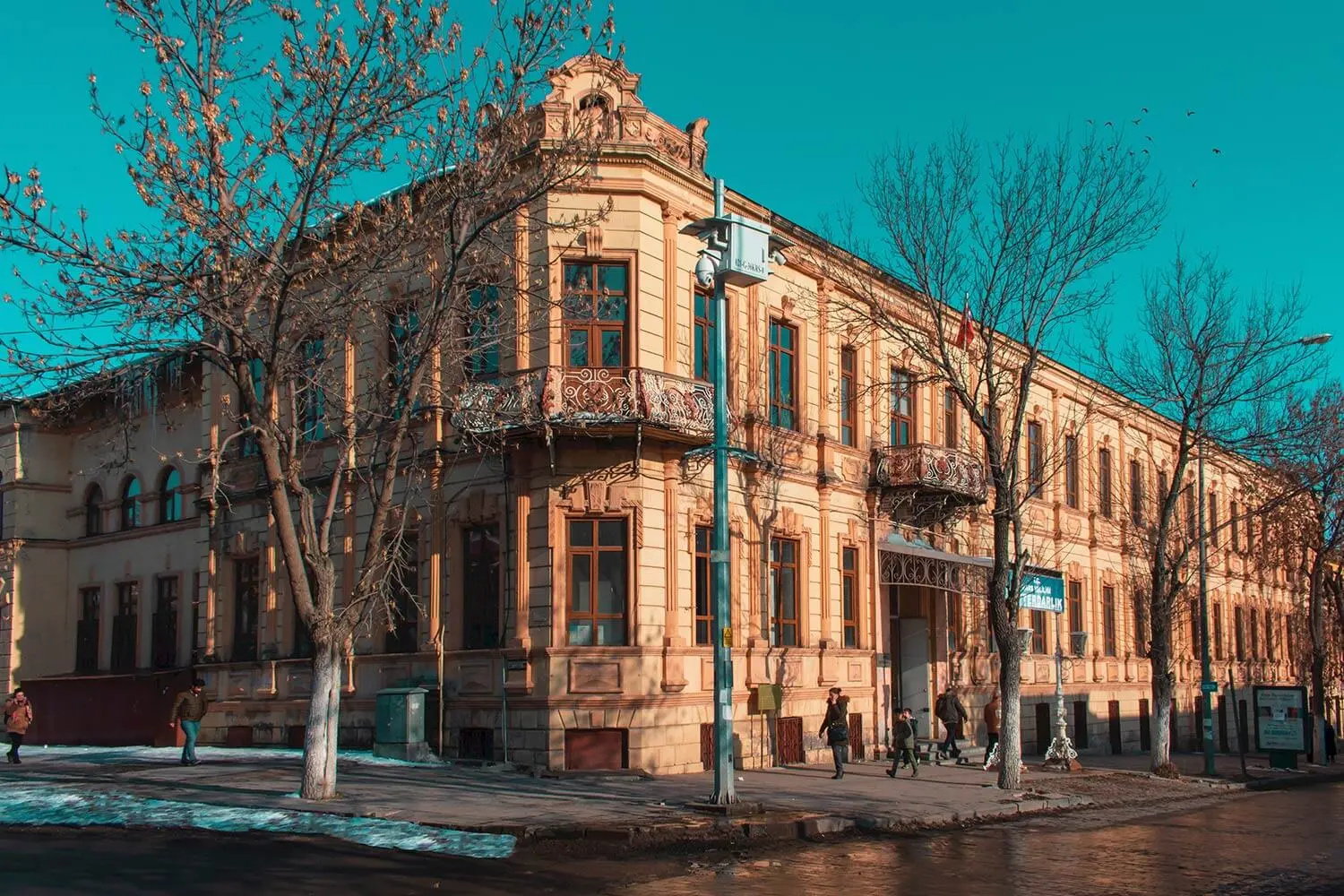
Kars is a province in the far northeast of Türkiye, and also the name of its capital, a city of dark basalt on a windswept plateau close to the Armenian border. A medieval citadel sits on the rock above the Kars River, and below it lies a grid of straight streets laid out during the Russian period, lined with two-storey stone buildings that look more like the Baltic than Anatolia.
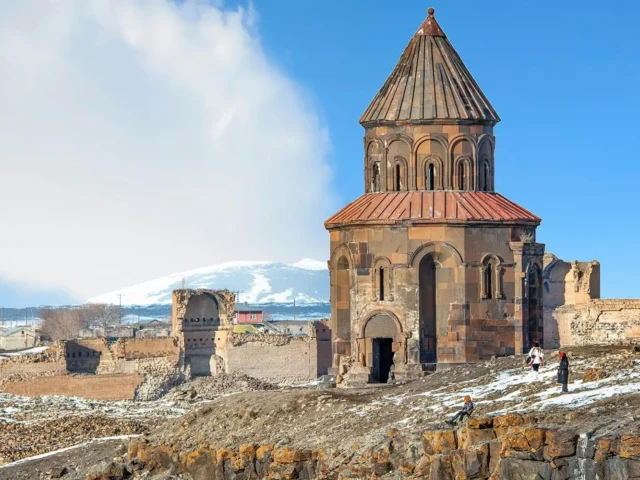
Most visitors come for Ani, 42 km east of the city: the ruined capital of the medieval Armenian Bagratid kingdom, spread over a plateau above the Arpaçay gorge, with cathedrals, churches, a Seljuk mosque and walls that run for kilometres. It has been a UNESCO World Heritage Site since 2016.
The 2002 provincial tourism inventory describes Kars as one of the easternmost provinces of the country and, because of its continental climate, one of the coldest. That cold is now part of the attraction: the Eastern Express train, the ski slopes of Sarıkamış, horse-drawn sleighs on frozen Lake Çıldır and goose roasted for winter feasts all bring visitors in the snow season.
Kars is also known across Türkiye from literature and film. Orhan Pamuk set his 2002 novel Snow here, and the city has long been associated with its cheese, honey and geese.
Places to visit in Kars
Ani
Ani ancient city near Kars: the UNESCO-listed Bagratid capital with its cathedral,…
Kars Castle
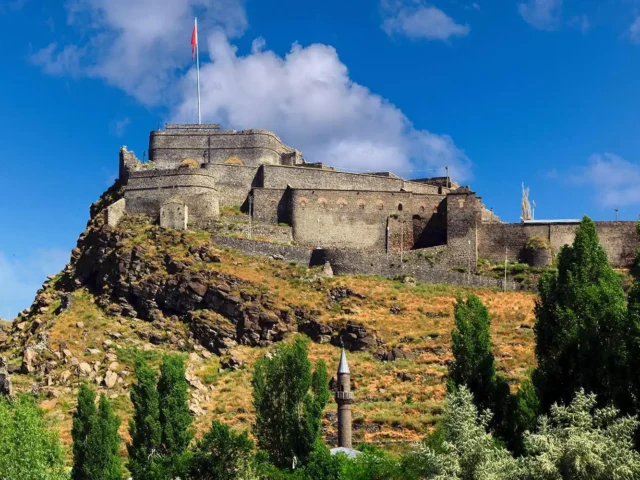
Kars Castle: the basalt citadel above the Kars River, rebuilt in 1153…
Kümbet Mosque
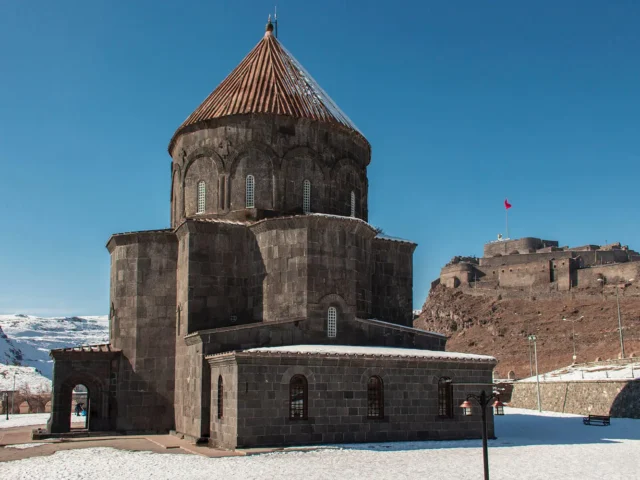
Kümbet Mosque in Kars: the 10th-century Church of the Holy Apostles below…
Fethiye Mosque
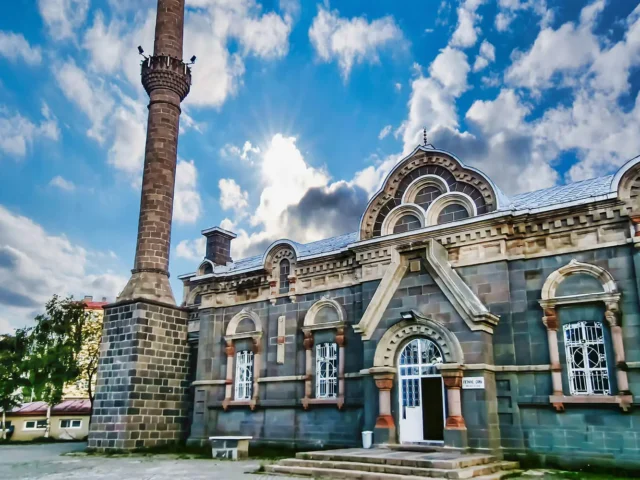
Fethiye Mosque in Kars: the Russian church of St Alexander Nevsky in…
Sarıkamış
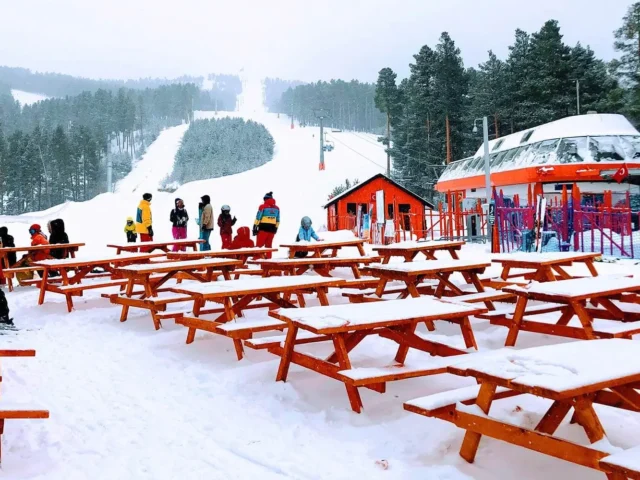
Sarıkamış in Kars: skiing on crystal snow at Cıbıltepe, Scots pine forest,…
How do you get to Kars?
By air: Kars Harakani Airport (KSY) is about 6 km from the city centre. Turkish Airlines flies from Istanbul Airport; AJet and Pegasus fly from Sabiha Gökçen, AJet also from Ankara, and SunExpress from İzmir. There are no scheduled international flights, so overseas visitors connect in Istanbul or Ankara. Taxis and airport shuttles run into the city.
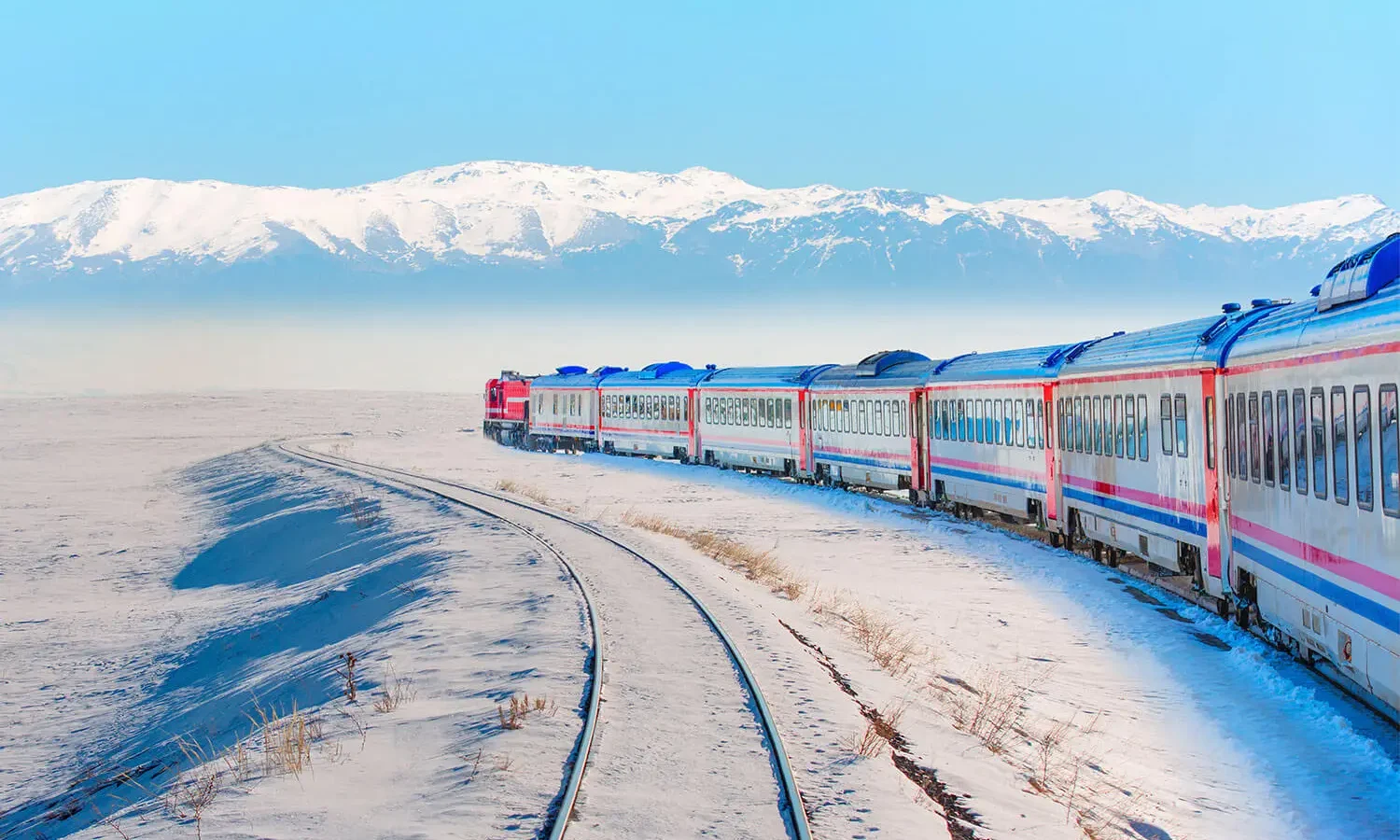
By rail: Kars is the eastern terminus of the Eastern Express (Doğu Ekspresi) from Ankara, a journey of more than a day across the Anatolian plateau. In winter the state railway also runs the Touristic Eastern Express: in the 2025–2026 season it ran from 22 December to 1 March, three times a week in each direction, taking about 32 hours with long stops in Erzincan and Erzurum on the way east. Tickets sell out quickly, so book as soon as sales open.
By road: Coaches link Kars with Erzurum (about 200 km), Iğdır (about 140 km), Ardahan and most large Turkish cities. Ani, Sarıkamış and Lake Çıldır are best reached by car, taxi or a day tour from the city; there is no regular public transport to Ani.
Where should you stay in Kars?
Stay in central Kars. The city hotels are within walking distance of the Russian-era streets, the bridge, the Kümbet Mosque and the castle, and they make the most practical base for Ani and Lake Çıldır, which are both done as day trips.
In the ski season, Sarıkamış is the alternative: hotels sit at the foot of the Cıbıltepe slopes among the pine forest, about an hour from Kars. Book early for the Eastern Express arrival days and the January school holiday, when both towns fill up.
Book a Kars tour
−5% Istambul readers save 5% on every tour below — applied at checkout.
Partner listings via GetYourGuide · free cancellation on most
What type of climate does Kars have?
Kars has a harsh continental climate: short, warm summers and long, very cold winters. Snow usually covers the ground for about four months, and temperatures have dropped to −37°C. Summer days are pleasant at this altitude, typically in the low to mid 20s°C, but nights stay cool even in July, so bring a warm layer at any time of year.
When is the best time to visit Kars?
June to September is best for Ani and the countryside. The plateau turns green, wild flowers cover the pastures and the roads are clear. Ani has almost no shade, so go early or late in the day.
December to March is the time for snow: skiing at Sarıkamış, the Touristic Eastern Express, and sleigh rides and ice fishing on frozen Lake Çıldır. Ani under snow is a remarkable sight, but dress for real cold and expect shorter opening hours in winter.
What is the history of Kars?
The plateau around Kars has been settled since prehistory, and the 2002 inventory notes that its ancient remains and ruins reach back to the very earliest periods of history. In the 10th century Kars became a royal city: the Armenian Bagratid king Abas I made it his capital, and the Church of the Holy Apostles, today’s Kümbet Mosque, was built during his reign in the 930s. In 961 the capital moved to Ani.
The Seljuks under Alp Arslan took the region in 1064. In 1153 the castle was rebuilt for the Saltukid ruler Melik İzzeddin Saltuk II. Georgians, Mongols and the armies of Timur followed; Timur destroyed the castle in 1386. The Ottomans rebuilt Kars in 1579 on the orders of Murad III, under the commander Lala Mustafa Pasha, and the castle walls, the Beylerbeyi Palace, the baths and the first stone bridge belong to this rebuilding.
Russia besieged Kars several times in the 19th century and held it from 1878 until 1918. The Russian administration laid out the grid of streets south of the river and built the stone public buildings, mansions and churches that still define the city centre. Turkish forces took Kars in 1920, and the Treaty of Kars of 1921 fixed the border that runs east of the province today.
In the winter of 1914–1915, during the First World War, the Ottoman Third Army fought the Battle of Sarıkamış against Russian forces in the mountains southwest of the city. Most Ottoman losses came from the cold, and the battle is commemorated every January.
What is Kars famous for?
Ani. The ruined medieval city on the Armenian border is the most important archaeological site in eastern Türkiye and the main reason most travellers make the journey. Excavations have been carried out since 1892 and still continue every summer.
Baltic-style architecture. Most of the Russian-era buildings were put up between 1890 and 1918, in a style locally called Baltic. About 190 of them are registered and protected, and a restoration project financed with European Union funds has restored the façades along Haydar Aliyev Caddesi.
Faith buildings from the first centuries of Turkish Anatolia. The inventory singles out the province’s potential for faith tourism, pointing to the first mosques the Seljuks built in Anatolia and to early Christian churches.
Cheese, goose and honey. Kars kaşarı was registered as a geographical indication in 2015 and Kars gravyeri in 2024. Kars has a dedicated cheese museum, and goose is the traditional winter meat.
What are the historical places of Kars?
In Kars city
Kars Castle. Also called the Central Castle or Inner Castle. The inventory dates it to the 10th century and records that it was levelled by Timur in 1386 and rebuilt in 1579. See our Kars Castle guide.
Kümbet Mosque (Church of the Holy Apostles). A domed 10th-century church at the foot of the castle, with twelve apostle reliefs around its drum. See our Kümbet Mosque guide.
Fethiye Mosque. Built by the Russians as a church in the early 20th century and converted into a mosque in the 1980s. See our Fethiye Mosque guide.
Taşköprü (Stone Bridge). The inventory records that the bridge was built in 1579 by order of Sultan Murad III during the rebuilding of the city. When the first bridge collapsed, the present bridge was built on the old piers in the early 18th century.
Beylerbeyi Palace. The palace at the foot of the castle was built in 1579 by Lala Mustafa Pasha. The two-storey building, according to the inventory, served as the government house of Kars until 1828.
The bathhouses. The İlbeyoğlu Hamam, on the right of Taşköprü and known today as the Muradiye Hamam, has high, airy domes, and its reliefs and decoration carry the architectural features of the 18th century. The Mazlumağa Hamam, on the left of the bridge, was built in 1579 and also has high, airy domes.
Evliya Mosque. The first mosque, built in 1579, collapsed and was rebuilt in the 17th century with an earth roof. It takes its name from the tomb in its courtyard.
Yusuf Paşa Mosque. The inscription over the door says it was built in 1664. Its original wooden minaret was later replaced with the stone minaret standing today.
Kars Archaeology and Ethnography Museum. The inventory calls the Kars Museum one of the richest museums in Eastern Anatolia. Its archaeological section shows ceramics and bronzes found around Kars, ring stones, coins, carved wooden doors, niches and bells; the ethnographic section shows objects the people of Kars used through history; and the garden holds reliefs, ram sculptures and gravestones of various periods. Finds from the Ani excavations, including a roughly 1,000-year-old sundial from the great bath, have been put on display here.
Around the province
Ani. 42 km east of the city, in Ocaklı (Ani) village. See our Ani guide.
Sarıkamış. A town in Scots pine forest southwest of Kars, with the province’s ski resort, a Russian imperial hunting lodge and the battlefields of 1914–1915. See our Sarıkamış guide.
What are the best things to do in Kars?
- Spend a full day at Ani. Walk from the Lion Gate to the cathedral, the Church of St Gregory of Tigran Honents on the gorge and the Menuçehr Mosque; allow at least three hours.
- Walk the Russian-era centre. The grid of streets south of the river is easy to explore on foot, with the restored Baltic-style façades along Haydar Aliyev Caddesi.
- Climb to Kars Castle for the view. Go up past the Kümbet Mosque and Taşköprü, and look down over the city and the river valley.
- Ski at Sarıkamış. The inventory describes the Cıbıltepe slopes among the pines as covered with crystal snow, which makes them all the more attractive to skiers.
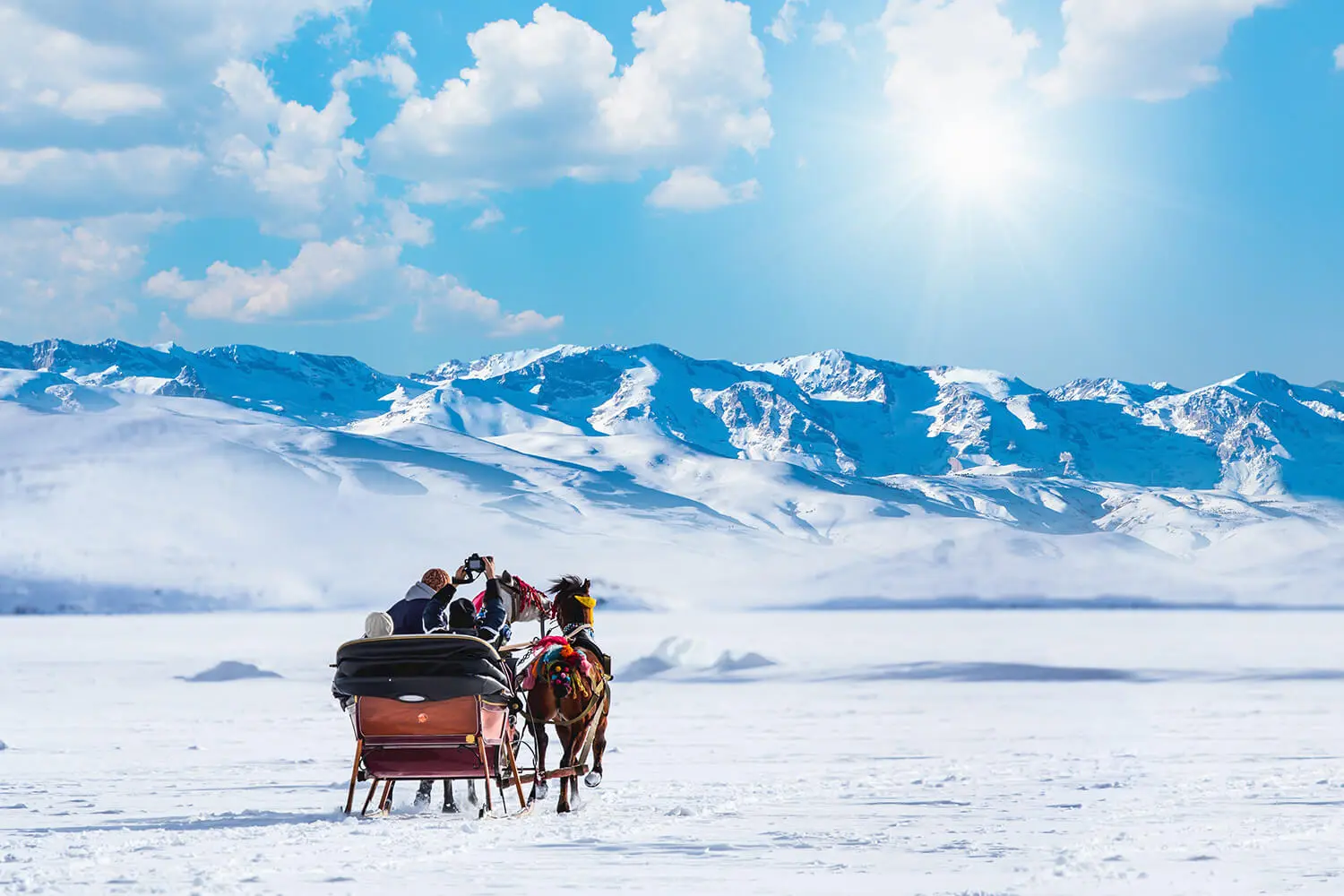
- Take a sleigh across frozen Lake Çıldır. In midwinter horse-drawn sleighs cross the ice and fishermen cut holes to set their nets. The lake is shared with neighbouring Ardahan province; see our Lake Çıldır guide.
- Ride the Eastern Express. The train from Ankara arrives at Kars station after a day and more across the plateau.
- Go fishing or walking. The inventory notes opportunities for sport fishing at Çengelli Lake and Aygır Lake in Kağızman and at Susuz Lake in Sarıkamış, and areas suitable for mountain and nature walks around Sarıkamış.
- Visit a cheese dairy or the cheese museum. Kars is one of Türkiye’s cheese capitals.
The inventory also lists local events, among them the Snow Festival in Sarıkamış, Nevruz celebrations in the centre on 21 March, a festival of cirit (mounted javelin) and rahvan (ambling) horse riding in May, the Apricot Festival in Kağızman and the Sarıçam-Karakucak festival in Sarıkamış in July. Dates change from year to year, so check locally.
What are the best places to visit in Kars?
Ani Ancient City is the medieval “City of 40 Gates” on the Armenian border, with its cathedral, churches, Seljuk mosque and walls above the Arpaçay gorge.
Kars Castle crowns the basalt rock above the old town and gives the best view of the city.
Kümbet Mosque is the 10th-century Church of the Holy Apostles, with its conical dome and twelve apostle reliefs.
Fethiye Mosque is the former Russian Orthodox church of Alexander Nevsky, built of black and red stone.
Sarıkamış is the ski town in the pine forest, with the Katerina hunting lodge and the Allahuekber Mountains National Park.
Also worth your time: Taşköprü and the old bathhouses, the Kars Archaeology and Ethnography Museum and the Kars cheese museum. Lake Çıldır, partly within Kars’s Arpaçay district, is covered on the Ardahan page, and the province of Iğdır, with views of Mount Ararat, lies to the southeast.
What is the traditional food of Kars?
Goose (kaz) is the signature dish. Geese are fattened in summer, slaughtered as winter begins, salted and dried, then roasted and served over bulgur pilaf cooked in the goose fat; a goose dinner is a winter tradition in Kars homes and restaurants.
The pastures of the plateau give Kars its dairy. Kars kaşarı is a mature, slightly sharp cheese, and Kars gravyeri is a hard, holed cheese made in the style of Swiss Gruyère; both carry geographical-indication status. Look also for çeçil (string cheese), local honey and, in Kağızman, apricots.
What should you buy in Kars?
Cheese. Kars kaşarı and gravyeri are sold vacuum-packed in the cheese shops of the city centre, which makes them easy to take home.
Honey. Flower honey from the high pastures is the other classic souvenir.




Frequently asked questions about Kars
Is Kars worth visiting?
Yes. Ani alone justifies the trip, and Kars adds a medieval castle, a 10th-century church, Russian-era streets, skiing at Sarıkamış and frozen Lake Çıldır in winter.
How many days do you need in Kars?
Two days cover the city and Ani. Add a day for Lake Çıldır or Sarıkamış, especially in winter.
How far is Ani from Kars?
About 42 km east of the city centre, roughly 45 minutes by car. There is no regular public bus, so go by taxi, hire car or tour.
Is Kars a UNESCO World Heritage Site?
The city itself is not, but the Archaeological Site of Ani in Kars province was inscribed on the World Heritage List in 2016.
How cold does Kars get in winter?
Very cold. Snow usually lies for about four months and temperatures have fallen as low as −37°C, so pack serious winter clothing from December to March.
How do you get to Kars by train?
The Eastern Express runs from Ankara to Kars. In winter the Touristic Eastern Express also runs, taking about 32 hours with sightseeing stops in Erzincan and Erzurum.
What food is Kars known for?
Roast goose with bulgur pilaf, Kars kaşarı and gravyer cheese (both with geographical-indication status), and highland honey.
What do the official records say about Kars?
Kars lies in Eastern Anatolia and is the easternmost of our provinces, and at the same time, because of its continental climate, one of the coldest. Although this disadvantage of place has been relatively unfavourable for the province’s industrial development, in terms of tourism potential it is one of the leading provinces of the region.
The province is one of our main winter tourism centres and could develop further in this field with investment. For cultural tourism, too, with ancient remains and ruins reaching back to the very earliest periods of history, it has become one of the leading centres. The province’s potential in faith tourism is also remarkable: the first mosques of the Seljuks in Anatolia and Christian churches of the early period are an indication of this potential. With its unspoilt nature, the province also has potential waiting to be used for ecotourism and sports tourism. (Ministry of Culture and Tourism, Kars Provincial Tourism Inventory, 2002)
Ready to see Kars?
Hand-picked tours with good reviews and clear prices.
Partner listings via GetYourGuide · free cancellation on most
Before or after: Istanbul
Most trips start or end in Istanbul. Our own experiences there:

 Dinner, sunset and day cruises between Europe and Asia.See cruises bosporuscruise.com

 Historic Turkish baths in the old city — hand-picked hamams, booked direct.Book a hamam istanbulhamam.com

 Istanbul’s tallest viewpoint: both continents from 369 metres.Get tickets camlicatower.com

 Free audio guides in 15 languages, safe routes and local tips — plus 5% off GetYourGuide.Open the free guide localada.com


