Kümbet Mosque: The Church of the Holy Apostles
On this page
- What is the Kümbet Mosque?
- How do you get to the Kümbet Mosque?
- When is the best time to visit the Kümbet Mosque?
- What is the history of the Kümbet Mosque?
- What is the Kümbet Mosque famous for?
- What can you see at the Kümbet Mosque?
- Common misconceptions about the Kümbet Mosque
- Frequently asked questions about the Kümbet Mosque
- What do the official records say about the Kümbet Mosque?
Key facts: Kümbet Mosque
- What it is: The 10th-century Church of the Holy Apostles, used as a mosque since 1993.
- Where: Kaleiçi quarter, at the southern foot of Kars Castle, Kars city centre.
- Period: Built in the 930s under the Bagratid king Abas I; restored by the Russians in 1878.
What is the Kümbet Mosque?
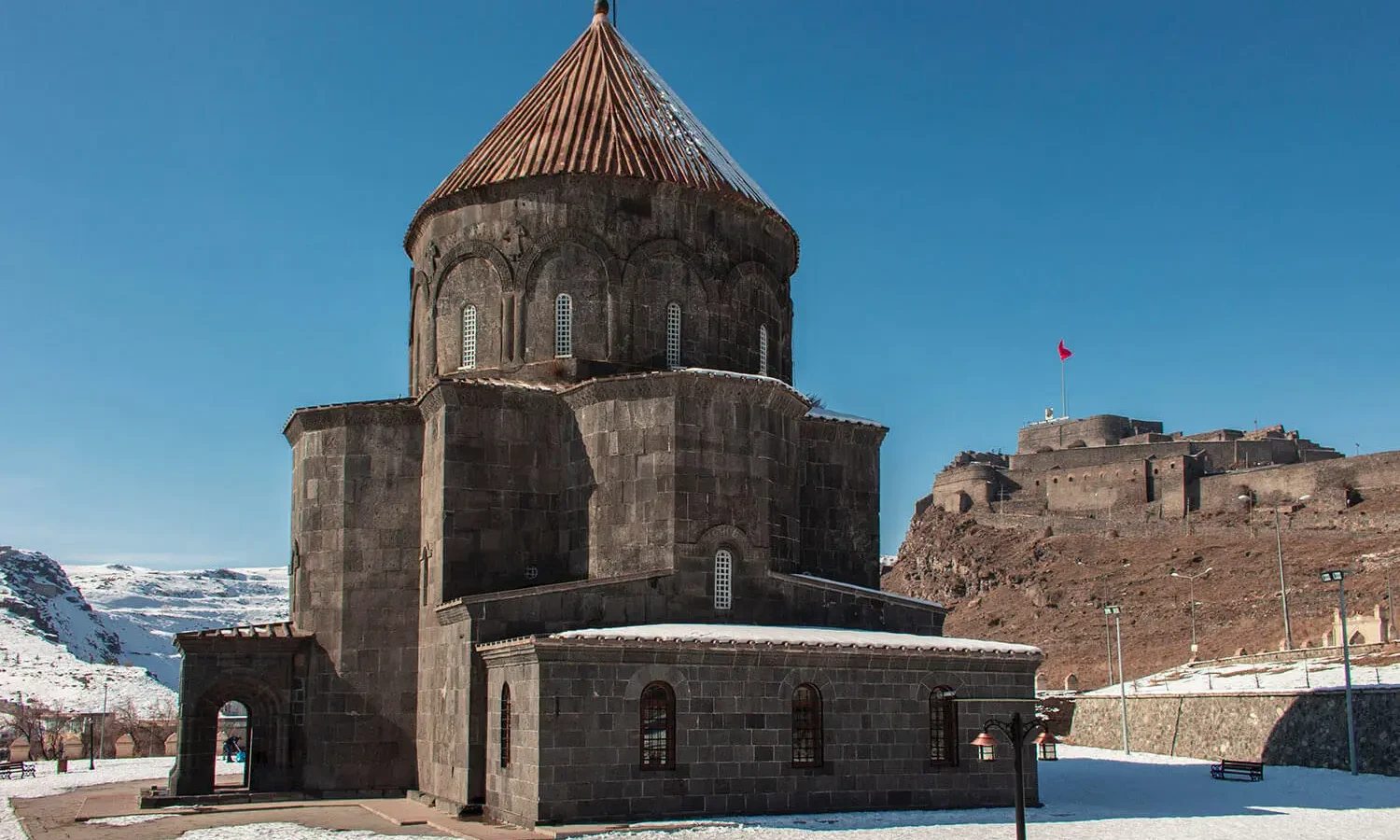
The Kümbet Mosque is the former Church of the Holy Apostles (Havariler Kilisesi), the oldest standing building in Kars. It stands below Kars Castle in the Kaleiçi quarter, a compact block of dark dressed stone under a tall conical dome, the shape that gave it the Turkish name kümbet (“dome” or “domed tomb”).
Its plan and its twelve carved figures around the drum make it one of the key monuments of 10th-century Armenian architecture. Over a thousand years it has served as a cathedral, a mosque, a Russian church, a museum and, since 1993, a mosque again.
How do you get to the Kümbet Mosque?
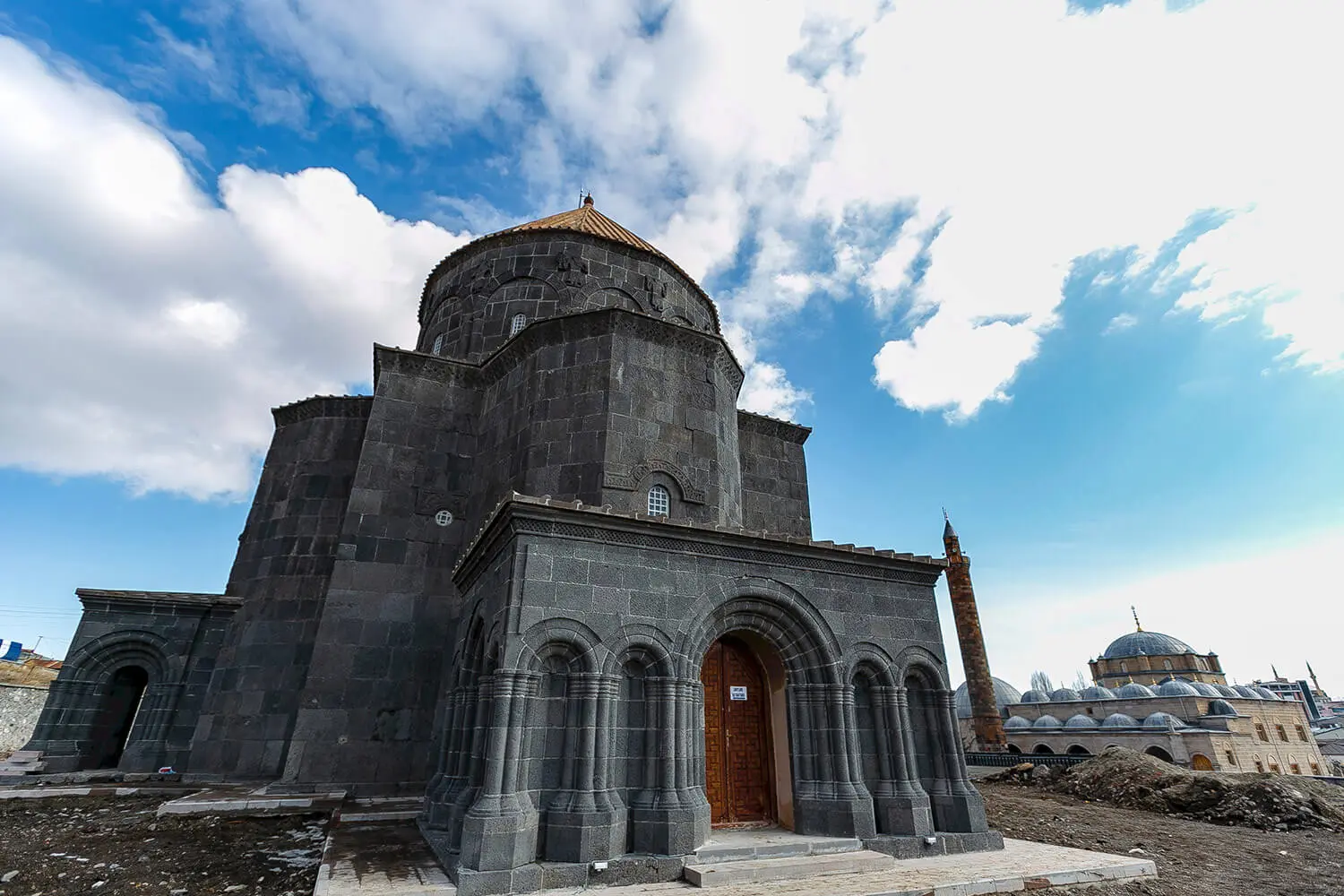
It is in the city centre, on the north bank of the Kars River below the castle. Walk across Taşköprü into Kaleiçi; the mosque is a few minutes’ walk uphill, on the way to the castle entrance.
In October 2026 the mosque was temporarily closed and cordoned off for repairs to the stone cladding of its roof, after stones began to fall. The exterior can still be seen from outside the cordon; check locally whether the interior has reopened.
Book a Kümbet Mosque tour
−5% Istambul readers save 5% on every tour below — applied at checkout.
Partner listings via GetYourGuide · free cancellation on most
When is the best time to visit the Kümbet Mosque?
Any time of year, ideally in the morning when the sun falls on the drum reliefs. As a working mosque it is closed to sightseers during prayer times, especially Friday midday prayers. Dress modestly; women should cover their hair.
What is the history of the Kümbet Mosque?
The church was built by the Bagratid king Abas I, who made Kars his capital, in the 930s; the exact years are uncertain because no building inscription survives. The inventory gives 932–937. Its domed four-apse plan follows the 7th-century church of St John at Mastara, a model widely used in the region.
After the Seljuks took Kars in 1064 it was converted into a mosque, and under the Ottomans, after 1579, it again served as a mosque. When Russia took Kars in 1877 it became a Russian Orthodox church: porches were added and, according to the inventory, it was repaired in 1878, and a bell tower built beside it in 1890 was demolished in 1918.
It became a mosque again in 1918, briefly a church in 1919, and after 1920 passed through years of neglect, including use as a depot. In 1964 it was decided to use it as a museum, and from 1993 it has served as a mosque under the Presidency of Religious Affairs. It was restored under projects approved in 2015.
What is the Kümbet Mosque famous for?
- The twelve apostles carved in relief around the drum.
- The conical dome, typical of the region’s medieval architecture.
- Its long history of changing faiths, from Armenian cathedral to mosque, Russian church, museum and mosque again.
What can you see at the Kümbet Mosque?
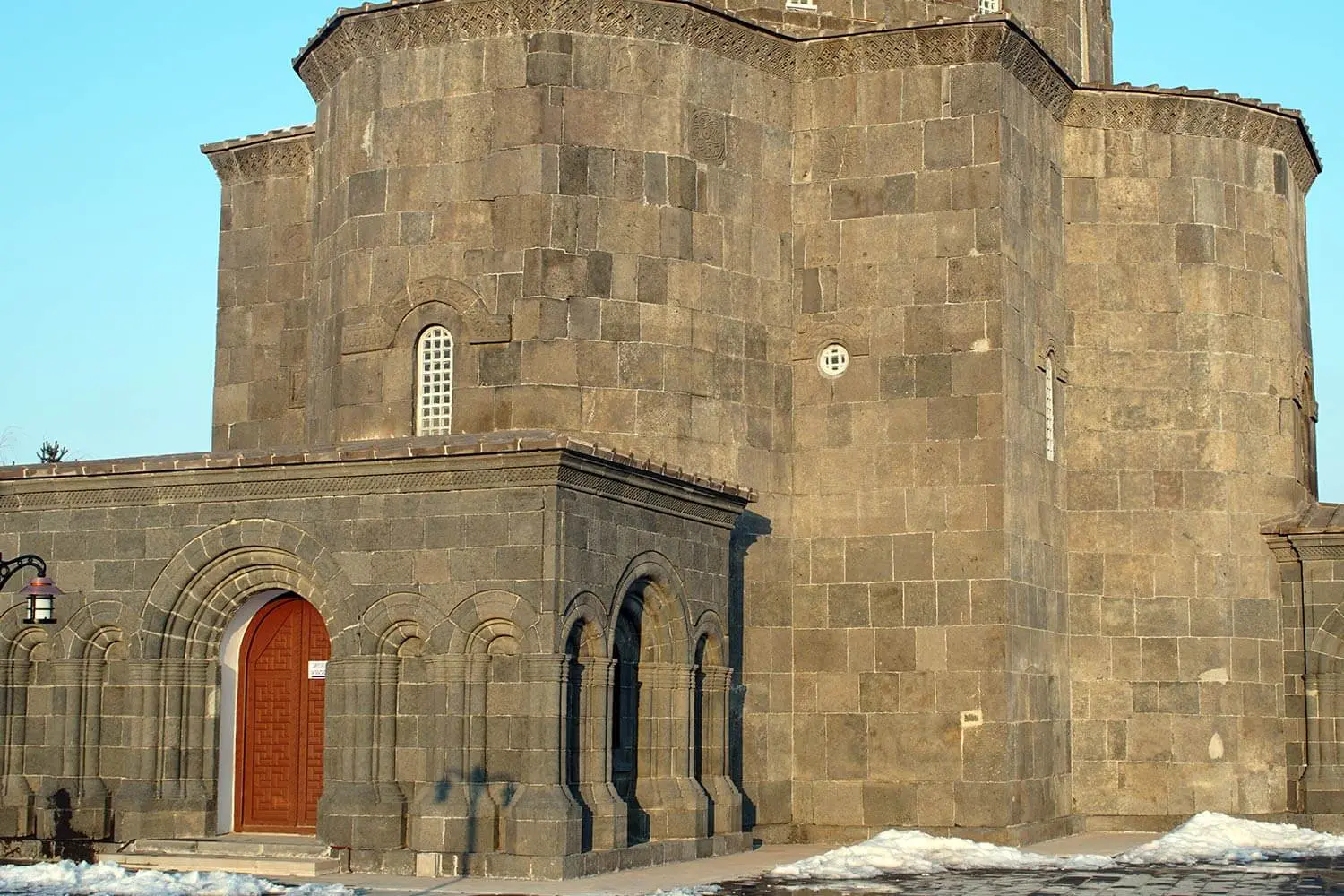
The exterior. The building is made of regular blocks of dressed stone of the kind known as Tiflis stone, a dark grey volcanic stone. Above the blind arches of the drum are stone reliefs of the twelve apostles, simple standing figures.
The plan. The church is centrally planned, extended by four niches like a four-leaf clover, with right-angled walls at the corners making a complete square, and topped by the long conical dome characteristic of the region.
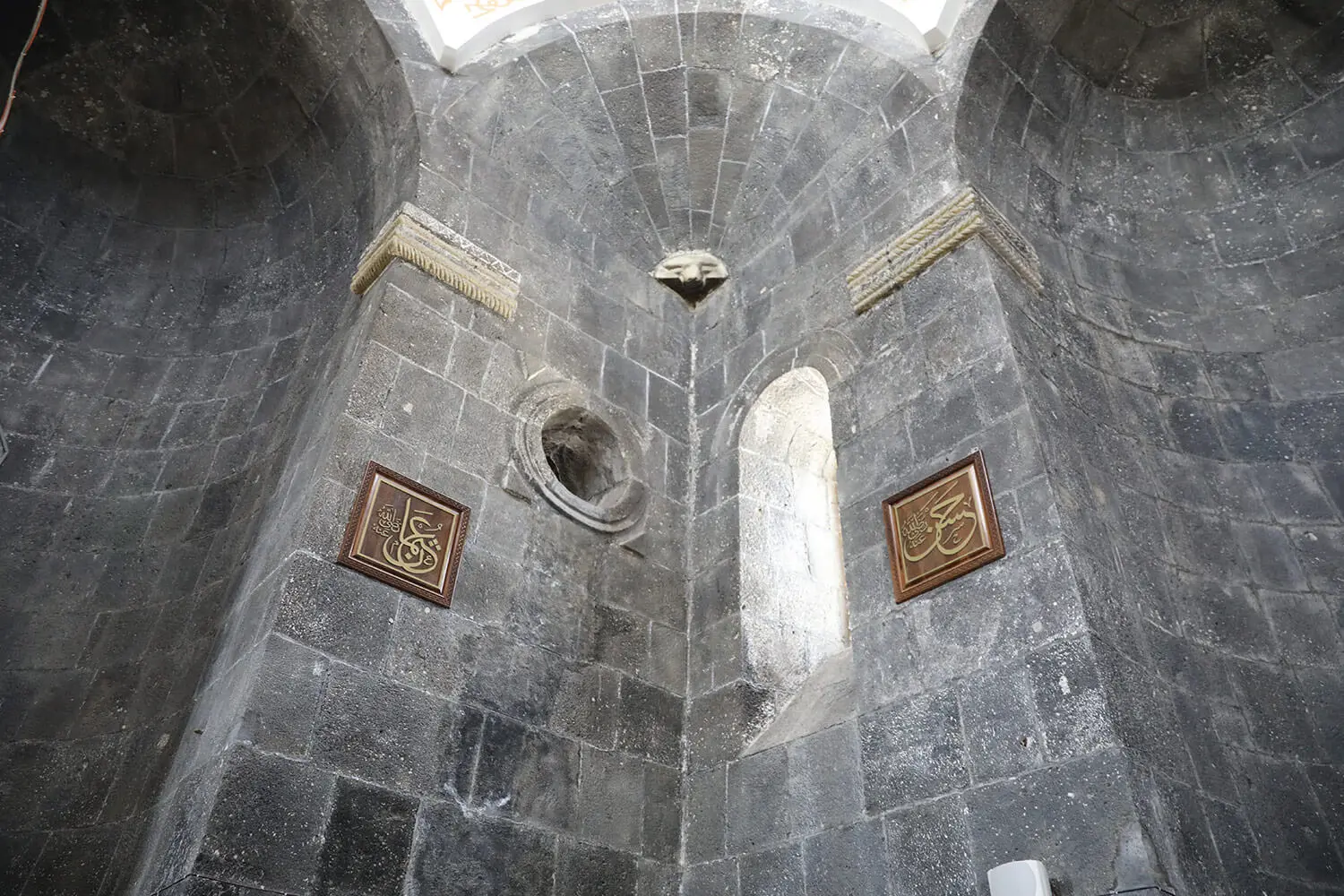
The interior. The inventory describes the interior as painted with a yellow plaster and decorated with interlocking geometric painted ornament. Travellers in the late 1990s also noted the original bema and a 19th-century Russian iconostasis.
The neighbourhood. The Evliya Mosque is close by. According to the inventory, the first mosque on the site was built in 1579; when it collapsed it was rebuilt in the 17th century with an earth roof, and it takes its name from the tomb in its courtyard. Just below, on the river, are Taşköprü, rebuilt on its old piers in the early 18th century, and the İlbeyoğlu (Muradiye) and Mazlumağa bathhouses on either side of it.
Common misconceptions about the Kümbet Mosque
Is it still the Museum of the Apostles?
What people often assume: Older guidebooks and some listings still call the building the “Museum of the Apostles” (Havariler Müzesi).
What the record says: It was a museum from 1964 to 1993; since 1993 it has been a mosque under the Presidency of Religious Affairs (Wikipedia, Cathedral of Kars).



Frequently asked questions about the Kümbet Mosque
Is the Kümbet Mosque a church or a mosque?
It was built as the Church of the Holy Apostles in the 930s and has been a mosque since 1993, after serving as a museum from 1964.
Can you go inside the Kümbet Mosque?
Normally yes, outside prayer times and in modest dress. In October 2026 it was temporarily closed for roof repairs, so check locally.
Who are the figures on the dome?
The twelve reliefs around the drum are identified as the Twelve Apostles, which gave the church its name.
Where is the Kümbet Mosque?
In the Kaleiçi quarter of Kars, at the foot of Kars Castle, a short walk across Taşköprü from the city centre.
What do the official records say about the Kümbet Mosque?
The church, located in the Kaleiçi quarter on the southern slope of Kars Castle, has been well preserved to the present day. It was built between 932 and 937 by the Bagratid king Abbas, who made Kars his capital. It was repaired by the Russians in 1878.
The centrally planned building, extended by four niches resembling a four-leaf clover, forms a complete square with four right-angled walls at the corners. Above this is the long conical dome roof particular to the region. Painted inside with a yellow plaster, the building has geometric, interlocking painted decoration. Seen from outside, there are stone reliefs of the 12 apostles above the decorative blind arches of the drum. The church was built of regular cut stone blocks known as Tiflis stone (a volcanic, dark grey stone). (Ministry of Culture and Tourism, Kars Provincial Tourism Inventory, 2002)
Ready to see Kümbet Mosque?
Hand-picked tours with good reviews and clear prices.
Partner listings via GetYourGuide · free cancellation on most
Before or after: Istanbul
Most trips start or end in Istanbul. Our own experiences there:
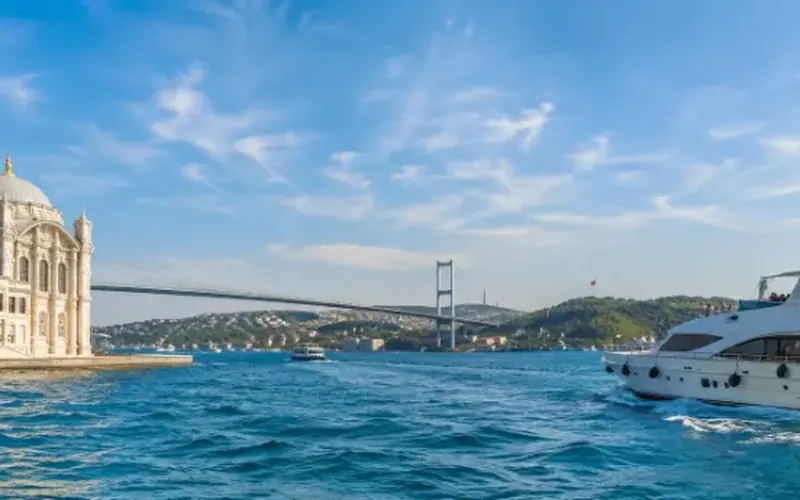
 Dinner, sunset and day cruises between Europe and Asia.See cruises bosporuscruise.com
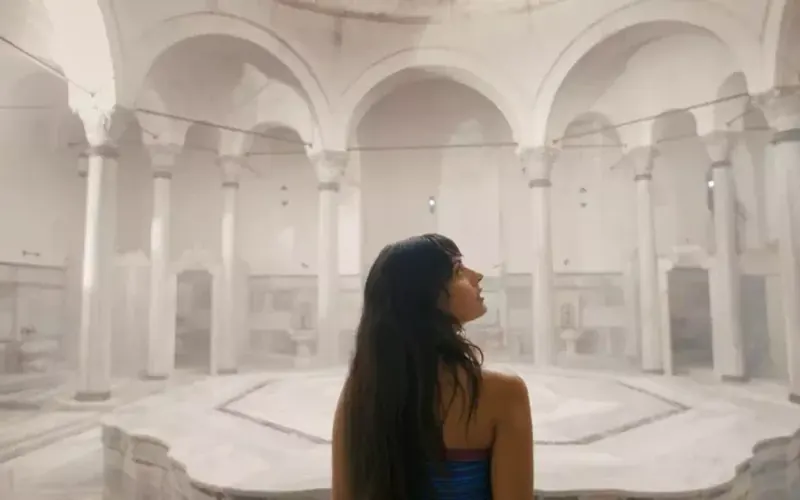
 Historic Turkish baths in the old city — hand-picked hamams, booked direct.Book a hamam istanbulhamam.com
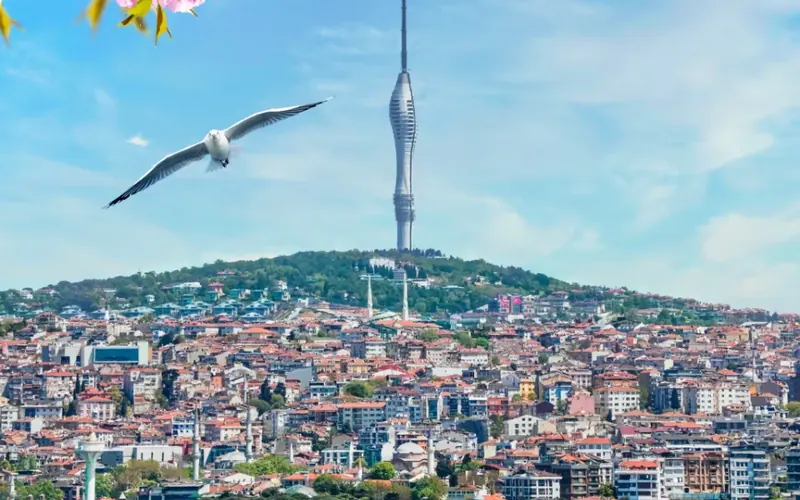
 Istanbul’s tallest viewpoint: both continents from 369 metres.Get tickets camlicatower.com
 Free audio guides in 15 languages, safe routes and local tips — plus 5% off GetYourGuide.Open the free guide localada.com
Nearby
All destinations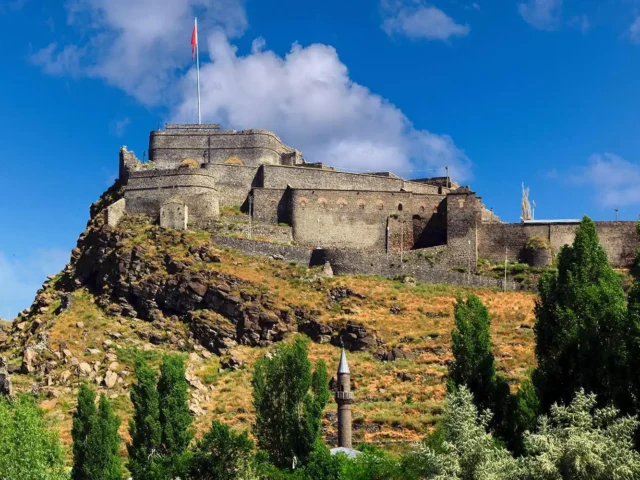
Kars Castle
Kars Castle: the basalt citadel above the Kars River, rebuilt…
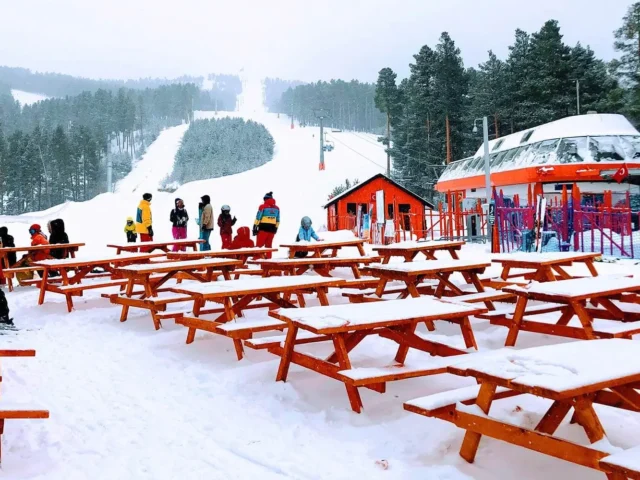
Sarıkamış
Sarıkamış in Kars: skiing on crystal snow at Cıbıltepe, Scots…
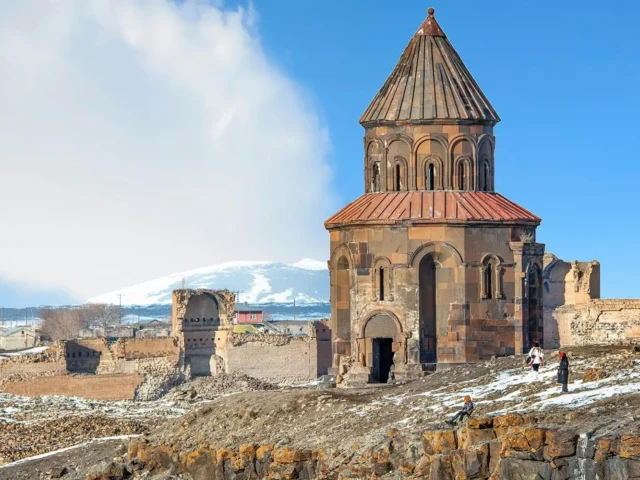
Ani
Ani ancient city near Kars: the UNESCO-listed Bagratid capital with…
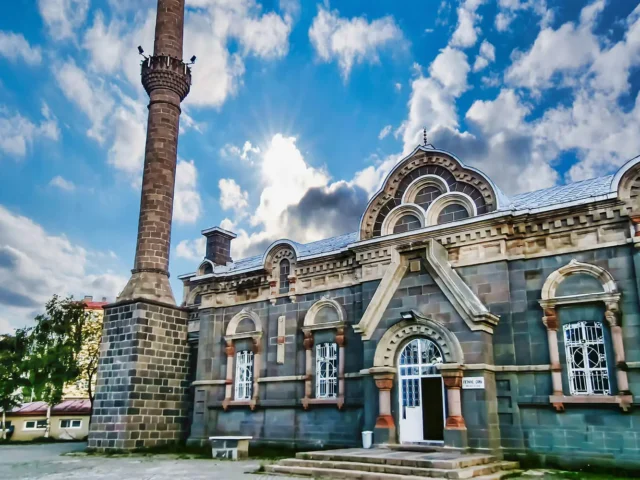
Fethiye Mosque
Fethiye Mosque in Kars: the Russian church of St Alexander…