
Kırklareli: Forests, Caves and Coast of Thrace
On this page
- What is Kırklareli?
- How do you get to Kırklareli?
- Where should you stay in Kırklareli?
- What type of climate does Kırklareli have?
- When is the best time to visit Kırklareli?
- What is the history of Kırklareli?
- What is Kırklareli famous for?
- What are the historical places of Kırklareli?
- What are the best things to do in Kırklareli?
- What are the best places to visit in Kırklareli?
- What is the traditional food of Kırklareli?
- What should you buy in Kırklareli?
- Frequently asked questions about Kırklareli
- What do the official records say about Kırklareli?
Key facts: Kırklareli
- Region: East Thrace, in European Türkiye: the province borders Bulgaria to the north, Edirne to the west, the Black Sea and Istanbul to the east, and Tekirdağ to the south.
- Best known for: The Istranca (Yıldız) Mountains and their forests, Dupnisa Cave, the İğneada floodplain forests, a quiet Black Sea coast, and early Ottoman and Mimar Sinan buildings.
- Name: Kırklareli means “place of the forty”; the town was called Kırk Kilise (“Forty Churches”) until 1924.
What is Kırklareli?
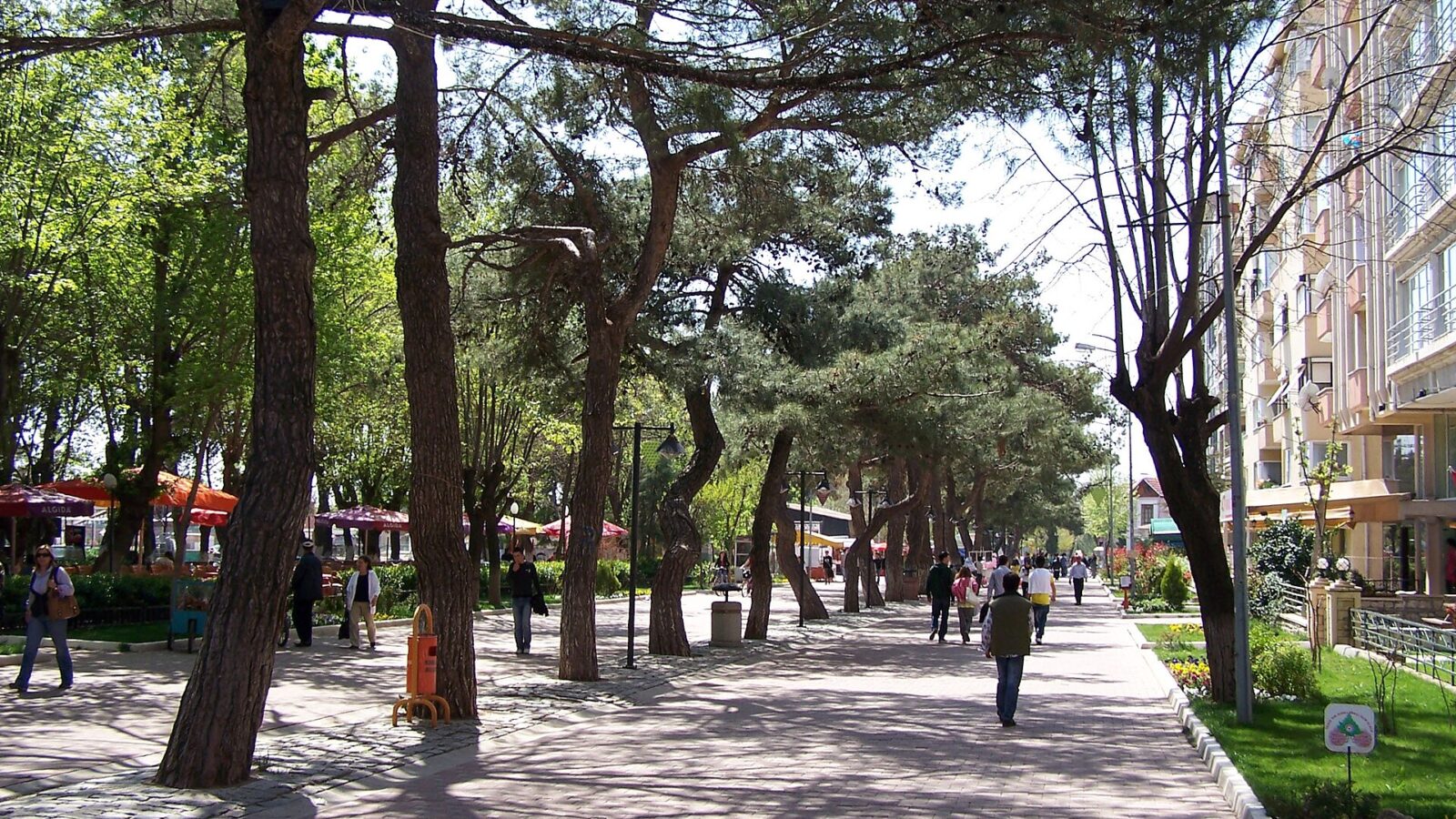
Kırklareli is a province in the far northwest of Türkiye, one of the country’s handful of provinces in Europe. Its capital, also called Kırklareli, sits on the plain of Thrace below the Istranca Mountains, about 200 km northwest of Istanbul and a short drive east of Edirne. The Bulgarian border runs along the ridge to the north.
The province has two faces. The south is open farmland, crossed by the old road from Istanbul to the Balkans, with the towns of Lüleburgaz and Babaeski and their Mimar Sinan mosques. The north is forest: the Istranca range, known in Turkish as the Yıldız Mountains, runs down to roughly 60 km of Black Sea coast with sandy beaches at İğneada, Kıyıköy and Kastro.
The 2002 provincial tourism inventory described Kırklareli as a fast-growing industrial city that also draws attention for the range of its tourism potential: coastal, sport, eco, faith and cultural tourism, places of worship that matter to both Christians and Muslims, works of Mimar Sinan, and natural beauty. Two decades later that is still a fair summary. Most foreign visitors pass straight through on the way to Bulgaria; those who stop find a province that Istanbul weekenders already know well.
Places to visit in Kırklareli
Dupnisa Cave
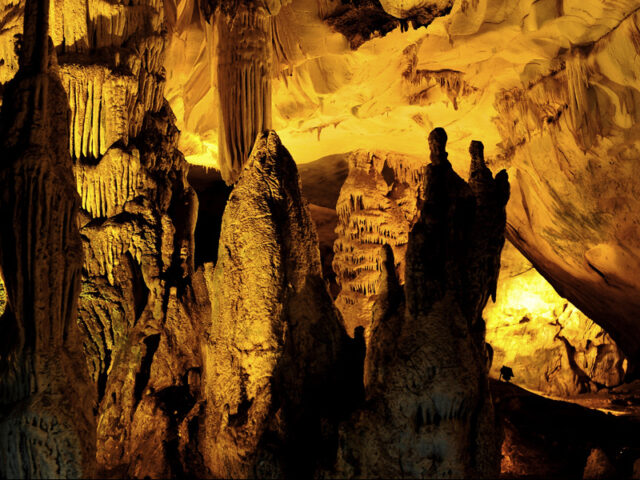
Dupnisa Cave in the Istranca Mountains: two open caves, an underground river…
İğneada Floodplain Forests
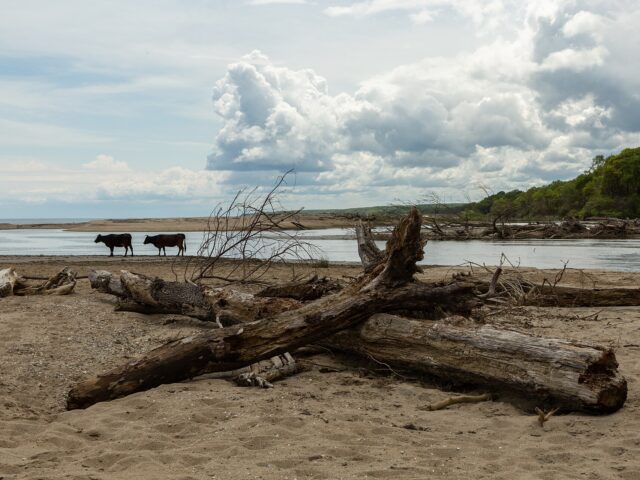
İğneada Floodplain Forests National Park: flooded longoz woods, five lakes and Black…
Kıyıköy
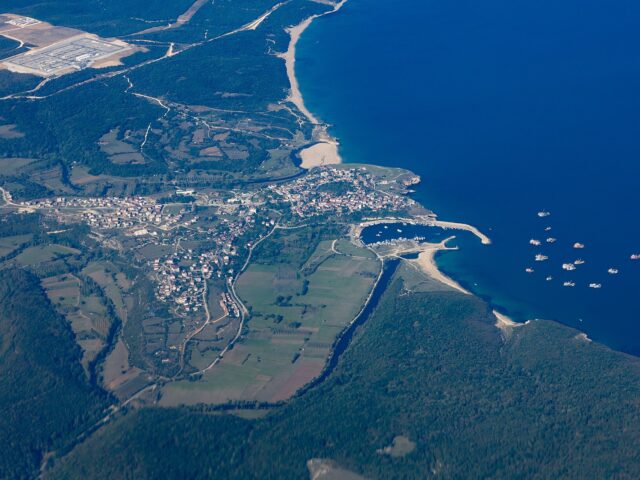
Kıyıköy on the Black Sea: Byzantine walls, the rock-cut St Nicholas Monastery,…
Vize Hagia Sophia
Vize Hagia Sophia, the Little Hagia Sophia: a 6th-century Byzantine church turned…
How do you get to Kırklareli?
By air: There is no airport in the province. Istanbul Airport on the European side is the usual gateway, and Sabiha Gökçen on the Asian side also works if you are prepared for a longer drive.
By road: Kırklareli is roughly 200 km from Istanbul. Intercity coaches run frequently from Istanbul’s bus stations to Kırklareli, Lüleburgaz, Babaeski and Vize. State road D.020, which runs from Istanbul to Edirne via Kırklareli, passes through Vize. For the coast and the forest sites you really need a car: İğneada is about 97 km from the city and Kıyıköy about 95 km, and public transport to both is limited.
By rail: Kırklareli city has no railway. Lüleburgaz, in the south of the province, is on the main line from Istanbul to Edirne and the Bulgarian border, served by regional trains between Istanbul and Edirne.
Where should you stay in Kırklareli?
Where you stay depends on what you came for. Kırklareli city has business hotels and is the practical base for the museum, the Hızır Bey complex and day trips to Dupnisa Cave and Edirne. On the coast, İğneada has many family-run pensions and a large resort hotel near the floodplain forest, and Kıyıköy has small guesthouses, fish restaurants and campsites by the Pabuçdere stream. Both fill up on summer weekends with visitors from Istanbul, so book ahead from June to August.
Lüleburgaz and Babaeski, on the main road and railway, are convenient stopovers if you are driving between Istanbul and Edirne or Bulgaria.
Tours in Anatolia
−5% Istambul readers save 5% on every tour below — applied at checkout.
Partner listings via GetYourGuide · free cancellation on most
What type of climate does Kırklareli have?
Kırklareli has hot, fairly humid summers and cool, cloudy, damp winters. The Istranca Mountains put the city in a partial rain shadow, so it receives less rain than the Black Sea coast; the annual average is about 585 mm. Snow is fairly common between December and March and usually lies for a week or two. The coast at İğneada and Kıyıköy is cooler and greener in summer than the plain, and sea mist is common.
When is the best time to visit Kırklareli?
May to October is the best period. Late May and June bring green forests, long evenings and quiet beaches; July and August are beach season on the Black Sea coast. September and October are excellent for walking in the Istranca forests and for the İğneada floodplain, when the leaves turn.
Check the season before planning a cave visit: the lower, wet section of Dupnisa Cave is closed from 15 November to 15 May to protect its bats, while the dry upper section stays open all year.
What is the history of Kırklareli?
People have lived here since at least the Neolithic. At Aşağıpınar, just outside the city, excavations since 1993 have found settlement layers from the Neolithic to the Hellenistic period. The 2002 inventory notes that the Aşağıpınar culture layers are contemporary with the Early and Middle Chalcolithic of Anatolia, and that its people show the features of the Balkan Neolithic cultures. Just to the north, Kanlıgeçit was, in the inventory’s words, “almost a small copy of the city of Troy”: an Early Bronze Age settlement ringed by a city wall, with megaron houses inside, founded around 2400 BC and destroyed by fire some time between 2300 and 2000 BC.
Thracian tribes came next. Vize, then called Bizye, was the capital of the Thracian Asti tribe, and the province is scattered with Thracian monuments: the inventory counts 92 registered tumuli, dating from the late Bronze Age (14th–13th centuries BC) to the early 3rd century AD, plus dolmens used between about 1300 and 800 BC and standing stones (menhirs) from the Early Iron Age.
According to the Kırklareli Culture and Tourism Directorate, Persian, Macedonian, Celtic and Roman rule followed. Ostrogoth and Hun raids were devastating, and the Hun invasion of 441–447 is said to have ruined 70 cities and towns. Justinian rebuilt the walls of the region’s fortresses in the 6th century, and the churches of Vize and the rock-cut monastery at Kıyıköy date from his reign.
The Byzantines called the town Saranta Ekklisies, “Forty Churches”, which became Kırk Kilise in Turkish. The Ottomans took it under Sultan Murad I in the 1360s. Bulgaria occupied it during the Balkan Wars of 1912–1913, and after the First World War the province was under Greek occupation for two years until 10 November 1922. On 20 December 1924 the town was renamed Kırklareli.
What is Kırklareli famous for?
- Dupnisa Cave, the only show cave in East Thrace, with an underground river and around 60,000 bats.
- The İğneada floodplain forests, a rare surviving longoz forest of ash, oak and alder behind the Black Sea dunes, protected as a national park since 2007.
- Hardaliye, a traditional Thracian drink of fermented grapes and mustard seed.
- Kırklareli köftesi, the town’s own grilled meatballs.
- Mimar Sinan’s mosques at Lüleburgaz and Babaeski, on the old road from Istanbul to the Balkans.
What are the historical places of Kırklareli?
Hızır Bey Complex (Kırklareli city). The province’s most important historic monument, made up of a mosque, a bath, an arasta (covered market) and a fountain, built by Köse Mihalzade Hızır Bey. The inventory calls the mosque, also known as the Büyük (Great) Mosque, the oldest mosque in Thrace, and describes it as a square, single-domed building of cut stone, “the first and simplest example of this type of mosque in the region”. Hızır Bey’s tomb stands in the courtyard on the mihrab side, and there is a şadırvan under a wooden roof in front. The minaret is built of küfeki limestone on a square base with a polygonal shaft. The arasta, 15 m long with 12 shops, is dated by the inventory to 1383. The inventory gives 1303 for the complex itself, but the town only came under Ottoman rule in the 1360s, and the mosque is usually dated to 1383 (see Kırklareli).
Kırklareli Museum. Housed in an 1894 building on Mustafa Kemal Bulvarı that once served as the town hall, the museum combines natural history, ethnography and archaeology. Finds from Aşağıpınar, Kanlıgeçit and Tilkiburnu are displayed upstairs, along with marble reliefs from the Roman theatre at Vize (see Kırklareli Museum).
Kadı Mosque. Built by Emin Ali Çelebi in 1577. The inventory singles out the stone carving of its window frames and mihrab; the ceiling and roof are wooden and the minaret is attached to the building.
Kırklareli houses. Neo-classical houses built by Greek master builders, mostly from the 19th and early 20th centuries. The Governor’s Mansion on Namazgah Caddesi, the Vali Faik Üstün Primary School and the Tevfik Fikret Primary School are the examples the inventory names.
Redoubts (tabyas). Earthwork and stone defences are common around the city. Seyfioğlu Tabyası, built in 1877, is the best preserved.
Sokollu Mehmed Pasha Complex (Lüleburgaz). A mosque complex commissioned by the grand vizier Sokollu Mehmed Pasha and designed by Mimar Sinan, begun in 1565 and finished around 1569–70 (see Sokollu Mehmed Pasha Mosque). The inventory lists a mosque, tomb, imaret, caravanserai and double bath, with arched shops between the mosque and the caravanserai. Evliya Çelebi recorded two great stables for 500 animals in the caravanserai; only arches and a few outer shop fronts survive from it today. Sinan also built the bridge over the Büyük Karıştıran stream at Lüleburgaz in 1569.
Cedit Ali Paşa Mosque (Babaeski). A Mimar Sinan mosque thought to have been built between 1561 and 1565.
Vize. The old Thracian capital has a fortress, a Roman theatre found in the 1990s and the 6th-century church of Hagia Sophia, later the Gazi Süleyman Paşa Mosque.
Tumuli and dolmens. The inventory names Kırklareli tumuli A, B and G, the Höyük Tepe tumulus at Alpullu, Kepirtepe at Lüleburgaz, Düzorman and İslam Bey among the main burial mounds, and dolmens near the villages of Kofçaz, Dereköy, Kadıköy, Kula, Geçitağzı, Kapaklı and Düzorman.
What are the best things to do in Kırklareli?
- Walk the Istranca forests. The inventory recommends the Dereköy forests for cycling, horse trekking and birdwatching, and the Dereköy and Şeytan streams for angling. The forests run almost unbroken from the Bulgarian border to the sea.
- Go underground at Dupnisa. Combine the cave with a forest picnic and a night at İğneada.
- Swim on the Black Sea. İğneada has a beach about 10 km long; Kıyıköy has long beaches either side of the old town; Kastro, about 18 km from Kıyıköy, is a smaller cove with clear water.
- Dive or snorkel. The inventory lists İğneada, Limanköy, Kıyıköy and Kasatura Bay as diving areas.
- Catch a festival. The 2002 inventory lists the oil-wrestling meets at Babaeski in May, the Kırklareli Karagöz Culture and Art and Kakava festivities, the Babaeski agricultural festival in August and the autumn livestock and goods fair at Pehlivanköy in September.
What are the best places to visit in Kırklareli?
Dupnisa Cave lies deep in the Istranca forest near Sarpdere village, about 58 km from the city. Two of its three caves are open to visitors, with an underground river, dripstone pools and columns of white, red and brown stone.
İğneada Floodplain Forests National Park protects one of the last longoz forests in Türkiye: seasonally flooded woodland of ash, oak and alder, with five lakes and about 10 km of dunes between İğneada and the Bulgarian border.
Kıyıköy is a fishing town on a headland between two rivers, still partly enclosed by Byzantine walls, with the rock-cut monastery of St Nicholas just outside.
Vize Hagia Sophia, the “Little Hagia Sophia”, is a 6th-century Byzantine church that became the Gazi Süleyman Paşa Mosque.
Also worth a stop: the Hızır Bey complex and museum in the city centre, the Kırklar Monument on the hill above the city, and the Mimar Sinan mosques at Lüleburgaz and Babaeski. Kasatura Bay Nature Reserve, 18 km south of Kıyıköy, protects the only natural black pine grove in Turkish Thrace.
What is the traditional food of Kırklareli?
The provincial culture directorate lists a long table of Thracian dishes, many with Balkan roots brought by families who settled here from Rumelia. The best known is Kırklareli köftesi, grilled meatballs. Others worth looking for:
- Hardaliye, a drink made by fermenting grapes with crushed mustard seed and sour cherry leaves.
- Papaz yahnisi, a meat stew cooked with whole garlic cloves, and kuzu kapama, lamb also called “Hıdrellez lamb”.
- Kapuska and kalle, made with pickled cabbage.
- Böreks such as leek, tatar (garlic and yogurt) and muhacir.
- Black Sea fish on the coast: hamsi, istavrit, mezgit and, after September, palamut grilled when it is at its fattiest.
- Höşmerim, a dessert of fresh cheese, semolina and egg.
What should you buy in Kırklareli?
The culture directorate recommends Thracian white cheese and kaşar, tahini halva and nougat halva, Kavala biscuits, grape molasses from Poyralı village, hand-woven textiles from Poyralı and Ertuğrul villages, and bottles of hardaliye.



Frequently asked questions about Kırklareli
How far is Kırklareli from Istanbul?
About 200 km by road, around three hours by car or coach. Kırklareli has no airport, so most visitors arrive via Istanbul Airport.
Is Kırklareli worth visiting?
Yes, especially for nature. Dupnisa Cave, the İğneada floodplain forests and the beaches at Kıyıköy and İğneada are among the best escapes from Istanbul, and the city has the oldest mosque in Thrace.
What is Kırklareli famous for?
The Istranca forests, Dupnisa Cave, the İğneada longoz forest, hardaliye grape drink and Kırklareli köftesi meatballs.
When is Dupnisa Cave open?
The dry upper cave is open all year. The wet lower cave, with the underground river, closes from 15 November to 15 May to protect its bats.
Which beaches are best in Kırklareli?
İğneada has a beach about 10 km long next to the national park, Kıyıköy has long beaches either side of the old town, and Kastro is a small cove with clear water south of Kıyıköy.
Can you combine Kırklareli with Edirne?
Yes. Edirne lies just west of Kırklareli, and many travellers visit both on a two- or three-day trip through Thrace.
What do the official records say about Kırklareli?
The Kırklareli houses, built in the neo-classical style by Greek master builders, generally date from the 19th and early 20th centuries. The Governor’s Mansion on Namazgah Caddesi, the Vali Faik Üstün Primary School and the Tevfik Fikret Primary School are examples of this civil architecture.
The mosque was built by Köse Mihalzade Hızır Bey and, together with the bath and the arasta, forms a complex. It is the oldest mosque in Thrace. Built of cut stone, it stands inside a courtyard. In the courtyard, on the mihrab side, is the tomb of Hızır Bey, and at the front there is a şadırvan covered by a wooden roof. The square, single-domed mosque is the first and simplest example of this type of mosque in the region. (Ministry of Culture and Tourism, Kırklareli Provincial Tourism Inventory, 2002)
Main photo: User:Darwinek, CC BY-SA 3.0, via Wikimedia Commons.
Ready to see Kırklareli?
Hand-picked tours with good reviews and clear prices.
Partner listings via GetYourGuide · free cancellation on most
Before or after: Istanbul
Most trips start or end in Istanbul. Our own experiences there:

 Dinner, sunset and day cruises between Europe and Asia.See cruises bosporuscruise.com

 Historic Turkish baths in the old city — hand-picked hamams, booked direct.Book a hamam istanbulhamam.com

 Istanbul’s tallest viewpoint: both continents from 369 metres.Get tickets camlicatower.com

 Free audio guides in 15 languages, safe routes and local tips — plus 5% off GetYourGuide.Open the free guide localada.com
Nearby
All destinations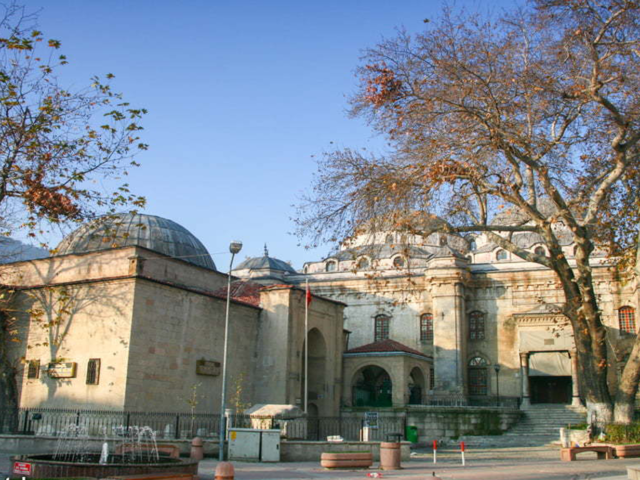
Kütahya
Kütahya travel guide: the Roman city of Aizanoi, hand-painted tiles,…
Aegean Coast Region
Türkiye's Aegean coast from Izmir to Bodrum: ancient Ephesus and…
Hakkari
Hakkari travel guide: Cilo-Sat glaciers and Reşko peak, the Zap…
Rize
Rize travel guide: Ayder plateau, the Kaçkar Mountains, Fırtına Valley…
