Zincirli Bedesten: Gaziantep’s 1718 Covered Market
On this page
- What is Zincirli Bedesten?
- How do you get to Zincirli Bedesten?
- When is the best time to visit Zincirli Bedesten?
- What is the history of Zincirli Bedesten?
- What is Zincirli Bedesten famous for?
- What can you see at Zincirli Bedesten?
- Frequently asked questions about Zincirli Bedesten
- What do the official records say about Zincirli Bedesten?
Key facts: Zincirli Bedesten
- What it is: An L-shaped Ottoman covered market of 73 shops, originally the city’s meat and vegetable market, now selling crafts, spices and local produce.
- Where: Şahinbey district, in the bazaar quarter of old Gaziantep below the castle.
- Period: Built in 1718 by Darendeli Hüseyin Pasha; restored in 2006–2008 and again after the 2023 earthquakes, reopening on 10 September 2025.
What is Zincirli Bedesten?
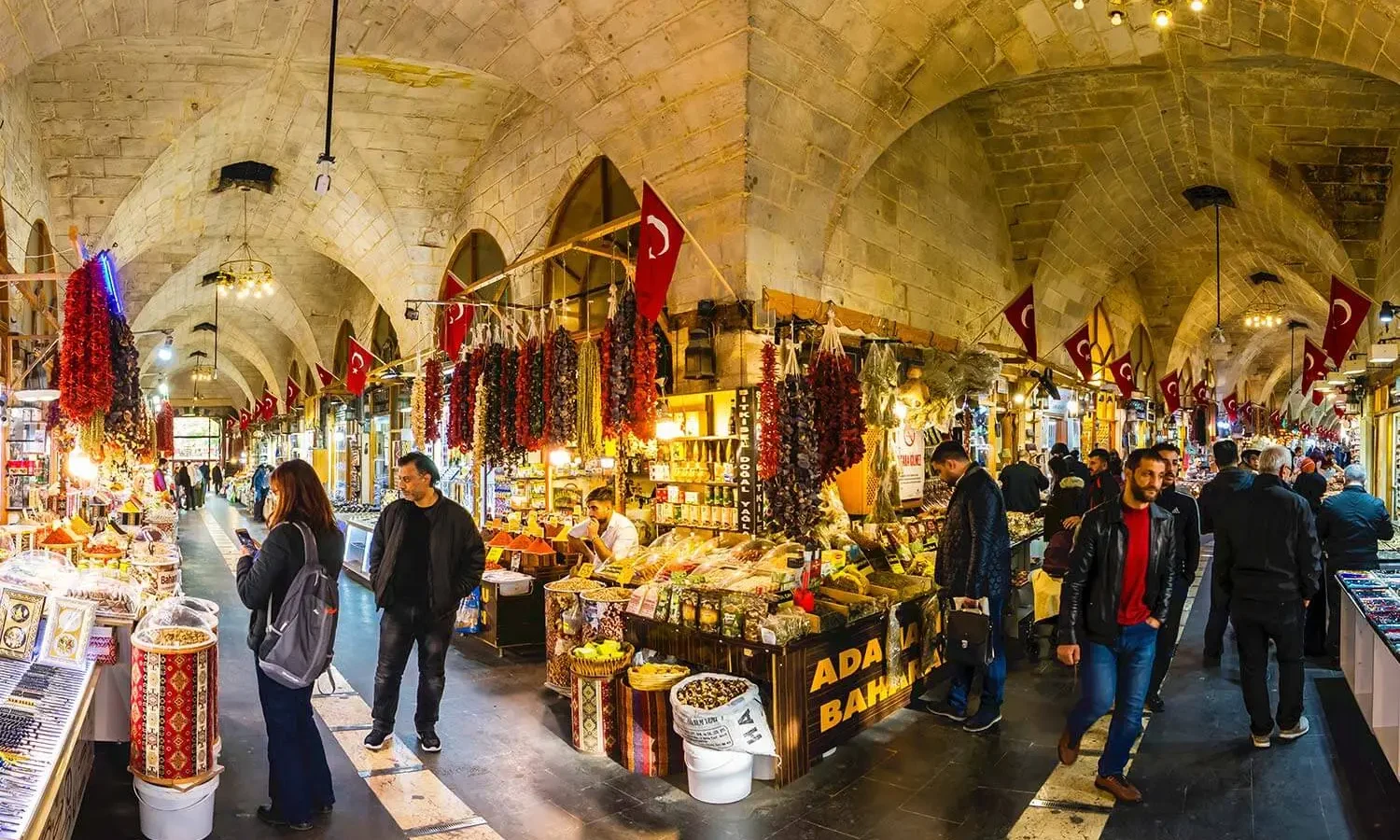
Zincirli Bedesten (the “Chained Bedesten”) is an Ottoman covered market in the old bazaar quarter of Gaziantep, a few minutes’ walk from the castle. Two stone-vaulted streets meet at a right angle to form an L, lined with 73 small shops. It was built as the city’s meat and vegetable market; today it sells copper, mother-of-pearl, spices, dried peppers and aubergines, pistachios, textiles and jewellery.
It is one of the busiest stops on any walk through old Antep, and the place where many visitors first meet the city’s crafts. The building was damaged in the February 2023 earthquakes and reopened after two years of restoration in September 2025.
How do you get to Zincirli Bedesten?
The bedesten is in the historic centre, in Şahinbey district, below the castle and close to the Coppersmiths’ Bazaar. From the old-town hotels it is a short walk; from newer parts of the city take a taxi or the tram towards the centre. It has five doors, three of which are in use.
Book a Zincirli Bedesten tour
−5% Istambul readers save 5% on every tour below — applied at checkout.
Partner listings via GetYourGuide · free cancellation on most
When is the best time to visit Zincirli Bedesten?
Late morning and late afternoon on weekdays, when the shops are open and the lanes are lively without the weekend crowds. The vaulted streets stay cool in summer, which makes the bedesten a good stop in the heat of the day. Opening hours change through the year, so check them before you visit.
What is the history of Zincirli Bedesten?
The market was built in 1718 by Darendeli Hüseyin Pasha, and its original name was the Hüseyin Pasha Bedesten. The four-line inscription over the south gate was written by the poet Kusuri, and the pasha’s endowment deed of 1719 lists the building with 80 shops. It was the trading hub of the butchers and greengrocers, which is why it was also called the Et Hali, the meat hall. The name Zincirli is thought to come from a large chain drawn across the gate at night for security; it is also known as the Kara Basamak Bedesten.
An upper storey, added later and used as a courthouse, was destroyed by fire in 1957. The market reopened in 1965 and was used for livestock trade and butchery. The General Directorate of Foundations restored it in 2006–2008 and it reopened as a market for crafts and local products.
The 6 February 2023 earthquakes damaged the building. After about two years of work, which returned it to its original form and strengthened the structure while keeping its historic fabric, it was reopened on 10 September 2025 with the Minister of Culture and Tourism in attendance. Shopkeepers report that visitor numbers have risen since.
What is Zincirli Bedesten famous for?
- Its plan. The L-shape of two crossing vaulted streets, often compared with the Spice Bazaar in Istanbul.
- The chain. The name comes from the chain that closed the gate at night.
- Local products. Dried vegetables for stuffing, red pepper, sumac, pistachios and menengiç.
- Crafts. Copperware, mother-of-pearl inlay and yemeni shoes from the surrounding workshops.
What can you see at Zincirli Bedesten?
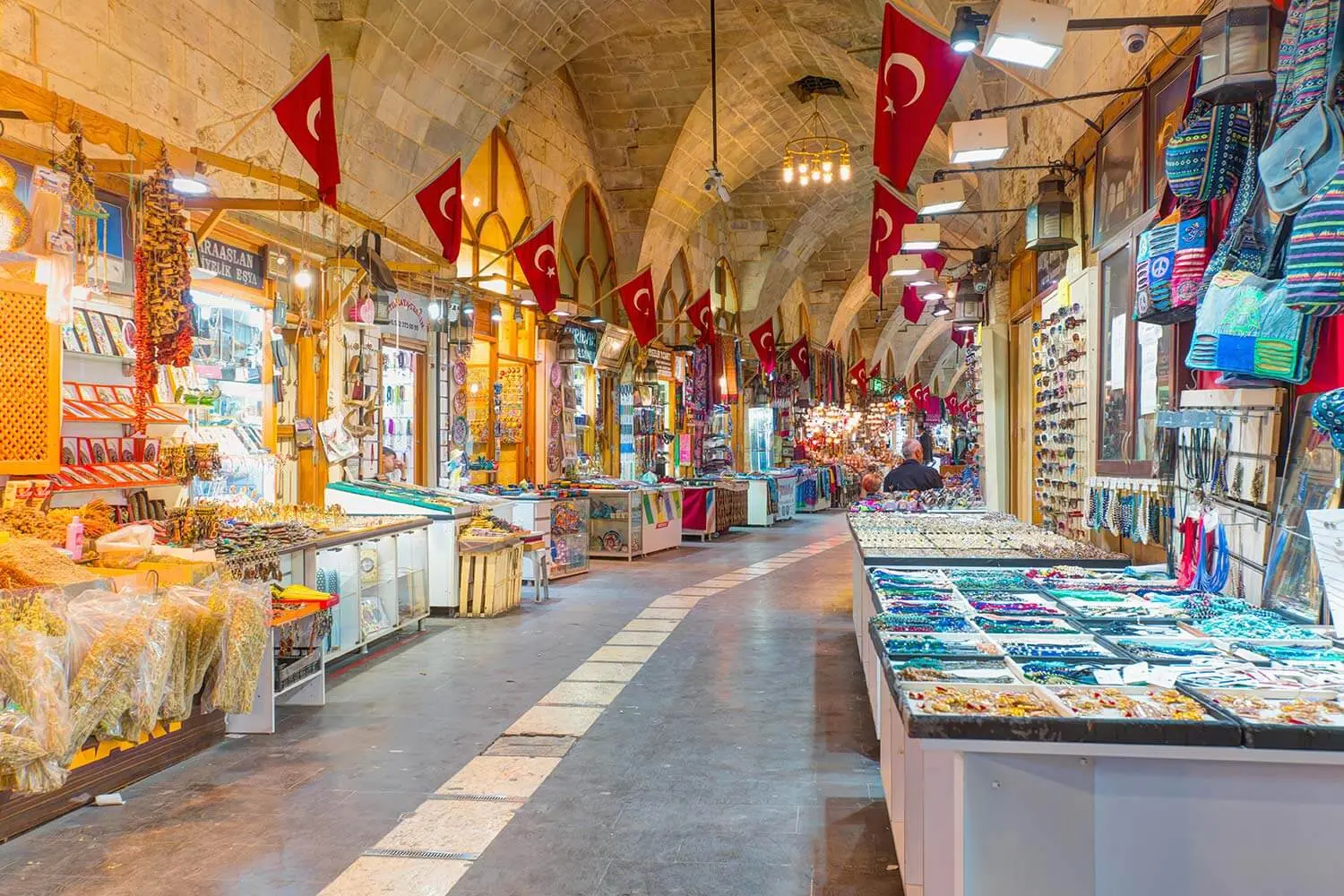
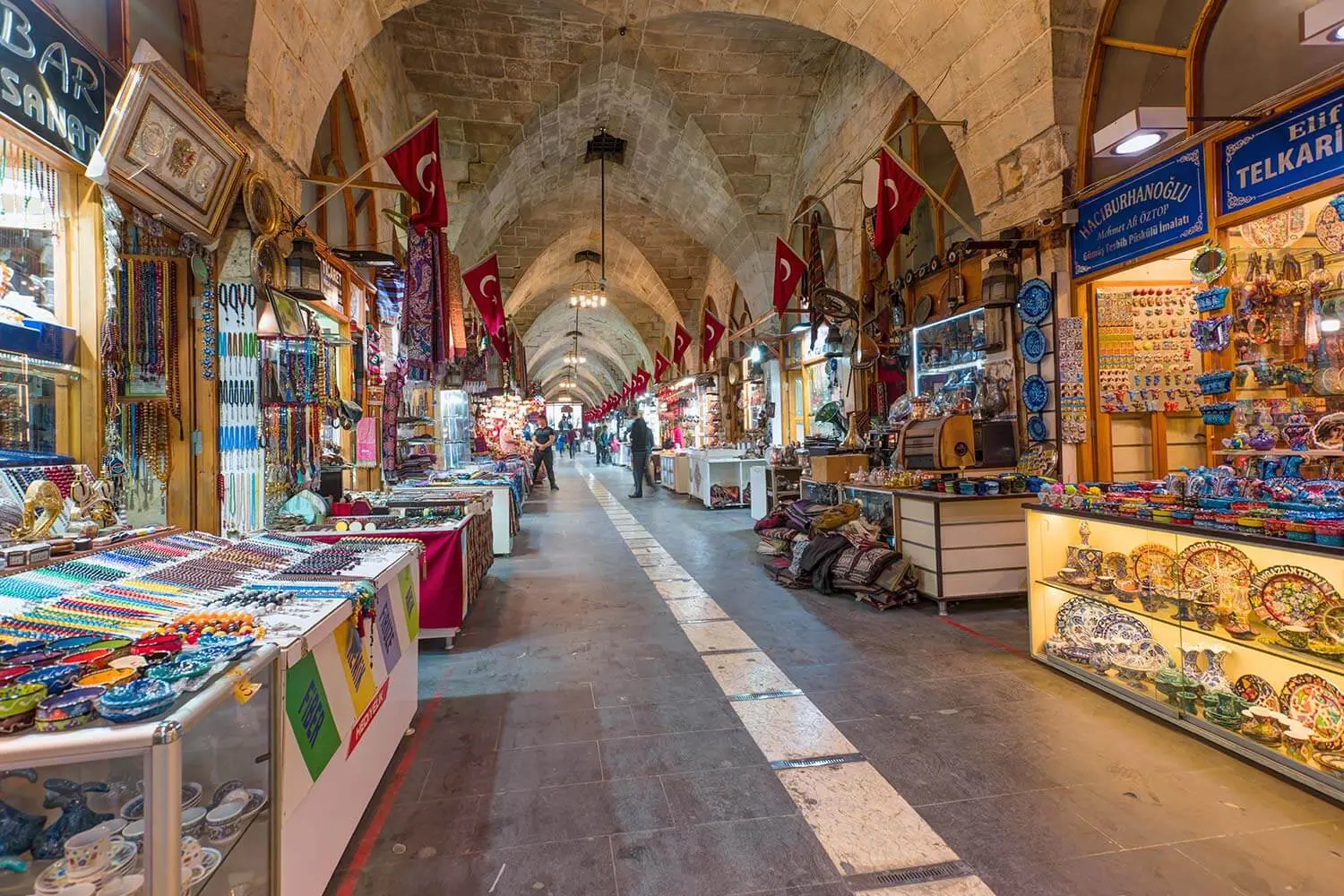
The vaulted streets. The building is single-storey, of cut stone and rubble. Shops of 10 to 25 square metres open off the two arms of the L.
The south gate and inscription. Look for Kusuri’s verse inscription above the south entrance.
The shops. Expect strings of dried aubergines and peppers, sacks of pistachios and spices, copper trays and coffee pots, mother-of-pearl boxes and backgammon boards, scarves and kutnu cloth.
The surroundings. The bedesten is part of a quarter of hans, coffee houses and workshops. From its doors you can carry on into the copper lanes and up to the castle.
Shopping tips
- Compare before you buy. Many shops sell similar goods; walk both arms of the L before choosing.
- Bargain politely. Prices for crafts are often open to discussion, especially if you buy several pieces. Food products are usually sold at fixed prices by weight.
- Dried vegetables travel well. Strings of dried aubergines and peppers, and bags of red pepper flakes and sumac, are light and easy to pack. Pistachios keep better in their shells.
- Ask about mother-of-pearl. Hand-inlaid pieces take weeks to make and cost far more than printed or resin imitations; good shops will tell you which is which.



Frequently asked questions about Zincirli Bedesten
When was Zincirli Bedesten built?
In 1718, by Darendeli Hüseyin Pasha. His endowment deed of 1719 lists it with 80 shops.
Why is it called Zincirli?
“Zincirli” means “with a chain”. The name is thought to come from a large chain drawn across the gate at night.
Is Zincirli Bedesten open after the earthquake?
Yes. It was restored after the 2023 earthquakes and reopened on 10 September 2025.
What can you buy at Zincirli Bedesten?
Copperware, mother-of-pearl work, spices, dried vegetables, pistachios, textiles, jewellery and other local products.
What do the official records say about Zincirli Bedesten?
The 2002 inventory has no separate entry for the bedesten, but it places the city’s historic commercial buildings at the centre of its character. Gaziantep has a deep-rooted and rich architecture belonging to the North Mesopotamian tradition. If we list the buildings that make up the character of the city, houses, mosques, hans and baths come first. The climate, topography, vegetation and social life of the region shaped the functions of these masonry buildings.
The inventory also lists, among the works planned under the city’s urban conservation plan, the restoration of the castle, the Şıra Han, the Butchers’ Bazaar (Kasaplar Çarşısı) and the other hans of the old town. (Ministry of Culture and Tourism, Gaziantep Provincial Tourism Inventory, 2002)
Ready to see Zincirli Bedesten?
Hand-picked tours with good reviews and clear prices.
Partner listings via GetYourGuide · free cancellation on most
Before or after: Istanbul
Most trips start or end in Istanbul. Our own experiences there:
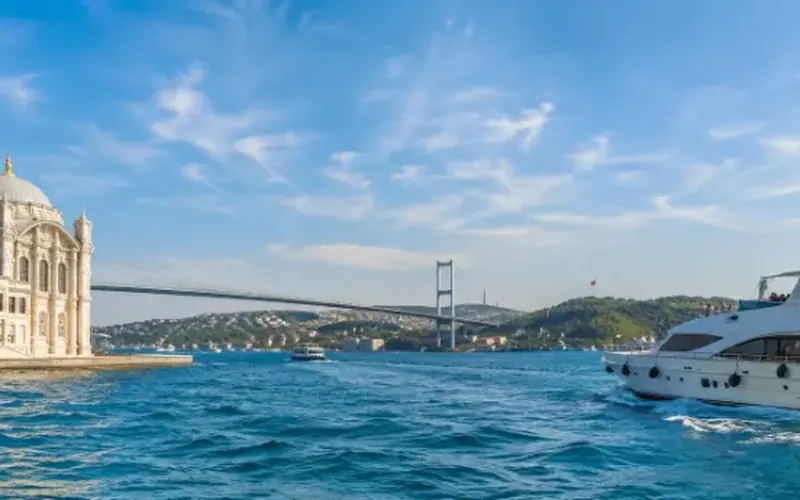
 Dinner, sunset and day cruises between Europe and Asia.See cruises bosporuscruise.com
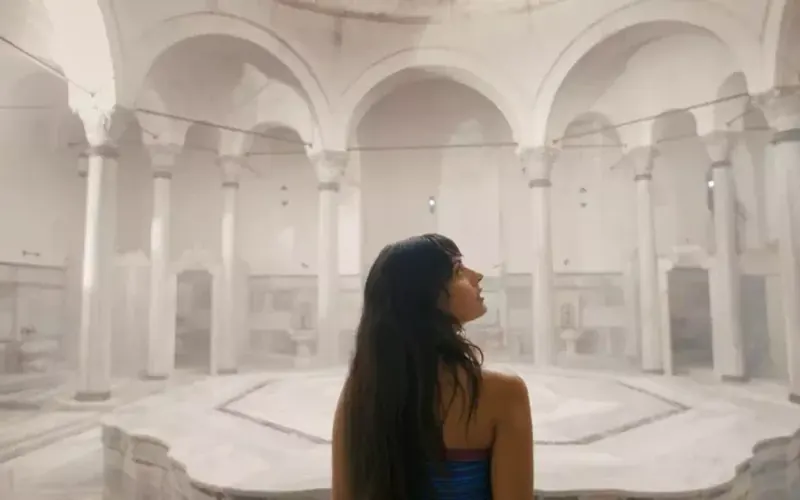
 Historic Turkish baths in the old city — hand-picked hamams, booked direct.Book a hamam istanbulhamam.com
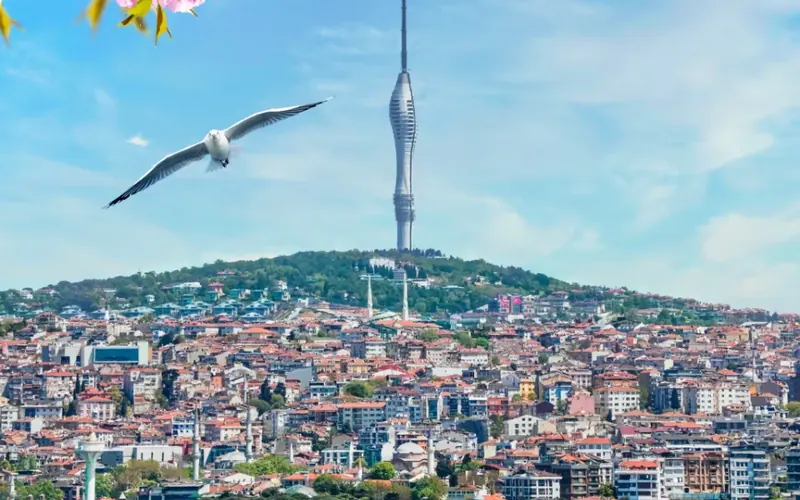
 Istanbul’s tallest viewpoint: both continents from 369 metres.Get tickets camlicatower.com
 Free audio guides in 15 languages, safe routes and local tips — plus 5% off GetYourGuide.Open the free guide localada.com
Nearby
All destinations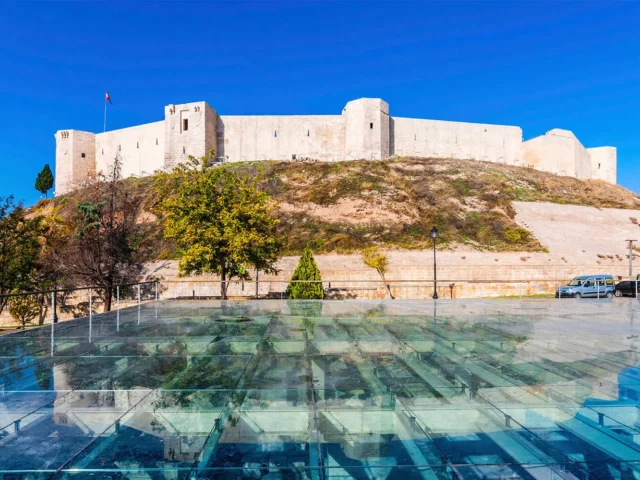
Gaziantep Castle
Gaziantep Castle: Roman watchtower turned Byzantine citadel, damaged in the…

Rumkale
Rumkale on the Euphrates: cliff-top fortress, former seat of the…
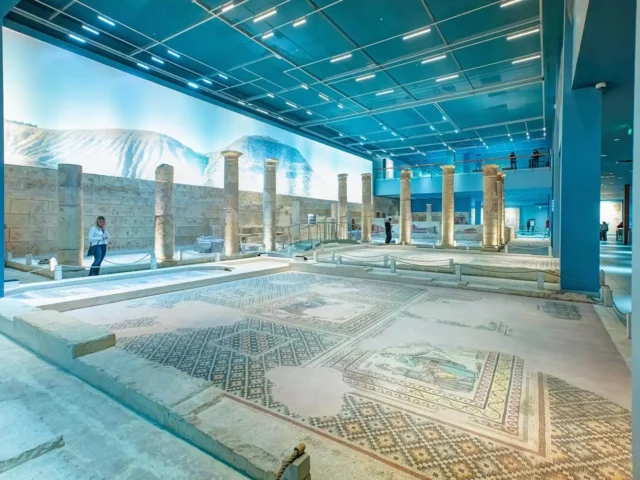
Zeugma Mosaic Museum
Zeugma Mosaic Museum in Gaziantep: the Gypsy Girl, Dionysos and…

Coppersmiths’ Bazaar
Gaziantep’s Coppersmiths’ Bazaar below the castle: working copper workshops, engraved…