
Gaziantep Castle: The Citadel of Old Antep
On this page
- What is Gaziantep Castle?
- How do you get to Gaziantep Castle?
- When is the best time to visit Gaziantep Castle?
- What is the history of Gaziantep Castle?
- What is Gaziantep Castle famous for?
- What can you see at Gaziantep Castle?
- Frequently asked questions about Gaziantep Castle
- What do the official records say about Gaziantep Castle?
Key facts: Gaziantep Castle
- What it is: A round-plan citadel on a mound in the centre of old Gaziantep, with a moat, bridge and 12 surviving towers.
- Where: Şahinbey district, in the historic centre of Gaziantep, beside the Coppersmiths’ Bazaar.
- Period: Begun as a Roman watchtower; given its present form under Justinian in the 6th century; added to under the Mamluks and Ottomans. Damaged in the February 2023 earthquakes and restored by late 2025.
What is Gaziantep Castle?
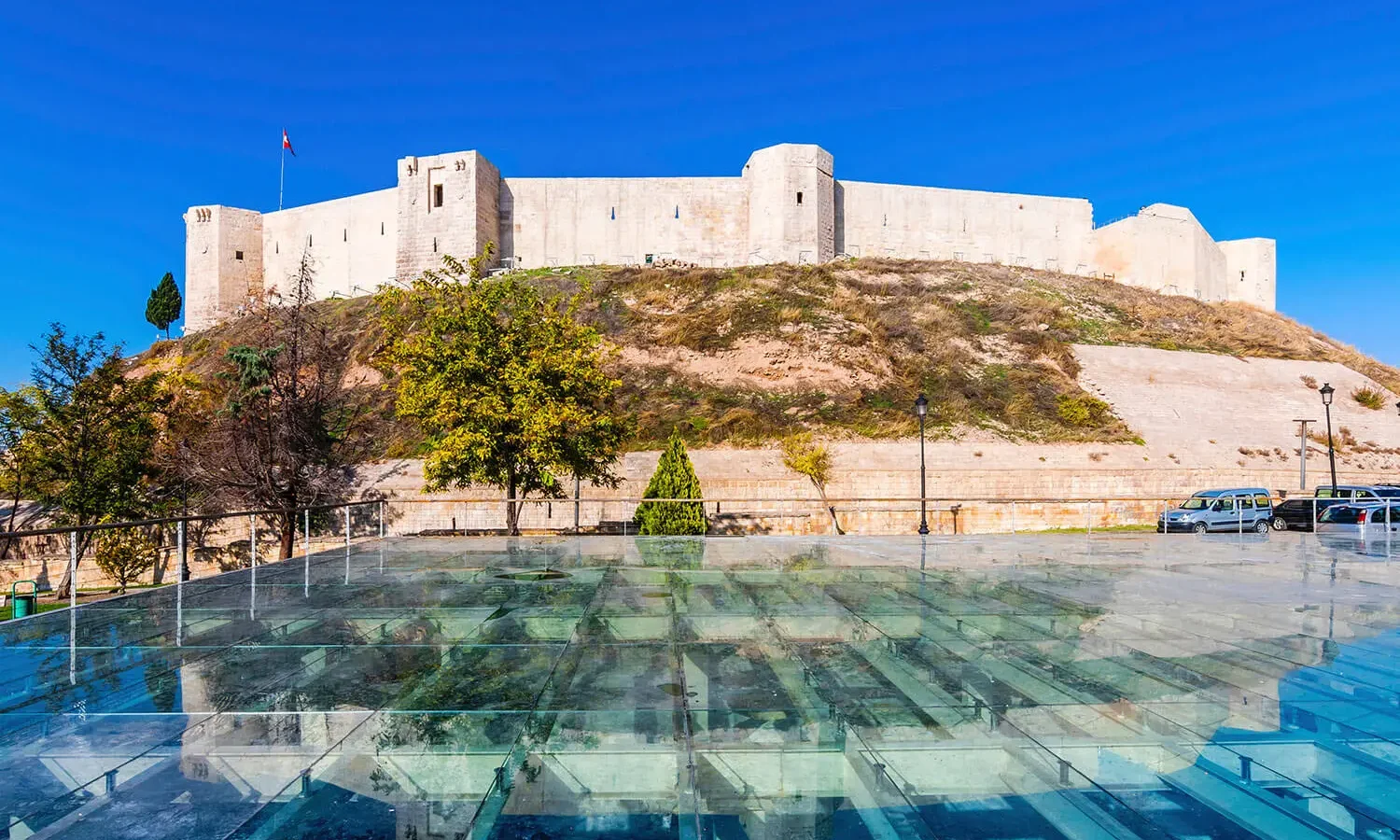
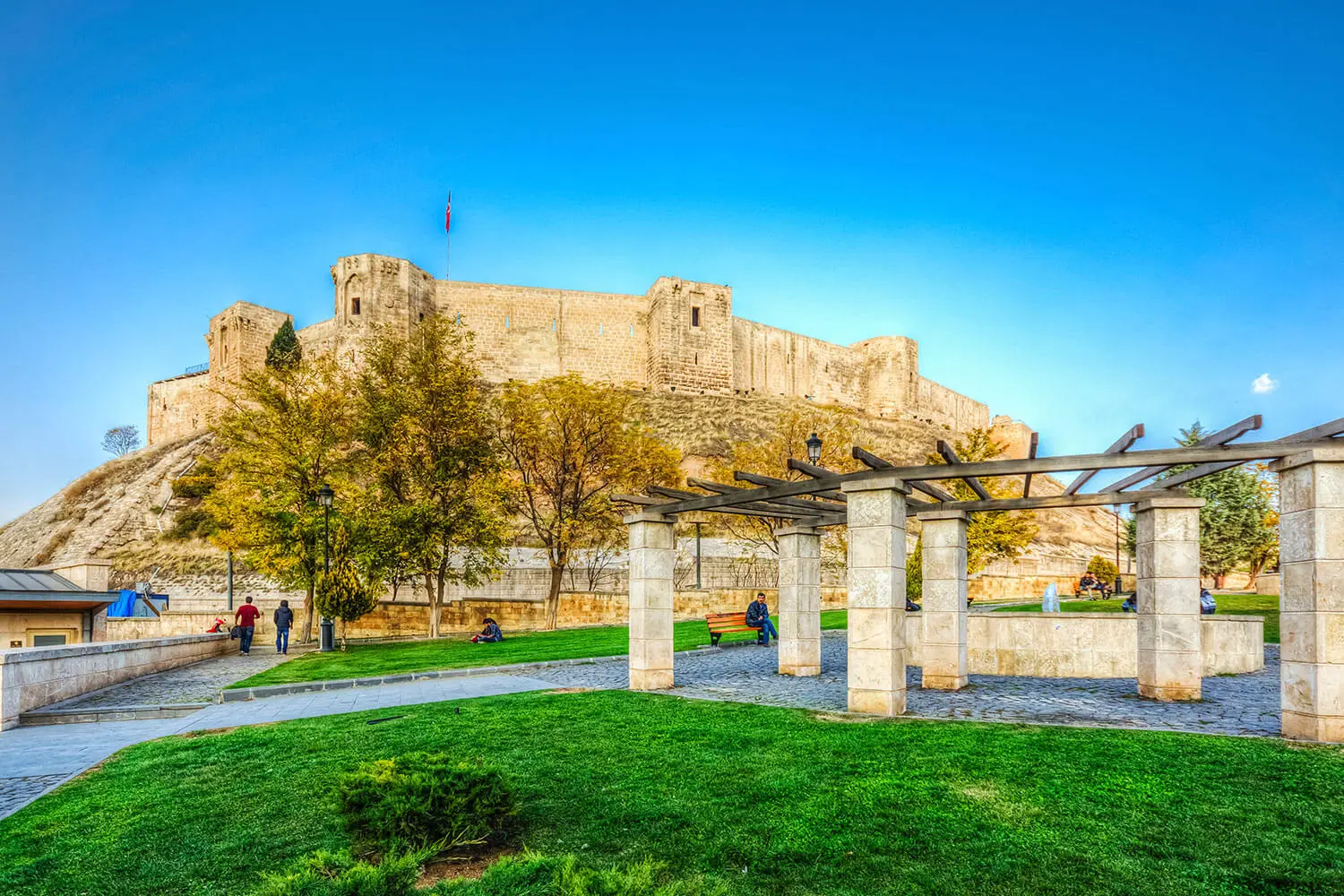
Gaziantep Castle (Gaziantep Kalesi) is the citadel at the heart of the old city of Gaziantep. It stands on an artificial mound, built up by thousands of years of settlement, with stone walls and towers running round its summit and a dry moat around its base. The 2002 inventory calls it one of the most beautiful castles still standing in Türkiye, the first monument that catches the eye of visitors arriving in the city, for its grandeur as much as for its long history.
The castle became international news on 6 February 2023, when the Kahramanmaraş earthquakes brought down sections of its walls and bastions. The Ministry of Culture and Tourism began restoring it in May 2023, and the work was handed over in late 2025.
How do you get to Gaziantep Castle?
The castle is in the old city centre, a short walk from the main hotels of the historic quarter. It is the natural starting point for a walk through the Coppersmiths’ Bazaar and the Zincirli Bedesten, which lie on the slopes below. From the airport, about 20 km east, a taxi takes roughly half an hour.
Book a Gaziantep Castle tour
−5% Istambul readers save 5% on every tour below — applied at checkout.
Partner listings via GetYourGuide · free cancellation on most
When is the best time to visit Gaziantep Castle?
Morning or late afternoon, when the light is soft on the stone and the bazaars below are busy. Spring and autumn are most comfortable; in summer the mound is exposed and hot at midday.
The castle was closed to visitors for more than two and a half years after the earthquake. Restoration was finished in late 2025 and officials said it would reopen shortly after; the provincial culture and tourism directorate still listed the castle and its panorama museum as closed at the time of writing. Check locally before you go. The walls, moat and bridge can be seen from outside in any case.
What is the history of Gaziantep Castle?
The inventory explains that there is no certain information about when and by whom the castle was built, but it is understood that it was first built in the Roman period as a watchtower and enlarged over time. It took its present appearance under the Byzantine emperor Justinian in the 6th century AD. Its inscriptions show that the towers on the west side were built in the Mamluk period, and that the two towers on either side of the castle bridge were built under Sultan Süleyman the Magnificent.
The mound beneath is much older than the walls; remains of the 2nd and 3rd centuries AD point to Roman settlement, and the hill had been inhabited long before. In the 17th century Evliya Çelebi counted 36 towers; 12 remain today. Restoration began in 1989, and excavations in 2000 uncovered an Ottoman mosque and bath inside the walls.
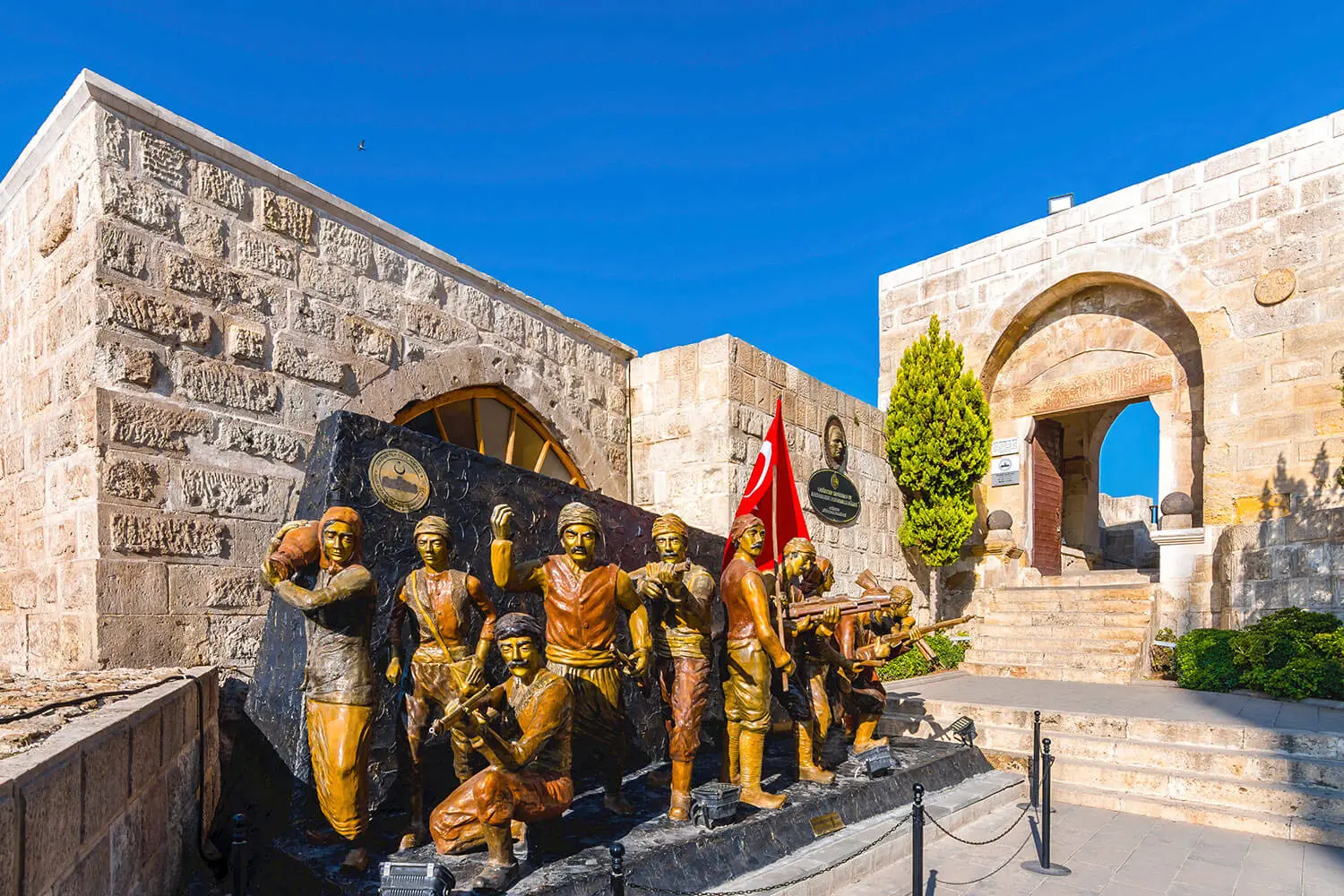
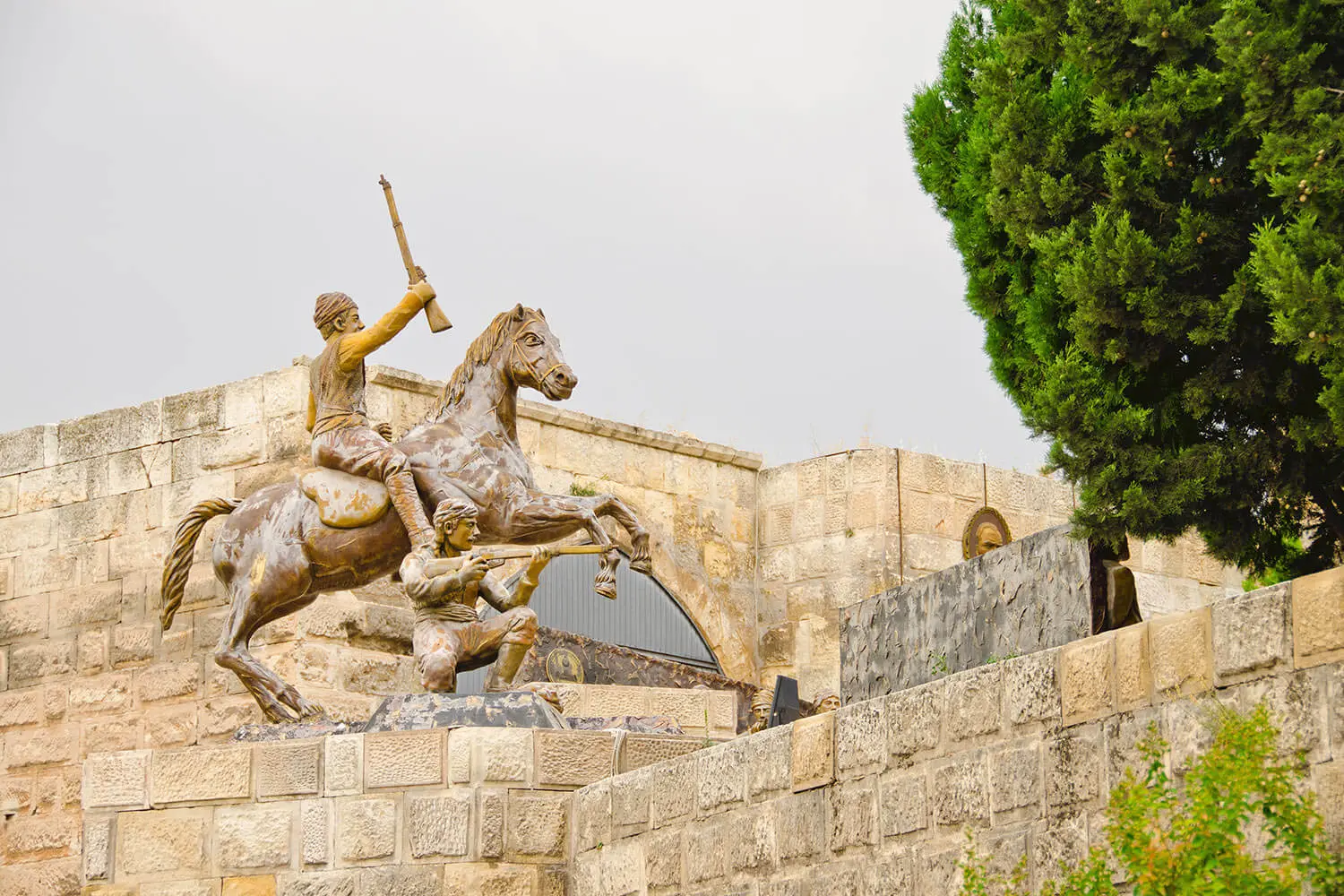
In recent decades the castle has also housed the Gaziantep Castle and Heroism Panorama Museum (Kahramanlık Panoraması Müzesi), which tells the story of the city’s defence against French occupation in 1920–21.
The February 2023 earthquakes damaged the castle severely: sections of the eastern and southern walls and bastions collapsed and stones scattered down the slopes. Restorers collected the fallen stones and stored the inscriptions at the Zeugma Mosaic Museum for reuse. Ground-penetrating radar found voids and fractured limestone inside the mound, which were filled with hydraulic lime. The Gaziantep Directorate of Surveying and Monuments says the castle is now stronger than before.
What is Gaziantep Castle famous for?
- Its shape. A near-circular citadel on a tall mound, about 1,200 m round, according to the inventory.
- Its age. Roman origins, Byzantine walls, Mamluk and Ottoman towers.
- The 2023 earthquake. Images of its collapsed walls became a symbol of the disaster, and its restoration a symbol of recovery.
- The defence of Antep. Its panorama museum retells the 1920–21 siege that earned the city the title Gazi.
What can you see at Gaziantep Castle?
The walls and towers. The inventory describes walls of large stones supported by 12 towers and bastions. From the moat you can see how the masonry changes from one period to the next.
The moat and bridge. A moat surrounds the castle and you enter over a bridge, flanked by the two Ottoman towers of Süleyman’s reign.
Below ground. In the lower parts, the inventory notes, large rooms, galleries, tunnels and wells were built to support the structures on top of the castle.
On the summit. Remains of a mosque, cistern and houses, as well as the Ottoman mosque and bath found in 2000.
The view. When open, the summit looks across the domes and minarets of the old town to the newer city.
Next to the castle, the Gaziantep Hamam Museum occupies a restored historic bath.



Frequently asked questions about Gaziantep Castle
Is Gaziantep Castle open?
Restoration after the 2023 earthquakes was completed in late 2025 and reopening was announced as imminent. Check locally before going; the walls and moat can be seen from outside at any time.
How old is Gaziantep Castle?
It began as a Roman watchtower and took its present form under Justinian in the 6th century, with Mamluk and Ottoman additions.
Was Gaziantep Castle destroyed in the earthquake?
Not destroyed, but sections of its eastern and southern walls and bastions collapsed on 6 February 2023. They have since been rebuilt.
What is near Gaziantep Castle?
The Coppersmiths’ Bazaar, Zincirli Bedesten, the Hamam Museum and the old hans are all within a few minutes’ walk.
How many towers does Gaziantep Castle have?
Twelve towers and bastions survive. Evliya Çelebi counted 36 in the 17th century.
What do the official records say about Gaziantep Castle?
Gaziantep Castle is one of the most beautiful of the castles that have survived in Türkiye. With its grandeur and might, as well as its deep-rooted history, it is among the first works to catch the attention of visitors who come to the city. Although there is no certain information about when and by whom the castle was built, it is understood that it was first built in the Roman period as a watchtower and enlarged over time. It took its present appearance in the 6th century AD, in the reign of the Byzantine emperor Justinian.
The castle is circular in plan, with a circumference of 1,200 metres. Its walls, built of large stones, are supported by 12 towers and bastions. There are remains of a mosque, cistern and dwellings on top of the castle. (Ministry of Culture and Tourism, Gaziantep Provincial Tourism Inventory, 2002)
Ready to see Gaziantep Castle?
Hand-picked tours with good reviews and clear prices.
Partner listings via GetYourGuide · free cancellation on most
Before or after: Istanbul
Most trips start or end in Istanbul. Our own experiences there:

 Dinner, sunset and day cruises between Europe and Asia.See cruises bosporuscruise.com

 Historic Turkish baths in the old city — hand-picked hamams, booked direct.Book a hamam istanbulhamam.com

 Istanbul’s tallest viewpoint: both continents from 369 metres.Get tickets camlicatower.com

 Free audio guides in 15 languages, safe routes and local tips — plus 5% off GetYourGuide.Open the free guide localada.com
Nearby
All destinations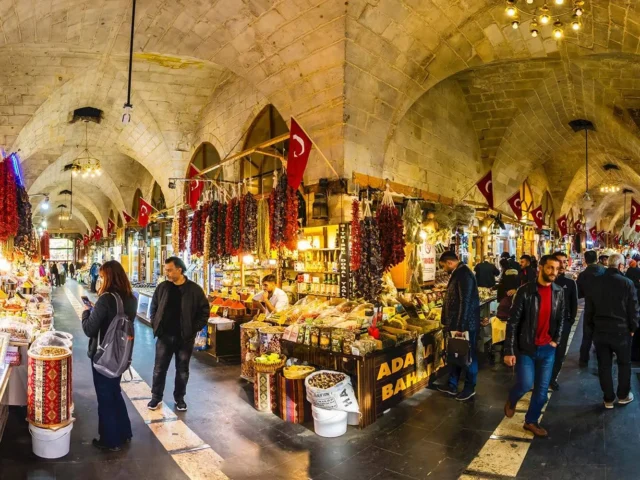
Zincirli Bedesten
Zincirli Bedesten in Gaziantep: an L-shaped Ottoman market of 1718,…

Coppersmiths’ Bazaar
Gaziantep’s Coppersmiths’ Bazaar below the castle: working copper workshops, engraved…

Rumkale
Rumkale on the Euphrates: cliff-top fortress, former seat of the…
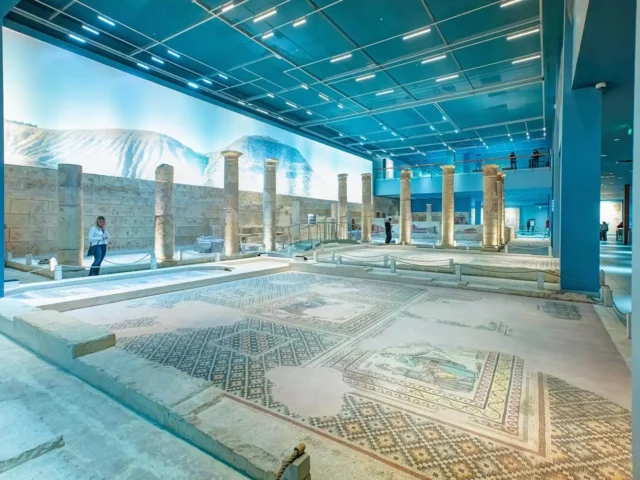
Zeugma Mosaic Museum
Zeugma Mosaic Museum in Gaziantep: the Gypsy Girl, Dionysos and…
