
Zeugma Mosaic Museum: Roman Floors Rescued from the Euphrates
On this page
- What is the Zeugma Mosaic Museum?
- How do you get to the Zeugma Mosaic Museum?
- When is the best time to visit the Zeugma Mosaic Museum?
- What is the history of the Zeugma Mosaic Museum?
- What is the Zeugma Mosaic Museum famous for?
- What can you see at the Zeugma Mosaic Museum?
- Common misconceptions about the Zeugma Mosaic Museum
- Frequently asked questions about the Zeugma Mosaic Museum
- What do the official records say about the Zeugma Mosaic Museum?
Key facts: Zeugma Mosaic Museum
- What it is: A museum of Roman mosaics, frescoes and sculpture rescued from the ancient city of Zeugma on the Euphrates; one of the largest mosaic museums in the world.
- Where: Gaziantep city centre, Şehitkamil district. The ancient city of Zeugma is 10 km east of Nizip, about 50 km from the museum.
- Opened: 9 September 2011. The Archaeological Site of Zeugma has been on the UNESCO Tentative List since 2012 (list).
What is the Zeugma Mosaic Museum?
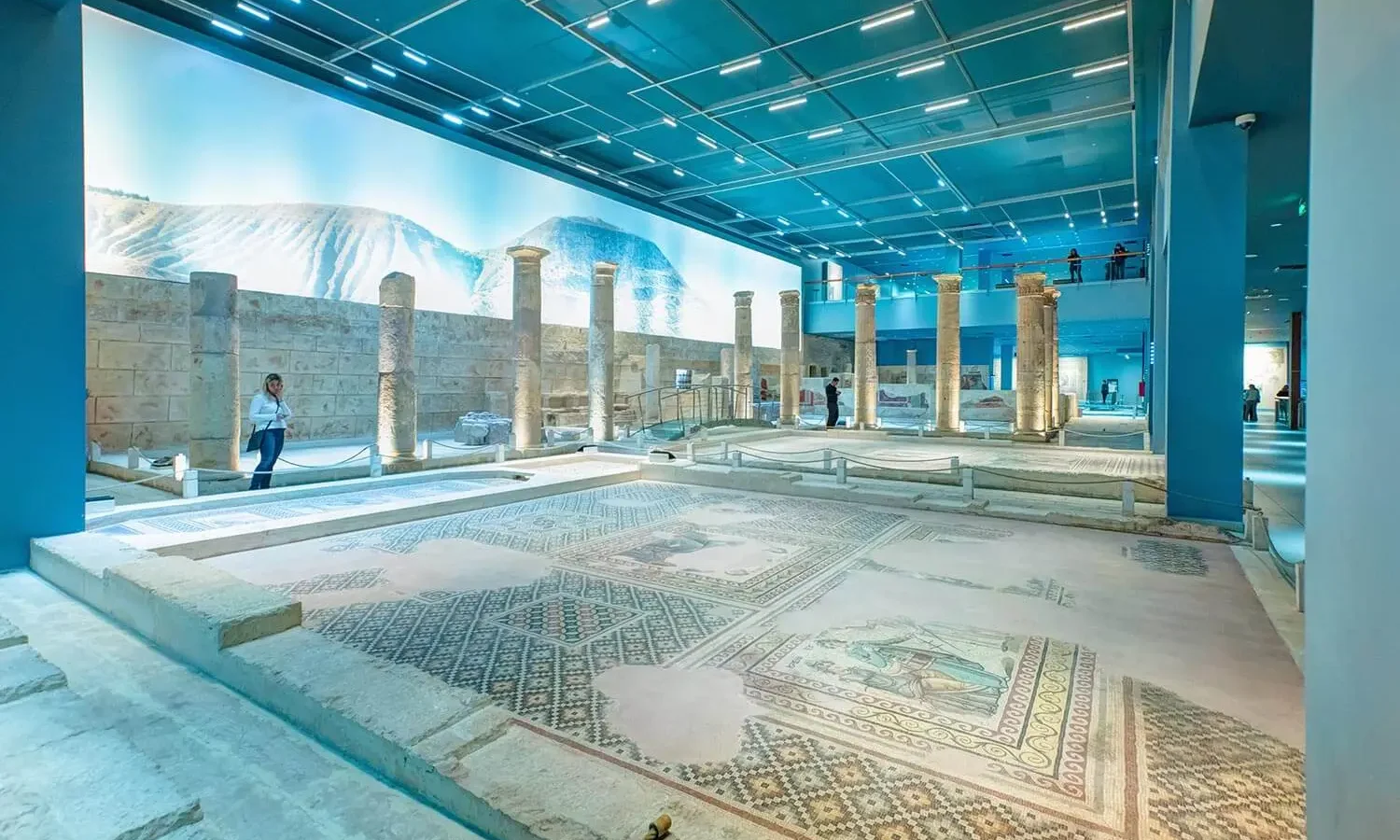
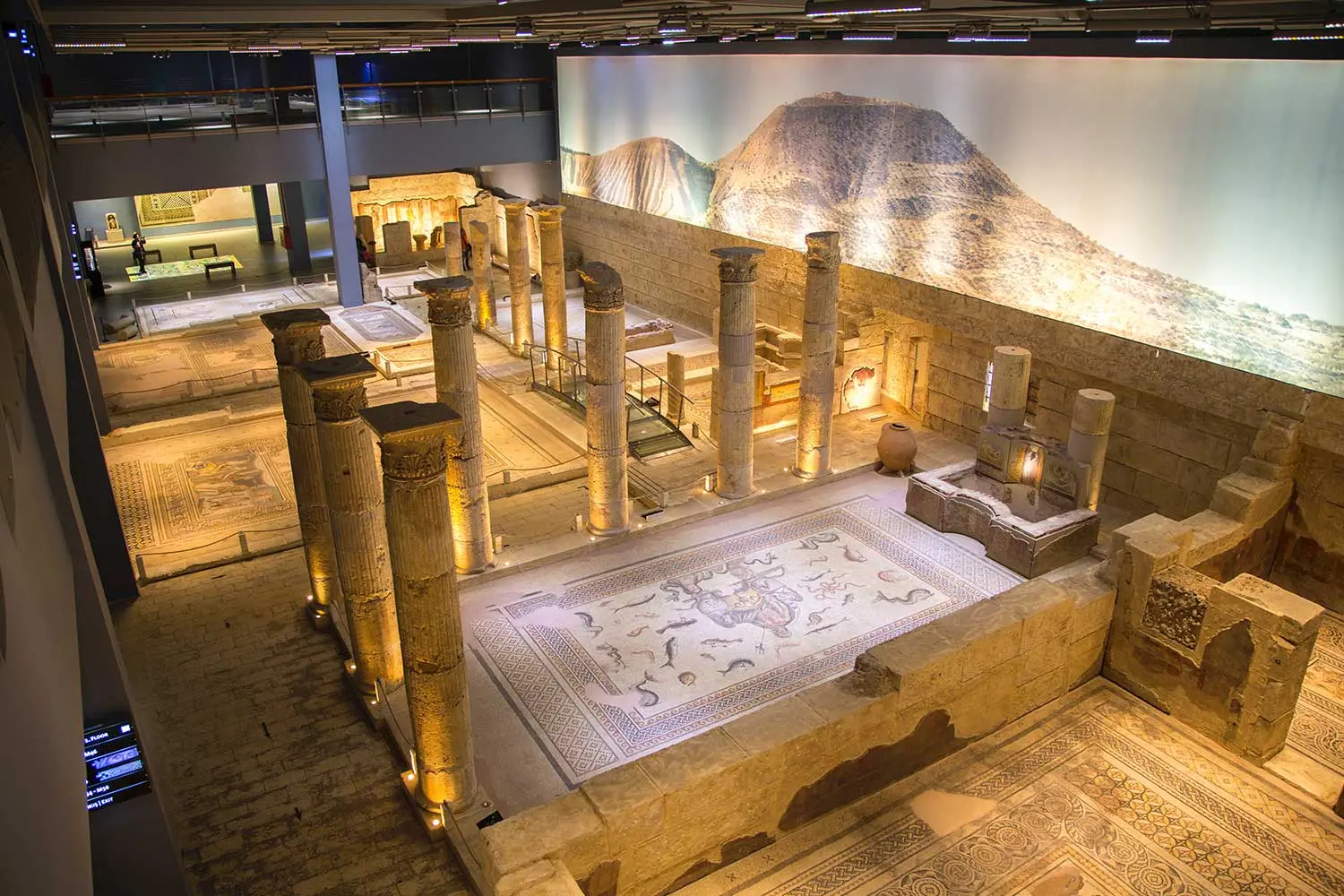
The Zeugma Mosaic Museum (Zeugma Mozaik Müzesi) in Gaziantep displays the floors and wall paintings of Roman villas from Zeugma, a city on the Euphrates founded around 300 BC. When the Birecik Dam reservoir began to fill in 2000, part of the ancient city went under water, and a rescue excavation lifted mosaics that would otherwise have been lost. They are now laid out in their original room plans, so you walk along the edges of dining rooms and courtyards as the owners once did.
The museum covers about 30,000 square metres, and its mosaics amount to well over 1,700 square metres; sources give figures up to about 2,450 square metres. It is the most visited sight in Gaziantep and one of the most visited museums in Türkiye, with a record 340,569 visitors in 2019. The building and its collection came through the February 2023 earthquakes intact, and the museum reopened in April 2023.
How do you get to the Zeugma Mosaic Museum?
The museum is in the city, in the Şehitkamil district, a short taxi ride from the castle and the old town hotels. City buses and the tram run nearby, but a taxi is simplest. Gaziantep Airport is about 20 km east of the centre.
To see where the mosaics came from, drive to the ancient city at Belkıs village, 10 km east of Nizip, about an hour from Gaziantep. The provincial culture and tourism directorate lists the archaeological site as open daily.
Book a Zeugma Mosaic Museum tour
−5% Istambul readers save 5% on every tour below — applied at checkout.
Partner listings via GetYourGuide · free cancellation on most
When is the best time to visit the Zeugma Mosaic Museum?
Any time of year: the museum is indoors and a good refuge from summer heat or winter rain. Opening hours change through the year, so check them before you visit. Allow at least two hours.
What is the history of the Zeugma Mosaic Museum?
The 2002 inventory records that Zeugma was founded in 300 BC by Seleucus Nicator, one of Alexander the Great’s commanders, near today’s Belkıs village, on about 20,000 dönüm (some 2,000 hectares) of land. In the Hellenistic period it was called Seleucia on the Euphrates. With a river landing on the Euphrates and the Silk Road from Antioch to China passing through it, the city had great trading potential. In the Roman period a legion was stationed there, and the inventory says Zeugma grew rich, partly through the life that being a military centre brought.
The villas of the elite, the city’s notables, wealthy citizens and senior officers, looked out over the Euphrates. In a Roman villa of the 2nd century AD excavated in 1992, mosaics of very high artistic value were found in the main room and the gallery in front of it, including a 7.5 × 3.75 m floor showing the wedding of Dionysos, god of wine, and Ariadne. These were lifted and taken to the Gaziantep Museum, along with a statue of Mars found lying on its back.
The Sasanians sacked Zeugma in AD 253. When the Birecik Dam was built, excavations at the dam wall uncovered a large Roman bath and a complex thought to be a gymnasium; 39 mosaic panels from the bath went to the Gaziantep Museum. With the reservoir filling in 2000 and only months left, the American philanthropist David W. Packard gave 5 million US dollars for an emergency excavation. The mosaics were first shown in the old Gaziantep Archaeology Museum, but there was no room for them all, and the purpose-built Zeugma Mosaic Museum opened on 9 September 2011. Excavations at Zeugma have continued since; in 2014 three glass mosaics were found, one showing the nine Muses.
What is the Zeugma Mosaic Museum famous for?
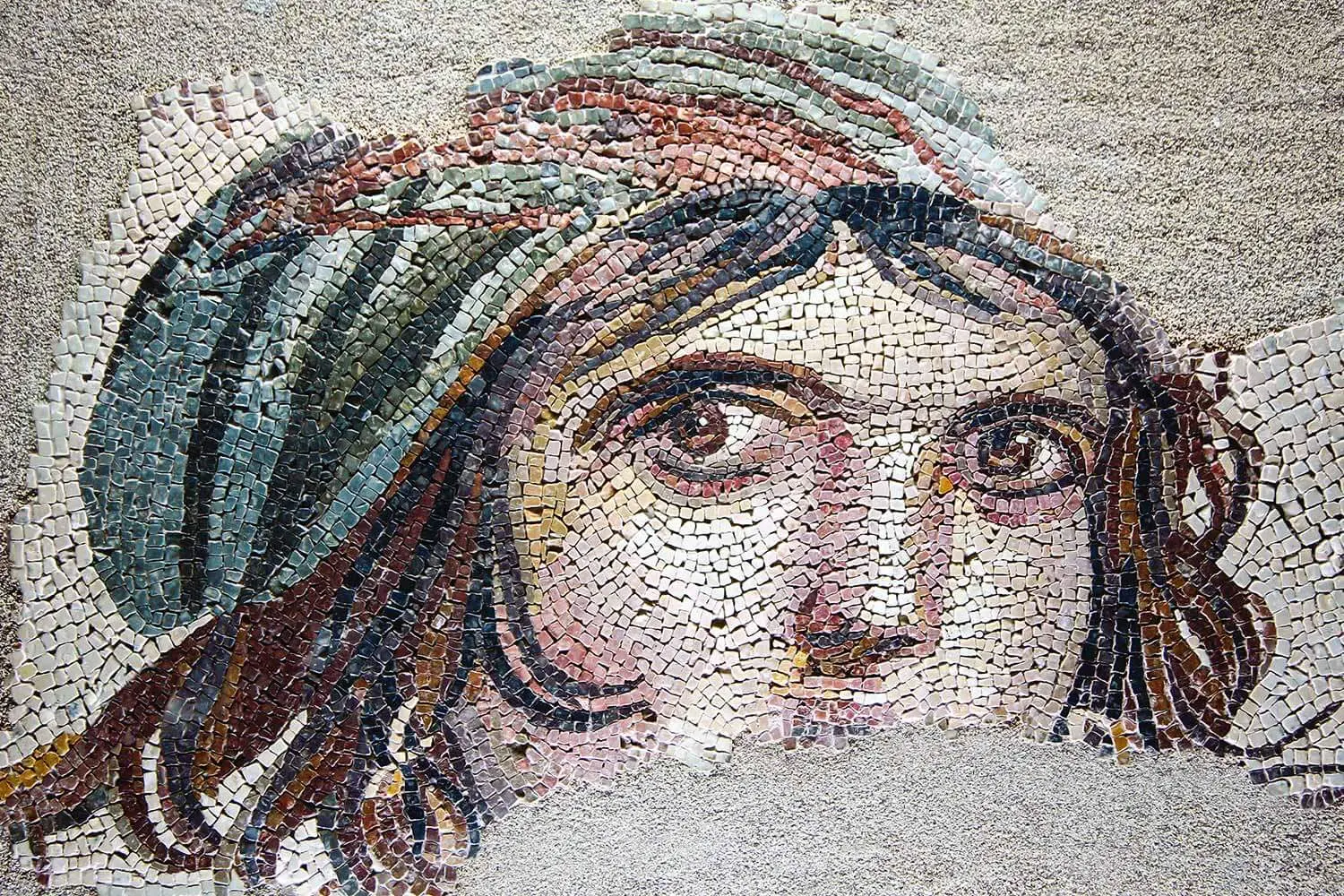
- The Gypsy Girl. A fragment of a mosaic face with wide, sidelong eyes, found at Zeugma in 1998 and now the symbol of Gaziantep. It is shown alone in a darkened room. Missing pieces of the panel that had been smuggled abroad were returned from Bowling Green State University in the United States in 2018.
- Scale. Whole villa floors laid out at full size, with reconstructed columns and walls.
- Dionysos and Ariadne. The wedding mosaic described in the 2002 inventory, one of the finest floors from Zeugma.
- The bronze Mars. The statue of the war god found at Zeugma.
What can you see at the Zeugma Mosaic Museum?
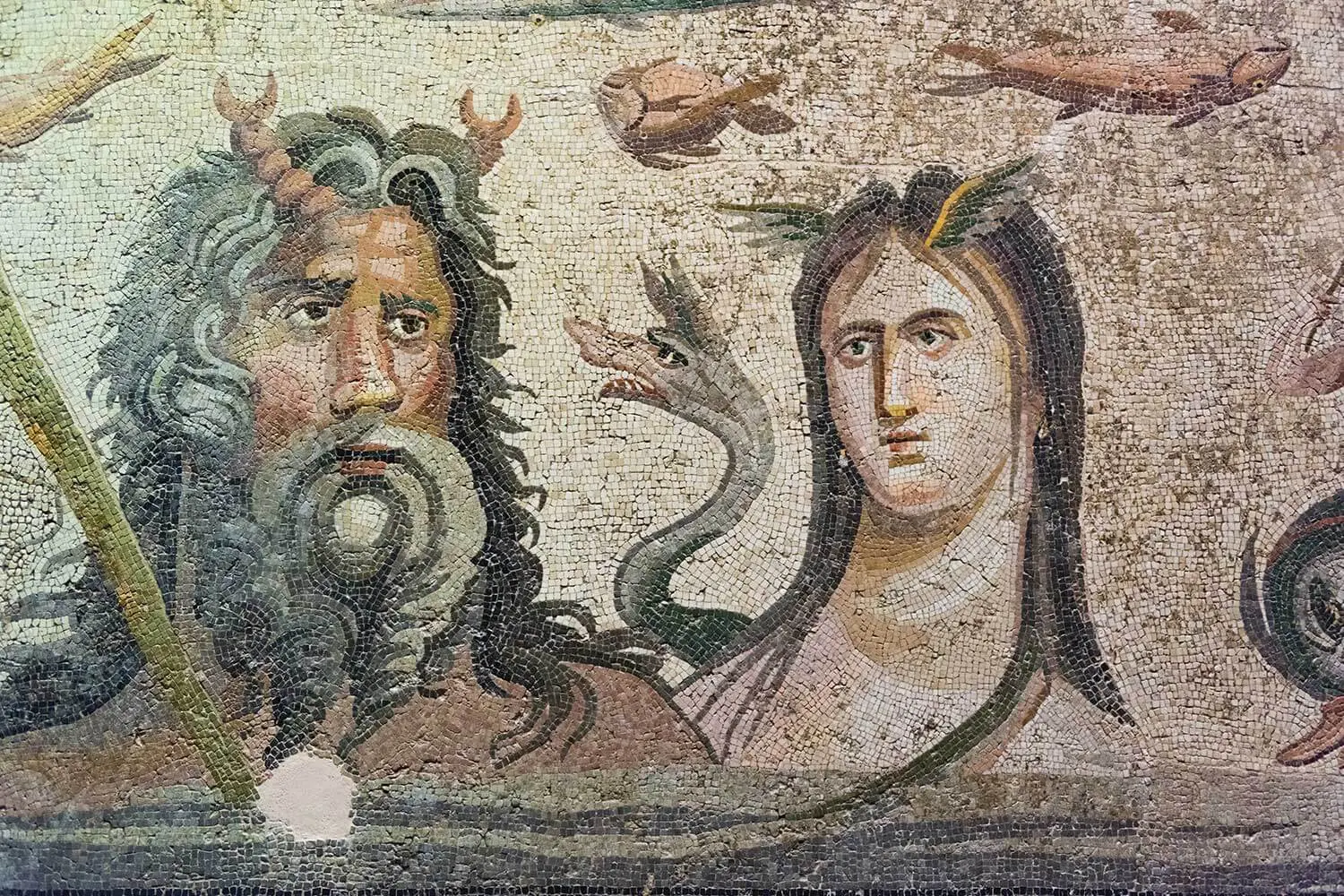
Villa floors. Mosaics are arranged in the plans of the houses they came from, named after their main scenes: the House of Poseidon, the House of Euphrates, the House of Dionysos and others. Many show myths: Dionysos’ triumph, Oceanus and Tethys, Achilles, Perseus and Andromeda, and river and water gods.
The Gypsy Girl room. The famous face, lit in a dark room, with an explanation of how the panel was found and recovered.
Frescoes and fountains. Painted wall plaster from the villas, and in-situ fountains and pools.
Sculpture and small finds. The statue of Mars, grave stelae, reliefs, bronzes and coins from Zeugma.
The Roman bath mosaics. Panels from the bath complex found at the Birecik Dam wall.
Take time on the upper galleries: some of the best floors are easiest to read from above.
Common misconceptions about the Zeugma Mosaic Museum
Is all of ancient Zeugma under water?
What people often assume: That the whole ancient city was drowned by the Birecik Dam and that the museum holds all that survives.
What the record says: The 2002 inventory states that about one-third of the city went under water when the reservoir filled. The rest, on the slopes rising some 300 m from the river towards the acropolis, is still on land, excavations continue there, and the site is open to visitors (source).



Frequently asked questions about the Zeugma Mosaic Museum
What is the Gypsy Girl mosaic?
A mosaic fragment of a young face with wide, sidelong eyes, found at Zeugma in 1998. It is the best-known piece in the museum and is displayed alone in a darkened room.
When is the Zeugma Mosaic Museum open?
Every day. The provincial culture and tourism directorate lists summer hours (from 1 April) of 08:30–19:00; winter hours end earlier.
How long do you need at the Zeugma Mosaic Museum?
Allow two hours, or longer if you want to study the floors from the upper galleries.
Can you visit ancient Zeugma itself?
Yes. Part of the city is under the Birecik reservoir, but the rest is open to visitors near Belkıs village, 10 km east of Nizip.
Was the museum damaged in the 2023 earthquake?
No. The building and the collection survived, and the museum reopened in April 2023.
What do the official records say about the Zeugma Mosaic Museum?
The 2002 inventory, written before the museum was built, describes the ancient city whose finds it now holds. Zeugma lies near Belkıs village, 10 km east of Nizip district, on the bank of the Euphrates. It is known that the city was founded in 300 BC by Seleucus Nicator, one of the commanders of Alexander the Great. Zeugma is another of the four important cities of the Kingdom of Commagene. Known as “Seleucia on the Euphrates” in the Hellenistic period, it is an ancient city with great trading potential, because it had a landing on the Euphrates and the Silk Road, stretching from Antioch to China, passed through it.
The villa quarter, where the elite of Zeugma such as its notables, wealthy citizens and high-ranking officers appear to have lived, overlooks the Euphrates. In the Roman villa uncovered in the 1992 excavations and dated to the 2nd century AD, mosaics of very high artistic value were found in the main room of the house and the gallery in front of it. (Ministry of Culture and Tourism, Gaziantep Provincial Tourism Inventory, 2002)
Ready to see Zeugma Mosaic Museum?
Hand-picked tours with good reviews and clear prices.
Partner listings via GetYourGuide · free cancellation on most
Before or after: Istanbul
Most trips start or end in Istanbul. Our own experiences there:

 Dinner, sunset and day cruises between Europe and Asia.See cruises bosporuscruise.com

 Historic Turkish baths in the old city — hand-picked hamams, booked direct.Book a hamam istanbulhamam.com

 Istanbul’s tallest viewpoint: both continents from 369 metres.Get tickets camlicatower.com

 Free audio guides in 15 languages, safe routes and local tips — plus 5% off GetYourGuide.Open the free guide localada.com
Nearby
All destinations
Coppersmiths’ Bazaar
Gaziantep’s Coppersmiths’ Bazaar below the castle: working copper workshops, engraved…
Zincirli Bedesten
Zincirli Bedesten in Gaziantep: an L-shaped Ottoman market of 1718,…

Rumkale
Rumkale on the Euphrates: cliff-top fortress, former seat of the…
Gaziantep Castle
Gaziantep Castle: Roman watchtower turned Byzantine citadel, damaged in the…
