Muş: Malazgirt, Tulips and the Murat Plain
On this page
- What is Muş?
- How do you get to Muş?
- Where should you stay in Muş?
- What type of climate does Muş have?
- When is the best time to visit Muş?
- What is the history of Muş?
- What is Muş famous for?
- What are the historical places of Muş?
- What are the best things to do in Muş?
- What are the best places to visit in Muş?
- What is the traditional food of Muş?
- Frequently asked questions about Muş
- What do the official records say about Muş?
Key facts: Muş
- Region: Eastern Anatolia, on the Muş Plain in the upper basin of the Murat River (the eastern Euphrates), between Bitlis, Bingöl, Erzurum, Ağrı and Diyarbakır.
- Best known for: The Battle of Malazgirt (Manzikert) of 1071, the red Muş tulip that flowers on the plain in late April and early May, and Urartian fortresses such as Kayalıdere.
- Protected area: The 238-hectare Malazgirt Battlefield Historical National Park, designated in 2018 (list of national parks).
What is Muş?
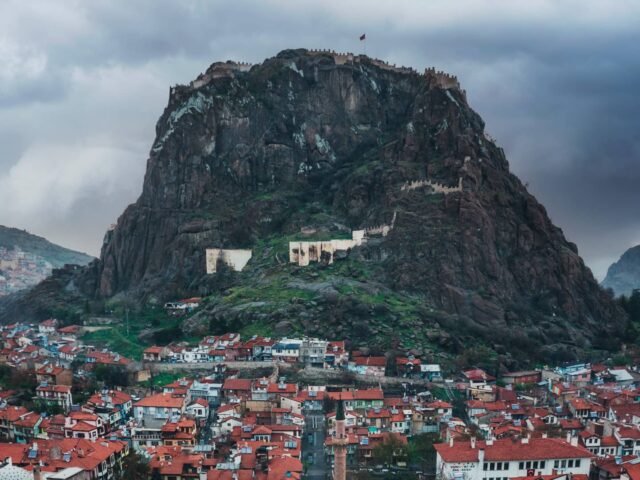
Muş is a province in eastern Türkiye built around one of the largest plains of the eastern highlands. The Muş Plain lies at around 1,300 m, ringed by mountains, with the Murat River, the eastern branch of the Euphrates, winding across it. The provincial capital, also called Muş, sits on the southern edge of the plain at the foot of the mountains; the 2002 inventory places it “on the plain between the valleys of the Çar and Korni streams”.
For most Turks, Muş means Malazgirt: the battle of 26 August 1071 in which the Seljuk sultan Alp Arslan defeated and captured the Byzantine emperor Romanos IV Diogenes, near the town of Malazgirt in the northeast of the province. The battlefield is now a national historical park and the scene of a large commemoration every August.
Beyond that, Muş is a province of farming plains, high pasture and scattered ruins: Urartian fortresses, Seljuk and Ottoman mosques in the town centre, and the remains of medieval Armenian monasteries on the mountain slopes. Tourism infrastructure is limited, which is part of the appeal for travellers already exploring Van and Bitlis.
Places to visit in Muş
Malazgirt Battlefield
Malazgirt (Manzikert) battlefield in Muş: the 1071 Seljuk victory, the 2018 national…
Kayalıdere
Kayalıdere, an 8th-century BC Urartian fortress near Varto in Muş: the 1965…
Muş Museum
Muş Museum, opened in 2021 in a 1930s school: Urartian and Roman…
How do you get to Muş?
By air: Muş Sultan Alparslan Airport (MSR) is about 18 km from the city centre, according to the provincial directorate (Muş Culture and Tourism Directorate). Turkish Airlines flies from Istanbul Airport, Pegasus from Sabiha Gökçen and AJet from Ankara (route list). It is also the most convenient airport for Tatvan and Ahlat in Bitlis province.
By rail: Muş is a stop on the Lake Van Express (Vangölü Ekspresi), which runs twice a week between Ankara and Tatvan (route details). The station is on the plain below the town.
By road: Intercity coaches connect Muş with Bitlis, Tatvan, Van, Erzurum, Diyarbakır, Bingöl and Elazığ, and with Istanbul and Ankara. Minibuses serve the district towns, including Malazgirt, Bulanık and Varto. To reach outlying sites such as Kayalıdere or the castles on the mountains south of town, you need a car.
Where should you stay in Muş?
Muş town is the only place with a real choice of hotels, mostly business hotels in the centre and along the main road. Malazgirt has very little accommodation outside the August commemoration, when rooms across the province fill quickly, so book well ahead or stay in Ahlat or Tatvan, about an hour away. Travellers on a Lake Van circuit often visit Malazgirt as a day trip from Ahlat.
Tours in Anatolia
−5% Istambul readers save 5% on every tour below — applied at checkout.
Partner listings via GetYourGuide · free cancellation on most
What type of climate does Muş have?
Muş has a continental climate with long, cold and snowy winters and hot, dry, sunny summers. Recorded extremes run from about −34°C to over 41°C (climate data). Snow covers the plain from December to March and stays much longer on the surrounding mountains. Spring arrives late: the plain greens up in April, and the tulips appear at the end of the month.
When is the best time to visit Muş?
Late April to early May for the tulips, when the red Muş tulip flowers for about 15 days (Muş Culture and Tourism Directorate). Late August for the Malazgirt commemoration on 26 August, the largest event in the province; expect crowds, security arrangements and full hotels. June and September are the most comfortable months for sightseeing and driving to outlying sites. Winter is harsh, though the plain under snow is striking and there is a small ski area near the city.
What is the history of Muş?
The inventory calls the “deep-rooted cultural history beginning with the Urartians” the province’s most important tourism resource. Urartian inscriptions have been found near the city, including one of King Menua (around 800 BC), and an inscription of Argişti I was found near Kepenek Castle (source). The Urartian fortress of Kayalıdere, excavated in 1965, dates from the reign of Sarduri II in the 8th century BC. The inventory records a tradition that the name Muş derives from the Mushki, one of the peoples who rose after the fall of the Hittites.
In the medieval period Muş was the centre of the Armenian district of Taron. Arab armies reached the area in the 7th century; the town later came under the Armenian Bagratids and was annexed by Byzantium in 969. After the Seljuk victory at Malazgirt in 1071 it passed to Turkish rule, followed by the Ahlatshahs, Ayyubids, Ilkhanids, Karakoyunlu, Timur (1387), Akkoyunlu and Safavids, until the Ottomans took control in the early 16th century under Selim I (source).
Until the First World War Muş had a large Armenian population, and the monasteries of Surp Karapet and Arakelots on the mountains around the plain were among the most important in the Armenian church. That community was deported and killed in 1915. Russian forces occupied the town in 1916, and it returned to Ottoman control in 1917. Muş became a province of the Turkish Republic, and the 1966 Varto earthquake caused heavy loss of life in the north of the province.
What is Muş famous for?
- Malazgirt. The 1071 battle that opened Anatolia to the Seljuks, commemorated every 26 August.
- The Muş tulip. A red wild tulip whose habitat on the plain is protected; the Muş Tulip Festival has been held since 2000.
- The Muş Plain and the Murat River. Farmland, wetlands and bird habitat, including Lake Haçlı and the Bulanık Plain, which the directorate lists as bird-watching areas (Muş Culture and Tourism Directorate).
- Urartian fortresses at Kayalıdere, Tıkızlı and Bostankale.
- Muş köftesi, stuffed bulgur dumplings served with melted butter.
What are the historical places of Muş?
Muş Castle. In the city centre, one of the oldest places in the town; its date and builder are unknown. The inventory records that it passed to the Muslims in the time of Caliph Umar and that, to its west, Arab, Seljuk and Ottoman cemeteries lie scattered and intertwined. The municipality has turned the site into a park (Muş Culture and Tourism Directorate).
Ulu Cami. Built by Sheikh Muhammed-i Mağribi, who is buried in its courtyard, and dated on architectural grounds to the second half of the 14th century. It has a central dome flanked by barrel vaults, and a three-domed portico of cut stone; the minaret was damaged by earthquake and repaired in 1968 and 1972.
Alaaddin Bey (Paşa) Mosque. Built at the start of the 18th century by the governor Alaaddin Bey. The inventory describes the portal flanked by carved lamp motifs, a mihrab with colonnettes and plant motifs, and a minaret with a square base and cylindrical shaft in two colours of cut stone. The Alaaddin Bey Hamamı beside it is still in use, and over the door to the main hall is a tortoise carved in relief.
Hacı Şeref Mosque. Built in the 17th century inside the Seljuk Arslanlı Han; its cut-stone portal, the oldest part, is dated 1318.
Haspet and Muşet castles. On the Kızıl Ziyaret mountain south of Muş. At Haspet the walls and two towers still stand, overlooking the plain; Muşet is thought to be Urartian in origin but was heavily rebuilt in the Middle Ages.
Malazgirt Castle. The town of Malazgirt is ringed by two parallel walls, largely rebuilt under the Seljuks in the 12th century (Malazgirt); restoration work is under way.
Tıkızlı Castle. An Urartian fortress near Malazgirt built of large stones without mortar; its inscriptions date it to the 9th–8th centuries BC.
Armenian churches and monasteries. The inventory notes that the ruins of Çanlı Kilise (Surp Karapet) at Yukarı Yongalı, the Arak (Arakelots) monastery near Kepenek and the church at Sironk draw foreign visitors. Most are now ruins; Arakelots was largely destroyed in the 1960s (source).
What are the best things to do in Muş?
- See the tulips on the plain in late April and early May; the Muş Tulip Festival is held at the end of April.
- Attend the Malazgirt commemoration on 26 August, or visit the battlefield park and the Malazgirt Museum at a quieter time.
- Visit the Muş Museum, opened in 2021, for Urartian finds and a hall on Sultan Alp Arslan.
- Watch birds at Lake Haçlı and on the Bulanık Plain.
- Walk the old centre of Muş for the Ulu Cami, the Alaaddin Bey Mosque and its hamam, and the castle park.
- Visit the lakes of the north: the inventory lists mineral-rich springs at Şor Gölü near Bulanık and Hamurpet Gölü near Varto.
What are the best places to visit in Muş?
Malazgirt Battlefield. The site of the 1071 battle near Malazgirt, now a national historical park, with the walled town, its castle and the Malazgirt Museum nearby.
Kayalıdere. An 8th-century BC Urartian fortress near Varto, where excavators found a bronze lion, a temple and a rock-cut tomb.
Muş Museum. The provincial museum in a 1930s school building in the centre of Muş, covering the Chalcolithic to the Ottoman period.
Also worth your time: the castle park and mosques of central Muş, Haspet Castle on the mountain south of town, and the Urartian fortress at Tıkızlı near Malazgirt. Ahlat, across the provincial border in Bitlis, is the natural partner to a visit to Malazgirt.
What is the traditional food of Muş?
The provincial directorate lists eight local dishes (Muş Culture and Tourism Directorate). Muş köftesi, also called hafta direği, is made from lean meat ground two or three times and mixed with fine bulgur; small balls are hollowed out, filled with minced meat, onion, walnut and rice, boiled and served with melted butter. Hez dolması is fatty minced meat and rice wrapped in cabbage leaves and cooked in sumac water. Çorti is a winter dish of chopped cabbage leaves packed with parsley, basil, onion and spices. Keşkek, of hulled wheat, chickpeas and meat, is topped with chopped raw onion.



Frequently asked questions about Muş
What is Muş famous for?
The Battle of Malazgirt (Manzikert) of 1071, fought in the northeast of the province, and the red Muş tulip that flowers on the plain in late April and early May.
How do you get to Muş?
Fly to Muş Sultan Alparslan Airport, about 18 km from the centre, from Istanbul or Ankara. The Lake Van Express from Ankara to Tatvan also stops at Muş.
When is the best time to visit Muş?
Late April to early May for the tulips, late August for the Malazgirt commemoration, or June and September for comfortable sightseeing weather.
How far is Malazgirt from Muş?
Malazgirt is in the northeast of the province, roughly a two-hour drive from Muş town, and closer to Ahlat on Lake Van.
What should you eat in Muş?
Muş köftesi, stuffed bulgur dumplings with melted butter, plus hez dolması cabbage rolls cooked in sumac water and keşkek.
Is there a museum in Muş?
Yes. The Muş Museum opened in 2021 in a 1930s school building in the city centre, and a separate Malazgirt Museum opened the same year in Malazgirt.
What do the official records say about Muş?
The settlement pattern and street fabric of Muş essentially reflect the character of a typical Turkish town. The houses, set within a street fabric resembling the settlements of other provinces in the region, generally consist of two-storey buildings rising behind a havuş (courtyard). Beside the havuş, entered through a gate opening from the street, are the tandır room, the store for provisions and seating under the trees that serves as an arbour.
The basic building material of the houses, whose façades are decorated with windows, brackets carrying the projecting upper floor, cornices marking the division between storeys, wooden balconies and balcony arches, is mud brick, and earth is used as the roof covering. Few of these houses, now on the point of collapse and defeated by new building techniques, can still be found in the city centre. (Ministry of Culture and Tourism, Muş Provincial Tourism Inventory, 2002)
Ready to see Muş?
Hand-picked tours with good reviews and clear prices.
Partner listings via GetYourGuide · free cancellation on most
Before or after: Istanbul
Most trips start or end in Istanbul. Our own experiences there:

 Dinner, sunset and day cruises between Europe and Asia.See cruises bosporuscruise.com

 Historic Turkish baths in the old city — hand-picked hamams, booked direct.Book a hamam istanbulhamam.com

 Istanbul’s tallest viewpoint: both continents from 369 metres.Get tickets camlicatower.com

 Free audio guides in 15 languages, safe routes and local tips — plus 5% off GetYourGuide.Open the free guide localada.com