
Ahlat Seljuk Cemetery: Carved Headstones on Lake Van
On this page
- What is Ahlat Seljuk Cemetery?
- How do you get to Ahlat Seljuk Cemetery?
- When is the best time to visit Ahlat Seljuk Cemetery?
- What is the history of Ahlat Seljuk Cemetery?
- What is Ahlat Seljuk Cemetery famous for?
- What can you see at Ahlat Seljuk Cemetery?
- Common misconceptions about Ahlat Seljuk Cemetery
- Frequently asked questions about Ahlat Seljuk Cemetery
- What do the official records say about Ahlat Seljuk Cemetery?
Key facts: Ahlat Seljuk Cemetery
- What it is: A medieval Muslim cemetery of carved headstones and tombs, known as the Selçuklu Meydan Mezarlığı, the largest of Ahlat’s historic cemeteries.
- Where: On the western edge of Ahlat, on the north shore of Lake Van, about 60 km from Bitlis.
- Period: Mainly 12th–15th centuries (Seljuk, Shah-Armen, Ilkhanid, Karakoyunlu and Akkoyunlu periods).
- UNESCO: Part of “The Tombstones of Ahlat the Urartian and Ottoman citadel”, on the Tentative List since 2000; not inscribed (UNESCO).
What is Ahlat Seljuk Cemetery?
Ahlat Seljuk Cemetery is a field of medieval tombstones on the edge of Ahlat, a district town of Bitlis province on the north shore of Lake Van. Thousands of upright headstones, many taller than a person and carved from the local volcanic stone, stand in rows across the grass, their faces covered with geometric patterns, interlaced plant motifs, niches and inscriptions.
Locally it is called the Selçuklu Meydan Mezarlığı (the Seljuk Meydan Cemetery). According to the Bitlis Provincial Directorate of Culture and Tourism, it covers roughly 200 dönüm, about 20 hectares, and contains both large sarcophagus-style tombs and older underground chamber tombs of the type known from Central Asia (Bitlis Culture and Tourism Directorate).
It is the main reason most people come to Ahlat, and the core of the site that Türkiye has proposed to UNESCO. The tomb towers known as the Ahlat kümbets stand nearby and are usually visited on the same day.
How do you get to Ahlat Seljuk Cemetery?
The cemetery lies on the main road at the western entrance to Ahlat. From Tatvan it is about 40 km along the north shore of Lake Van, roughly 40 minutes by car; from Bitlis town it is about 60 km. Minibuses run between Tatvan and Ahlat and can drop you at the cemetery.
The closest airport is Muş Sultan Alparslan Airport; Van Ferit Melen Airport is an alternative if you are coming around the lake from Van. Adilcevaz, with its castle and the slopes of Mount Süphan, is a further 25 minutes or so to the east.
Tours in Anatolia
−5% Istambul readers save 5% on every tour below — applied at checkout.
Partner listings via GetYourGuide · free cancellation on most
When is the best time to visit Ahlat Seljuk Cemetery?
Late May to early October, when the grass is dry and paths are easy to walk. Come in the early morning or late afternoon: the carving on the headstones is shallow, and low side light makes the patterns stand out far better than midday sun. The cemetery is open ground and can be visited in winter, but snow often covers the lower parts of the stones.
What is the history of Ahlat Seljuk Cemetery?
UNESCO’s Tentative List entry notes that Ahlat’s history goes back to around 900 BC, but that the town is best known for its tombstones of the 12th to 15th centuries AD (UNESCO). In this period Ahlat was a major city: after the Seljuk victory at Malazgirt in 1071 it was governed by Sökmen el-Kutbi, whose successors, the Shah-Armens, made it their capital from around 1100. It was later contested between the Ayyubids, the Georgians and the Seljuks of Rum, sacked by the Khwarazmian ruler Jalal al-Din in 1230 and badly damaged by an earthquake in 1246, after which it came under the Ilkhanids (Ahlat history).
The cemetery grew through all of these periods. Its stones record emirs, scholars, merchants and craftsmen, and many inscriptions name the masons who carved them, which makes the site one of the best records of stone-carving workshops in early Turkish Anatolia. UNESCO lists six main historic cemeteries in Ahlat: Harabe Şehir, Taht-ı Süleyman, Kırklar, Kale, Merkez and Meydanlık. The Meydanlık cemetery is the one visitors know as the Seljuk Cemetery.
The 2002 inventory records that the Ministry funded landscaping and lighting around Ahlat’s tombs in 1996 and further landscaping work in 1999.
What is Ahlat Seljuk Cemetery famous for?
- Tall headstones. Thin upright slabs of red, brown and grey volcanic stone, carved on both faces.
- Decoration. Muqarnas niches, star and knot patterns, palmettes, and bands of Arabic inscription in several scripts.
- Signed work. Masons’ names on the stones, which allow scholars to trace individual workshops.
- Scale. No other medieval Islamic cemetery in Türkiye has so many carved stones still standing in place.
What can you see at Ahlat Seljuk Cemetery?
The headstones. Most graves are marked by a pair of upright stones at head and foot, with a long, low stone between them. Look at the top of the slabs for pointed or rounded arches framing a niche, and at the sides for narrow borders of rope-like and interlaced patterns. Lichen in orange and yellow grows on many stones and is part of their colour today.
Sarcophagus tombs and chamber tombs. Some graves are covered by large stone sarcophagi. Others sit above underground chambers, the older burial type the provincial directorate links with Central Asian traditions.
The view. From the higher parts of the cemetery the stones stand against the blue of Lake Van, with Mount Süphan to the east.
Nearby. The Ahlat Museum, which first opened in 1971 and reopened in a new building with a welcome centre in 2014, displays finds from excavations in Ahlat, from the Chalcolithic to the Ottoman period (Bitlis Culture and Tourism Directorate). The 2002 inventory notes Seljuk ceramics with figural decoration from excavations at the Çifte Hamam, the zaviye and the Ulu Cami, and grave goods of the 2nd millennium BC and Early Iron Age from the Yuvadamı necropolis, 15 km away. The kümbets, Ahlat’s lakeside castle and the İskender Paşa Mosque of 1584 are all within a short drive.
Common misconceptions about Ahlat Seljuk Cemetery
Is Ahlat already a UNESCO World Heritage Site?
What people often assume: That the cemetery is on the World Heritage List, since it is often described as a UNESCO site.
What the record says: It is on Türkiye’s Tentative List, submitted on 25 February 2000 as “The Tombstones of Ahlat the Urartian and Ottoman citadel”, which is the first step towards nomination; it has not been inscribed (UNESCO).



Frequently asked questions about Ahlat Seljuk Cemetery
How many tombstones are in Ahlat Seljuk Cemetery?
Thousands. Published counts vary, so the provincial directorate gives the area instead: about 200 dönüm, roughly 20 hectares.
How long do you need at Ahlat Seljuk Cemetery?
Allow one to two hours for the cemetery itself, and half a day to add the kümbets, the lakeside castle and the Ahlat Museum.
How do you get to Ahlat from Tatvan?
It is about 40 km along the north shore of Lake Van, around 40 minutes by car. Minibuses run between the two towns.
Why are the Ahlat tombstones so tall?
They are slabs of local volcanic stone, which is soft enough to carve finely and strong enough to stand in thin upright pieces, so masons could make large, decorated headstones.
Is the Ahlat cemetery on the UNESCO list?
It is on Türkiye’s UNESCO Tentative List as part of “The Tombstones of Ahlat the Urartian and Ottoman citadel”, submitted in 2000, but it has not been inscribed.
What do the official records say about Ahlat Seljuk Cemetery?
The Ahlat Museum opened for display in 1970. The museum mainly exhibits works recovered in the excavations carried out between 1965 and 1991 at the Çifte Hamam, the Zaviye and the Ulu Cami, and ceramic finds of the Seljuk period decorated with figures.
Among the works on display, the grave finds (ceramics) of the 2nd millennium BC and the Early Iron Age recovered from the Yuvadamı necropolis, 15 km from the district, and among them the 2nd-millennium BC ceramics of Eastern Anatolian origin, which hold an important place, attract particular interest. (Ministry of Culture and Tourism, Bitlis Provincial Tourism Inventory, 2002)
Ready to see Ahlat Seljuk Cemetery?
Hand-picked tours with good reviews and clear prices.
Partner listings via GetYourGuide · free cancellation on most
Before or after: Istanbul
Most trips start or end in Istanbul. Our own experiences there:

 Dinner, sunset and day cruises between Europe and Asia.See cruises bosporuscruise.com

 Historic Turkish baths in the old city — hand-picked hamams, booked direct.Book a hamam istanbulhamam.com

 Istanbul’s tallest viewpoint: both continents from 369 metres.Get tickets camlicatower.com

 Free audio guides in 15 languages, safe routes and local tips — plus 5% off GetYourGuide.Open the free guide localada.com
Nearby
All destinationsBitlis Castle
Bitlis Castle above the old Kalealtı bazaar, with the Ulu…
Ahlat Kümbets
The kümbets of Ahlat, Bitlis: Ulu Kümbet, Emir Bayındır, Çifte…
Nemrut Crater Lake
Nemrut Crater Lake in Bitlis: Türkiye’s largest crater lake, inside…
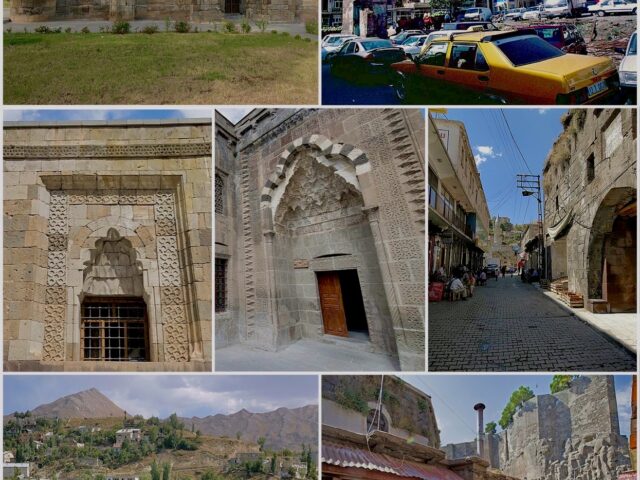
Bitlis
Bitlis travel guide: Ahlat’s Seljuk tombstones and kümbets, the Nemrut…
