
Mahmut Bey Mosque: Painted Wood in Kasaba Village
On this page
- What is Mahmut Bey Mosque?
- How do you get to Mahmut Bey Mosque?
- When is the best time to visit Mahmut Bey Mosque?
- What is the history of Mahmut Bey Mosque?
- What is Mahmut Bey Mosque famous for?
- What can you see at Mahmut Bey Mosque?
- Frequently asked questions about Mahmut Bey Mosque
- What do the official records say about Mahmut Bey Mosque?
Key facts: Mahmut Bey Mosque
- What it is: A wooden hypostyle mosque with a painted timber interior, built for the Candarid emir Mahmut Bey.
- Where: Kasaba village, about 18 km northwest of Kastamonu city.
- Date and UNESCO: 1366–67; part of “Wooden Hypostyle Mosques of Medieval Anatolia”, inscribed on the World Heritage List in 2023 (UNESCO).
What is Mahmut Bey Mosque?
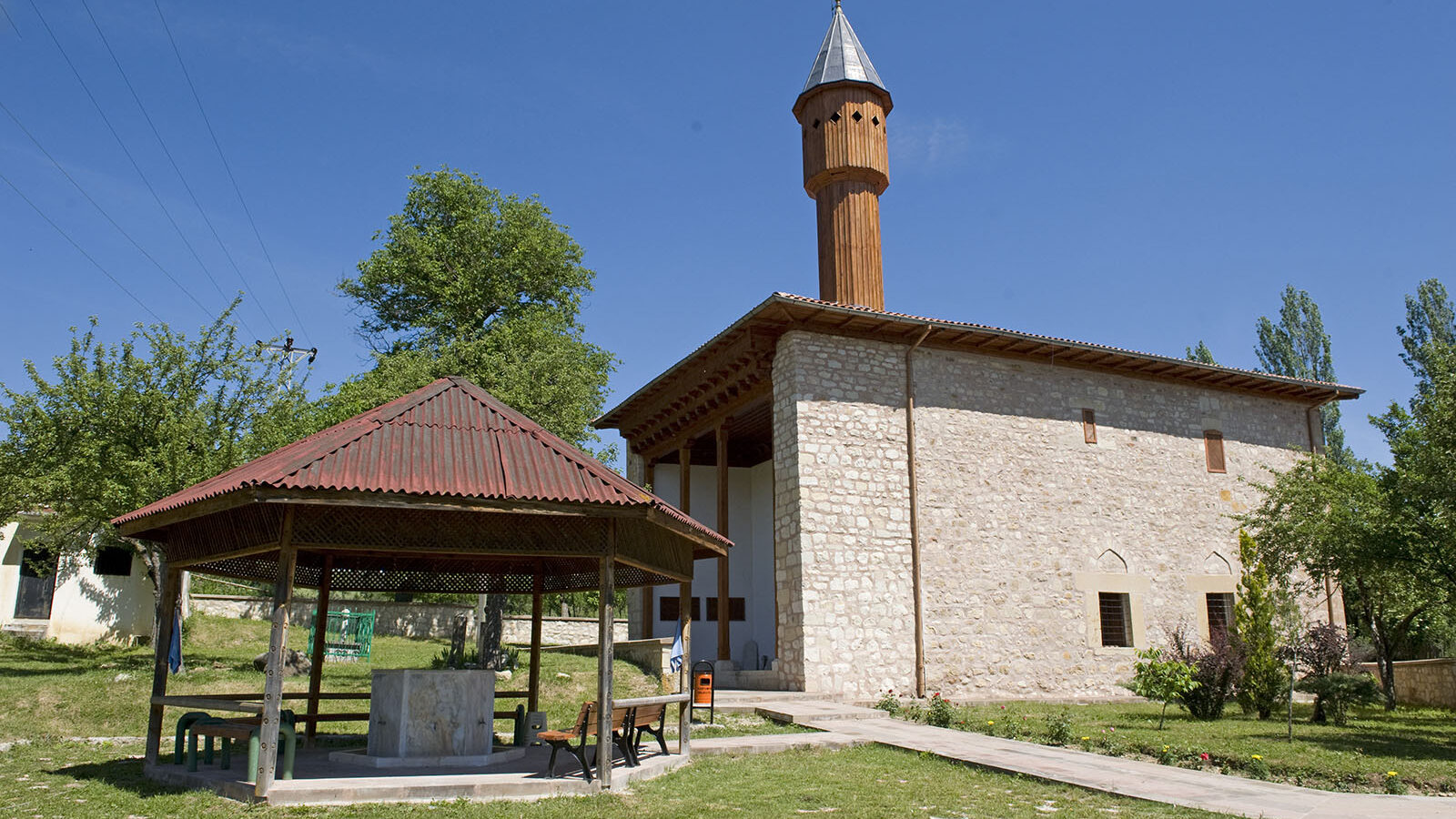
The Mahmut Bey Mosque (Mahmut Bey Camii), also called the Kasaba Mosque after its village, is a small 14th-century mosque in the hills northwest of Kastamonu. From outside it looks like a plain village mosque of stone with a tiled roof. Inside, every surface of wood, columns, beams, ceiling, gallery and doors, is painted with geometric and floral patterns in earthy reds, yellows and browns.
It is the latest of the five mosques that make up the UNESCO World Heritage property “Wooden Hypostyle Mosques of Medieval Anatolia”, inscribed in 2023. The other four are in Afyonkarahisar, Sivrihisar, Ankara and Beyşehir. Locally it is also known as the Çivisiz Camii, the “mosque without nails”, because its timber roof was put together without metal fixings.
How do you get to Mahmut Bey Mosque?
Kasaba village is about 18 km northwest of Kastamonu city, a short drive on a country road. There is no regular public transport to the village, so take a taxi from Kastamonu, rent a car or join a tour. If the door is closed outside prayer times, ask in the village for whoever holds the key.
Kastamonu Airport, with flights from Istanbul, is just south of the city, so the mosque is an easy half-day trip after landing.
Tours in Anatolia
−5% Istambul readers save 5% on every tour below — applied at checkout.
Partner listings via GetYourGuide · free cancellation on most
When is the best time to visit Mahmut Bey Mosque?
Any time of year, but May to October brings the easiest driving and the best light inside. The interior is dim, so a bright day helps. Avoid Friday midday prayers. Dress as for any working mosque: shoulders and knees covered, a headscarf for women, shoes off at the door.
What is the history of Mahmut Bey Mosque?
The mosque was built in 1366–67 for Emir Hüsameddin Mahmut Bey, son of Emir Adil Bey and a leading figure of the Candarid (Candaroğulları) principality, which ruled from Kastamonu. Its inscription survives and confirms the builder and the date.
It belongs to a tradition that UNESCO describes as wooden hypostyle mosques: a flat or pitched timber roof carried on rows of wooden columns instead of a dome. The tradition flourished in Anatolia in the 13th and 14th centuries, and Mahmut Bey is the latest of the five mosques on the World Heritage List and the only one standing in a village rather than a town.
The carved wooden door was so highly valued that the original was taken to Kastamonu for safekeeping, where it is held in the city’s ethnography collection; a faithful copy hangs in its place. The Turkish State Mint has since issued a commemorative coin for the mosque.
What is Mahmut Bey Mosque famous for?
- Its painted wooden interior, one of the best-preserved examples of medieval painted woodwork (kalem işi) in Anatolia.
- UNESCO World Heritage status since 2023.
- The “mosque without nails” nickname, for its roof built without metal fixings.
- The carved door, with old script and plant motifs.
What can you see at Mahmut Bey Mosque?
The prayer hall. A rectangular hall without a dome. According to the 2002 inventory, four wooden columns carry the timber roof and divide the space into three aisles.
The painted ceiling and beams. Flat painted ceiling panels and beams covered with interlaced geometric patterns, rosettes and plant motifs in coloured paint applied directly to the wood. Bring a torch or use your phone light carefully; flash photography is best avoided.
The galleries. Wooden interior balconies, painted like the rest of the woodwork.
The door. The copy of the carved door, with inscriptions in old script and plant motifs, as described in the inventory.
The village. Kasaba is a small farming village, and unlike the other four mosques in the UNESCO property, this one still stands in a rural setting, which is part of its appeal.



Frequently asked questions about Mahmut Bey Mosque
Is the Mahmut Bey Mosque a UNESCO World Heritage Site?
Yes. Since 2023 it has been one of five mosques in the World Heritage property Wooden Hypostyle Mosques of Medieval Anatolia.
How far is the Mahmut Bey Mosque from Kastamonu?
About 18 km northwest of the city, in Kasaba village. There is no regular bus, so go by taxi, car or tour.
When was the Mahmut Bey Mosque built?
In 1366–67, for the Candarid emir Mahmut Bey, son of Adil Bey, according to its inscription.
Why is it called the mosque without nails?
Its timber roof was assembled with interlocking joints and no metal fixings, so locals call it the Çivisiz Camii.
Can tourists go inside the Mahmut Bey Mosque?
Yes, outside prayer times. Dress modestly and remove your shoes; if it is locked, ask in the village for the key.
What do the official records say about Mahmut Bey Mosque?
It is in Kasaba village, 20 km northwest of the city centre. It is one of the fine examples of the tradition of wooden mosques of the Seljuk and Beylik periods. It was built in 1388 by Candaroğlu Mahmut Bey. Four wooden columns carrying the wooden roof of the building, which from outside looks like a plain village mosque, divide the interior into three aisles. The wooden door leaves are decorated with old script and plant motifs. The painted decoration made with coloured paint on flat wood is also very accomplished. (Ministry of Culture and Tourism, Kastamonu Provincial Tourism Inventory, 2002)
Note: the inventory’s date of 1388 differs from the date of 1366–67 given by the mosque’s inscription and by UNESCO; the later sources are followed in this guide.
Main photo: Dosseman, CC BY-SA 4.0, via Wikimedia Commons.
Ready to see Mahmut Bey Mosque?
Hand-picked tours with good reviews and clear prices.
Partner listings via GetYourGuide · free cancellation on most
Before or after: Istanbul
Most trips start or end in Istanbul. Our own experiences there:

 Dinner, sunset and day cruises between Europe and Asia.See cruises bosporuscruise.com

 Historic Turkish baths in the old city — hand-picked hamams, booked direct.Book a hamam istanbulhamam.com

 Istanbul’s tallest viewpoint: both continents from 369 metres.Get tickets camlicatower.com

 Free audio guides in 15 languages, safe routes and local tips — plus 5% off GetYourGuide.Open the free guide localada.com
Nearby
All destinationsPompeiopolis
Pompeiopolis at Taşköprü, Kastamonu: the Roman city founded by Pompey,…
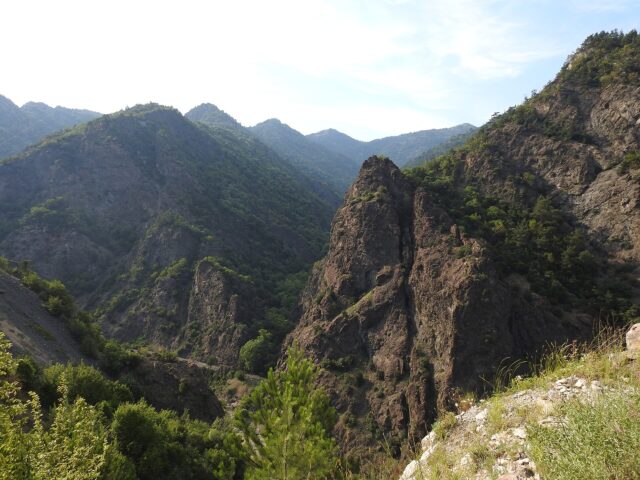
Küre Mountains National Park
Küre Mountains National Park in Kastamonu and Bartın: Valla Canyon,…
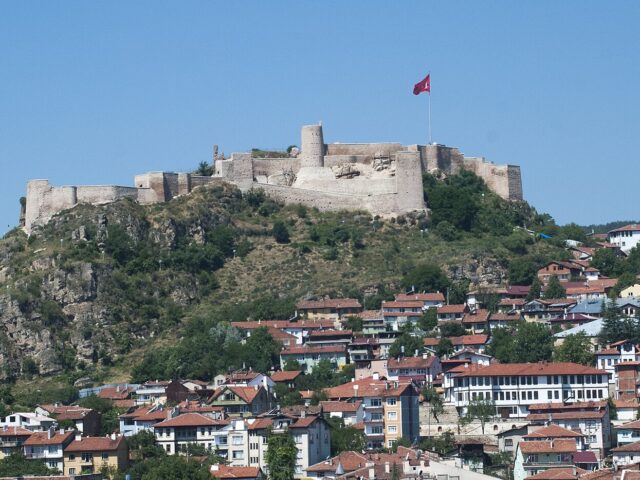
Kastamonu Castle
Kastamonu Castle: the Byzantine and Candarid citadel above the old…
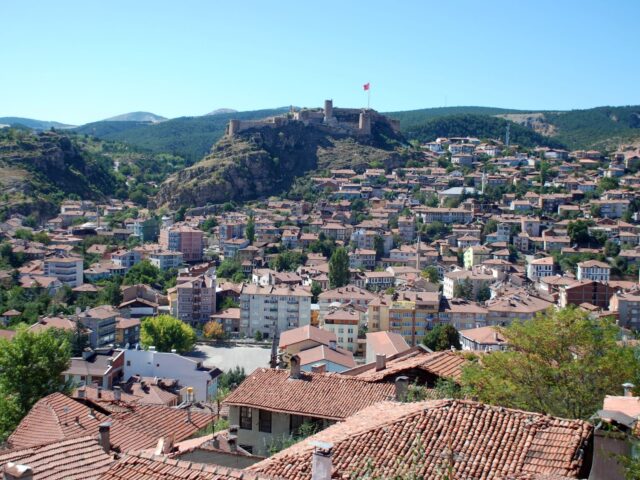
Kastamonu
Kastamonu travel guide: the UNESCO-listed Mahmut Bey Mosque, the castle,…
