Erzurum: Seljuk Madrasas and Snow on the Eastern Plateau
On this page
- What is Erzurum?
- How do you get to Erzurum?
- Where should you stay in Erzurum?
- What type of climate does Erzurum have?
- When is the best time to visit Erzurum?
- What is the history of Erzurum?
- What is Erzurum famous for?
- What are the historical places of Erzurum?
- What are the best things to do in Erzurum?
- What are the best places to visit in Erzurum?
- What is the traditional food of Erzurum?
- What should you buy in Erzurum?
- Frequently asked questions about Erzurum
- What do the official records say about Erzurum?
Key facts: Erzurum
- UNESCO Tentative List: The Yakutiye Madrasa and the Double Minaret (Çifte Minareli) Madrasa are two of the ten buildings in the “Anatolian Seljuks Madrasahs” entry, on Türkiye’s Tentative List since 2014 (UNESCO). They are not inscribed World Heritage Sites.
- Region: Eastern Anatolia, on a high plateau at about 1,900 m, where the Euphrates (Karasu), Aras and Çoruh river basins begin.
- Best known for: Seljuk, Saltukid and Ilkhanid monuments, the Palandöken ski slopes on the edge of the city, cağ kebabı and jet-black Oltu stone.
What is Erzurum?
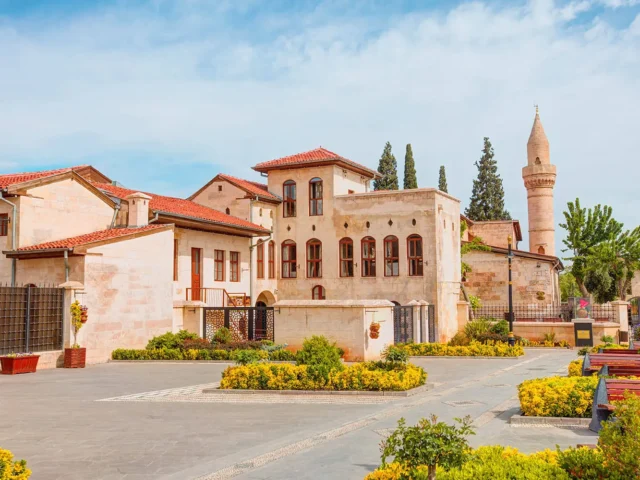
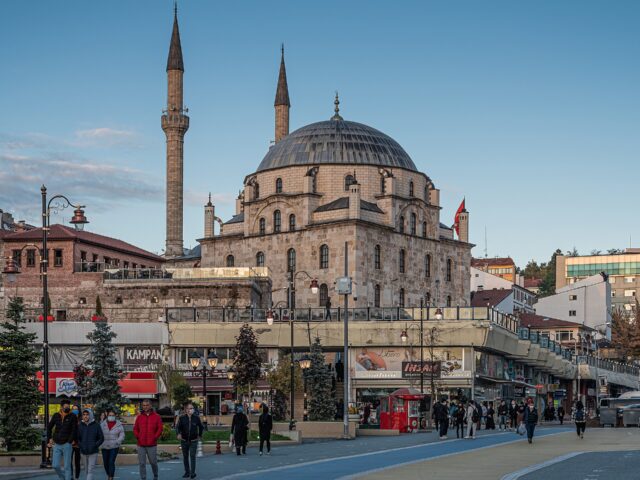
Erzurum is the largest city of northeastern Türkiye and the capital of a province of mountains and high plains. The city sits at roughly 1,900 m, which makes it one of the highest major cities in the country, and the Palandöken range rises directly behind its southern suburbs.
The province forms the western half of the Erzurum–Kars section of Eastern Anatolia. According to the 2002 provincial inventory, it covers 25,066 km², about 3.2 per cent of the country, and roughly 64 per cent of its land is mountain. Three major river systems start here: the Karasu branch of the Euphrates, the Aras and the Çoruh.
For visitors, Erzurum is two places at once. In the old centre along Cumhuriyet Caddesi you walk between some of the finest medieval buildings in Anatolia, including the Yakutiye Madrasa, the Double Minaret Madrasa and the Three Tombs. Ten minutes’ drive away, Palandöken is one of Türkiye’s main ski areas. A day north takes you to Tortum Waterfall and the Georgian monasteries of the Tortum valley.
Places to visit in Erzurum
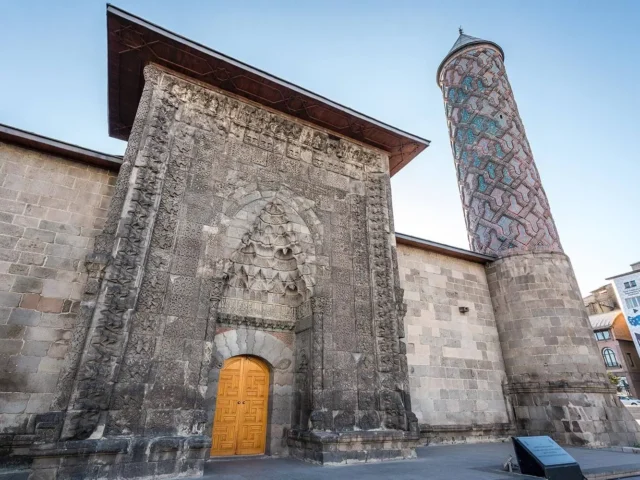
Yakutiye Madrasa
Yakutiye Madrasa in Erzurum: the 1310 Ilkhanid college with its carved lion…
Double Minaret Madrasa
Erzurum’s Double Minaret Madrasa (Çifte Minareli): twin tiled minarets, carved portal, the…
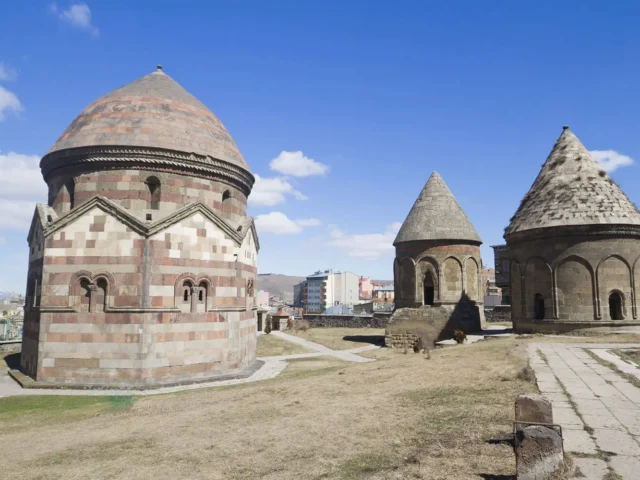
The Three Tombs
Üç Kümbetler in Erzurum: three medieval stone tomb towers, including Emir Saltuk’s…
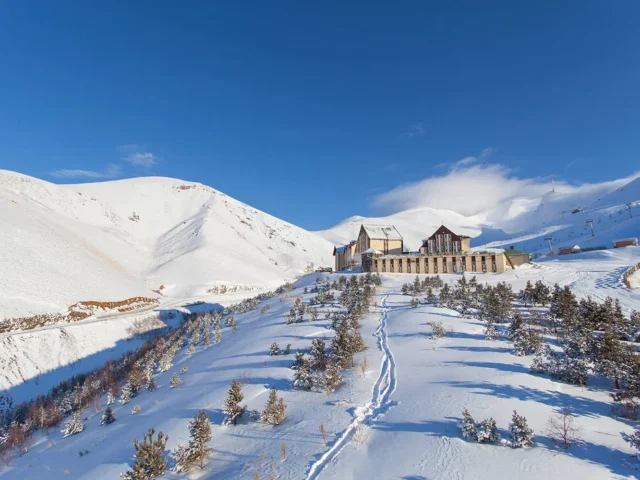
Palandöken
Palandöken ski area above Erzurum: powder snow from 2,200 m to over…
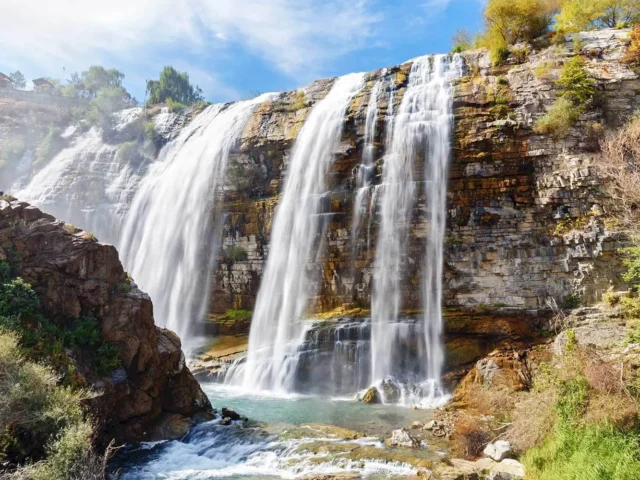
Tortum Waterfall
Tortum Waterfall in Erzurum’s Uzundere district: a 48 m drop from Tortum…
How do you get to Erzurum?
By air: Erzurum Airport (ERZ) is about 11 km from the city. Turkish Airlines flies from Istanbul Airport; AJet and Pegasus fly from Sabiha Gökçen, AJet from Ankara, and SunExpress from İzmir, with a winter service from Antalya. The only regular international link is a summer SunExpress service from Düsseldorf, so most overseas visitors connect in Istanbul.
By rail: Erzurum is on the Ankara–Kars line used by the Doğu Ekspresi (Eastern Express). The tourist version, the Turistik Doğu Ekspresi, runs only in winter and makes timed stops in Erzincan and Erzurum on its way to Kars; in the 2025–2026 season it left Ankara three times a week between late December and late February, and the whole 1,360 km journey takes about 32 hours.
By road: Intercity coaches connect Erzurum with Istanbul, Ankara, Trabzon, Kars, Erzincan, Bayburt and most cities in the east. In winter, mountain passes on all approaches can close or require chains, so check the forecast before driving.
Where should you stay in Erzurum?
For sightseeing, stay in the city centre around Cumhuriyet Caddesi and the Yakutiye district. The madrasas, the Great Mosque, the castle and the Taşhan bazaar are all within walking distance, and so are the cağ kebabı restaurants.
In the ski season most visitors stay on the mountain. The Palandöken ski hotels sit on the slopes about 5 km from the centre, so you can ski in the day and take a taxi into town for dinner. Outside the ski season, a city-centre hotel is the more practical base.
Book an Erzurum tour
−5% Istambul readers save 5% on every tour below — applied at checkout.
Partner listings via GetYourGuide · free cancellation on most
What type of climate does Erzurum have?
Erzurum has a severe continental climate shaped by its altitude. The average daily temperature in January is about −10 °C, and the city recorded −37.2 °C in December 2002. Snow usually lies for months, which is why the ski season on Palandöken is long and the snow stays dry and powdery.
Summers are short and pleasant rather than hot: the July daily average is around 19 °C, and nights stay cool even in August.
When is the best time to visit Erzurum?
June to September is best for the city’s monuments and for trips into the countryside. Tortum Waterfall carries the most water in May and June. From December to April the city fills with skiers, and the snow-covered domes and minarets are worth seeing, but sightseeing days are short and very cold.
April and October can bring snow and closed passes. If you are driving between Erzurum and Bayburt, Erzincan or Kars in winter, allow extra time.
What is the history of Erzurum?
According to the provincial inventory, finds dated as far back as around 4900 BC show that Erzurum, the largest province of Eastern Anatolia, has been a place of settlement since the earliest periods of history. The high plain sits on the old route between the Iranian plateau and the Black Sea, and every power that crossed it wanted a fortress here.
After the division of Armenia between Rome and Persia in 387, the Romans fortified the town and renamed it Theodosiopolis after Emperor Theodosius I. The inventory notes that the first construction date of Erzurum Castle is not known for certain, but that it is thought to have been built by the Byzantines in the first half of the 5th century AD.
The Seljuks took the city after the Battle of Manzikert in 1071, and the Saltukids, one of the first Turkish principalities in Anatolia, ruled from Erzurum until 1202. Their buildings are the oldest in the city: the castle mosque and its brick minaret, the Great Mosque, and the largest of the Three Tombs. The Great Mosque’s date is known from a chronogram by the Erzurum poet Ketencizade, whose verse yields the year 1179, under the Saltukid ruler Nasreddin Muhammed.
In the late 13th and early 14th centuries Erzurum was part of the Ilkhanid realm. The Yakutiye Madrasa (1310) and the Çobandede Bridge over the Aras (1297–98) belong to this period, and most scholars place the Double Minaret Madrasa here too. The Ottomans took the city after Selim I’s victory at Chaldiran in 1514, and in 1562 Lala Mustafa Pasha built the city’s first Ottoman mosque.
As a frontier city, Erzurum was captured by Russian armies in 1829, 1878 and again in February 1916. The 1828–29 war is also when the inscription of the Double Minaret Madrasa and the portal of a tomb next to it were taken to Russia. After the city was retaken on 12 March 1918, the Erzurum Congress met here in July and August 1919, one of the founding steps of the Turkish War of Independence. In the 20th century Erzurum became a university city with the opening of Atatürk University in 1950, and in 2011 it hosted the Winter Universiade.
What is Erzurum famous for?
Seljuk and Ilkhanid architecture. Few Turkish cities have as many major medieval monuments within a few hundred metres of each other. The carved portals of the Yakutiye and Double Minaret madrasas, with their trees of life, leopards and double-headed eagles, are among the best stone carving of the period.
Snow and skiing. Palandöken hosted the 2011 Winter Universiade, and the season usually runs from December into April.
Cağ kebabı. Lamb marinated with onion, salt and black pepper, stacked on a horizontal spit and turned over a wood fire, then sliced onto small skewers called cağ. It comes from the Oltu district, and “Oltu Cağ Kebabı” was registered as a geographical indication in 2009.
Oltu stone. A soft, jet-like black stone mined around Oltu and carved into prayer beads and jewellery. The upper floor of the Taşhan in the centre is full of Oltu stone workshops.
Erzurum houses. The inventory describes a house type particular to Eastern Anatolia, built around an enclosed ground-floor court and the tandır evi, the bread-oven room where families lived in winter. See the official records section below.
What are the historical places of Erzurum?
In Erzurum city
Great Mosque (Ulu Cami or Atabey Camii). On Cumhuriyet Caddesi, the inventory describes it as reflecting all the features of the Anatolian Seljuk great mosques. Its plan is a rectangle of 52.50 by 41 m with seven aisles running perpendicular to the qibla wall. In front of the wide central aisle is a wooden dome made of stacked timber beams, which local people call the kırlangıç (swallow). The roof is carried on 28 piers linked by pointed arches, and the building was repaired five times under the Ottomans.
Tepsi Minare (Clock Tower). A brick minaret on the southwest corner of the citadel, built for the castle mosque by the Saltukid İnanç Yabgu Alp Tuğrul Bey and dated to the 12th century. Clocks were fitted in 1843 and 1881, turning it into a clock tower. The inventory calls it one of the first examples in Anatolia of the traditional brick minaret known since the Karakhanids.
Castle Mosque (Kale Mescidi). Inside the citadel, built under the Saltukids in the 12th century. The inventory notes that it is regarded as the oldest Turkish building in Erzurum; its deep mihrab sits in a semicircular bastion of the walls.
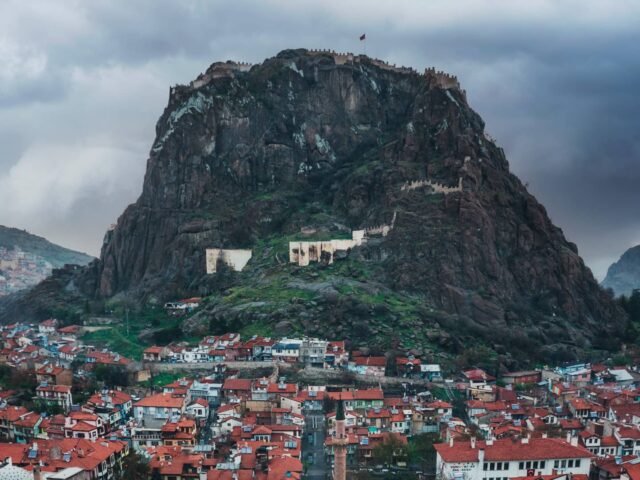
Erzurum Castle. The citadel on the hill above the centre, thought to date from the first half of the 5th century. Walk up for the view over the domes of the old city.
Yakutiye Madrasa (1310) and the Double Minaret Madrasa, two of the most important madrasas in Anatolia, each with its own guide on this site.
The Three Tombs (Üç Kümbetler). Three stone tomb towers in a garden south of the Double Minaret Madrasa; the largest is attributed to Emir Saltuk.
Lala Mustafa Pasha Mosque. The first Ottoman mosque in Erzurum, built in 1562. Lists of Mimar Sinan’s works attribute it to him, but the inventory points out that some solutions in the building, explained by the local geography and climate, do not match Sinan’s style, and suggests he did not build it himself. Its central dome on four piers with half-domes follows the plan of the Şehzade Mosque in Istanbul.
Ottoman single-domed mosques. Murat Pasha Mosque (1573) became the model for the city’s later single-domed mosques. Others worth a look are the Caferiye (1645), built of dark brown dressed stone, and the Narmanlı (1738), whose dome is a little larger than the rest.
Rüstem Pasha Bedesten (Taşhan). A two-storey han of dressed stone on Menderes Caddesi, built in 1555–60 by Rüstem Pasha, grand vizier of Süleyman the Magnificent. The inventory notes that no door or window opens from the upper floor onto the courtyard, which it explains by the city’s cold climate. Oltu stone carvers work upstairs.
Atatürk House Museum. A late 19th-century mansion that served briefly as the German consulate in 1915–16 and then as the governor’s residence. Mustafa Kemal stayed here from 9 July to 29 August 1919 while working on the Erzurum Congress, and it opened as a museum in 1984. The Congress building itself was closed to visitors in January 2026 after an engineering report found it at risk in an earthquake.
Erzurum Museum. The new museum opened in August 2023 in the Üç Kümbetler garden, across the street from the Three Tombs, with about 20,000 objects from prehistory through the Urartian, Roman, Seljuk and Ottoman periods.
Around the province
Çobandede Bridge. Built in 1297–98 by Emir Çoban Salduz, vizier of the Ilkhanids, over the Aras near Köprüköy. It was built with seven arches, of which six survive.
Arslan Pasha Mosque, Oltu. On the bank of the Oltu stream, built in 1664 by Arslan Mehmed Pasha, governor of Kars. The inventory calls it one of the finest representatives in Eastern Anatolia of the Ottoman single-domed mosque.
Öşk Vank (Oshki) Church. In Çamlıyamaç, Uzundere, near Tortum Lake. According to its inscription, building began in 961 under Adarnase of the Bagratid dynasty and was completed in 966 by the magistros Bagrat. It is known for two-coloured stonework and figural carving. In June 2026 it was still awaiting restoration and parts of the roof had collapsed, so you can only look from outside.
Caravanserais. The ruined Hacıbekir caravanserai, about 34 km southwest of Aşkale, is dated to the late 13th century, and the Karasu Han, 32 km west of Aşkale, was built as a guard-post han in the early 17th century.
What are the best things to do in Erzurum?
- Ski Palandöken. Dry continental snow, long runs above 2,000 m and the city lights below at night.
- Walk the medieval centre. The Great Mosque, Double Minaret Madrasa, Three Tombs, castle and Yakutiye are a half-day on foot.
- Drive the Tortum valley. Tortum Waterfall, Tortum Lake, Öşk Vank and the ruins of Engüzekkapı Castle make a full day north of the city.
- Soak in a thermal spring. The inventory notes that Pasinler, Ilıca and Köprüköy are the centres of spa tourism; the Köprüköy spring, locally called “Deli Çermik” for its fierce bubbling, is known for its mud.
- Raft or walk the Çoruh. The inventory describes the Çoruh, which rises in Bayburt and passes through İspir, as one of the best rafting rivers in the country, and records that the 1993 World Rafting Championship was held on it. Dams have since been built downstream in Artvin, so ask local operators which stretches still run.
- Hike to the Karasu spring. The inventory describes day walks in the Dumlu Mountains north of the city: three hours on foot to Dumlu Baba, the cold spring that is the source of the Karasu, returning by Kırkgöze village.
- Time a festival. The inventory lists the anniversary of the city’s liberation (12 March), the Erzurum Congress anniversary (23 July), the Köroğlu festivities at Uzunoluk in Oltu and an autumn honey, apple and wrestling festival. Confirm current dates locally.
What are the best places to visit in Erzurum?
Yakutiye Madrasa is the Ilkhanid college of 1310 on Cumhuriyet Caddesi, with a tiled minaret and a carved portal, now the Turkish-Islamic Arts and Ethnography Museum.
Double Minaret Madrasa (Çifte Minareli Medrese) is the city’s emblem: two fluted brick minarets with turquoise tile above a monumental portal, and an arcaded courtyard behind.
The Three Tombs (Üç Kümbetler) are three stone tomb towers from the 12th to the 14th centuries, the largest carved with bulls, eagles and snakes.
Palandöken is the mountain and ski area immediately south of the city, with runs from about 2,200 m to over 3,100 m.
Tortum Waterfall drops about 48 m from the outlet of Tortum Lake in Uzundere district, and is at its strongest in May and June.
Also worth your time: the Great Mosque, the Tepsi Minare and castle, the Erzurum Museum and the Taşhan. Further afield, Kars and the ruins of Ani are a few hours east, and İshak Pasha Palace near Mount Ararat is a long day’s drive.
What is the traditional food of Erzurum?
Cağ kebabı is the dish to travel for: marinated lamb cooked on a horizontal spit over wood and served in small skewers, usually with flat lavaş bread, onion and green chilli.
Look also for su böreği (layered boiled-pastry börek), kadayıf dolması (shredded-pastry rolls stuffed with walnuts and soaked in syrup), and civil peyniri, a stringy low-fat cheese.
What should you buy in Erzurum?
Oltu stone. Prayer beads (tespih), rings, earrings and brooches carved from the black stone of Oltu. The workshops on the upper floor of the Taşhan sell directly, and you can watch the carvers at work.
Local produce. Civil cheese, honey from the highland pastures and kadayıf dolması packed for travel.



Frequently asked questions about Erzurum
Is Erzurum worth visiting?
Yes. Its medieval centre, with the Yakutiye and Double Minaret madrasas, the Three Tombs and the Great Mosque, is one of the finest in Anatolia, and Palandöken offers serious skiing on the edge of town.
How many days do you need in Erzurum?
One full day covers the city monuments and museums. Add a day for Tortum Waterfall and the Tortum valley, and more if you are skiing.
What is the nearest airport to Erzurum?
Erzurum Airport (ERZ), about 11 km from the city, with direct flights from Istanbul, Ankara and İzmir, plus a summer service from Düsseldorf.
How cold does Erzurum get in winter?
Very cold. The January daily average is about −10 °C, and the city has recorded −37.2 °C. Pack proper winter clothing from December to March.
Is Erzurum a UNESCO World Heritage Site?
No. Its Yakutiye and Double Minaret madrasas are part of the “Anatolian Seljuks Madrasahs” entry on the UNESCO Tentative List (2014), which has not been inscribed.
What food is Erzurum known for?
Cağ kebabı, lamb cooked on a horizontal spit over wood and served on small skewers. Kadayıf dolması, su böreği and civil cheese are also local.
Does the Eastern Express stop in Erzurum?
Yes. Both the Doğu Ekspresi and the winter-only Turistik Doğu Ekspresi on the Ankara–Kars line stop in Erzurum.
What do the official records say about Erzurum?
The rich geography, history and cultural setting in which they stand have played a large part in shaping the houses of Erzurum. In particular, the life lived inside them, the climate and the building materials were important factors in their design. For this reason a house type emerged in Erzurum that essentially follows Turkish house architecture but has its own particular features.
On the ground floor, besides service spaces such as the stable, larder and hayloft, there are also living spaces. The tandır evi, an important living unit, and the winter rooms were placed on this floor. The open courtyard of the Turkish house became, in the form of an enclosed court, an important living area on the ground floor. On the upper floor, one or two rooms open onto a sofa that is no more than a narrow passage. In this way a plan particular to Eastern Anatolia, different from other regions, came into being. Houses of this type, with an inner court and a tandır room, are found in settlements such as Bayburt and Kars, but the finest examples are in Erzurum. The old houses of Erzurum have not been sufficiently protected because of wars, fires and new building. (Ministry of Culture and Tourism, Erzurum Provincial Tourism Inventory, 2002)
Ready to see Erzurum?
Hand-picked tours with good reviews and clear prices.
Partner listings via GetYourGuide · free cancellation on most
Before or after: Istanbul
Most trips start or end in Istanbul. Our own experiences there:

 Dinner, sunset and day cruises between Europe and Asia.See cruises bosporuscruise.com

 Historic Turkish baths in the old city — hand-picked hamams, booked direct.Book a hamam istanbulhamam.com

 Istanbul’s tallest viewpoint: both continents from 369 metres.Get tickets camlicatower.com

 Free audio guides in 15 languages, safe routes and local tips — plus 5% off GetYourGuide.Open the free guide localada.com