
Kastabala Ancient City: Hierapolis on the Ceyhan
On this page
- What is Hierapolis-Kastabala?
- How do you get to Hierapolis-Kastabala?
- When is the best time to visit Hierapolis-Kastabala?
- What is the history of Hierapolis-Kastabala?
- What is Hierapolis-Kastabala famous for?
- What can you see at Hierapolis-Kastabala?
- Common misconceptions about Hierapolis-Kastabala
- Frequently asked questions about Hierapolis-Kastabala
- What do the official records say about Hierapolis-Kastabala?
Key facts: Hierapolis-Kastabala
- What it is: A Hellenistic and Roman city of Cilicia, centre of the cult of Artemis Perasia, with a colonnaded street, theatre and a medieval castle on the hill.
- Where: Kesmeburun village, near the Ceyhan river, roughly 15–20 km north of Osmaniye city.
- Excavations: Since 2009 by a team from Karadeniz Technical University under Prof. Dr. Turgut Hacı Zeyrek.
What is Hierapolis-Kastabala?
Hierapolis-Kastabala is the ruined city that the locals call Bodrumkale, after the castle on the rock above it. It stands in Osmaniye province, on the edge of the plain near the Ceyhan, the ancient Pyramos. In the 1st century BC it was the capital of the local king Tarcondimotus; under Rome it was a prosperous provincial town and a religious centre whose goddess drew pilgrims from up and down the river.
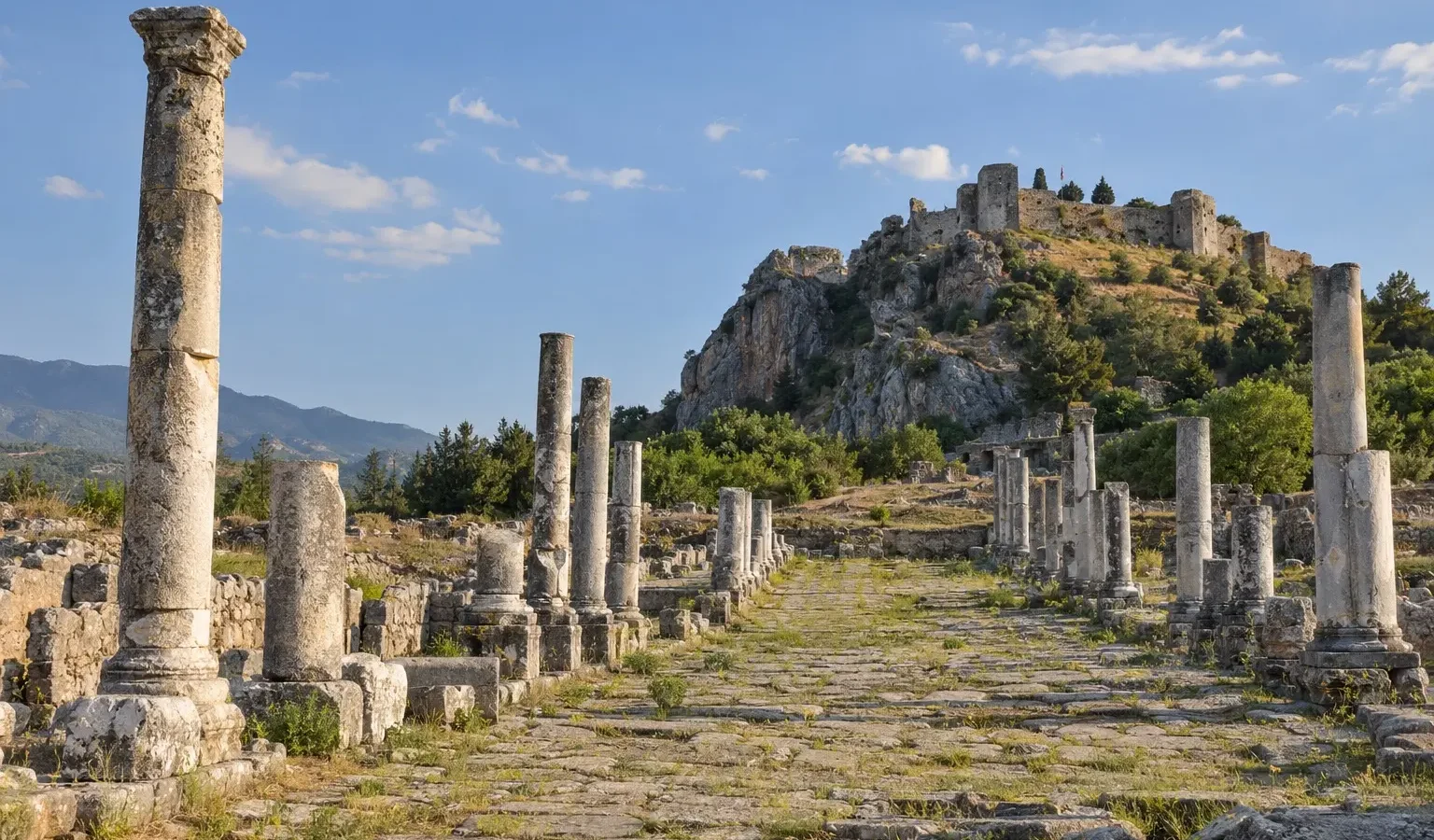
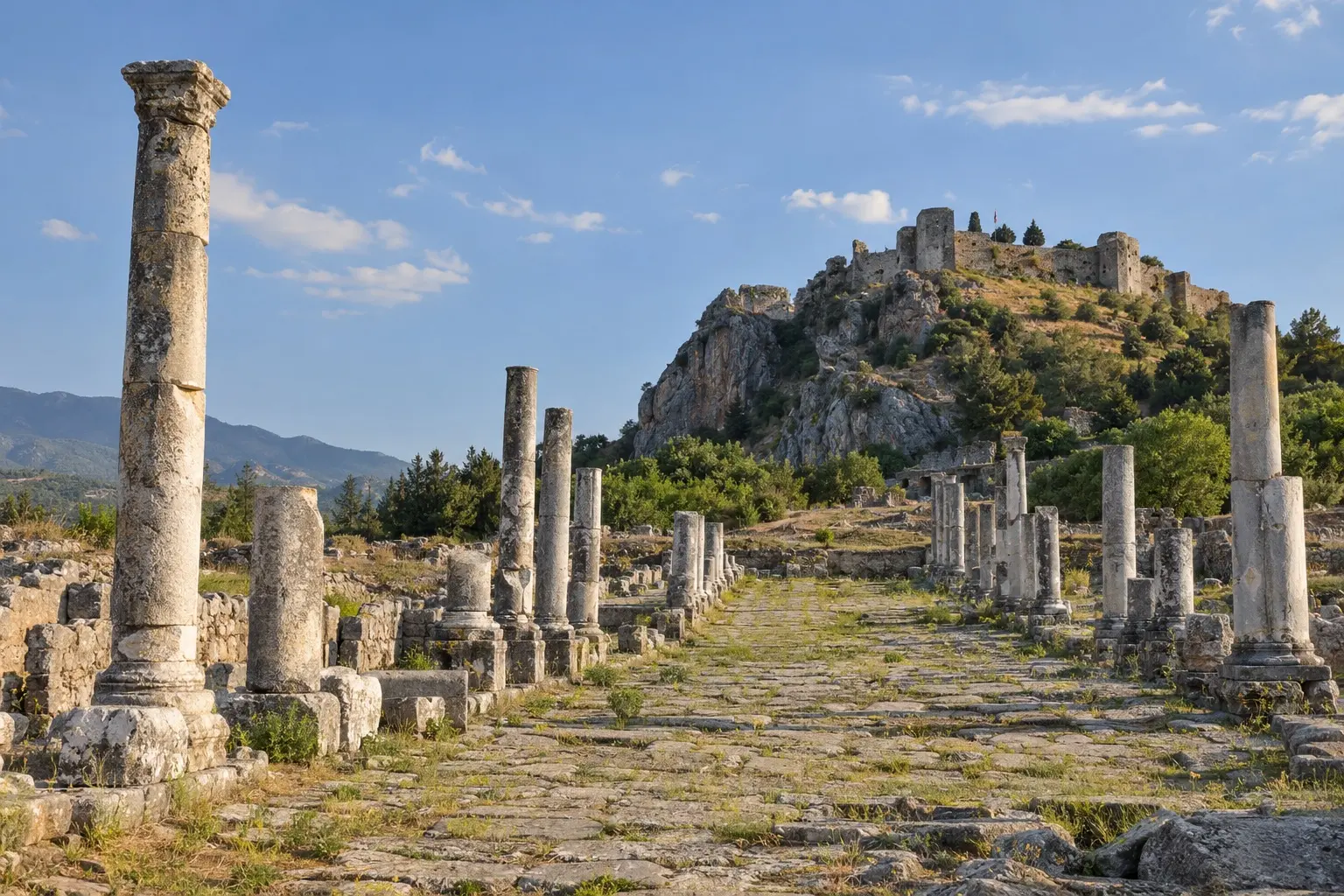
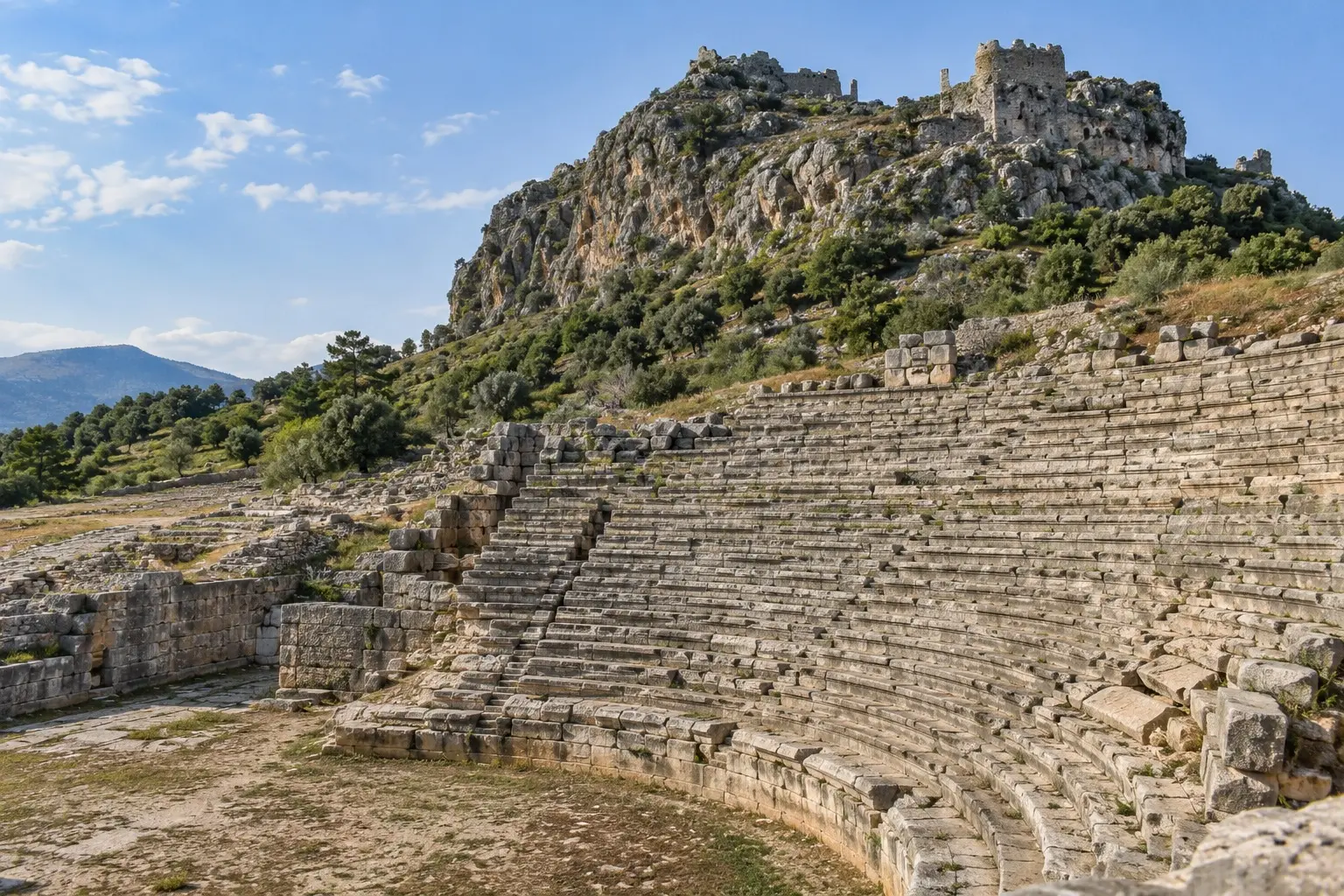
What you see today is mainly Roman: a long colonnaded street with many columns still standing, a theatre set into the slope, baths, churches built from reused Roman stone, rock-cut tombs and, above it all, the castle. It is one of the most rewarding ancient sites in eastern Cilicia and rarely crowded.
How do you get to Hierapolis-Kastabala?
The site lies at Kesmeburun, north of Osmaniye city; the 2002 provincial inventory gives the distance as 15 km. There is no useful public transport, so come by car or taxi. Most visitors combine it with the Karatepe-Aslantaş Open-Air Museum to the north-west and Toprakkale Castle on the plain, which together make a full day.
The nearest airports are Adana’s Çukurova International Airport and Hatay Airport. Osmaniye is on the Adana–Gaziantep motorway and the railway.
Book a Kastabala Ancient City tour
−5% Istambul readers save 5% on every tour below — applied at checkout.
Partner listings via GetYourGuide · free cancellation on most
When is the best time to visit Hierapolis-Kastabala?
Spring (March to May) and autumn (October and November). The Çukurova plain is very hot in summer, often above 40°C, and the site has little shade; if you come in July or August, arrive at opening time. The Ministry’s museum listing gives daily hours of 08:30–19:30 with free entry, but check before you go, as hours change by season and with excavation work.
What is the history of Hierapolis-Kastabala?
The city first appears on coins of the Seleucid king Antiochos IV Epiphanes (2nd century BC), who named it Hierapolis, the “holy city”, for its goddess Artemis Perasia. In the 1st century BC the local ruler Tarcondimotus made it the capital of his small kingdom. He died in a sea battle fighting for Mark Antony against Octavian, and the city passed into the Roman Empire.
The cult of the goddess made Kastabala famous. The provincial inventory records that cities along the Ceyhan joined in its yearly festival, which brought trade as well as pilgrims, and that the priestesses walked barefoot over glowing coals. A city wall was built around the centre in the 4th century AD.
The town changed hands several times during the Arab and Turkish raids of the early Middle Ages. In the medieval period settlement shrank to the castle on the hill, and the site was abandoned after it passed to the Ramazanoğulları in the 14th century.
What is Hierapolis-Kastabala famous for?
The colonnaded street and the cult of Artemis Perasia. The street, lined with columns that still stand in long rows, is the image most people take away. Excavations in the theatre have also produced finds such as Roman theatrical masks, and restoration work aims to re-erect more of the colonnade.
What can you see at Hierapolis-Kastabala?
- The colonnaded street: the main axis of the Roman city, with standing columns and paving.
- The theatre: built into the hillside; the inventory gives it a capacity of about 5,000. Its orchestra and seating were first cleared by museum staff in 1978.
- Churches: two Byzantine churches with polygonal apses, built with stone taken from Roman buildings.
- Baths and stadium: remains of the Roman baths and the stadium.
- Necropolis: rock-cut and monumental tombs on the hills around the city.
- The castle: the medieval fortress on the rock above the city, dated by the inventory to the time of the Crusades in the 13th century.
Paths are rough in places and the castle climb is steep. Bring water and a hat.
Common misconceptions about Hierapolis-Kastabala
Is Kastabala in Mersin province?
What people often assume: Because it belongs to ancient Cilicia, Kastabala is sometimes placed in Mersin, along with Cilician sites such as Silifke and Mut.
What the record says: The site is at Kesmeburun in Osmaniye province, on the eastern side of the Çukurova plain. The Ministry’s museum listing puts it under Osmaniye (source).



Frequently asked questions about Hierapolis-Kastabala
Where is Kastabala?
At Kesmeburun village in Osmaniye province, near the Ceyhan river, roughly 15–20 km north of Osmaniye city.
Is Kastabala free to visit?
The Ministry’s museum listing shows free entry and daily hours of 08:30–19:30; check before you go, as hours can change.
What is the best-preserved part of Kastabala?
The colonnaded street with its standing columns, followed by the theatre and the castle on the hill.
Can I combine Kastabala with other sites?
Yes. Karatepe-Aslantaş Open-Air Museum and Toprakkale Castle are both within easy driving distance and make a full day together.
Who is excavating Kastabala?
A team from Karadeniz Technical University led by Prof. Dr. Turgut Hacı Zeyrek, working at the site since 2009.
What do the official records say about Hierapolis-Kastabala?
The city of Kastabala, within the bounds of Bahçe village 15 kilometres from Osmaniye, was founded in the 1st century BC by Tarkondimotes, a local king, and used as the capital of his kingdom. When Tarkondimotes died in a naval battle against the Roman emperor Octavian, the city was absorbed into the empire.
Among the ancient remains of Kastabala that have come down to us in fairly good condition, the most important are without doubt the colonnaded street and the theatre with seating for five thousand. (Ministry of Culture and Tourism, Osmaniye Provincial Tourism Inventory, 2002)
Ready to see Kastabala Ancient City?
Hand-picked tours with good reviews and clear prices.
Partner listings via GetYourGuide · free cancellation on most
Before or after: Istanbul
Most trips start or end in Istanbul. Our own experiences there:

 Dinner, sunset and day cruises between Europe and Asia.See cruises bosporuscruise.com

 Historic Turkish baths in the old city — hand-picked hamams, booked direct.Book a hamam istanbulhamam.com

 Istanbul’s tallest viewpoint: both continents from 369 metres.Get tickets camlicatower.com

 Free audio guides in 15 languages, safe routes and local tips — plus 5% off GetYourGuide.Open the free guide localada.com
Nearby
All destinationsToprakkale Castle
Toprakkale Castle near Osmaniye: Abbasid, Crusader, Armenian and Mamluk basalt…
Zorkun Plateau
Zorkun Plateau above Osmaniye: a 1,600 m summer yayla of…
Karatepe-Aslantaş
Karatepe-Aslantaş Open-Air Museum near Kadirli: the 8th-century BC gates, the…
Osmaniye
Osmaniye travel guide: Karatepe-Aslantaş and its Hittite bilingual, Kastabala, Toprakkale…
