Niğde: Southern Cappadocia and the Taurus Peaks
On this page
- What is Niğde?
- How do you get to Niğde?
- Where should you stay in Niğde?
- What type of climate does Niğde have?
- When is the best time to visit Niğde?
- What is the history of Niğde?
- What is Niğde famous for?
- What are the historical places of Niğde?
- What are the best things to do in Niğde?
- What are the best places to visit in Niğde?
- What is the traditional food of Niğde?
- Frequently asked questions about Niğde
- What do the official records say about Niğde?
Key facts: Niğde
- Region: Central Anatolia, on the southern edge of Cappadocia, between the Aladağlar and Bolkar ranges of the Taurus.
- Best known for: The rock-cut Gümüşler Monastery, Seljuk monuments such as the 1223 Alaaddin Mosque and the Hüdavend Hatun Tomb, ancient Tyana, and climbing and trekking in the Aladağlar.
- Elevation: Niğde city stands at about 1,276 m, which gives it cool nights even in summer.
What is Niğde?
Niğde is a province in south-central Türkiye and also the name of its capital, a town of Seljuk mosques and tombs on a hill above a fertile plain of orchards and potato fields. To the north it shades into the volcanic landscape of Cappadocia; to the east and south rise the Aladağlar and Bolkar ranges of the Taurus, with peaks over 3,500 m.
The 2002 tourism inventory introduces Niğde as one of the most important provinces of the Cappadocia region in historical and cultural terms, with a history of about 9,000 years. In Niğde, it says, a mosaic of cultures carrying traces of all the civilisations that came and went in Anatolia over thousands of years, it is possible to see many Hittite, Roman, Byzantine, Seljuk and Ottoman works.
Few foreign visitors stop here, which is its appeal. The Gümüşler Monastery has frescoes as fine as anything in Göreme and a fraction of the crowds; the Alaaddin Mosque has a carved portal on which, on summer mornings, a crowned woman’s head appears in the shadows; and Demirkazık in the Aladağlar is one of Türkiye’s main climbing centres.
Places to visit in Niğde
Gümüşler Monastery
Gümüşler Monastery near Niğde: a rock-cut Byzantine monastery with a 14 m…
Alaaddin Mosque
Alaaddin Mosque in Niğde: the 1223 Seljuk mosque whose east portal casts…
Hüdavend Hatun Tomb
Hüdavend Hatun Tomb in Niğde: the 1312 octagonal Seljuk tomb with human-headed…
Tyana
Tyana at Kemerhisar, Niğde: the Hittite Tuwanuwa and Roman city, birthplace of…
How do you get to Niğde?
By air: Niğde has no airport. The nearest is Nevşehir Kapadokya Airport, about 90 km away, with domestic flights mainly from Istanbul. Kayseri Erkilet Airport, to the northeast, has more frequent domestic connections, and Adana’s Çukurova International Airport serves the south side of the Taurus.
By road: Niğde lies on the main routes from Central Anatolia to the Mediterranean and southeastern Türkiye, on the approach to the Taurus passes. The Ankara–Niğde motorway, opened in 2020, has made the drive from Ankara straightforward. Intercity buses connect Niğde with Ankara, Istanbul, Konya, Kayseri, Nevşehir and Adana.
By rail: Niğde has a station on the railway between Kayseri and Ulukışla. Check current services with TCDD; for most visitors the bus is more practical.
Getting around: The town-centre monuments are walkable. Gümüşler, Kemerhisar (Tyana) and Bor are reached by local minibus or taxi; for the Aladağlar, Çamardı and Demirkazık, a car or an arranged transfer is best.
Where should you stay in Niğde?
Niğde town has business and mid-range hotels close to the centre, convenient for the monuments, Gümüşler and Tyana. For the mountains, climbers and trekkers stay in the villages of Çamardı district, especially Demirkazık and Çukurbağ, where small pensions cater to them and the trailheads begin. Many travellers also visit Niğde as a day trip from a base in Cappadocia.
Book a Niğde tour
−5% Istambul readers save 5% on every tour below — applied at checkout.
Partner listings via GetYourGuide · free cancellation on most
What type of climate does Niğde have?
Niğde has a cold semi-arid climate bordering on continental: hot, dry summers and cold, snowy winters, with about 350 mm of rain a year and around 23 days of snow. The record high is 39.7°C and the record low −25.6°C. At 1,276 m, summer nights are cool. In the mountains, the inventory notes, the climate allows permanent snow on the high ground, and the difference between day and night is large: low night temperatures freeze the lakes, while daytime temperatures rise to 30°C.
When is the best time to visit Niğde?
For the town, Gümüşler and Tyana, May–June and September–October are best. For the Alaaddin Mosque‘s crowned-woman shadow you need a summer morning. For trekking and climbing in the Aladağlar, the season runs from roughly June to September, when most snow has cleared from the routes; winter climbing on Demirkazık is for experienced mountaineers only.
The inventory lists a series of local spring festivals, the Kayardı, Kırbağları, Tepeviran and Tepe “Friday” gatherings in May, and the commemoration of the poet Ahmet Kuddusi in Bor in December.
What is the history of Niğde?
Settlement in the Niğde area goes back to the Neolithic: the finds from Köşk Höyük in the Niğde Museum include a full-size model of a house dated to around 4883 BC. In the 2nd millennium BC the region was part of the Hittite world, and Tyana, the Hittite Tuwanuwa, later became the capital of a Luwian-speaking Neo-Hittite kingdom. The name Niğde is first recorded as Nahita in Late Hittite inscriptions found near Aktaş. On the summit of Göllüdağ, to the north, are the remains of an unfinished Late Hittite city of the 8th–7th centuries BC.
In Roman and Byzantine times Tyana, south of the modern town, was the region’s main city, a colony under Caracalla and from 372 the metropolis of Cappadocia Secunda. The Umayyads sacked it in 708 after a long siege, and many of its people moved to Niğde, then known as Nakida or Magida, which gradually took over its role. Rock-cut monasteries such as Gümüşler Monastery belong to the Byzantine centuries that followed.
By the early 13th century, under the Seljuks, Niğde was one of the larger cities of Anatolia. The Alaaddin Mosque (1223), the Hatıroğlu Fountain (1276) and the castle repairs of Alaeddin Keykubad I date from this time, followed by the Hüdavend Hatun Tomb (1312) and the Sungurbey Mosque (around 1335) under the Ilkhanids. After the Seljuk collapse the city passed between the Eretna and Karamanid beyliks; the Ak Medrese was built in 1409 under the Karamanids. The Ottomans took Niğde in the second half of the 15th century; sources give dates between 1467 and 1471.
What is Niğde famous for?
Seljuk stonework. Niğde has one of the best groups of Seljuk and Ilkhanid buildings in Central Anatolia, on and around Alaaddin Hill in the town centre.
Southern Cappadocia. The Gümüşler Monastery and the Narlıgöl valley, with fairy chimneys and churches, are part of the same volcanic landscape as Göreme and Ihlara.
Mountains. The inventory records that the Aladağlar and Bolkarlar Mountaineering and Trekking Centre was created in 1992, and that Demirkazık summit has become a natural school of mountaineering, with close to 300 climbing routes. The Aladağlar rise to 3,756 m and the Bolkar Mountains to 3,524 m.
Apples, potatoes and gazoz. The province is known for its apples and potatoes, and Niğde Gazozu, a soft drink first made in 1962, is its best-known brand.
What are the historical places of Niğde?
In Niğde town
Alaaddin Mosque. The Seljuk mosque of 1223 on Alaaddin Hill. See our Alaaddin Mosque guide.
Niğde Castle and clock tower. Northeast of Alaaddin Hill, the castle is known to have surrounded the old city with three rings of walls; today only one main tower stands. Its building date is not known, but it was heavily repaired under Alaeddin Keykubad I. The clock tower, built on one of the western bastions with stone reused from Christian ruins nearby, dates from the late Ottoman period around the turn of the 20th century.
Hüdavend Hatun Tomb. The finest Seljuk tomb in Niğde, built in 1312. See Hüdavend Hatun Tomb.
Sungurbey Mosque. Built around 1335 by Seyfeddin Sungur Ağa, the Ilkhanid governor of Niğde. The inventory notes that it was badly damaged by fire in the mid-18th century, when its domes and the piers carrying them collapsed; wooden posts now stand in their place. Its east portal recalls that of the Çifte Minareli Medrese in Erzurum, and the empty octagonal-pyramid tomb of its founder stands to the southeast.
Ak Medrese. A two-storey Karamanid madrasa of 1409 where the Niğde Museum began.
Hatıroğlu Fountain. Opposite the Alaaddin Mosque. Its inscription records that it was built in 1276, under Gıyaseddin Keyhüsrev III, by Hatıroğlu Şerafeddin Mesud, who rebelled against the state the same year and was captured and executed.
Dışarı Mosque. Also called Çelebi Hüsameddin Mosque, a square Ottoman mosque under a single large dome, thought to be of the 16th century.
Gündoğdu Tomb. Next to the Hüdavend Hatun Tomb, dated around 1344 by the grave inscription of Ahi Bevvap, son of Gündoğdu, with a carved portal.
Niğde Museum. Six halls present the archaeology of Central Anatolia in order: Neolithic Köşk Höyük, Bronze Age mining at the Kestel tin mine and finds from Acemhöyük, Late Hittite stelae and hieroglyphic inscriptions with the Göllüdağ lion, Hellenistic to Byzantine sculpture from Tyana, coins and treasures, and ethnography. Its mummies include a 10th-century “nun” from the Ihlara Valley and four 13th-century infant mummies.
Around the province
Gümüşler Monastery. A large rock-cut monastery with frescoes, 9 km from Niğde. See Gümüşler Monastery.
Tyana and the Roman Pool. The ancient city under Kemerhisar, with its Roman aqueduct and pool. See Tyana.
Andaval church. About 8 km northeast of Niğde near Aktaş, the ruins of a Byzantine church about 1,500 years old, first described by W. J. Hamilton in 1842 and said to have been dedicated to Helena, mother of Constantine.
Narlıgöl valley. The inventory describes the area as an extension of Cappadocia, similar in form to the Ihlara–Derinkuyu valley. Fairy chimneys line a valley running east to west, and the Narlıgöl churches, with features of late Byzantine art, were built in the 11th–12th centuries. The most important, to the south of Narlıgöl, has five storeys, with saints on the walls and the apostles on the ceiling of its entrance floor.
Göllüdağ. About 60 km north of Niğde near Kömürcü village, at 2,172 m, a walled Late Hittite city around a crater lake, abandoned before it was finished.
Bor. The old town southwest of Niğde has two Ottoman bathhouses, the Eski and Yeni Hamam, and the tomb of Sarı Saltuk, the 13th-century dervish known as the master of Taptuk Emre.
What are the best things to do in Niğde?
- Climb or trek in the Aladağlar. The inventory describes the classic route: from the Emli valley or the Sokullupınar camp, over the Çelikbuyduran climb and the Yedigöller plateau, ending at the Hacer valley and the Soğukpınar and Karpuzbaşı waterfalls, in about 4–5 days. See our Aladağlar National Park page.
- Walk to the Bolkar lakes. The Bolkar Mountains in the south of the province have glacial lakes and summer pastures; the provincial directorate publishes trekking routes for both ranges.
- See the shadow at Alaaddin Mosque. On summer mornings the carving of the east portal casts the outline of a crowned woman’s head.
- Take the waters. The Çiftehan hot springs, 80 km from Niğde on the road towards the Taurus, have pools whose foundations, the inventory says, go back to Roman times, with Seljuk domed baths above. The Narlıgöl spring has both bathing and drinking waters.
- Paraglide over the Emli valley. The inventory notes that the slopes around the Emli valley suit paragliding.
- Watch the folk dances. Yıldız, Develi, Çubuk, Hop Cilveli, Tombili, Karam and Menberi are the dances most often performed in the region.
What are the best places to visit in Niğde?
Gümüşler Monastery is a rock-cut Byzantine monastery around a 14-metre-high courtyard, with frescoes of the 11th–12th century and its own underground city.
Alaaddin Mosque is the Seljuk mosque of 1223 on Alaaddin Hill, known for its east portal and the crowned woman’s head that appears in its shadows.
Hüdavend Hatun Tomb is an octagonal Seljuk tomb of 1312 covered with reliefs of human-headed birds, lions and a double-headed eagle.
Tyana, under the town of Kemerhisar, was the Hittite Tuwanuwa and the Roman capital of southern Cappadocia, with a 2nd-century aqueduct and the Roman Pool at Bahçeli.
Also worth your time: the Niğde Museum, the Sungurbey Mosque, the Narlıgöl valley and, for walkers, the Aladağlar National Park, which spans the border with Kayseri. Ihlara Valley and the underground cities of Derinkuyu and Kaymaklı are a short drive north.
What is the traditional food of Niğde?
The inventory suggests it is fair to look at Niğde’s food in two parts: the dishes of Niğde’s native people and those of the immigrants. Agricultural produce dominates. In Niğde, where summer vegetables are dried and stored for winter, baking winter bread has become a tradition, and today winter bread is still made in all the villages and in many homes in the town.
The tray bread (tepsi ekmeği) and kapama dishes brought by immigrants from the Balkans (Rumeli) have added to the richness of the local cuisine. Among the province’s best-known dishes are tirit, made by cooking crumbled bread with cheese in butter, and Niğde tava, made with diced meat, garlic, peppers and tomatoes.
Look out too for local apples, which appear in many dishes, and a cold bottle of Niğde Gazozu.



Frequently asked questions about Niğde
Is Niğde part of Cappadocia?
Historically, yes. Niğde lies in southern Cappadocia, and sites such as the Gümüşler Monastery and the Narlıgöl valley share the volcanic landscape of Göreme and Ihlara.
What is the nearest airport to Niğde?
Nevşehir Kapadokya Airport, about 90 km away. Kayseri Erkilet and Adana Çukurova airports are the main alternatives.
What is Niğde famous for?
Seljuk monuments such as the Alaaddin Mosque, the Gümüşler Monastery, the Aladağlar mountains, apples and potatoes, and Niğde Gazozu.
Where is Demirkazık?
In Çamardı district of Niğde, in the Aladağlar range. Demirkazık village is the main base for climbers and trekkers.
How many days do you need in Niğde?
One full day covers the town, the museum, Gümüşler and Tyana. Add several days for trekking in the Aladağlar or Bolkar Mountains.
What should you eat in Niğde?
Try Niğde tava with diced meat, garlic, peppers and tomatoes, and tirit, crumbled bread cooked with cheese in butter.
What do the official records say about Niğde?
Niğde, in the Central Anatolia region, one of the most important provinces of the Cappadocia area in historical and cultural terms and with a history of about 9,000 years, has in recent years shown great development in the region in a short time, with its advances in industry, tourism, agriculture, trade, education and health.
In Niğde, a mosaic of cultures carrying the traces of all the civilisations that came and went in Anatolia over thousands of years, it is possible to see works of the Hittite, Roman, Byzantine, Seljuk and Ottoman periods in great number. (Ministry of Culture and Tourism, Niğde Provincial Tourism Inventory, 2002)
Ready to see Niğde?
Hand-picked tours with good reviews and clear prices.
Partner listings via GetYourGuide · free cancellation on most
Before or after: Istanbul
Most trips start or end in Istanbul. Our own experiences there:
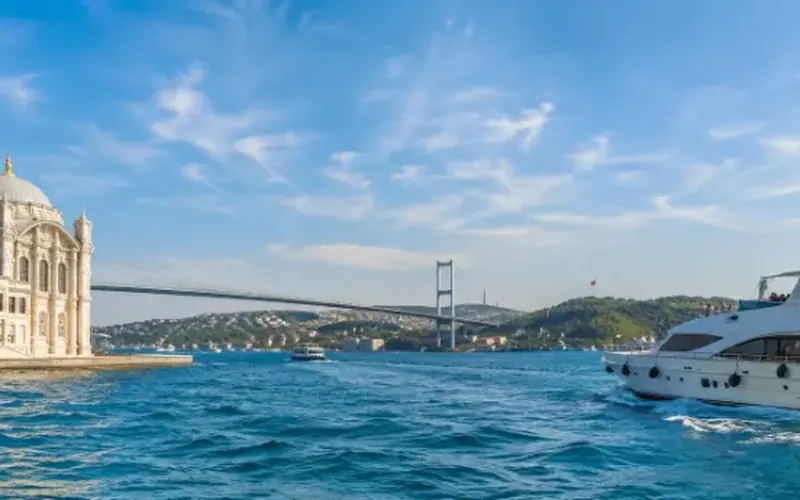
 Dinner, sunset and day cruises between Europe and Asia.See cruises bosporuscruise.com
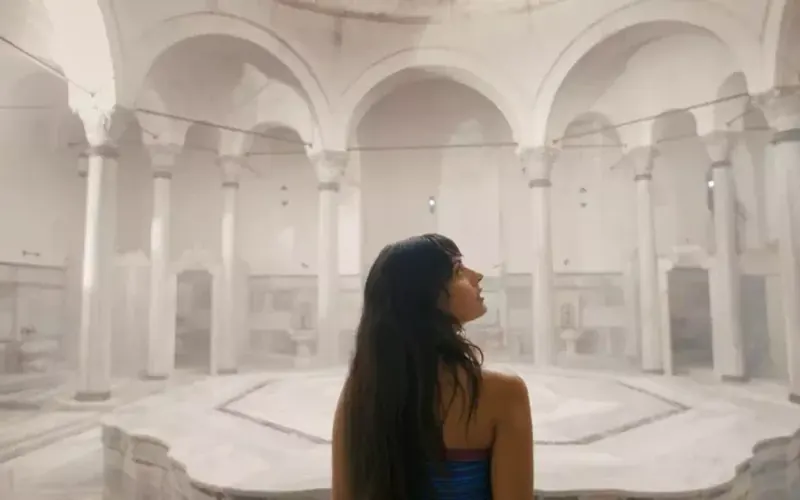
 Historic Turkish baths in the old city — hand-picked hamams, booked direct.Book a hamam istanbulhamam.com
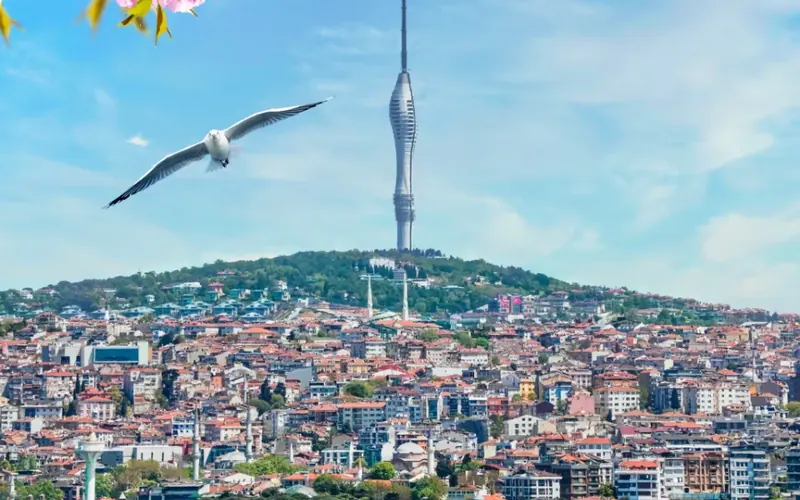
 Istanbul’s tallest viewpoint: both continents from 369 metres.Get tickets camlicatower.com
 Free audio guides in 15 languages, safe routes and local tips — plus 5% off GetYourGuide.Open the free guide localada.com
Nearby
All destinations
Şanlıurfa
Şanlıurfa travel guide: Göbeklitepe, Balıklıgöl, Harran’s beehive houses, Halfeti, the…
Erzincan
Erzincan travel guide: Kemaliye and the Dark Canyon, Urartian Altıntepe,…
Bingöl
Bingöl travel guide: the floating islands of Solhan, the lakes…
Mardin
Mardin travel guide: the stone old town above Mesopotamia, Deyrulzafaran…