
Gümüşler Monastery: Frescoes of Southern Cappadocia

On this page
- What is Gümüşler Monastery?
- How do you get to Gümüşler Monastery?
- When is the best time to visit Gümüşler Monastery?
- What is the history of Gümüşler Monastery?
- What is Gümüşler Monastery famous for?
- What can you see at Gümüşler Monastery?
- Frequently asked questions about Gümüşler Monastery
- What do the official records say about Gümüşler Monastery?
Key facts: Gümüşler Monastery
- What it is: A Byzantine rock-cut monastery with a church of frescoes, living rooms, a burial chamber and an underground city, one of the largest monasteries in Cappadocia.
- Where: Gümüşler, 9 km from Niğde town, Niğde province.
- Period: Frescoes dated to the 11th–12th century; the carving of the monastery may begin earlier.
What is Gümüşler Monastery?
The Gümüşler Monastery (Gümüşler Manastırı), also called Eski Gümüş, is a monastery carved into a large mass of rock at Gümüşler, just outside Niğde. It has a high open courtyard surrounded by rock-cut rooms, a church covered in frescoes, a burial chamber and an underground city. The 2002 inventory calls it one of the most beautiful and best-preserved works of Byzantine art in Anatolia.
It lies outside the main Cappadocia circuit, so it is usually quiet and its frescoes are well preserved.
How do you get to Gümüşler Monastery?
Gümüşler is 9 km from Niğde town, according to the inventory, and the monastery is on the edge of the settlement. Take a taxi or a local minibus to Gümüşler from Niğde, or drive; from Cappadocia it fits easily into a day trip south with the Niğde town monuments.
Book a Gümüşler Monastery tour
−5% Istambul readers save 5% on every tour below — applied at checkout.
Partner listings via GetYourGuide · free cancellation on most
When is the best time to visit Gümüşler Monastery?
Spring and autumn are the most comfortable seasons, but the rock interior stays cool all year, which makes it a good visit on a hot summer afternoon. Morning light is best for photographs of the courtyard façade. Opening days and hours for state-run sites change, so check before going.
What is the history of Gümüşler Monastery?
The exact date of the carving is not known; it probably took place between the 8th and the 12th century. On the basis of the iconography and style of the church’s wall paintings, the provincial culture and tourism directorate dates the decoration to the 11th–12th century. The frescoes are attributed to at least three different painters.
In the 1960s the British archaeologist Michael Gough carried out conservation work on the monastery. In 1973 it was declared an archaeological site. The 2002 inventory records that it was chosen as a priority site in the ministry’s faith-tourism project and that in 1996 the ministry funded landscaping around it.
The inventory sums up its importance: the strong and lively expression of the frescoes in the church, the underground city it contains, the large burial chamber, and the increased defensive measures together with the living quarters carved into the rock show that Gümüşler was one of the important religious centres of its time.
What is Gümüşler Monastery famous for?
- Frescoes. Paintings of high quality by at least three artists, from Christ enthroned in the apse to the Annunciation and Nativity.
- Scale. A courtyard 14 m high, cut straight down into the rock, makes it one of the largest monasteries in Cappadocia.
- Hunting scenes. A room above the narthex painted with hunting scenes and animals.
- An underground city. A defensive refuge built into the monastery itself.
What can you see at Gümüşler Monastery?
The entrance and courtyard. The inventory describes how the monastery is entered through a vaulted portal. Rock-cut rooms open on the east, west and south sides of the courtyard, and the church is on the north. The courtyard is 14 m high.
The church. The church is in the form of an equal-armed cross. Four thick, round natural columns support a ceiling given the appearance of a dome, and the sides are barrel-vaulted. At the east end there are three niches (apses), small ones at the sides and a large one in the middle.
The frescoes. In the main apse, the upper band shows Christ enthroned with angels and the symbols of the Evangelists, with the Virgin and the apostles in a Deesis scene; the lowest band shows the Church Fathers Basil of Caesarea, Gregory of Nyssa and Gregory of Nazianzus. The north arm holds the Annunciation, the Nativity and the Presentation in the Temple, with John the Baptist and St Stephen, thought to be by a second artist. South of the door from the narthex into the nave are the Virgin and Child flanked by the archangels Gabriel and Michael, attributed to a third.
The upper room. Above the narthex is a room painted with hunting scenes and various animals.
The underground city. On the left side of the courtyard is an underground settlement with shafts reaching the surface for ventilation and communication. Wear sensible shoes; passages are low and uneven.



Frequently asked questions about Gümüşler Monastery
How far is Gümüşler Monastery from Niğde?
About 9 km. It is a short taxi or minibus ride from Niğde town.
How old is Gümüşler Monastery?
Its frescoes are dated to the 11th–12th century. The carving of the monastery itself may have begun earlier, between the 8th and 12th centuries.
Is Gümüşler part of Cappadocia?
Yes. It is in southern Cappadocia and is one of the largest rock-cut monasteries in the region.
What is special about the Gümüşler frescoes?
They are well preserved and painted by at least three artists, with a room of hunting and animal scenes above the narthex.
Does Gümüşler Monastery have an underground city?
Yes. On the left side of the courtyard is an underground settlement with ventilation shafts.
What do the official records say about Gümüşler Monastery?
The monastery in the town of Gümüşler, 9 km from Niğde, is one of the most beautiful and best-preserved works of Byzantine art in Anatolia. Accepted as an archaeological site in 1973, the monastery was carved into a very large and wide mass of rock.
The walls of the church, carved like a rock hollow with four columns, are covered with frescoes. The strong and lively expression of the frescoes in the church, the underground city it contains, the large burial chamber and the increased defensive measures, together with the living units carved into a very large rock mass, show that the Gümüşler site and monastery was one of the important religious centres of its time. (Ministry of Culture and Tourism, Niğde Provincial Tourism Inventory, 2002)
Main photo: Dosseman, CC BY-SA 4.0, via Wikimedia Commons.
Ready to see Gümüşler Monastery?
Hand-picked tours with good reviews and clear prices.
Partner listings via GetYourGuide · free cancellation on most
Before or after: Istanbul
Most trips start or end in Istanbul. Our own experiences there:

 Dinner, sunset and day cruises between Europe and Asia.See cruises bosporuscruise.com

 Historic Turkish baths in the old city — hand-picked hamams, booked direct.Book a hamam istanbulhamam.com

 Istanbul’s tallest viewpoint: both continents from 369 metres.Get tickets camlicatower.com

 Free audio guides in 15 languages, safe routes and local tips — plus 5% off GetYourGuide.Open the free guide localada.com
Nearby
All destinations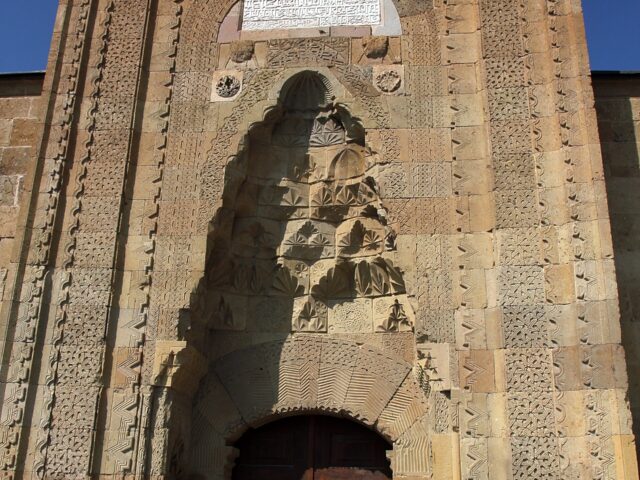
Alaaddin Mosque
Alaaddin Mosque in Niğde: the 1223 Seljuk mosque whose east…
Tyana
Tyana at Kemerhisar, Niğde: the Hittite Tuwanuwa and Roman city,…
Hüdavend Hatun Tomb
Hüdavend Hatun Tomb in Niğde: the 1312 octagonal Seljuk tomb…
Niğde
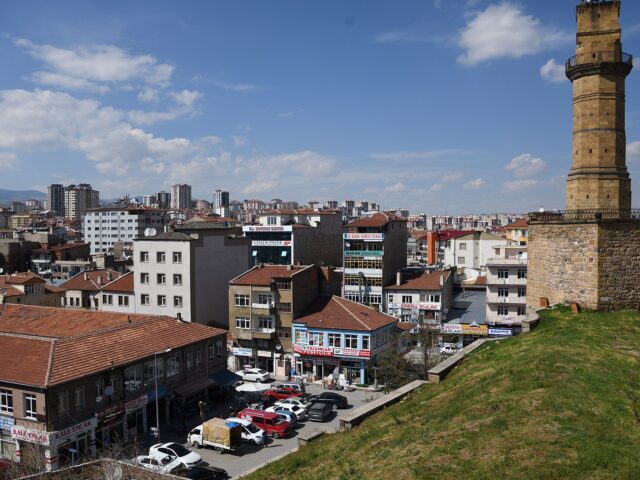
Niğde travel guide: Gümüşler Monastery, the Alaaddin Mosque, Hüdavend Hatun…
