
Tyana: Ancient City and Roman Aqueduct at Kemerhisar
On this page
Key facts: Tyana
- What it is: An ancient city, the Hittite Tuwanuwa and Roman Tyana, with a 2nd-century aqueduct and the Roman Pool at Bahçeli.
- Where: Under and around Kemerhisar, southwest of Niğde, Niğde province.
- Period: From the Hittite period; Roman and Byzantine city; excavated since 2000 by a University of Padua team.
What is Tyana?
Tyana is the ancient city that lies beneath the small town of Kemerhisar, southwest of Niğde. Known to the Hittites as Tuwanuwa, it was for more than two thousand years one of the main cities of southern Cappadocia, on the road from Constantinople to the Cilician Gates and Syria. It is best remembered as the reputed birthplace of the 1st-century philosopher Apollonius of Tyana.
Most of the city is under the houses of Kemerhisar, and what visitors see today are excavated sections, a line of Roman aqueduct arches striding across the fields, and the Roman Pool at Bahçeli, a stone basin built to feed the city’s water. Many important statues and architectural pieces from Tyana are in the Niğde Museum.
How do you get to Tyana?
Kemerhisar lies a short drive south of Bor, which is itself southwest of Niğde town. Local minibuses run from Niğde to Bor and Kemerhisar, but a car or taxi is easier for combining the excavation area, the aqueduct and the Roman Pool at Bahçeli. The aqueduct runs from Kemerhisar towards Bahçeli, so you can follow it by road.
Book a Tyana tour
−5% Istambul readers save 5% on every tour below — applied at checkout.
Partner listings via GetYourGuide · free cancellation on most
When is the best time to visit Tyana?
Spring and autumn give the best conditions: green fields and mild temperatures in April–June, clear light in September–October. The site is open and shadeless, so in summer go early or late.
What is the history of Tyana?
Tyana first appears in Hittite texts as Tūwanuwa, linked in the Telipinu Proclamation to the conquests of the early king Labarna. In the 1st millennium BC, as Tuwana, it was the capital of a Luwian-speaking Neo-Hittite kingdom. Xenophon mentions it in the Anabasis, and in the Hellenistic period it was renamed Eusebeia near the Taurus and became the second city of Cappadocia.
The provincial culture and tourism directorate notes that in the Roman period the city twice served as capital of the southern Cappadocian kingdom. Under Caracalla it became a Roman colony; in 272 Emperor Aurelian took it and, according to the ancient sources, spared it from sack. In 372 Valens made it the metropolis of the new province of Cappadocia Secunda, and it had been a bishopric since 325.
Tyana’s strategic position on the main road to the Cilician Gates made it a target during the Arab wars. The Umayyads sacked it in 708 after a long siege, Harun al-Rashid occupied it in 806, and Abbasid forces razed it in 831. After the 10th century its role passed to Niğde.
Since 2000 excavations have been led by a team from the University of Padua under Professor Guido Rosada. In 2020 the team uncovered an octagonal church with 4th-century coins. The site is protected as a first-, second- and third-degree archaeological site.
What is Tyana famous for?
- Apollonius of Tyana. The wandering philosopher and holy man of the 1st century AD, said to have been born here.
- The aqueduct. Roman arches still standing in the fields around Kemerhisar, whose name means “arch fortress”.
- The Roman Pool. A large stone basin at Bahçeli that fed water to the city.
- The road to the Cilician Gates. For centuries Tyana guarded the main route between Anatolia and Cilicia and Syria.
What can you see at Tyana?
The aqueduct. Aqueduct arches run from Kemerhisar to the Roman Pool within the boundaries of Bahçeli, and part of them still stand. The directorate dates them to the 2nd century AD, in the time of Trajan and Hadrian.
The Roman Pool (Bahçeli). On a rocky slope east of Köşk Höyük in Bahçeli. The 2002 inventory calls it one of the finest surviving works of the Roman Empire, a pool of 2nd-century date with Olympic dimensions, built to carry water to ancient Tyana below Kemerhisar.
The excavation area. Excavated sections of the Roman and Byzantine city lie within Kemerhisar. The remains are fragmentary, so a visit here is about context rather than complete buildings.
Finds in Niğde Museum. Sculpture and architectural pieces from Tyana are displayed in the Hellenistic, Roman and Byzantine hall of the Niğde Museum; see them before or after visiting the site.



Frequently asked questions about Tyana
Where is ancient Tyana?
Under and around the town of Kemerhisar, south of Bor, southwest of Niğde town.
What was Tyana called by the Hittites?
Tuwanuwa. Later it was Tuwana, the capital of a Neo-Hittite kingdom, and in the Hellenistic period Eusebeia near the Taurus.
Who was Apollonius of Tyana?
A 1st-century AD philosopher and holy man whose reputed birthplace was Tyana.
What is the Roman Pool at Bahçeli?
A large 2nd-century stone basin, linked by an aqueduct to Tyana, built to supply the city with water.
Is Tyana still being excavated?
Yes. A University of Padua team has led excavations since 2000 and found an octagonal church in 2020.
What do the official records say about Tyana?
The Roman Pool in the town of Bahçeli is one of the most beautiful works surviving from the Roman Empire. The pool, built by the Romans in the 2nd century AD in the town of Bahçeli in Bor district, has Olympic dimensions and was built to carry water to the ancient city of Tyana, beneath the town of Kemerhisar. (Ministry of Culture and Tourism, Niğde Provincial Tourism Inventory, 2002)
Ready to see Tyana?
Hand-picked tours with good reviews and clear prices.
Partner listings via GetYourGuide · free cancellation on most
Before or after: Istanbul
Most trips start or end in Istanbul. Our own experiences there:

 Dinner, sunset and day cruises between Europe and Asia.See cruises bosporuscruise.com

 Historic Turkish baths in the old city — hand-picked hamams, booked direct.Book a hamam istanbulhamam.com

 Istanbul’s tallest viewpoint: both continents from 369 metres.Get tickets camlicatower.com

 Free audio guides in 15 languages, safe routes and local tips — plus 5% off GetYourGuide.Open the free guide localada.com
Nearby
All destinationsHüdavend Hatun Tomb
Hüdavend Hatun Tomb in Niğde: the 1312 octagonal Seljuk tomb…
Gümüşler Monastery
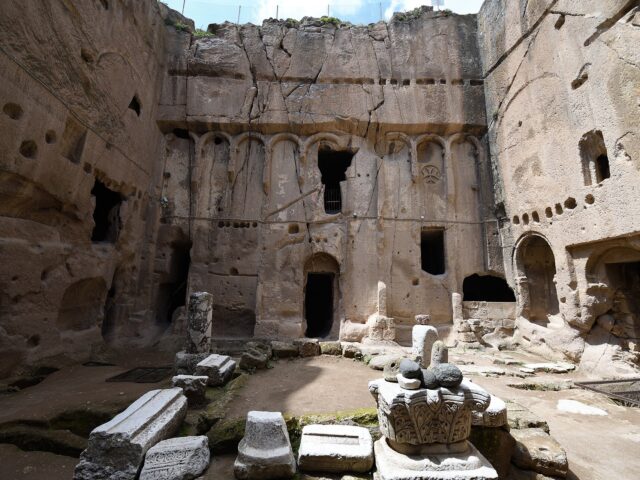
Gümüşler Monastery near Niğde: a rock-cut Byzantine monastery with a…
Alaaddin Mosque
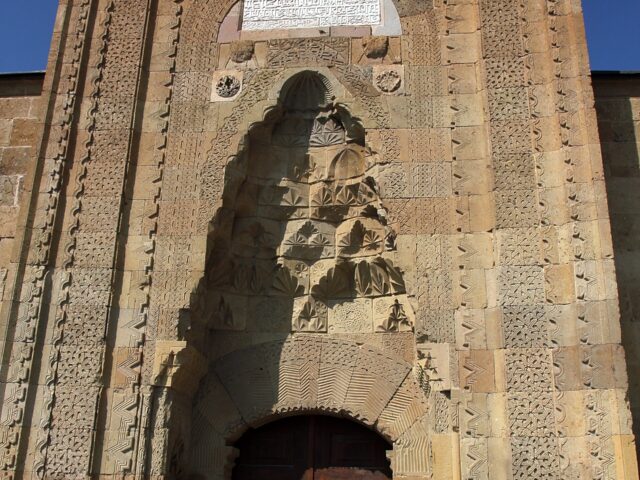
Alaaddin Mosque in Niğde: the 1223 Seljuk mosque whose east…
Niğde
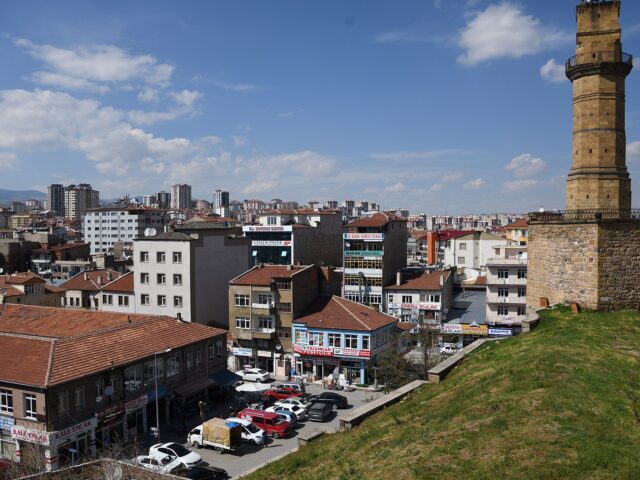
Niğde travel guide: Gümüşler Monastery, the Alaaddin Mosque, Hüdavend Hatun…
