
Hasandede Mosque and Tombs: Kırıkkale’s Dervish Shrine
On this page
- What is Hasandede Mosque and Tombs?
- How do you get to Hasandede Mosque and Tombs?
- When is the best time to visit Hasandede Mosque and Tombs?
- What is the history of Hasandede Mosque and Tombs?
- What is Hasandede Mosque and Tombs famous for?
- What can you see at Hasandede Mosque and Tombs?
- Frequently asked questions about Hasandede Mosque and Tombs
- What do the official records say about Hasandede Mosque and Tombs?
Key facts: Hasandede Mosque and Tombs
- What it is: A village mosque with two adjoining tombs of the dervish Hasandede (Doğanbeğ) and his family, a place of pilgrimage.
- Where: Hasandede, 12 km from Kırıkkale city, Merkez district, Kırıkkale province.
- Period: Mosque built in 1605; tombs added in the 17th century, according to historical records.
What is Hasandede Mosque and Tombs?
Hasandede is a small town 12 km from Kırıkkale that grew up around the tomb of a Turkmen dervish of the same name. At its centre stand a mosque and two tombs side by side: one for Hasandede himself, also known as Doğanbeğ, and one shared by his sons and daughter. The complex is one of the best-known shrines in Kırıkkale province and the focus of a yearly culture festival.
Visitors come to pray at the tomb and to make vows, as at many dervish shrines in Anatolia. The atmosphere is that of a living place of devotion rather than a monument, and respectful dress and behaviour are expected.
How do you get to Hasandede Mosque and Tombs?
Hasandede lies in the central district of Kırıkkale, 12 km from the city according to the 2002 inventory. The easiest way is by car or taxi from Kırıkkale; there are local minibuses, but services are irregular. Kırıkkale can be reached from Ankara by road (about 80 km) or by high-speed train to Kırıkkale YHT station.
The mosque and tombs are in the centre of the settlement and easy to find; parking is usually possible nearby.
Tours in Anatolia
−5% Istambul readers save 5% on every tour below — applied at checkout.
Partner listings via GetYourGuide · free cancellation on most
When is the best time to visit Hasandede Mosque and Tombs?
Spring and autumn are the most comfortable seasons on the plateau. The busiest time is the Hasandede culture festival, which the 2002 inventory lists in October; it brings music, crowds and communal meals, and is the best time to see the shrine as a social as well as religious centre. If you prefer quiet, come on a weekday morning outside festival time. Avoid prayer times, especially Friday midday, if you want to see the mosque interior.
What is the history of Hasandede Mosque and Tombs?
Hasandede belongs to the wave of Turkmen dervishes who settled Central Anatolia after the 13th century, founding lodges around which villages formed. Little documentary evidence survives about Hasandede himself, and much of what is told about him is legend, but the buildings are dated.
The 2002 inventory records that the mosque and tomb stand side by side. On the minaret side of the mosque, the first tomb belongs to Hasandede (Doğanbeğ); the second is the shared tomb of his sons Şeyh Halil İbrahim and Şeyh Mustafa and his daughter Ümmühan Ana. Hasandede Mosque is known to have been built in 1605, and it is understood from historical records that the tombs were built later, in the 17th century.
Over the following centuries the town around the shrine grew, and the tomb became one of the main pilgrimage centres between Ankara and the Kızılırmak. The local festival keeps that tradition public today.
What is Hasandede Mosque and Tombs famous for?
- Pilgrimage. It is one of the main faith-tourism sites the 2002 inventory lists for Kırıkkale.
- A family of saints. Unusually, the tombs hold not only the founding dervish but also his two sons and his daughter, Ümmühan Ana.
- The festival. The Hasandede culture festival, held in autumn, is one of the province’s main local events.
- Rock formations. The provincial culture and tourism directorate promotes eroded rock pinnacles near Hasandede, locally called fairy chimneys (peri bacaları), alongside the shrine.
What can you see at Hasandede Mosque and Tombs?
The mosque. Dated to 1605, the mosque is the oldest part of the complex. It has been repaired over the centuries and is in daily use.
Hasandede’s tomb. Beside the minaret, the tomb of Hasandede (Doğanbeğ) is the focus of the pilgrimage. Visitors usually enter quietly, recite a prayer and leave an offering or a vow.
The family tomb. Next to it is the second tomb, shared by Şeyh Halil İbrahim, Şeyh Mustafa and Ümmühan Ana. Both tombs were built in the 17th century, after the mosque.
The surroundings. Around the complex are a cemetery, shaded resting places and stalls that appear on busy days. Allow extra time if you want to look for the rock pinnacles promoted by the directorate in the countryside nearby; ask locally for directions.



Frequently asked questions about Hasandede Mosque and Tombs
Where is Hasandede?
Hasandede is a small town in the central district of Kırıkkale, 12 km from the city, which is itself about 80 km east of Ankara.
Who is buried at Hasandede?
The dervish Hasandede, also called Doğanbeğ, in one tomb, and his sons Şeyh Halil İbrahim and Şeyh Mustafa with his daughter Ümmühan Ana in the adjoining tomb.
How old is Hasandede Mosque?
The mosque dates from 1605. The two tombs beside it were built later in the 17th century.
Can non-Muslims visit Hasandede?
Yes. Dress modestly, remove shoes inside the mosque and tombs, and avoid visiting during prayers.
When is the Hasandede festival?
The 2002 tourism inventory lists it in October. Exact dates vary, so check with the local municipality.
What do the official records say about Hasandede Mosque and Tombs?
It is in Hasandede town, attached to the central district of Kırıkkale and 12 km from the city. The mosque and tomb stand side by side. On the minaret side of the mosque, the first tomb belongs to Hasandede (Doğanbeğ), and the second is the shared tomb of his sons Şeyh Halil İbrahim and Şeyh Mustafa and his daughter Ümmühan Ana. Hasandede Mosque is known to have been built in 1605. It is understood from historical records that the tombs were built later, in the 17th century. (Ministry of Culture and Tourism, Kırıkkale Provincial Tourism Inventory, 2002)
Ready to see Hasandede Mosque and Tombs?
Hand-picked tours with good reviews and clear prices.
Partner listings via GetYourGuide · free cancellation on most
Before or after: Istanbul
Most trips start or end in Istanbul. Our own experiences there:

 Dinner, sunset and day cruises between Europe and Asia.See cruises bosporuscruise.com

 Historic Turkish baths in the old city — hand-picked hamams, booked direct.Book a hamam istanbulhamam.com

 Istanbul’s tallest viewpoint: both continents from 369 metres.Get tickets camlicatower.com

 Free audio guides in 15 languages, safe routes and local tips — plus 5% off GetYourGuide.Open the free guide localada.com
Nearby
All destinationsHaydar Sultan Complex
Haydar Sultan in Keskin, Kırıkkale: a dervish shrine over a…
Çeşnigir Bridge
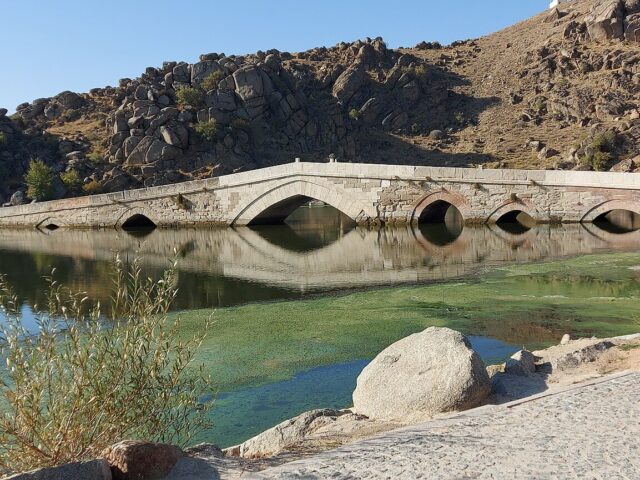
Çeşnigir Bridge in Kırıkkale: the 13th-century Seljuk bridge over the…
Kırıkkale
Kırıkkale travel guide: the Seljuk Çeşnigir Bridge, Hasandede and Haydar…
Zonguldak
Zonguldak travel guide: Gökgöl Cave, the Cehennemağzı Caves of Herakles…
