Söğüt: Ertuğrul Gazi’s Tomb and the Cradle of the Ottomans
On this page
Key facts: Söğüt
- What it is: The small town where Ertuğrul Gazi settled his Kayı tribe and Osman Gazi founded the Ottoman principality; site of Ertuğrul Gazi’s tomb.
- Where: Söğüt district, about 30 km southeast of Bilecik.
- Period: Granted to Ertuğrul Gazi in the 13th century; his tomb was built under Mehmed I and restored in 1757 and 1886.
What is Söğüt?
Söğüt is a district town in Bilecik province, about 30 km southeast of the provincial centre, and the third-largest town in the province after Bozüyük and Bilecik. It is known across Türkiye as the cradle of the Ottoman Empire: according to tradition, the Seljuk sultan granted the area to Ertuğrul Gazi and his Kayı Turks in the 13th century, and from here Ertuğrul’s son Osman built the principality that became the Ottoman state.
The town’s main sight is the domed tomb of Ertuğrul Gazi. Söğüt also has the Ertuğrul Gazi Museum and, every September, one of the best-known traditional festivals in Türkiye, the commemoration of Ertuğrul Gazi, also called the Yörük Festival.
How do you get to Söğüt?
Söğüt is about 30 km by road from Bilecik and lies between Bilecik and Eskişehir. The nearest high-speed train stations are Bilecik and Bozüyük on the Ankara–Istanbul line; from there, continue by taxi, local bus or hire car. Buses also run from Bilecik. Söğüt makes an easy day trip from Bilecik, Eskişehir or Bursa, and it pairs naturally with the Sheikh Edebali Tomb in Bilecik.
Tours in Anatolia
−5% Istambul readers save 5% on every tour below — applied at checkout.
Partner listings via GetYourGuide · free cancellation on most
When is the best time to visit Söğüt?
September, for the Ertuğrul Gazi commemoration. The Bilecik Provincial Directorate of Culture and Tourism describes it as a three-day event with folk dance groups, parachute displays, cirit (mounted javelin) games, a henna night and rice served to guests. The town fills up with visitors, so book accommodation in Bilecik or Eskişehir ahead. Outside the festival, spring and autumn are pleasant and quiet; summer is warm.
What is the history of Söğüt?
According to the provincial directorate, Ertuğrul Gazi led a group of Kayı Turks to Söğüt, which the Seljuk sultan granted him after a victory over the Byzantines at Sultanönü in 1231, with Domaniç as summer pasture. Ertuğrul died in Söğüt around 1281. In 1284 his son Osman founded the frontier principality of Söğüt, which is generally regarded as the beginning of the Ottoman state, and from here Osman captured Bilecik in 1299.
Historians stress that little is certain about Ertuğrul himself: the only firm fact is that he was Osman’s father, and the Ottoman accounts of his life were written more than a century later. According to the Bilecik Provincial Directorate of Culture and Tourism, Osman first had his father buried in an open grave; Mehmed I later turned it into a domed tomb; in 1757, under Mustafa III, it was restored so extensively that its original form changed; and in 1886 Abdülhamid II restored it again and added a fountain beside it (Bilecik Culture and Tourism Directorate).
The commemoration in Söğüt has a long tradition: the provincial directorate describes it as having been held for more than seven centuries.
What is Söğüt famous for?
- The tomb of Ertuğrul Gazi, father of Osman, founder of the Ottoman dynasty.
- The Ertuğrul Gazi commemoration and Yörük Festival every September.
- The founding of the Ottoman state: Söğüt was the first seat of Osman’s principality.
What can you see at Söğüt?
The tomb of Ertuğrul Gazi. The building is hexagonal and domed, with walls of one course of stone alternating with two courses of brick, and a rectangular entrance flanked by two windows on each side. Beside it is the fountain added in 1886. Inside, the sarcophagus is lit by rectangular windows in the west and southeast walls.
The Ertuğrul Gazi Museum. The town’s museum displays archaeological and ethnographic finds, and exhibits on Turkish history including life-size statues of Ottoman sultans.
Mounds and hot springs nearby. The 2002 inventory lists the mounds of Oluklu, Yeşilyurt and Yörükçepri as archaeological sites in the district, and a hot spring at Çaltı, whose 38°C bicarbonate water is used for bathing and drinking. The Sakarya River nearby is popular for fishing.
Common misconceptions about Söğüt
Is the tomb in Söğüt the original 13th-century building?
What people often assume: That the tomb of Ertuğrul Gazi stands as Osman built it.
What the record says: Osman left an open grave; the domed tomb dates from Mehmed I, and restorations in 1757 and 1886 changed its original form (Bilecik Culture and Tourism Directorate).



Frequently asked questions about Söğüt
Where is Ertuğrul Gazi buried?
In Söğüt, Bilecik province. The hexagonal domed tomb dates from Mehmed I and was restored in 1757 and, under Abdülhamid II, in 1886.
How far is Söğüt from Bilecik?
About 30 km southeast of Bilecik by road.
When is the Söğüt Ertuğrul Gazi festival?
Every September, over three days, with folk dances, cirit games, parachute displays, a henna night and rice for guests.
Why is Söğüt called the cradle of the Ottoman Empire?
Ertuğrul Gazi’s Kayı tribe settled here in the 13th century, and his son Osman founded the principality that became the Ottoman state.
Is there a museum in Söğüt?
Yes. The Ertuğrul Gazi Museum shows archaeological and ethnographic finds and life-size statues of Ottoman sultans.
What do the official records say about Söğüt?
The Söğüt Ethnography Museum, in the district of Söğüt, contains archaeological and ethnographic works. Among the other important works in the province are caravanserais, soup kitchens, towers, the Tomb of Ertuğrul Gazi, the Orhan Gazi Imaret, the Tomb of Bala Hatun, the Orhan Gazi Mosque, the Osman Gazi Mosque, the Emirler Mosque, the Karacalar Mosque and the İlyas Bey Mosque.
The water of the Çaltı hot spring, in the Çaltı town of Söğüt district, comes from a source 30 km away. It contains bicarbonate, and its temperature is 38 degrees. (Ministry of Culture and Tourism, Bilecik Provincial Tourism Inventory, 2002)
Ready to see Söğüt?
Hand-picked tours with good reviews and clear prices.
Partner listings via GetYourGuide · free cancellation on most
Before or after: Istanbul
Most trips start or end in Istanbul. Our own experiences there:
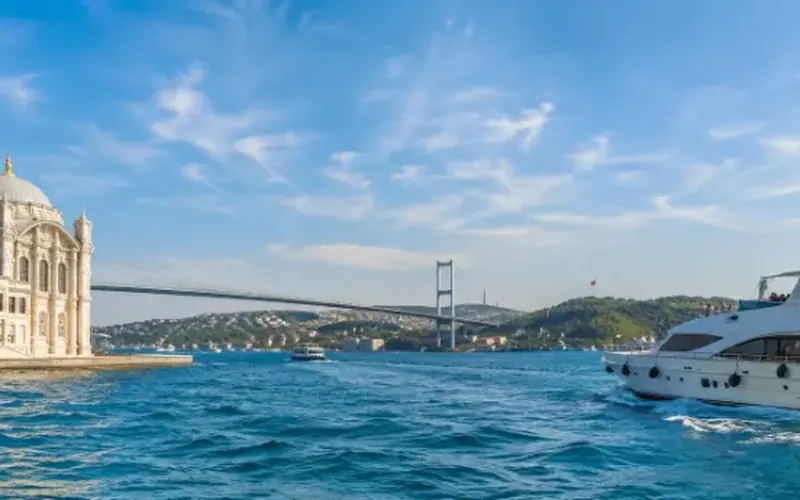
 Dinner, sunset and day cruises between Europe and Asia.See cruises bosporuscruise.com
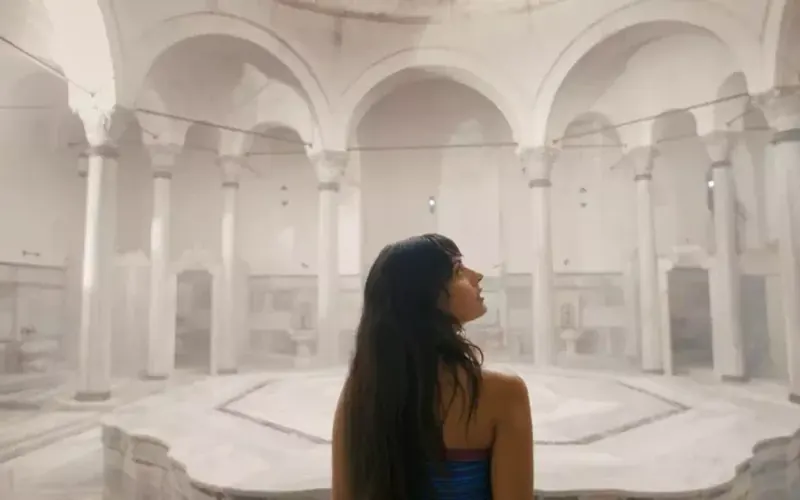
 Historic Turkish baths in the old city — hand-picked hamams, booked direct.Book a hamam istanbulhamam.com

 Istanbul’s tallest viewpoint: both continents from 369 metres.Get tickets camlicatower.com
 Free audio guides in 15 languages, safe routes and local tips — plus 5% off GetYourGuide.Open the free guide localada.com
Nearby
All destinationsSheikh Edebali Tomb
Sheikh Edebali Tomb in Bilecik: the grave of Osman Gazi’s…
Köprülü Mehmet Paşa Caravanserai
Köprülü Mehmet Paşa Caravanserai at Vezirhan, Bilecik: a 17th-century Ottoman…
Bilecik
Bilecik travel guide: Söğüt and Ertuğrul Gazi’s tomb, Sheikh Edebali’s…

Kocaeli
Kocaeli and its centre İzmit, ancient Nicomedia: once an eastern…