
Hagia Sophia of Trabzon: Frescoes of the Empire of Trebizond
On this page
- What is Hagia Sophia (Trabzon)?
- How do you get to Hagia Sophia (Trabzon)?
- When is the best time to visit Hagia Sophia (Trabzon)?
- What is the history of Hagia Sophia (Trabzon)?
- What is Hagia Sophia (Trabzon) famous for?
- What can you see at Hagia Sophia (Trabzon)?
- Frequently asked questions about Hagia Sophia (Trabzon)
- What do the official records say about Hagia Sophia (Trabzon)?
Key facts: Hagia Sophia (Trabzon)
- What it is: A late Byzantine church built for Emperor Manuel I of Trebizond, later a mosque, a museum from 1964 and a mosque again since 2013.
- Where: On a terrace near the shore about 2–3 km west of central Trabzon, Ortahisar district, Trabzon province.
- Period: Thought to have been built in 1238–1263; the separate bell tower dates from 1427.
What is Hagia Sophia (Trabzon)?
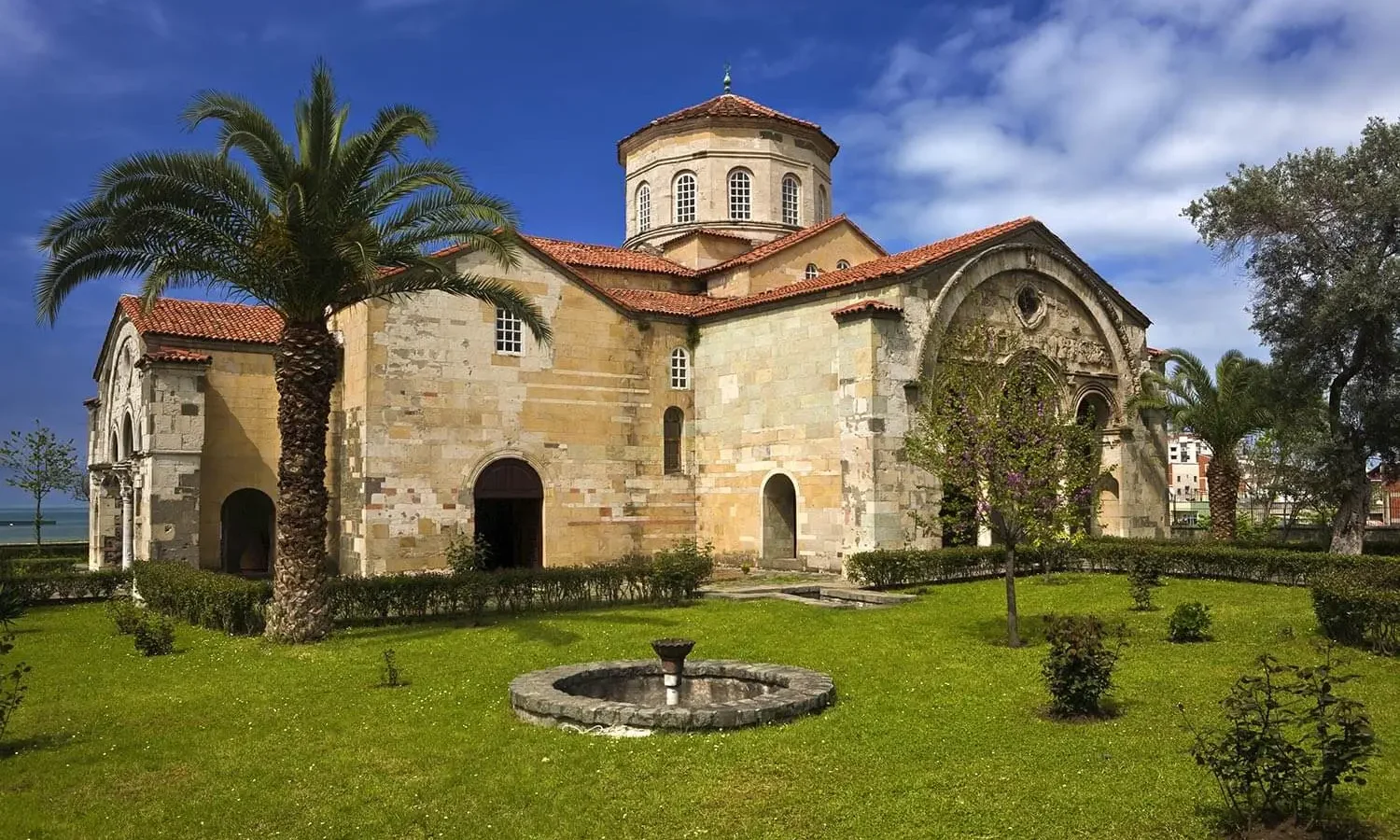
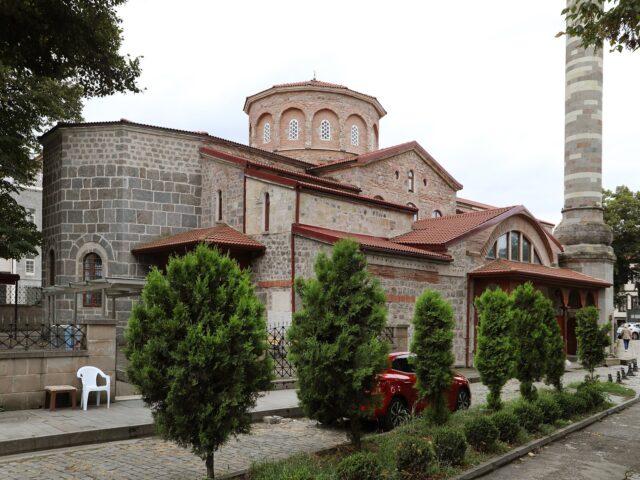
The Hagia Sophia of Trabzon is a 13th-century church built for the emperors of Trebizond on a terrace above the sea, west of the old city. It is small, about 22 metres long, but its frescoes and the carving on its porches make it one of the most important late Byzantine buildings in Türkiye. It shares its name, “Holy Wisdom”, with the far larger Hagia Sophia in Istanbul.
The church stands in a garden with a tall square bell tower a short distance to the west. After centuries as a mosque, it was restored in 1958–1964 with experts from the University of Edinburgh and opened as a museum. In 2013 it became a mosque again, and since a further restoration completed in 2020 it is used for prayers and visited by tourists at the same time.
How do you get to Hagia Sophia (Trabzon)?
The church lies about 2–3 km west of Meydan, the central square of Trabzon, between the coast road and the hillside. Dolmuş minibuses running west along the shore pass close by; ask for “Ayasofya”. A taxi from the centre takes around ten minutes.
Book a Hagia Sophia of Trabzon tour
−5% Istambul readers save 5% on every tour below — applied at checkout.
Partner listings via GetYourGuide · free cancellation on most
When is the best time to visit Hagia Sophia (Trabzon)?
The building is open all year. Because the frescoes are covered during each of the five daily prayers, time your visit between prayers and avoid Friday midday, when the congregation is largest. Summer weekends are busiest, as many visitors combine the church with a day in the city.
What is the history of Hagia Sophia (Trabzon)?
The 2002 inventory says the church is thought to have been built in 1238–1263, in the time of Manuel I, one of the kings of the Komnenian state in Trabzon. It was the church of a monastery and was built as the emperors’ foundation outside the walls of their capital.
The inventory adds that the four-columned, three-apsed chapel on the north side is older than the main building, and that the bell tower, 25 metres to the west, was built in 1427. The tower is about 40 metres high and has a small frescoed chapel on its second floor.
After Mehmed II took Trebizond in 1461 the church was eventually converted into a mosque; sources give dates for this between the 15th and the 17th centuries, and the Ministry of Culture and Tourism names Beylerbeyi Ali Bey as the man who converted it. The frescoes survived under plaster. Between 1958 and 1964 they were uncovered and the building consolidated in a project with the University of Edinburgh, and in 1964 it opened as a museum.
In 2013 the building was turned back into a mosque. A restoration began around 2018, and on 29 July 2020 it reopened for worship and visits, with a mechanical curtain system that covers the frescoes during prayers and opens them again afterwards.
What is Hagia Sophia (Trabzon) famous for?
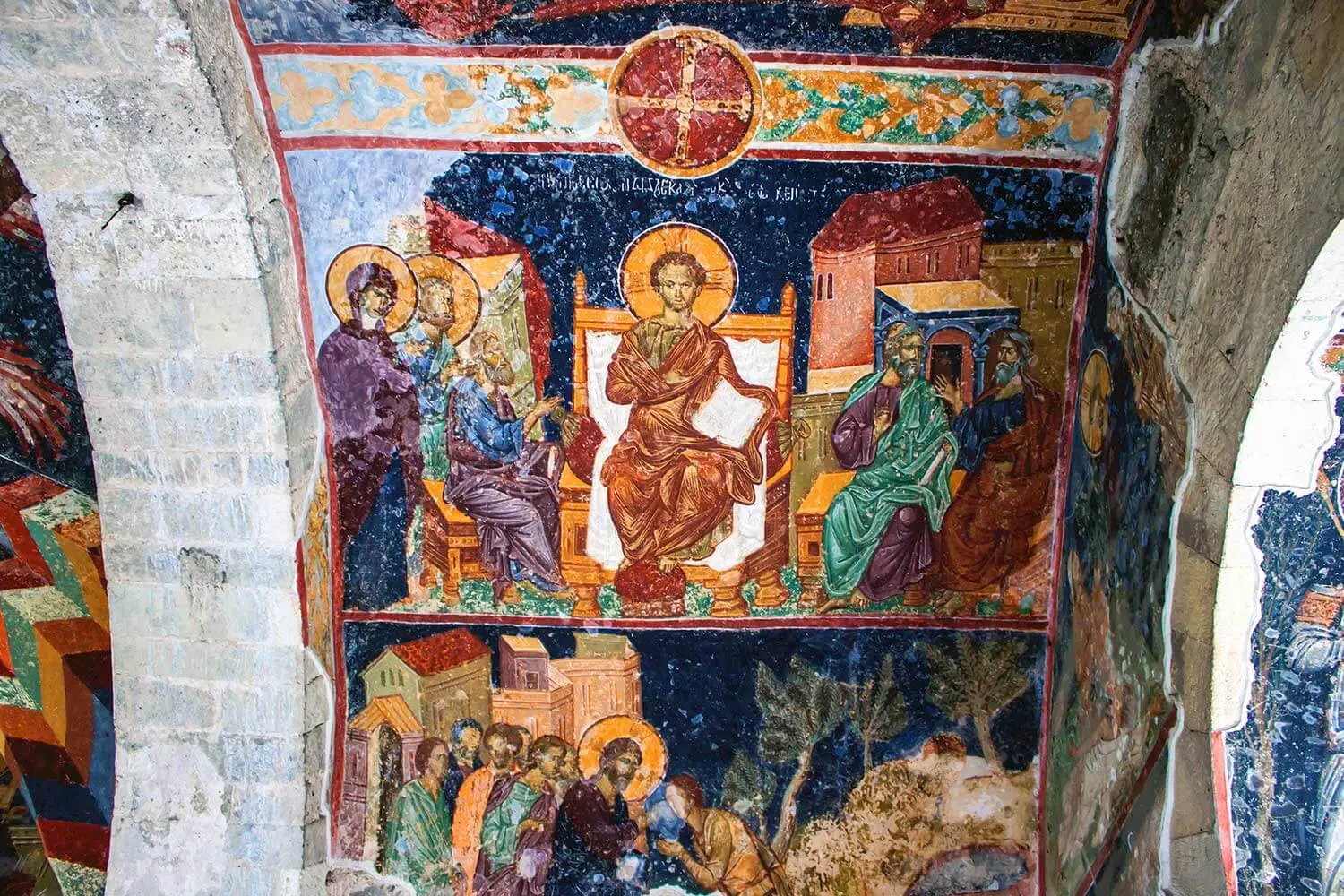
- Frescoes. Late 13th-century wall paintings that rank among the finest of the late Byzantine period, although an expert estimate suggests no more than a sixth of the original decoration survives.
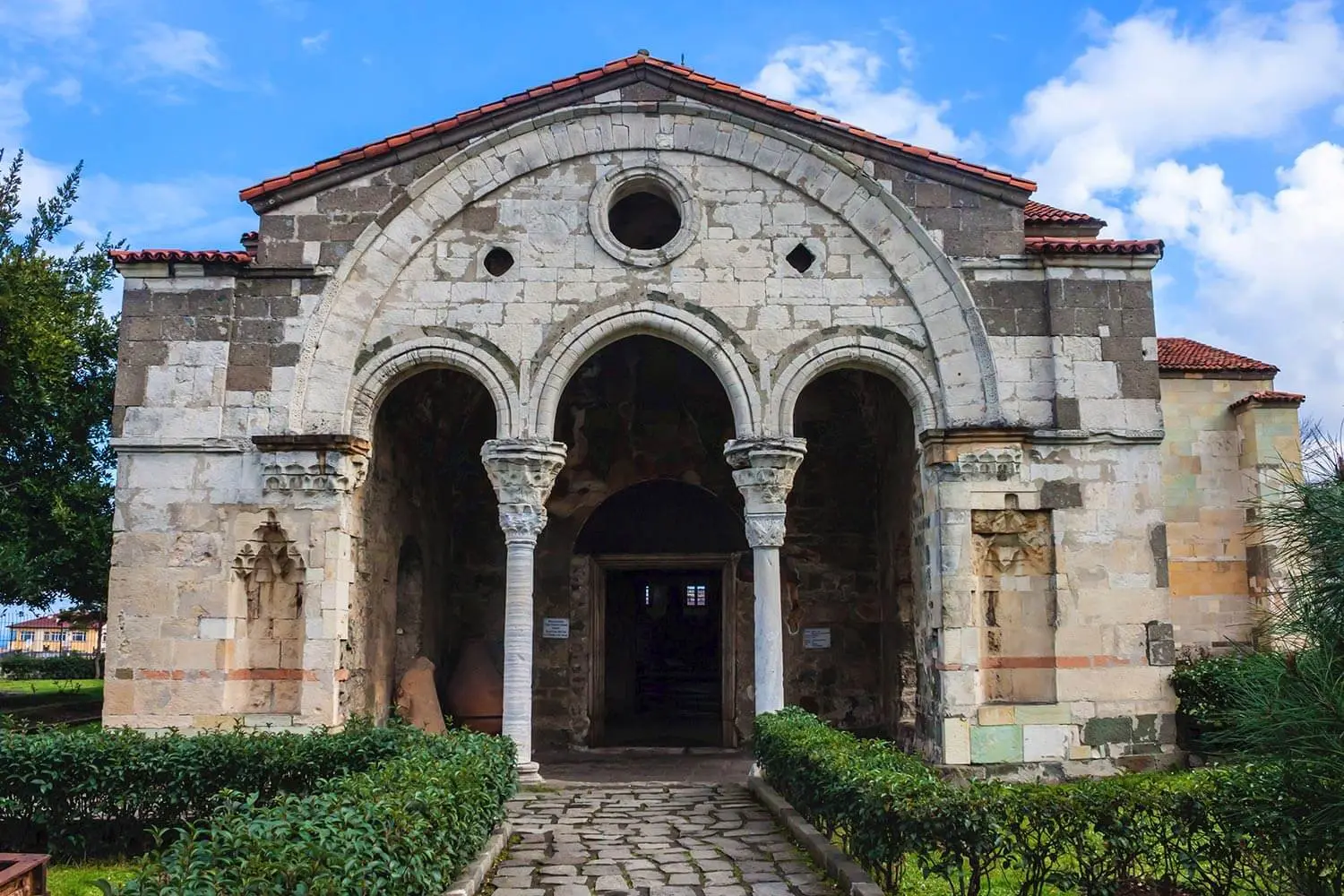
- Stone carving. The inventory calls the building very rich in stone decoration. The Ministry of Culture and Tourism notes Seljuk-style carved niches, capitals and medallions, a single-headed eagle and fantastic creatures among geometric and bird motifs.
- A meeting of styles. Seljuk-style ornament and reliefs in the manner of Armenian and Georgian carving on a Byzantine church show how open Trebizond was to its neighbours.
What can you see at Hagia Sophia (Trabzon)?
The church. A cross-in-square plan with a high central dome on four arches, three porches on the north, south and west, and an opus sectile floor of coloured stone under the dome. The building measures 22 by 11.6 metres.
The frescoes. Scenes from the New Testament fill the dome, vaults and walls. The Ministry lists among the decoration the banishment of Adam and Eve, the Last Supper and the Baptism. Visit outside prayer times to see them uncovered; some areas are now behind protective glass.
The porches and façades. Look for the carved arch of the south façade and the stone reliefs, niches and capitals around the entrances, where Byzantine and Seljuk-style ornament sit side by side.
The bell tower. The square tower of 1427 stands in the garden west of the church. It is usually seen from outside.
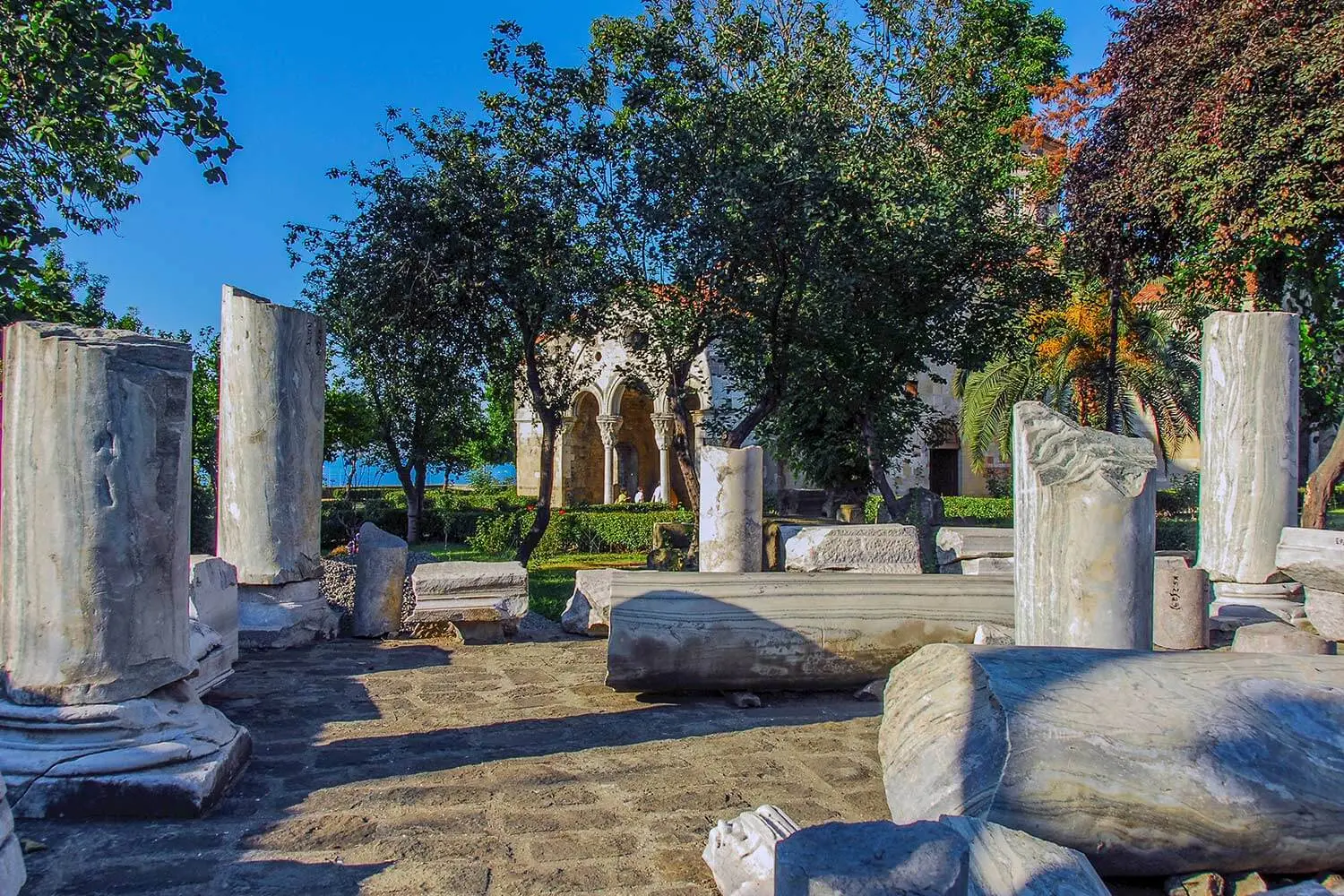
The garden. Ottoman tombstones, architectural fragments, a fountain and the remains of a chapel are set out in the grounds, which look towards the sea.



Frequently asked questions about Hagia Sophia (Trabzon)
Can tourists visit the Hagia Sophia in Trabzon?
Yes. It is a working mosque, open to visitors outside prayer times. Dress modestly; women should cover their hair.
Are the frescoes still visible?
Yes, outside prayer times. Since the 2020 restoration a curtain system covers the frescoes during prayers and opens them again afterwards, and some areas are protected behind glass.
How is it different from Hagia Sophia in Istanbul?
It is a much smaller 13th-century church built for the emperors of Trebizond, seven centuries after Justinian’s great church in Istanbul, and it is best known for its frescoes and carved porches rather than its size.
How do you get to the Hagia Sophia from Trabzon centre?
It is about 2–3 km west of Meydan. Dolmuş minibuses heading west along the coast road stop nearby, and a taxi takes about ten minutes.
How long should you spend there?
Around 45 minutes to an hour is enough for the church, the bell tower from outside and the garden.
What do the official records say about Hagia Sophia (Trabzon)?
The museum, 3 km west of the city, is a church from the 13th century, and its wall frescoes and garden are well worth seeing. It is thought to have been built in 1238–1263, in the time of Manuel I, one of the kings of the Komnenos state in Trabzon. The four-columned, three-apsed chapel to the north of the museum, one of the important works of the 13th-century Byzantine period, is older than the museum building. The bell tower, 25 metres west of the building, was built in 1427. The building is very rich in stone decoration and frescoes. (Ministry of Culture and Tourism, Trabzon Provincial Tourism Inventory, 2002)
Ready to see Hagia Sophia of Trabzon?
Hand-picked tours with good reviews and clear prices.
Partner listings via GetYourGuide · free cancellation on most
Before or after: Istanbul
Most trips start or end in Istanbul. Our own experiences there:

 Dinner, sunset and day cruises between Europe and Asia.See cruises bosporuscruise.com

 Historic Turkish baths in the old city — hand-picked hamams, booked direct.Book a hamam istanbulhamam.com

 Istanbul’s tallest viewpoint: both continents from 369 metres.Get tickets camlicatower.com

 Free audio guides in 15 languages, safe routes and local tips — plus 5% off GetYourGuide.Open the free guide localada.com
Nearby
All destinations
Atatürk Mansion, Trabzon
The Atatürk Mansion in Trabzon: a banker’s summer house at…

Sumela Monastery
Sumela Monastery near Trabzon: its history, frescoes and 2022 reopening…
Uzungöl
Uzungöl in Çaykara, Trabzon: how a landslide made the lake,…
Trabzon
Trabzon travel guide: Sumela Monastery, the Hagia Sophia of Trebizond,…
