
Sinop: Anatolia’s Northernmost City on the Black Sea
On this page
- What is Sinop?
- How do you get to Sinop?
- Where should you stay in Sinop?
- What type of climate does Sinop have?
- When is the best time to visit Sinop?
- What is the history of Sinop?
- What is Sinop famous for?
- What are the historical places of Sinop?
- What are the best things to do in Sinop?
- What are the best places to visit in Sinop?
- What is the traditional food of Sinop?
- What should you buy in Sinop?
- Frequently asked questions about Sinop
- What do the official records say about Sinop?
Key facts: Sinop
- Region: Central Black Sea coast; the city stands on the narrowest part of the Boztepe peninsula, the northernmost point of Anatolia.
- Best known for: One of the oldest cities on the Black Sea, founded by settlers from Miletus; birthplace of the philosopher Diogenes; the Historic Sinop Prison, reopened as a museum in 2025.
- Nature: Hamsilos and Tatlıca Waterfalls nature parks and the Sarıkum Nature Reserve are among the province’s protected areas (Sinop Culture and Tourism Directorate).
What is Sinop?
Sinop is a province on the central Black Sea coast of Türkiye, and the name of its capital, a small port city on a peninsula that reaches further north than any other point of Anatolia. The city occupies the narrow neck of the peninsula, with a harbour on each side; behind it, the green dome of Boztepe rises out of the sea.
It is one of the oldest cities on the Black Sea. Greek settlers from Miletus founded Sinope here, the philosopher Diogenes was born here, and the kings of Pontus made it their capital. Its walls, much of them still standing, run from shore to shore across the isthmus.
Today Sinop is a quiet, walkable town that comes alive in summer, when Turkish families come for its beaches, seafood and cool sea air. Inland, the province climbs into forested mountains with waterfalls, highland pastures (yayla) and old wooden towns such as Boyabat.
Places to visit in Sinop
Sinop Historical Prison
Sinop Historical Prison, built in 1887 inside the inner citadel and reopened…
Hamsilos Nature Park
Hamsilos, the narrow forested inlet west of Sinop often called Türkiye's only…
Tatlıca Waterfalls
Tatlıca (Erfelek) Waterfalls in Sinop: 28 cascades in a forested valley, a…
Sarıkum Nature Reserve
Sarıkum Nature Reserve near Sinop: a coastal lake, dunes, beach and forest…
How do you get to Sinop?
By air: Sinop Airport (NOP) lies a short drive west of the city centre. Turkish Airlines flies from Istanbul Airport and Pegasus from Sabiha Gökçen. When Sinop flights are full, Samsun’s Çarşamba Airport, about 170 km to the east by road, has many more connections.
By road: Direct coaches run to Sinop from Istanbul, Ankara and Samsun; the Istanbul and Ankara services are often overnight. Sinop is about 170 km from Samsun along the coast. The coastal road west towards Kastamonu’s shore is winding and slow but very scenic.
By rail: There is no railway to Sinop.
Getting around: The old town, harbour, museum and prison are all walkable. Hamsilos and Akliman are a short drive or minibus ride west of the city, while Sarıkum, Erfelek and the highlands need a car or a tour.
Where should you stay in Sinop?
Most visitors stay in the city itself, close to the harbour and the old town, where small hotels and pensions are within walking distance of the fish restaurants and the prison museum. Families often prefer the beach areas: Karakum, on the inner harbour 1.5 km from the centre, has hotels, bungalows and campsites, and Akliman, west of the city, has pensions and forest campsites near Hamsilos. Gerze, along the coast to the southeast, is a quieter alternative.
Book ahead for July and August, when Sinop is busy with domestic tourists.
Tours in Anatolia
−5% Istambul readers save 5% on every tour below — applied at checkout.
Partner listings via GetYourGuide · free cancellation on most
What type of climate does Sinop have?
The 2002 inventory notes that Sinop lies where the climates of the eastern and western Black Sea meet. Differences in temperature between the seasons are not very great, and the steady winds that blow throughout the year have a strong effect. Apart from a few days in summer, the year is humid and rainy. In the north of the province the Black Sea climate dominates; in the south, behind the mountains running parallel to the coast, rainfall decreases, temperatures drop and the influence of the steppe climate begins to appear.
In practice this means warm, rarely scorching summers and cool, wet winters, with occasional snow between December and March.
When is the best time to visit Sinop?
June to September is the season for swimming, beaches and the waterfront. July and August are the busiest months. Late May, June and September are the sweet spot: warm enough for the sea, quieter, and better for hiking at Hamsilos and Tatlıca. Spring and autumn are good for the waterfalls, which carry the most water after rain. Winter is quiet and often wet, but the museums and the prison remain open.
What is the history of Sinop?
The 2002 inventory notes that although Sinop is one of the smallest settlements on the Black Sea, it is one of its oldest cities. Its foundation is not known for certain, but it is mentioned in Hittite inscriptions as Sinip or Sinova.
Ionian Greeks from Miletus founded the colony of Sinope, usually dated to the 7th century BC. Its position, with the finest natural harbour on this coast, made it a major trading city, and it founded colonies of its own along the Black Sea. The Cynic philosopher Diogenes was born here around 412 BC.
In 183 BC Pharnaces I of Pontus took the city and made it the capital of his kingdom; Mithridates VI, Rome’s great enemy, was born and buried here (see the Kingdom of Pontus). Lucullus captured Sinope for Rome in 70 BC, and Julius Caesar founded a Roman colony here in 47 BC. After centuries of Byzantine rule, the Seljuks of Rûm took the city in 1214. It was then ruled by the Pervane and Candarid (İsfendiyar) emirates before Mehmed II took it for the Ottomans in 1461.
On 30 November 1853 a Russian fleet destroyed an Ottoman squadron in Sinop harbour. The Battle of Sinop pushed Britain and France into the Crimean War. The Martyrs’ Fountain in the shipyard bazaar, as the inventory notes, was built with money found in the pockets of the Ottoman sailors who died in this battle.
What is Sinop famous for?
- The Historic Sinop Prison, built inside the inner citadel in 1887 and used as a prison for over a century, now a museum. See our Sinop Historical Prison guide.
- Diogenes. The Cynic philosopher was born here, and his statue stands in the city.
- Northernmost Anatolia. İnceburun, northwest of the city, is the northernmost point of Anatolia, marked by a lighthouse.
- Coast and forest together. Beaches backed by forest at Akliman, Hamsilos and Sarıkum.
- Sinop mantısı and nokul, two local dishes with geographical-indication status.
What are the historical places of Sinop?
Sinop Fortress. The inventory calls the castle the most striking of Sinop’s historic monuments. It once encircled the whole city except the Yalı and Kefevi quarters, and although it survived with little damage until the early years of the Second Constitutional era (1908), many sections are now ruined. The date of construction is not known for certain, but it is thought to have been built by the Milesians, with later rebuilding and additions under the Kingdom of Pontus.
Inner Citadel (İçkale). On the west side of the city, between the sea to the north and south. The inventory notes that it was built about a year after the Seljuks took Sinop, with a long wall added on the east side, and that ruins of the old city, such as temples and palaces, were reused, so columns, capitals and temple inscriptions can be seen set into the walls. The historic prison stands in its southern part.
Sinop Archaeology Museum. The inventory notes that museum work in Sinop began in 1921, one of the earliest in Türkiye. The museum shows finds from the prehistoric, Hellenistic, Roman and Byzantine periods and icons from around Sinop. In its garden are the remains of a temple excavated in 1951 and identified as the Serapeion, a rectangular temple with an altar on its south side; terracotta figures of Serapis, Dionysus, Heracles, Isis and Kore were found during the excavation.
Alaaddin Mosque and Süleyman Pervane Madrasa. The mosque dates from the Seljuk period and was repaired by Süleyman Pervane in 1268. It is rectangular with five domes, and the tomb of the İsfendiyaroğulları stands in a corner of its courtyard. To its north, the madrasa was built in 1262 by the Seljuk vizier Süleyman Pervane to commemorate the city’s rescue from enemy pressure. A marble portal leads to a courtyard with a fountain, marble-columned arcades and 16 small rooms.
Balatlar Church. Thought to have been a Roman theatre or bath, the building became a church under the Byzantines in the 7th century, and some of its frescoes survive.
Historic Water Tunnel. At Sülüklü Göl, an ancient rock-cut tunnel about 230 m long and 1.5 m high, zig-zagging with ventilation shafts 20–30 m deep. Researchers from Ankara University suggested it was a water channel.
Seyyid Bilal Tomb. Built in the Seljuk period on the spot where Seyyid Bilal, a descendant of Hüseyin and a commander of the Arab armies, was martyred.
Boyabat Castle and the rock tombs. In the Gökırmak valley, Boyabat Castle sits on one of two steep rocky hills and shows use from the late Roman period to the Ottoman era. Southeast of Salar village, 15 km along the Boyabat–Kastamonu road, a rock-cut tomb with lion capitals and lion reliefs on its pediment is thought to have been made by the Paphlagonians.
What are the best things to do in Sinop?
- Swim at Akliman and Hamsilos. Akliman’s long sandy beach runs into forest 9 km west of the city, and the inventory describes its picnic area as one where the forest and the sea meet.
- Walk the walls and the waterfront. Follow the fortress walls from the inner citadel to the harbour, and see the Pasha Bastions (Paşa Tabyaları), one of the city’s most visited sights.
- Climb the Tatlıca Waterfalls. A string of 28 cascades in a forested valley near Erfelek.
- Birdwatch at Sarıkum. A lake, dunes and forest by the sea west of the city.
- Drive to İnceburun. The lighthouse at the northernmost point of Anatolia.
- Head for the highlands. The inventory lists Kurugöl yayla, 12 km northwest of Türkeli at 800 m, as a natural viewing terrace over the Black Sea, and Akgöl, off the Ayancık–Boyabat road, for its unspoiled flora. Akgöl is now a nature park.
- Explore İnaltı Cave. Near İnaltı village, about 35 km from Ayancık, a wide cave with travertine and stalactites in its first 350–400 m; the inventory gives its total length as 700 m. It was declared a nature park in 2020. Check access locally before driving out.
- Go to a festival. The 2002 inventory lists summer festivals in Sinop, Ayancık and Gerze, and a string of village fairs (panayır) through August and September. Dates change, so check locally.
What are the best places to visit in Sinop?
Sinop Historical Prison: the stone prison inside the inner citadel, used from 1887 until the late 1990s and reopened as a museum in 2025 after restoration.
Hamsilos Nature Park: a narrow forested inlet west of the city, often called Türkiye’s only fjord.
Tatlıca Waterfalls: 28 cascades on a stream near Erfelek, with stairs and wooden walkways climbing beside them.
Sarıkum Nature Reserve: sea, dunes, a lake and forest in one small protected area, known for birds.
Also worth seeing: the Archaeology Museum and Ethnography Museum, the Alaaddin Mosque and Pervane Madrasa, the Pasha Bastions, İnceburun lighthouse, Boyabat Castle and the old wooden houses of Boyabat.
What is the traditional food of Sinop?
Fresh Black Sea fish is the obvious choice in the harbour restaurants: anchovy (hamsi) in winter, and bonito, horse mackerel and others in season. Two local specialities carry geographical indications. Sinop mantısı is the local take on Turkish dumplings. Nokul is a rolled pastry filled with walnuts, raisins and sugar; it was traditionally baked at home before the religious holidays, and because it keeps well, sailors took it to sea as provisions.
What should you buy in Sinop?
Nokul from a local bakery, and handmade crafts from the shops around the harbour. Sinop also has a long boatbuilding tradition. Embroidered cotton cloth was already a Sinop product in the early 20th century, and the inventory mentions flax: Ayancık held a flax (keten) festival.



Frequently asked questions about Sinop
Is Sinop worth visiting?
Yes, especially in summer. It combines one of the oldest cities on the Black Sea, the Historic Sinop Prison museum and forest-backed beaches at Akliman and Hamsilos.
How do you get to Sinop from Istanbul?
Fly from Istanbul Airport (Turkish Airlines) or Sabiha Gökçen (Pegasus) to Sinop Airport, or take a direct coach, often overnight.
What is Sinop famous for?
The Historic Sinop Prison, its Greek foundation and city walls, the philosopher Diogenes, Hamsilos inlet and İnceburun, the northernmost point of Anatolia.
When is the best time to visit Sinop?
June to September for swimming; late May, June and September for fewer crowds and good hiking.
How many days do you need in Sinop?
Two days cover the city, the prison museum and Hamsilos. Add a day for the Tatlıca Waterfalls and Sarıkum.
What food should you try in Sinop?
Sinop mantısı, nokul pastry and fresh Black Sea fish in the harbour restaurants.
What do the official records say about Sinop?
Sinop was founded in the middle of the Black Sea Region, at the northernmost point of Anatolia, on the narrowest part of the Boztepe Peninsula. It is one of the most beautiful natural harbours of the Black Sea. Because it is a rainy region, it has many streams and brooks, all of which flow into the Black Sea and are used for irrigation and for carrying forest products. It has important highland pastures with picnic and recreation areas.
The city has two harbours, one to the northwest and one to the southeast. The main harbour is in the bay to the southeast. Akliman and Hamsaroz Bay (Hamsilos) to the northwest were shelters in ancient times. (Ministry of Culture and Tourism, Sinop Provincial Tourism Inventory, 2002)
Ready to see Sinop?
Hand-picked tours with good reviews and clear prices.
Partner listings via GetYourGuide · free cancellation on most
Before or after: Istanbul
Most trips start or end in Istanbul. Our own experiences there:

 Dinner, sunset and day cruises between Europe and Asia.See cruises bosporuscruise.com

 Historic Turkish baths in the old city — hand-picked hamams, booked direct.Book a hamam istanbulhamam.com

 Istanbul’s tallest viewpoint: both continents from 369 metres.Get tickets camlicatower.com

 Free audio guides in 15 languages, safe routes and local tips — plus 5% off GetYourGuide.Open the free guide localada.com
Nearby
All destinationsKütahya
Kütahya travel guide: the Roman city of Aizanoi, hand-painted tiles,…
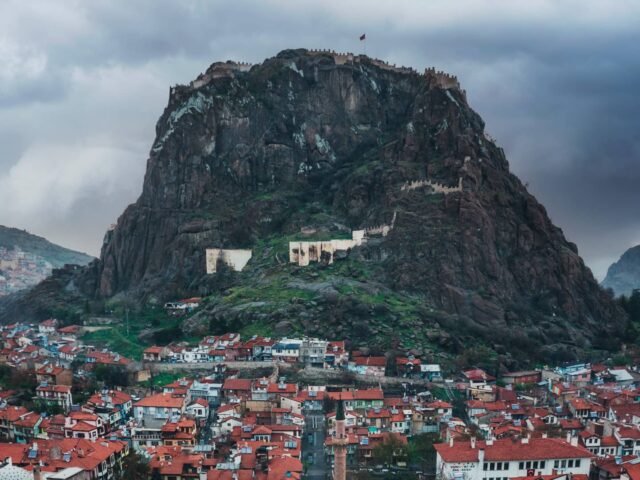
Afyon
Afyon, also known as Afyonkarahisar, is a city located in…
Gümüşhane
Gümüşhane travel guide: Karaca Cave, the Santa ruins, Roman Satala,…
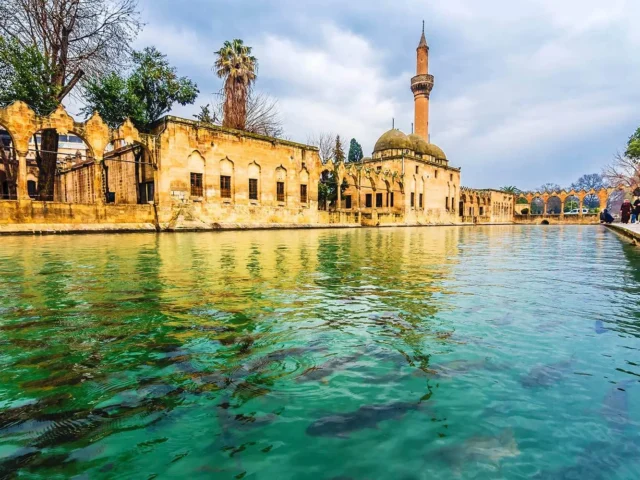
Şanlıurfa
Şanlıurfa travel guide: Göbeklitepe, Balıklıgöl, Harran’s beehive houses, Halfeti, the…
