
Tillo: The Town of İbrahim Hakkı
On this page
Key facts: Tillo
- What it is: A small hill town, officially Aydınlar, home to the domed tomb of the Sufi master İsmail Fakirullah and his pupil İbrahim Hakkı of Erzurum.
- Where: Tillo district, about 7 km from Siirt city.
- Period: A centre of learning in the 18th century; the tomb was built by İbrahim Hakkı (1703–1780) to his own plan.
What is Tillo?
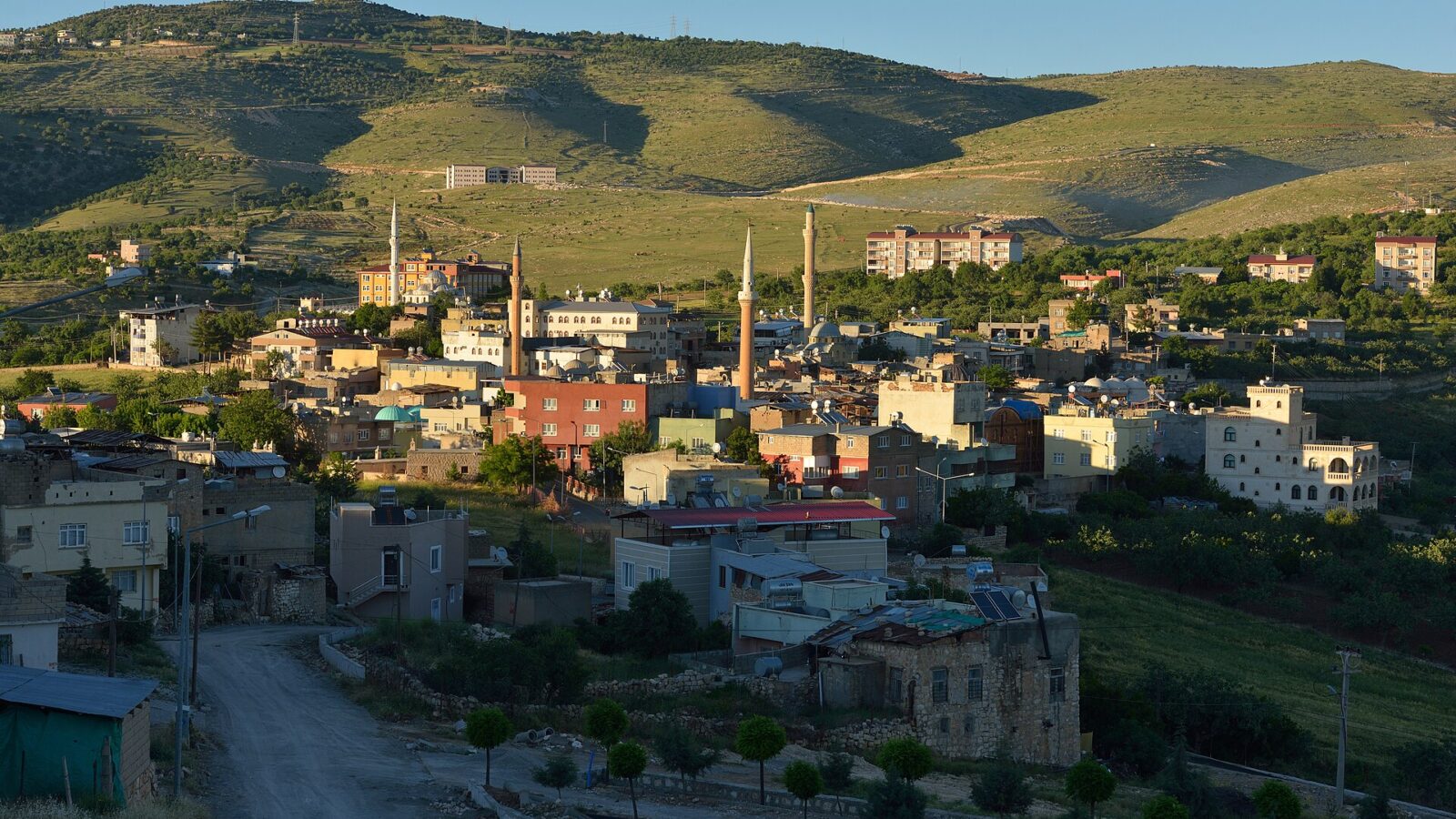
Tillo is a small town on a hill near Siirt, officially renamed Aydınlar but still known everywhere by its old name, which comes from the Arabic tell, “hill”. It is famous as the place where İbrahim Hakkı of Erzurum, one of the best-known Ottoman scholars of the 18th century and author of the encyclopaedic Marifetname, studied under his teacher İsmail Fakirullah, and where both are buried.
Their domed tomb is a place of pilgrimage. The town also has a museum displaying items that belonged to İsmail Fakirullah and İbrahim Hakkı, and objects they used, and on a hill to the east stands the small tower known as Kale-i Üstad, linked to a famous experiment in light.
How do you get to Tillo?
Tillo is about 7 km from Siirt city, according to the provincial culture and tourism directorate. Taxis and minibuses make the short trip from the centre. Siirt Airport (SXZ) is the nearest airport, and Batman Airport is an alternative.
Tours in Anatolia
−5% Istambul readers save 5% on every tour below — applied at checkout.
Partner listings via GetYourGuide · free cancellation on most
When is the best time to visit Tillo?
Spring and autumn are the most comfortable seasons. The directorate notes that events are held at the tomb every year between 18 May and 22 June, the anniversaries of İbrahim Hakkı’s birth and death, when the town is busiest. The equinoxes in March and September are traditionally connected with the tomb because of the light effect described below.
What is the history of Tillo?
İbrahim Hakkı, in a passage of the Marifetname quoted by the directorate, describes the ancestry of his teacher. An ancestor of Fakirullah named Molla Ali left Cizre in 1504 to escape oppression, settled in the village of Tillo and became imam, preacher and teacher at its mosque, a role Fakirullah later held. He describes Tillo at that time as having about 200 houses, a few shops, a han, a hammam, three mosques and a Friday mosque.
İbrahim Hakkı was born on 18 May 1703 at Hasankale in Erzurum. His father, Derviş Osman Efendi, settled in Tillo in 1710 and attached himself to Fakirullah. İbrahim Hakkı was brought to Tillo at the age of nine, lived in a cell Fakirullah had built for his father, and studied under him. İsmail Fakirullah, a respected Sufi master of the area, died in 1734. İbrahim Hakkı returned to Tillo several times and finally settled there. He built the tomb himself, to his own plan, and died on 22 June 1780. Although his will asked that he not be buried under his master’s dome, he was laid to rest inside it at the request of Fakirullah’s son Mustafa Fânî.
The 2002 inventory describes İbrahim Hakkı as a great Sufi, sociologist, psychologist and astrologer who left more than 40 works.
What is Tillo famous for?
- İbrahim Hakkı. His Marifetname, completed in the 18th century, combines religious knowledge with astronomy, medicine and the natural sciences of its time.
- The light in the tomb. The inventory records that a ray of sunlight on the equinox was directed onto the head of Fakirullah’s sarcophagus, an arrangement it calls the clearest proof of İbrahim Hakkı’s skill in the exact sciences.
- A centre of learning. İbrahim Hakkı’s own account in the Marifetname describes how teaching at Tillo’s mosque passed from Fakirullah’s ancestor Molla Ali down to Fakirullah himself.
What can you see at Tillo?
The tomb of İsmail Fakirullah and İbrahim Hakkı. It stands in the centre of the town’s lower cemetery, where a cemetery of relatives and disciples has grown up around it. The domed building covers about 40 m² on an octagonal base.
Kale-i Üstad. The inventory describes the tower on a hill 3 km east of Tillo. Through a window 40 × 40 cm in its wall, the sun’s rays on 21 March and 23 September were reflected by a prism in the tower so that they lit the head of İsmail Fakirullah’s sarcophagus. The inventory states that this feature was lost in a repair carried out in 1963, and that despite all efforts it had not been possible to restore the arrangement.
The Tillo museum. A display of belongings of İsmail Fakirullah and İbrahim Hakkı and objects they used.
The old town. Tillo is divided into three quarters, Fakirullah, Mücahit and Saydanlar. The tomb draws pilgrims year-round, so dress modestly and keep your voice low inside.
Common misconceptions about Tillo
Does the sunlight still reach the tomb at the equinox?
What people often assume: That the famous equinox light effect still works exactly as İbrahim Hakkı designed it.
What the record says: The 2002 Ministry of Culture and Tourism inventory states that the arrangement was lost during a repair in 1963 and could not be re-established despite all efforts. The provincial directorate’s current page on the tomb does not describe the effect (Siirt Culture and Tourism Directorate).



Frequently asked questions about Tillo
Who is buried at Tillo?
The Sufi master İsmail Fakirullah (d. 1734) and his pupil İbrahim Hakkı of Erzurum (1703–1780), author of the Marifetname, in a domed tomb İbrahim Hakkı built.
How far is Tillo from Siirt?
About 7 km, according to the provincial culture and tourism directorate.
What is the Tillo light event?
On 21 March and 23 September sunlight passed through a window in the Kale-i Üstad tower and a prism onto the head of Fakirullah’s sarcophagus. The 2002 inventory says the effect was lost in a 1963 repair.
Is Tillo the same as Aydınlar?
Yes. Aydınlar is the official name, but the town and district are generally known as Tillo.
When are events held at İbrahim Hakkı’s tomb?
Each year between 18 May and 22 June, the anniversaries of his birth and death, according to the provincial directorate.
What do the official records say about Tillo?
The tomb that İbrahim Hakkı, a scholar of religion and astronomy, built in the 18th century for his teacher İsmail Fakirullah is in the centre of Aydınlar district (Tillo). The building has lost its originality through additions and renovation work. The main feature of the tomb, built on a hill, was that every year, at a certain moment on 21 March, the sun’s rays passing through a 40 × 40 cm window in the wall (Kalet-ül Üstad) were reflected by a prism in the tower so as to light the head of İsmail Fakirullah’s sarcophagus. However, with the repair of 1963 this feature of the building disappeared, and despite all efforts it has not been possible to re-establish the arrangement.
İbrahim Hakkı, a great Sufi, sociologist, psychologist and astrologer, left more than 40 works. His grave is in the centre of Aydınlar district (Tillo), inside the tomb of İsmail Fakirullah. (Ministry of Culture and Tourism, Siirt Provincial Tourism Inventory, 2002)
Main photo: Dûrzan Cîrano, CC BY-SA 4.0, via Wikimedia Commons.
Ready to see Tillo?
Hand-picked tours with good reviews and clear prices.
Partner listings via GetYourGuide · free cancellation on most
Before or after: Istanbul
Most trips start or end in Istanbul. Our own experiences there:

 Dinner, sunset and day cruises between Europe and Asia.See cruises bosporuscruise.com

 Historic Turkish baths in the old city — hand-picked hamams, booked direct.Book a hamam istanbulhamam.com

 Istanbul’s tallest viewpoint: both continents from 369 metres.Get tickets camlicatower.com

 Free audio guides in 15 languages, safe routes and local tips — plus 5% off GetYourGuide.Open the free guide localada.com
Nearby
All destinationsVeysel Karani Shrine
Veysel Karani Shrine at Baykan, Siirt: the tomb and mosque…
Great Mosque of Siirt
Great Mosque of Siirt (Ulu Cami): the Seljuk-era mosque repaired…
Botan Valley National Park
Botan Valley National Park near Siirt: the canyons of the…
Siirt
Siirt travel guide: İbrahim Hakkı's tomb at Tillo, the Veysel…
