
Mosaic Basilica: 6th-Century Church Floor near Kilis
On this page
- What is the Mosaic Basilica?
- How do you get to the Mosaic Basilica?
- When is the best time to visit the Mosaic Basilica?
- What is the history of the Mosaic Basilica?
- What is the Mosaic Basilica famous for?
- What can you see at the Mosaic Basilica?
- Frequently asked questions about the Mosaic Basilica
- What do the official records say about the Mosaic Basilica?
Key facts: Mosaic Basilica (Mozaikli Bazilika)
- What it is: An Early Christian basilica of the 6th century AD with about 800 square metres of stone floor mosaic, displayed under a protective roof.
- Where: Southwest of Oylum Höyük, near Kilis town and the Syrian border (Kilis Culture and Tourism Directorate). The area is inside the 10 km border zone where the UK Foreign Office advises against all travel.
- Discovered: Found in 1999 after illegal digging; almost fully excavated in 2004 and 2006.
What is the Mosaic Basilica?
The Mosaic Basilica (Mozaikli Bazilika) is the floor and lower walls of an Early Christian church near Kilis, dated to the 6th century AD. Its interest lies at your feet: a floor of geometric mosaic covering roughly 800 square metres, made from local stones in red, brown, white, grey, melon-yellow and black.
It stands just southwest of Oylum Höyük, the great settlement mound of the province. After excavation the church was covered with a steel roof and arranged as an open-air museum, so the mosaic can be seen in place rather than lifted into a museum.
How do you get to the Mosaic Basilica?
The basilica is a short drive from Kilis town, beside Oylum Höyük, in the plain close to the Syrian frontier. There is no public transport; go by car or taxi from Kilis. Gaziantep Airport, about 46 km from Kilis, is the nearest airport, and Gaziantep city is about an hour away by road.
The site lies inside the 10 km strip along the Turkey–Syria border where the UK Foreign Office advises against all travel. Check your government’s current advice and your insurance cover first, and ask in Kilis whether the site is open on the day you plan to go.
Tours in Anatolia
−5% Istambul readers save 5% on every tour below — applied at checkout.
Partner listings via GetYourGuide · free cancellation on most
When is the best time to visit the Mosaic Basilica?
Spring and autumn are the best seasons. The roof keeps the sun off the mosaic, but the plain around it is shadeless and very hot in July and August, so visit early or late in the day in summer. Combine it with Oylum Höyük next door.
What is the history of the Mosaic Basilica?
The church came to light in 1999, when illegal treasure-hunting exposed part of it and archaeologists were called in. According to the Kilis Provincial Directorate of Culture and Tourism, only part of it was uncovered that year; excavations in 2004 and 2006 exposed almost the whole building.
The directorate dates it to the 6th century AD, the Early Byzantine period, when this part of northern Syria was densely settled with Christian villages and churches. The excavators found two inscriptions and many Roman and medieval coins, as well as the bases of the columns. No capitals were found on site; a capital standing in the garden of the culture and tourism directorate is said to have been brought from here. Tombs of religious figures were also found within the church.
In 2017 the governor’s office announced that the basilica had been designed as an open-air museum under a steel roof, with lighting, parking and a café planned. One of the inscriptions was then held at the Gaziantep Museum, with plans to return it after the work was finished.
What is the Mosaic Basilica famous for?
- Its floor. Around 800 square metres of mosaic, one of the largest surviving church floors in the region.
- Local materials. The church walls are black basalt and limestone, and the mosaic tesserae are local stone rather than glass.
- Its setting. It sits beside Oylum Höyük, so a single visit spans the Bronze Age and late antiquity.
What can you see at the Mosaic Basilica?
The plan. The building is a long rectangle with its entrance on the west. Two rows of columns divided the interior into three aisles (naves), the usual basilica plan of the period. The column bases are still in place.
The mosaic. The patterns are leaf motifs, a Maltese cross and geometric designs: intersecting circles, lozenges shaped like slices of baklava, squares and zigzags. The directorate notes that the mosaic shows the characteristics of Early Byzantine art.
The walls. Low courses of basalt and limestone show the outline of the church and its side rooms.
The best-preserved parts of the floor are sometimes kept covered to protect them, so you may not see the whole mosaic at once.



Frequently asked questions about the Mosaic Basilica
How old is the Mosaic Basilica in Kilis?
The Kilis culture and tourism directorate dates it to the 6th century AD, the Early Byzantine period.
How big is the mosaic?
The floor mosaic covers about 800 square metres, in red, brown, white, grey, yellow and black stone.
When was the basilica discovered?
In 1999, after illegal digging exposed part of it. Excavations in 2004 and 2006 uncovered almost all of it.
Where is the Mosaic Basilica?
Just southwest of Oylum Höyük near Kilis, inside the 10 km border zone where the UK Foreign Office advises against all travel.
What do the official records say about the Mosaic Basilica?
The 2002 provincial tourism inventory does not have a separate entry for the basilica, which had only just been found. The Kilis Provincial Directorate of Culture and Tourism describes it as follows.
The Mosaic Basilica, located southwest of Oylum Höyük, is an Early Christian church of the 6th century AD. Part of it was uncovered in 1999, and with the excavations of 2004 and 2006 almost all of it was revealed. Covering an area of about 800 square metres, the church has a basilical plan and a mosaic-paved floor. The building is a long rectangle made of local stone, black basalt and limestone, with its entrance on the west. The interior is divided into three naves by two rows of columns. The floor mosaic is made of red, brown, white, grey, melon-coloured and black stones and decorated with leaf motifs, a Maltese cross and geometric patterns. (Ministry of Culture and Tourism, Kilis Provincial Directorate of Culture and Tourism)
Ready to see Mosaic Basilica?
Hand-picked tours with good reviews and clear prices.
Partner listings via GetYourGuide · free cancellation on most
Before or after: Istanbul
Most trips start or end in Istanbul. Our own experiences there:

 Dinner, sunset and day cruises between Europe and Asia.See cruises bosporuscruise.com

 Historic Turkish baths in the old city — hand-picked hamams, booked direct.Book a hamam istanbulhamam.com

 Istanbul’s tallest viewpoint: both continents from 369 metres.Get tickets camlicatower.com

 Free audio guides in 15 languages, safe routes and local tips — plus 5% off GetYourGuide.Open the free guide localada.com
Nearby
All destinationsRavanda Castle
Ravanda Castle in Kilis: a fortress carved into a cone-shaped…
Oylum Höyük
Oylum Höyük near Kilis: a huge settlement mound with a…
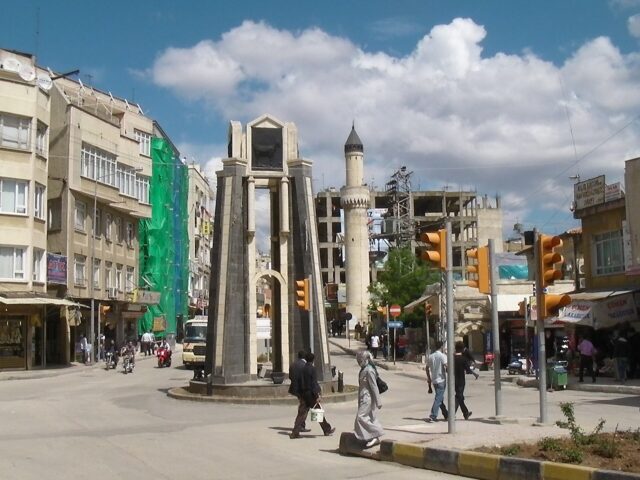
Kilis
Kilis travel guide: Ravanda Castle, Oylum Höyük, Mamluk mosques, Kilis…
Konya
Konya, home of the Mevlana Museum and Rumi's tomb: a…
