
Karaman Castle: Citadel of the Karamanid Capital
On this page
- What is Karaman Castle?
- How do you get to Karaman Castle?
- When is the best time to visit Karaman Castle?
- What is the history of Karaman Castle?
- What is Karaman Castle famous for?
- What can you see at Karaman Castle?
- Frequently asked questions about Karaman Castle
- What do the official records say about Karaman Castle?
Key facts: Karaman Castle
- What it is: A medieval citadel with three rings of walls on a prehistoric mound, used by the Seljuks, the Karamanids and the Ottomans.
- Where: Hisar quarter, Karaman city centre, Karaman province.
- Period: Probably built at the end of the 11th or start of the 12th century; inner citadel restored by the Ottomans in the 1460s.
What is Karaman Castle?
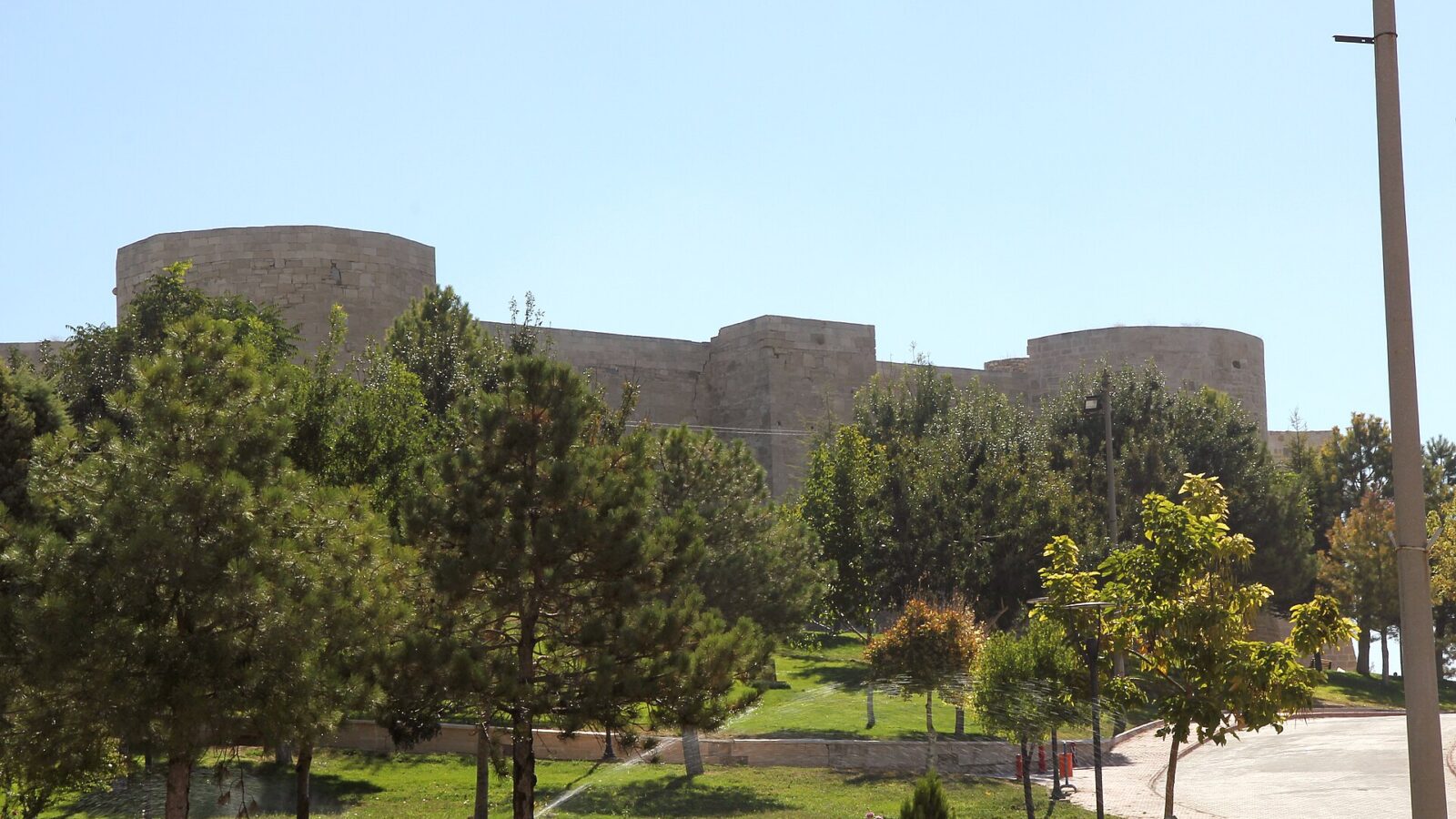
Karaman Castle (Karaman Kalesi) is the citadel of the old Karamanid capital, standing on a mound in the Hisar (“castle”) quarter in the centre of Karaman. It was built as three rings: an outer castle, a middle castle and an inner castle. The outer walls have disappeared completely; parts of the middle walls still circle the mound, and the inner citadel has come down almost intact.
What you see today is mainly the inner citadel: a compact enclosure of stone walls with nine towers, four round and five square, rising above the flat roofs of the old quarter. It is open to the public, and its walls give the best view in the city, south over Karaman to the Taurus and north to the dark mass of Karadağ.
How do you get to Karaman Castle?
The castle is in the city centre, a short walk from the Hatuniye Madrasa and the Karaman Museum, and a short taxi ride from Karaman railway station. High-speed trains reach Karaman from Konya, Ankara and Istanbul (Halkalı); the nearest airport is Konya (KYA), roughly 120 km away. A walk up through the Hisar quarter takes you past the Alaeddin Bey Tomb and the Boyalı Kadı (Hisar) Mosque on the way.
Tours in Anatolia
−5% Istambul readers save 5% on every tour below — applied at checkout.
Partner listings via GetYourGuide · free cancellation on most
When is the best time to visit Karaman Castle?
Any time of year, but spring and autumn are the most comfortable. Go in the late afternoon: the light is low and warm on the stone, and the view over the city towards Karadağ is at its best. In summer avoid midday, when the walls give little shade.
What is the history of Karaman Castle?
The mound under the castle is far older than the walls. The provincial culture directorate notes traces of the Bronze Age, the Roman period and the Byzantine period in it, and archaeological excavations on the mound began in 2013.
The castle itself is thought to have been built at the end of the 11th or the beginning of the 12th century. It held an important position under the Seljuks and then under the Karamanids, who made Karaman their capital in the 13th century and rebuilt the city walls. According to the 2002 inventory, it was completely destroyed by the Ilkhanids in the 13th century and by the Ottomans in 1468, and rebuilt after each time.
The Ottoman rebuilding of the inner citadel, after Mehmed II’s campaigns against the Karamanids, is the one that gives the castle its present form. The builders reused material from destroyed buildings: the inventory notes that in earlier repairs many architectural pieces and gravestones of the Roman, Byzantine and Islamic periods were set into the walls, and the directorate mentions reused inscriptions in the curtain walls.
What is Karaman Castle famous for?
- Its intact inner citadel, one of the best-preserved medieval citadels in central Anatolia.
- Spolia. Carved stones and inscriptions from older buildings are built into the walls; look for them as you walk around.
- The Karamanids. This was the stronghold of the dynasty that held out against the Ottomans for more than a century.
- The view over the city and the plain.
What can you see at Karaman Castle?
The inner citadel. The inventory describes a single gate opening to the west and nine towers, four round and five flat-faced. Most of the towers were divided into two storeys by timber beams.
The middle walls. Stretches of the middle wall still run around the mound below the citadel.
Reused stones. Look for fragments of inscriptions and carved blocks built into the masonry, some from Roman and Byzantine buildings.
The Hisar quarter. Around the castle are two Karamanid monuments. The Alaeddin Bey Tomb was built for the Karamanid ruler Alaeddin Bey, executed by Bayezid I in 1388. It is of cut stone, with a dome inside and a fluted conical roof outside; a band of Qur’anic inscription runs right round the walls below the dome, and its portal has muqarnas, twisted colonnettes, interlacing plant ornament and naskh script, with the entrance to the burial crypt below. The Boyalı Kadı (Hisar) Mosque is a Karamanid mosque with a large central dome on a square plan, a porch with three small domes and a stone mihrab with muqarnas.
Nearby. The Hatuniye Madrasa, the Karaman Museum and the Yunus Emre Mosque and Tomb are all within walking distance.



Frequently asked questions about Karaman Castle
How old is Karaman Castle?
It is thought to date from the end of the 11th or start of the 12th century. The inner citadel was rebuilt by the Ottomans in the 1460s.
Can you visit Karaman Castle?
Yes. The castle is open to the public and the inner citadel walls give a view over the city to Karadağ.
Where is Karaman Castle?
In the Hisar quarter in the centre of Karaman, within walking distance of the Hatuniye Madrasa and the Karaman Museum.
Who built Karaman Castle?
The builder is not recorded. It was used and repaired by the Seljuks, the Karamanids and the Ottomans, who restored the inner citadel after taking the city in 1468.
What is under the castle?
A mound with traces of the Bronze Age, Roman and Byzantine periods. Excavations on it began in 2013.
What do the official records say about Karaman Castle?
It was founded on a mound in Karaman’s Hisar quarter as outer, middle and inner castles. The outer castle walls have disappeared completely, while some parts of the middle castle walls and the inner castle walls have survived intact to the present day. Although its exact construction date is not known, it is estimated to have been built at the end of the 11th or beginning of the 12th century.
The castle held an important position in the Seljuk and Karamanid periods, and was rebuilt after being completely destroyed by the Ilkhanids in the 13th century and by the Ottomans in 1468. The inner castle has a single gate opening to the west and nine towers, four round and five straight. Most of the towers were divided by timber posts into two storeys. In earlier repairs many building pieces and gravestones of the Roman, Byzantine and Islamic periods were used in the walls. (Ministry of Culture and Tourism, Karaman Provincial Tourism Inventory, 2002)
Main photo: Klaus-Peter Simon, CC BY-SA 3.0, via Wikimedia Commons.
Ready to see Karaman Castle?
Hand-picked tours with good reviews and clear prices.
Partner listings via GetYourGuide · free cancellation on most
Before or after: Istanbul
Most trips start or end in Istanbul. Our own experiences there:

 Dinner, sunset and day cruises between Europe and Asia.See cruises bosporuscruise.com

 Historic Turkish baths in the old city — hand-picked hamams, booked direct.Book a hamam istanbulhamam.com

 Istanbul’s tallest viewpoint: both continents from 369 metres.Get tickets camlicatower.com

 Free audio guides in 15 languages, safe routes and local tips — plus 5% off GetYourGuide.Open the free guide localada.com
Nearby
All destinationsYunus Emre Mosque and Tomb
The Yunus Emre Mosque and Tomb in Karaman: a Karamanid…
Binbirkilise
Binbirkilise, the Thousand and One Churches on Karadağ near Karaman:…
Hatuniye Madrasa
Hatuniye Madrasa in Karaman: built in 1382 by Nefise Sultan,…
Taşkale Granaries
Taşkale's granaries: over 250 grain stores cut into a cliff…
