
Safranbolu: Ottoman Houses and Caravan Bazaars
On this page
Key facts: Safranbolu
- What it is: An Ottoman market town of timber-framed houses, mosques, baths and caravanserais, and a district of Karabük province.
- Where: 8 km north of Karabük city, in the western Black Sea region.
- UNESCO: Inscribed as the City of Safranbolu in 1994, under criteria (ii), (iv) and (v) (UNESCO).
What is Safranbolu?
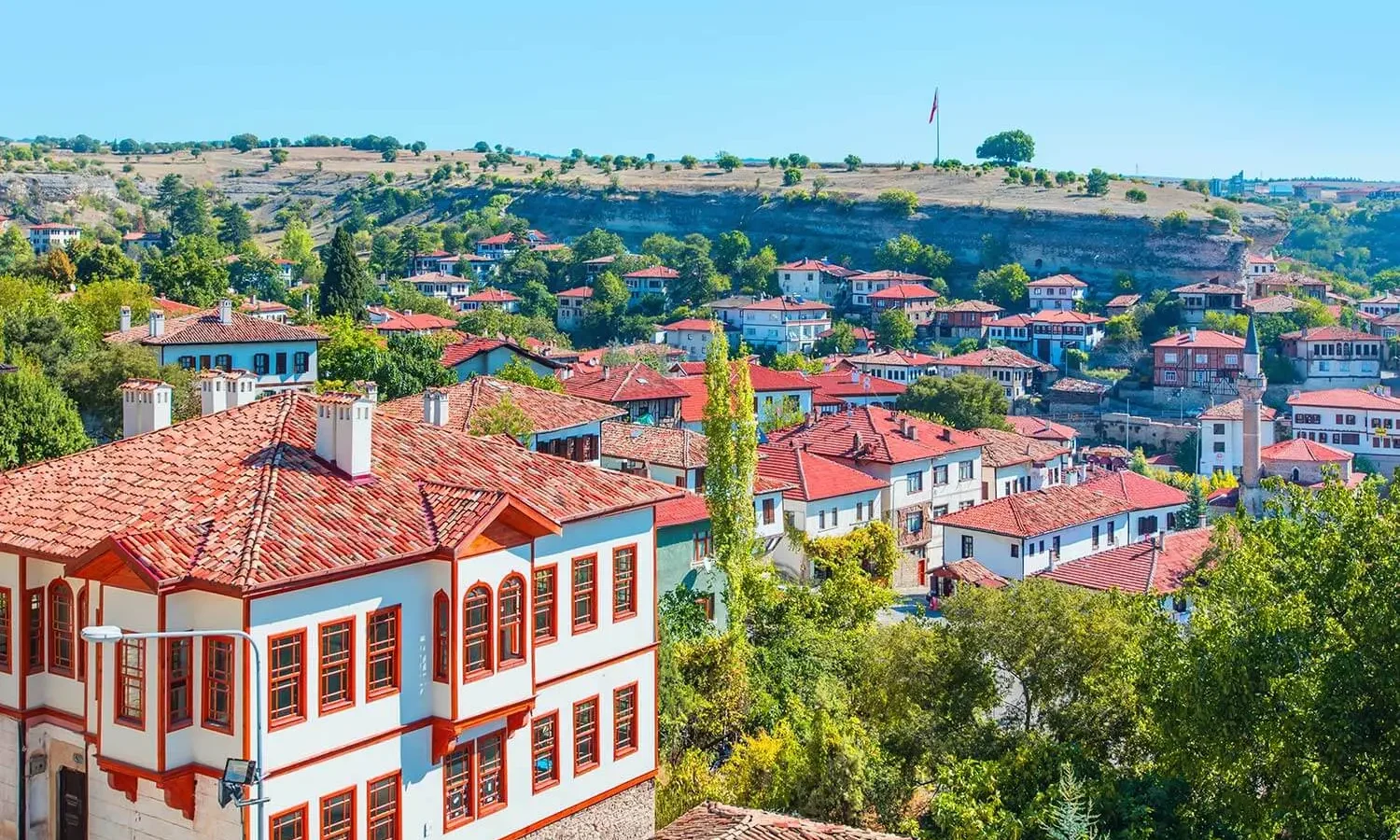
Safranbolu is a small town in Karabük province that kept, almost intact, the shape of an Ottoman caravan town: a market quarter packed into a valley, mansions with deep eaves stepping up the slopes, and a summer suburb of houses in gardens on the hill above. UNESCO inscribed it on the World Heritage List in 1994 as one of the best-preserved examples of Ottoman town planning and domestic architecture.
The town takes its name from saffron, which was grown around it for centuries and is still cultivated at Davutobası to the east. Today Safranbolu is one of the most visited small towns in northern Türkiye: people come for the houses, the lokum, the bazaar and a night in a converted mansion.
How do you get to Safranbolu?
Safranbolu is 8 km north of Karabük city. Minibuses and municipal buses run regularly from Karabük to the old bazaar (Çarşı) in about 15 minutes, and intercity coaches from Istanbul (around 400 km, five to six hours) and Ankara (about 220 km) stop at Karabük and Safranbolu.
The nearest airports are Kastamonu, about 90 km away, and Zonguldak Airport near Çaycuma, about 100 km away, both with flights from Istanbul. Karabük railway station, on the Ankara–Zonguldak line, has regional trains to Zonguldak. Inside the old town you walk: the lanes are steep, cobbled and narrow.
Book a Safranbolu tour
−5% Istambul readers save 5% on every tour below — applied at checkout.
Partner listings via GetYourGuide · free cancellation on most
When is the best time to visit Safranbolu?
May–June and September–October are the most comfortable months for walking. October is the saffron harvest, with a festival in town. Weekends and public holidays are crowded with domestic visitors, and weekdays are noticeably calmer. Winter brings snow on the roofs and empty lanes, but some guesthouses close and the canyon walks nearby get muddy.
What is the history of Safranbolu?
Known to the Byzantines as Dadybra, the town came under Turkish rule in the late 12th century. UNESCO notes that it grew into a trading centre after the Turkish conquest and was an important caravan stop by the 13th century. The 17th century was its golden age: Cinci Hoca, a mentor of Sultan İbrahim, built the Cinci Han and Cinci Hamam in the middle of the bazaar, and the grand vizier Köprülü Mehmet Pasha’s mosque opened in 1661/62.
The town produced its own grand vizier, İzzet Mehmet Pasha (in office 1794–98), who built a stone mosque in the bazaar in 1796 and the clock tower on the castle hill in 1797. Safranbolu was part of Kastamonu province until 1923 and of Zonguldak until 1995, when it joined the new province of Karabük.
When railways replaced the caravan routes, Safranbolu lost its trade, and the steelworks built in Karabük in 1939 drew people and money a few kilometres south. That decline is partly why the old town survived. Conservation began in 1975; in 1979 the Ministry of Culture expropriated and restored Kaymakamlar House, which opened as a training centre and house museum in 1981.
What is Safranbolu famous for?
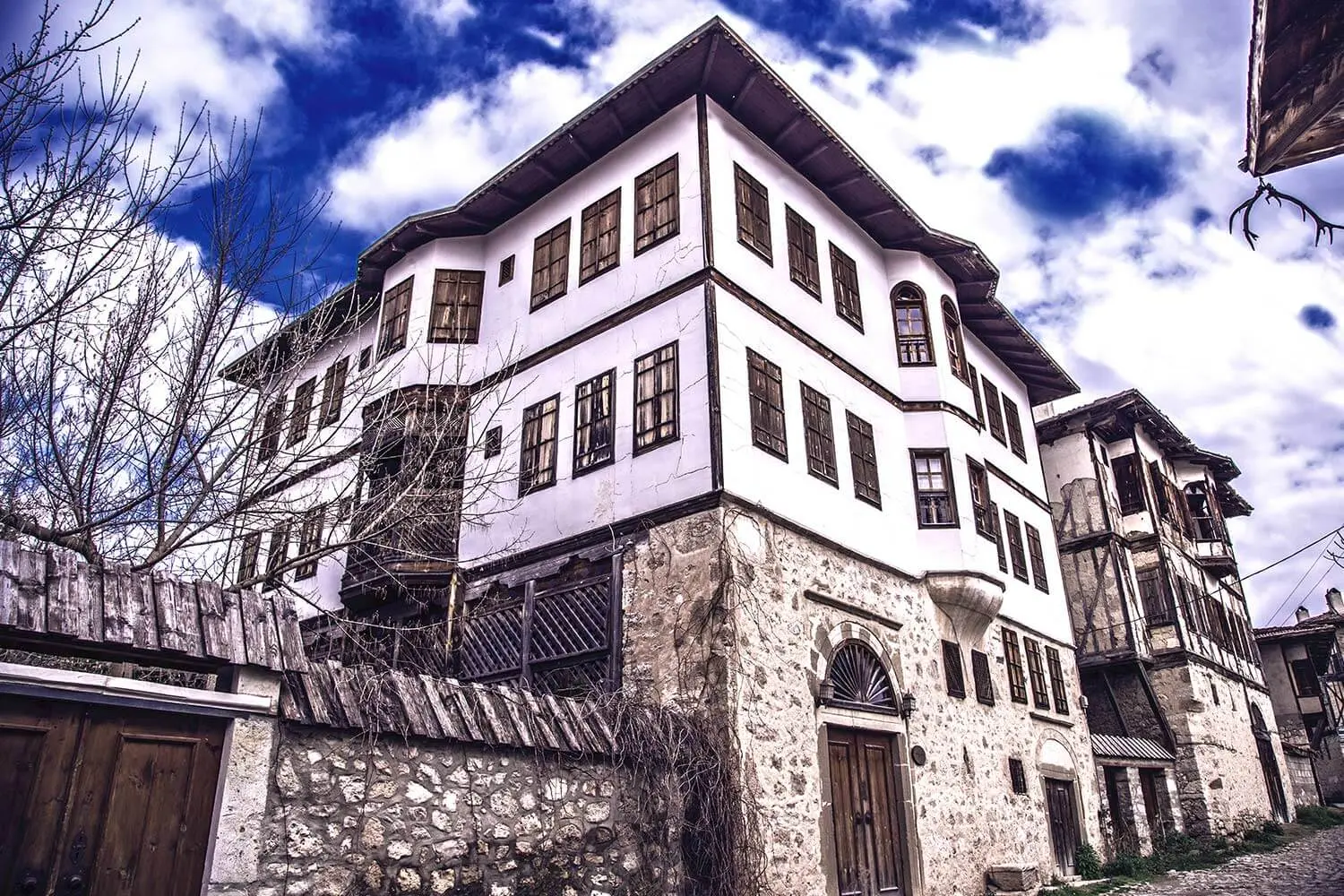
- Ottoman houses. According to the 2002 provincial inventory, around 2,000 traditional houses built in the 18th, 19th and early 20th centuries, about 800 of them legally protected.
- The two-season town. Families lived in the Çarşı (the “city”) in winter and moved up to Bağlar (the “vineyards”) for the summer.
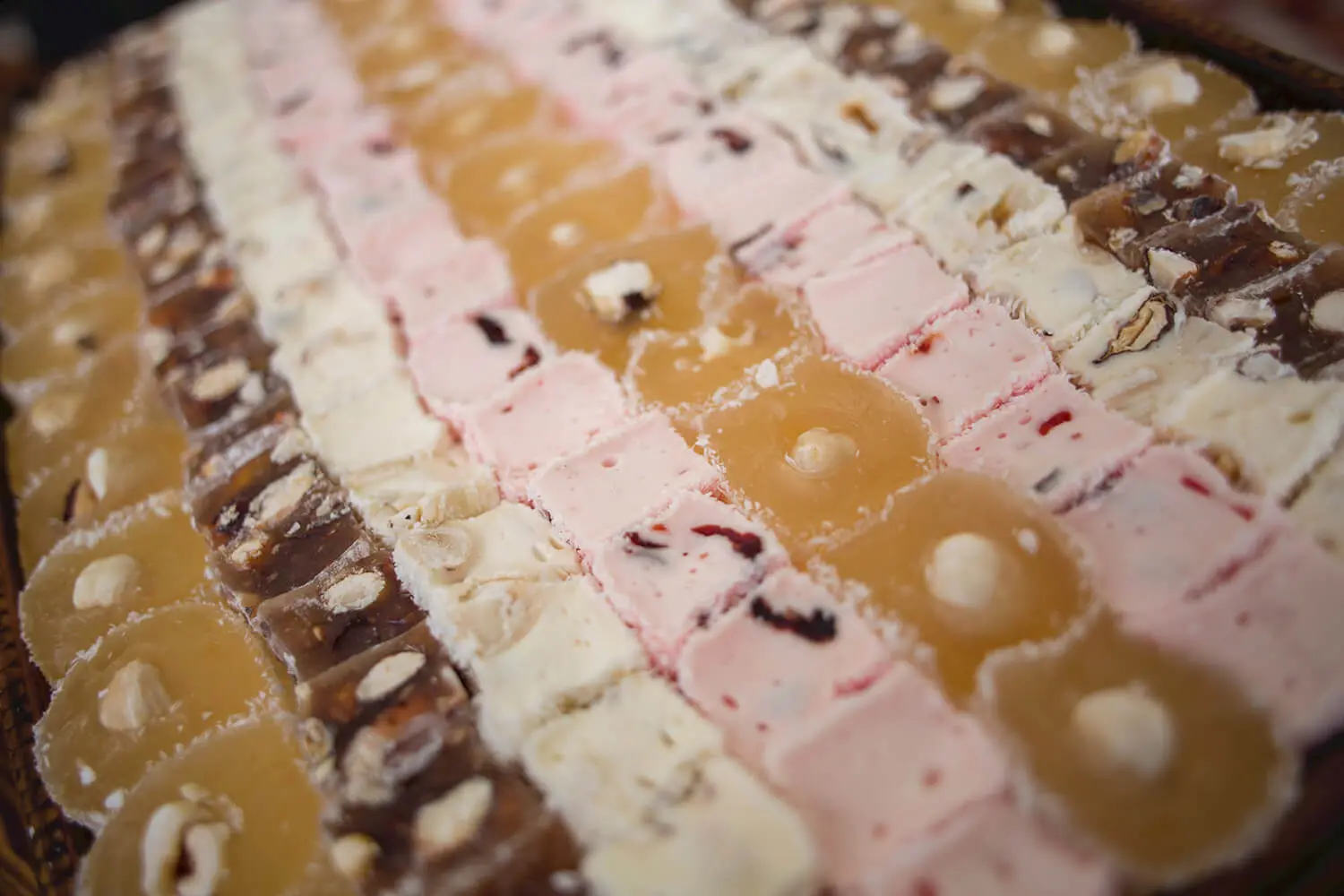
- Saffron and lokum. Saffron tea and saffron-flavoured Turkish delight are sold all over the bazaar.
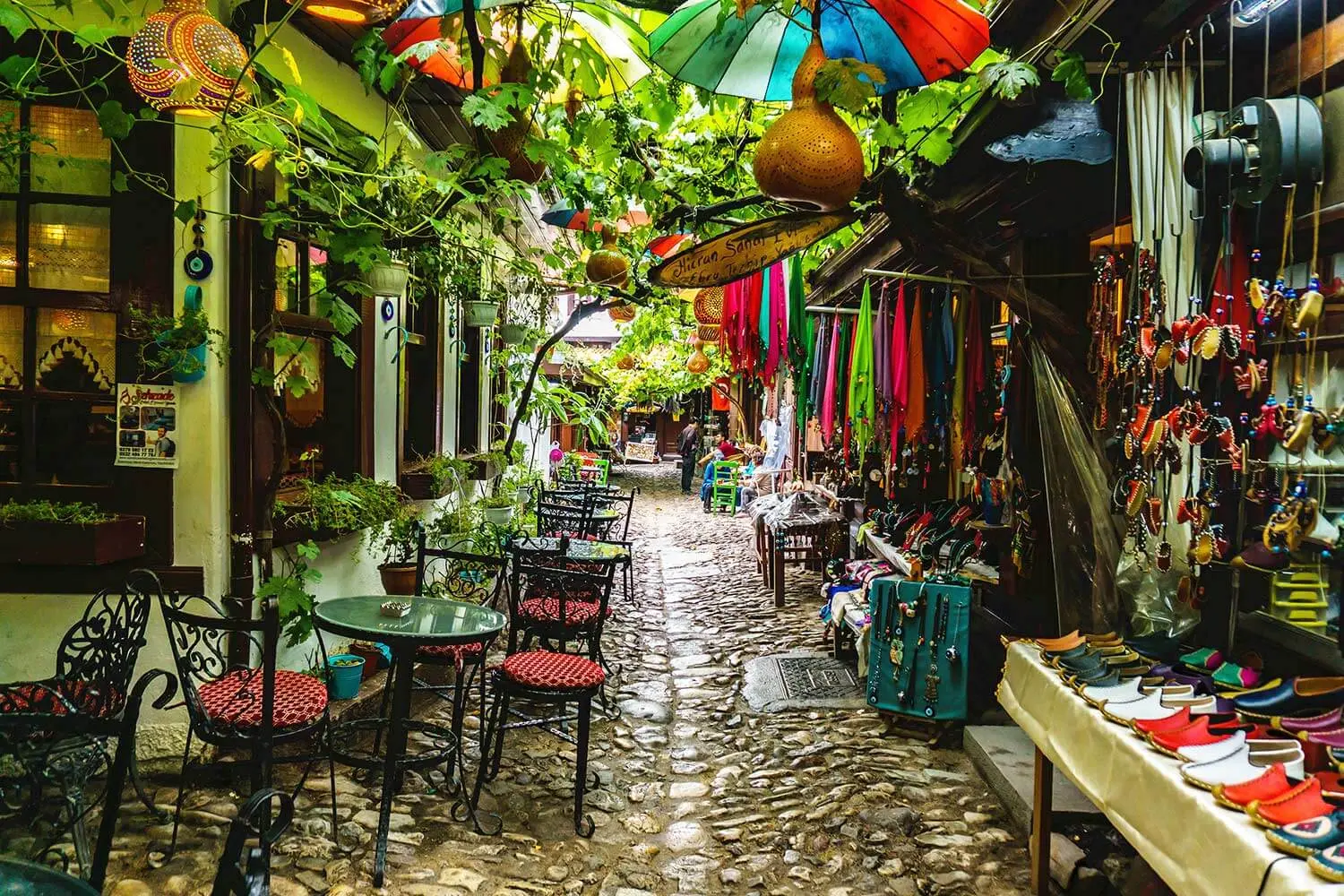
- Crafts. The Yemeniciler Arastası, the arcade of the yemeni slipper-makers, and the blacksmiths’ bazaar still work.
What can you see at Safranbolu?
Çarşı. The market quarter in the valley, between two streams, is the core of the town. UNESCO describes its narrow, curving streets with stone paving that drains water, half-timbered houses, blank street walls and rooms opening off a central hall (sofa). Kazdağlı Square at the entrance to the bazaar has the Kazdağlıoğlu Mosque of 1778 and most of the cafés.
Cinci Han and Cinci Hamam. The 17th-century stone caravanserai is now a hotel, and its courtyard is open for tea. The hamam next door still operates, with separate sections for men and women.
Köprülü Mehmet Pasha Mosque. A square-planned mosque with a dome on an octagonal drum. In its courtyard are a sundial, a timekeeper’s room and an ablution fountain, forming a small complex.
İzzet Mehmet Pasha Mosque (1796). Built entirely of cut stone, with corner weight towers and a three-domed space for women on the north side. The 2002 inventory likens it to a small model of the Nuruosmaniye Mosque in Istanbul.
Kaymakamlar Museum House. On Hıdırlık Yokuşu Street, built for Hacı Mehmet Efendi, whose rank of lieutenant colonel gave the house its name. It has harem and selamlık sections, and the furnished rooms show how a large Safranbolu household lived.
City History Museum. The old government house on the castle hill, built in 1904–06 with money from local residents, now holds displays on Safranbolu’s crafts, trades, pharmacies, lokum-making and household life. The clock tower beside it dates from 1797.
Hıdırlık Hill. East of the town, an open-air prayer place with two stone mihrabs, the octagonal tomb of Hasan Pasha (1845) and the best panorama over the Çarşı roofs.
Kıranköy and Bağlar. Kıranköy, the former non-Muslim quarter, has stone houses with shops below, and the church of St Stephen, converted into the Ulu Cami in 1956. Bağlar, a few hundred metres higher, has detached summer houses in large gardens.
Bird houses. Look up at the façades: small bird houses were built into mosques, bridges and mansions. The best known, says the inventory, is on the façade of the Kileciler House of 1884.
Nearby are Yörük Village, Tokatlı Canyon and Bulak (Mencilis) Cave, all within half an hour.



Frequently asked questions about Safranbolu
Why is Safranbolu a UNESCO World Heritage Site?
It is an exceptionally well-preserved Ottoman caravan town. UNESCO inscribed it in 1994 for its houses, bazaars and street pattern, which shaped urban development across much of the Ottoman Empire.
How far is Safranbolu from Karabük?
About 8 km. Minibuses and municipal buses take around 15 minutes from Karabük city to the old bazaar.
Is one day enough for Safranbolu?
One day covers the bazaar, the mosques, a house museum and Hıdırlık Hill. Stay a night to see the town in the evening and add Yörük Village or Tokatlı Canyon.
Can you stay in a historic house in Safranbolu?
Yes. Many mansions in the Çarşı and Bağlar districts are guesthouses or small hotels, and the 17th-century Cinci Han is a hotel.
What does the name Safranbolu mean?
It combines saffron with the Greek polis, city. Saffron is still grown at Davutobası, east of the town.
What do the official records say about Safranbolu?
In the formation of the town of Safranbolu, function was put first, yet aesthetic concerns were never abandoned. The settlement pattern of the town, with the placing of houses and public buildings, markets and bazaars, and the layout of roads, streets and squares, can be shown as an example of the town’s functional structure. All the houses face the more centrally placed public buildings, religious buildings and monuments. Whichever house you look from, the view is never blocked. The near façades of the houses are blind, the far façades open, so that they can look out at one another.
In placing the houses, the view that each house would create and the view it would enjoy were considered as carefully as the demands of the climate. The view seen from a window, from the outer gate of a courtyard or between two houses forms an absolute whole. This care, which may escape notice at first glance, governs the whole town and all its buildings. Respect for the neighbour prevails as much as respect for the surroundings. No house blocks the view of another. In short, in Safranbolu “the view has been shared fairly”. (Ministry of Culture and Tourism, Karabük Provincial Tourism Inventory, 2002)
Ready to see Safranbolu?
Hand-picked tours with good reviews and clear prices.
Partner listings via GetYourGuide · free cancellation on most
Before or after: Istanbul
Most trips start or end in Istanbul. Our own experiences there:

 Dinner, sunset and day cruises between Europe and Asia.See cruises bosporuscruise.com

 Historic Turkish baths in the old city — hand-picked hamams, booked direct.Book a hamam istanbulhamam.com

 Istanbul’s tallest viewpoint: both continents from 369 metres.Get tickets camlicatower.com

 Free audio guides in 15 languages, safe routes and local tips — plus 5% off GetYourGuide.Open the free guide localada.com
Nearby
All destinationsHadrianopolis
Hadrianopolis near Eskipazar, Karabük: Roman and Byzantine baths, churches and…
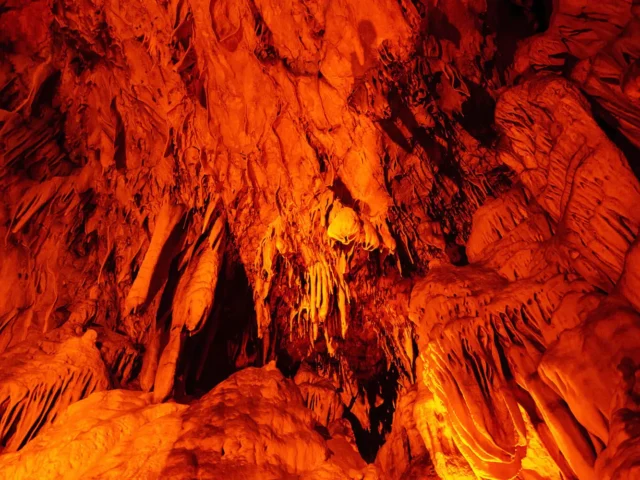
Bulak (Mencilis) Cave
Bulak (Mencilis) Cave near Safranbolu: a 6.5 km karst cave…
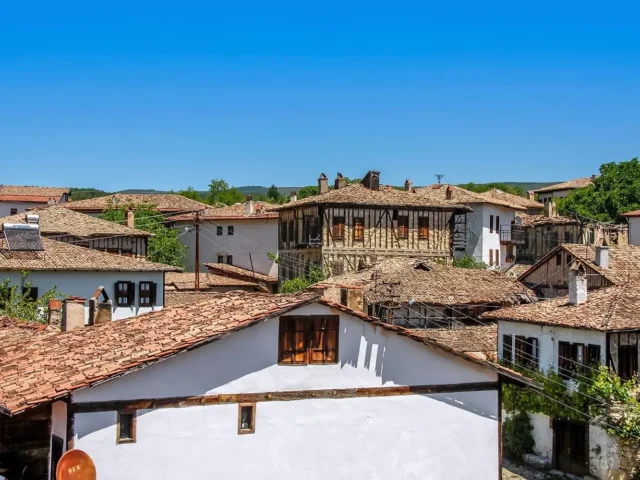
Yörük Village
Yörük Village near Safranbolu: a protected Turkmen village of whitewashed…
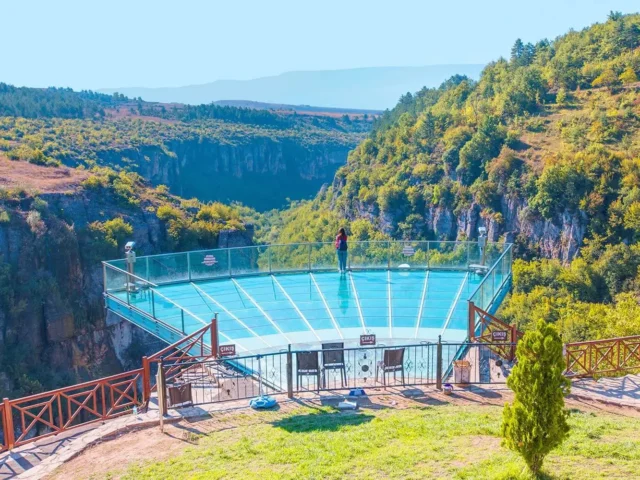
Tokatlı Canyon
Tokatlı Canyon near Safranbolu: the glass Crystal Terrace 80 m…
