
Hadrianopolis: Mosaics of the Black Sea’s Zeugma
On this page
- What is Hadrianopolis?
- How do you get to Hadrianopolis?
- When is the best time to visit Hadrianopolis?
- What is the history of Hadrianopolis?
- What is Hadrianopolis famous for?
- What can you see at Hadrianopolis?
- Frequently asked questions about Hadrianopolis
- What do the official records say about Hadrianopolis?
Key facts: Hadrianopolis
- What it is: A Roman and Early Byzantine city in ancient Paphlagonia, inhabited from at least the 1st century BC to the 8th century AD.
- Where: About 3 km west of Eskipazar, Eskipazar district, Karabük province.
- Known for: Church floor mosaics with the four rivers of Paradise and animals, often compared to Zeugma; excavated by Karabük University since 2003.
What is Hadrianopolis?
Hadrianopolis (also spelled Hadrianaupolis; Hadrianapolis in the 2002 inventory) is an ancient city just west of the small town of Eskipazar, in the south of Karabük province. It lay in southwestern Paphlagonia and was named in honour of the Roman emperor Hadrian (AD 117–138).
Excavations since 2003 have uncovered baths, two churches, a theatre, a villa, defensive walls and rock tombs, and above all mosaic floors. Because of the animals and figures in its mosaics, Turkish media and the excavators call it “the Zeugma of the Black Sea”.
How do you get to Hadrianopolis?
The site is about 3 km west of Eskipazar. Eskipazar lies in the south of the province, southwest of Karabük city, and is reached by road from Karabük; from the town centre a taxi to the site takes a few minutes. A car makes it easy to combine Hadrianopolis with Safranbolu in a long day.
The nearest airports are Kastamonu and Zonguldak (Çaycuma), both with flights from Istanbul; Ankara Esenboğa is the more practical choice if you are coming from the capital.
Book a Hadrianopolis tour
−5% Istambul readers save 5% on every tour below — applied at checkout.
Partner listings via GetYourGuide · free cancellation on most
When is the best time to visit Hadrianopolis?
May to October. The site is open-air, and most of the walking is on gravel and earth paths, so dry weather helps. Excavation seasons have run through the year, including winter, so you may see archaeologists at work. Summer weekends have become busy since the site was officially declared an archaeological site; the excavation director reported around 100,000 visitors in 2025.
What is the history of Hadrianopolis?
People settled here from the late Hellenistic period, and the city flourished under Rome and Byzantium. In the 2nd century AD it took the name of Hadrian; it was also known as Caesarea (Kaisareia) and Proseilemmene. Under Theodosius I, when parts of Paphlagonia and Bithynia were joined to form the province of Honorias, it became Hadrianopolis in Honoriade. It was the seat of a bishop, and two saints, Alypios the Stylite and Stylianos of Paphlagonia, are said to have been born here.
The 2002 inventory records Hadrianapolis and the related settlement of Kimistene (Asar Tepe) as the most important ancient remains in the province. At Kimistene a temple and a large number of Greek funerary inscriptions of the 3rd and early 4th centuries were found; the inscriptions record that men of Kimistene worked as miners abroad.
Systematic excavations began in 2003 and are run by Karabük University’s archaeology department under the Ministry of Culture and Tourism. Finds since then include an 1,800-year-old limestone slab showing a female figure, probably Demeter, holding ears of wheat (2019), a 2nd-century dedication to Asklepios (2022), and new polychrome mosaics with peacocks and an amphora with grapes in a Roman fort (2022).
What is Hadrianopolis famous for?
- The rivers of Paradise mosaics. Church floors show personifications of the four rivers named in Genesis, Gihon (Geon), Pishon (Phison), Tigris and Euphrates.
- Animal mosaics: horses, bulls, elephants, panthers, deer, peacocks and other birds.
- One of the earliest churches in Anatolia, according to the excavators.
- The “Zeugma of the Black Sea” nickname, after the famous mosaic city near Gaziantep.
What can you see at Hadrianopolis?
The churches. The two large churches, of the 4th to 8th centuries, have the site’s best floor mosaics: the rivers of Paradise, geometric panels and animals interpreted as early Christian symbols.
Baths. Two bath buildings, together with water channels and cisterns, show how the city was supplied with water. A monumental fountain was uncovered in 2021, its basin and pool intact.
Theatre and public buildings. Surveys and geophysical work have identified 14 public buildings, among them a theatre, an arched and domed building and a monumental cult niche.
Rock tombs and the fort. The city has rock-cut tombs, and its defensive structure, a Roman fort, produced some of the most recent mosaic finds.
Other remains nearby. The inventory lists further rock tombs in Eskipazar district, notably the Deliklikaya tombs at Budaklar village, two rows of seven and six chambers, some domed and some vaulted, and the finely worked Hisariçi tomb in the same village.



Frequently asked questions about Hadrianopolis
Where is Hadrianopolis?
About 3 km west of Eskipazar in Karabük province, in the ancient region of Paphlagonia.
Why is Hadrianopolis called the Zeugma of the Black Sea?
Because of its mosaic floors, which show the four rivers of Paradise and animals such as horses, elephants, panthers and peacocks.
Can you visit Hadrianopolis?
Yes. It has been declared an archaeological site and received around 100,000 visitors in 2025, with walking routes through the excavated areas.
Who excavates Hadrianopolis?
Karabük University’s archaeology department, under the Ministry of Culture and Tourism. Excavations began in 2003.
Can you visit Hadrianopolis from Safranbolu?
Yes, but it is in the south of the province near Eskipazar, so plan it as a separate half-day trip by car or via Karabük.
What do the official records say about Hadrianopolis?
As a result of archaeological work in Karabük province, the ruins of the ancient city of Hadrianapolis, dating from the Roman period and thought to have been founded in 64 BC, have been found within the borders of Eskipazar district.
Another important settlement belonging to the city of Hadrianapolis in Eskipazar is Kimistene (Asar Tepe). In this ancient settlement, which dates to the 3rd and early 4th centuries, a temple and a significant number of funerary inscriptions were found. These inscriptions, written in Greek, contain information that the people of Kimistene worked as miners in Romania. (Ministry of Culture and Tourism, Karabük Provincial Tourism Inventory, 2002)
Ready to see Hadrianopolis?
Hand-picked tours with good reviews and clear prices.
Partner listings via GetYourGuide · free cancellation on most
Before or after: Istanbul
Most trips start or end in Istanbul. Our own experiences there:

 Dinner, sunset and day cruises between Europe and Asia.See cruises bosporuscruise.com

 Historic Turkish baths in the old city — hand-picked hamams, booked direct.Book a hamam istanbulhamam.com

 Istanbul’s tallest viewpoint: both continents from 369 metres.Get tickets camlicatower.com

 Free audio guides in 15 languages, safe routes and local tips — plus 5% off GetYourGuide.Open the free guide localada.com
Nearby
All destinations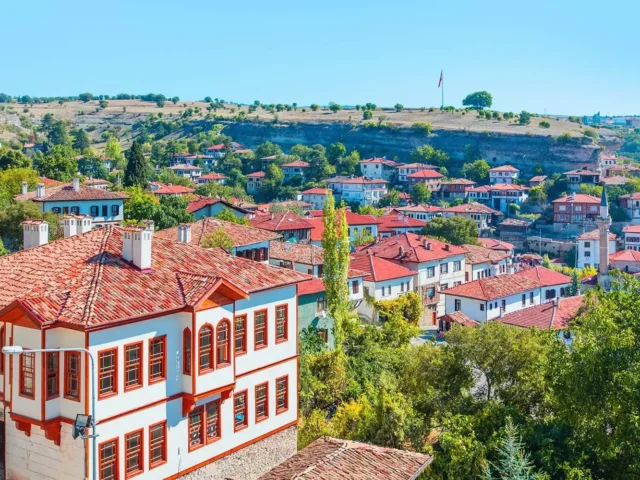
Safranbolu
Safranbolu, the UNESCO-listed Ottoman town: Çarşı bazaar, Cinci Han, Köprülü…
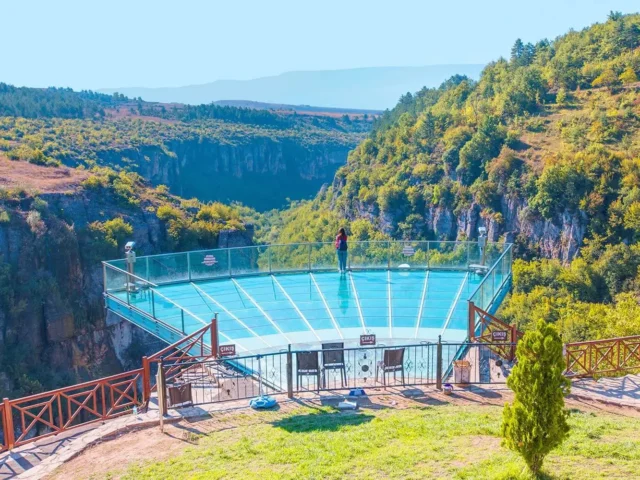
Tokatlı Canyon
Tokatlı Canyon near Safranbolu: the glass Crystal Terrace 80 m…
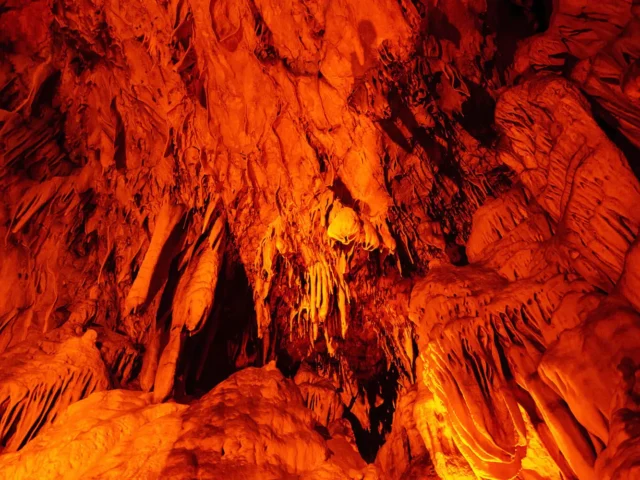
Bulak (Mencilis) Cave
Bulak (Mencilis) Cave near Safranbolu: a 6.5 km karst cave…
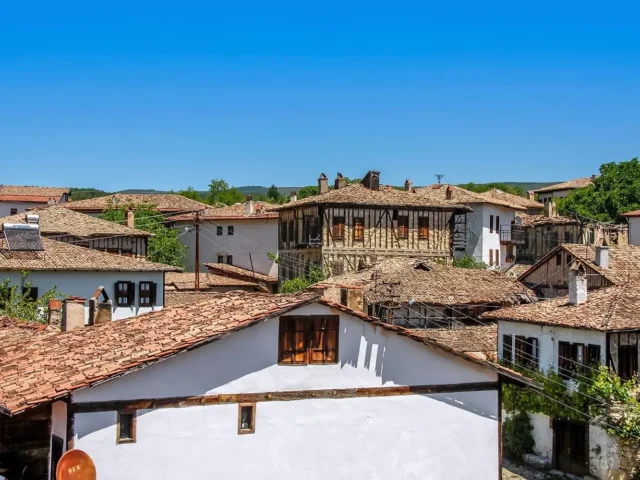
Yörük Village
Yörük Village near Safranbolu: a protected Turkmen village of whitewashed…
