
Great Mosque of Diyarbakır: Seljuk Courtyard of Roman Stone
On this page
- What is the Great Mosque of Diyarbakır?
- How do you get to the Great Mosque of Diyarbakır?
- When is the best time to visit the Great Mosque of Diyarbakır?
- What is the history of the Great Mosque of Diyarbakır?
- What is the Great Mosque of Diyarbakır famous for?
- What can you see at the Great Mosque of Diyarbakır?
- Frequently asked questions about the Great Mosque of Diyarbakır
- What do the official records say about the Great Mosque of Diyarbakır?
Key facts: Great Mosque of Diyarbakır
- What it is: The congregational mosque (Ulu Cami) of Diyarbakır, with two madrasas attached; one of the oldest mosques in Anatolia.
- Where: In the centre of Sur, the walled old city of Diyarbakır, on Gazi Caddesi.
- Period: Mosque on the site after 639; present building begun around 1091 under the Seljuk sultan Malik Shah, with additions to the 19th century.
What is the Great Mosque of Diyarbakır?
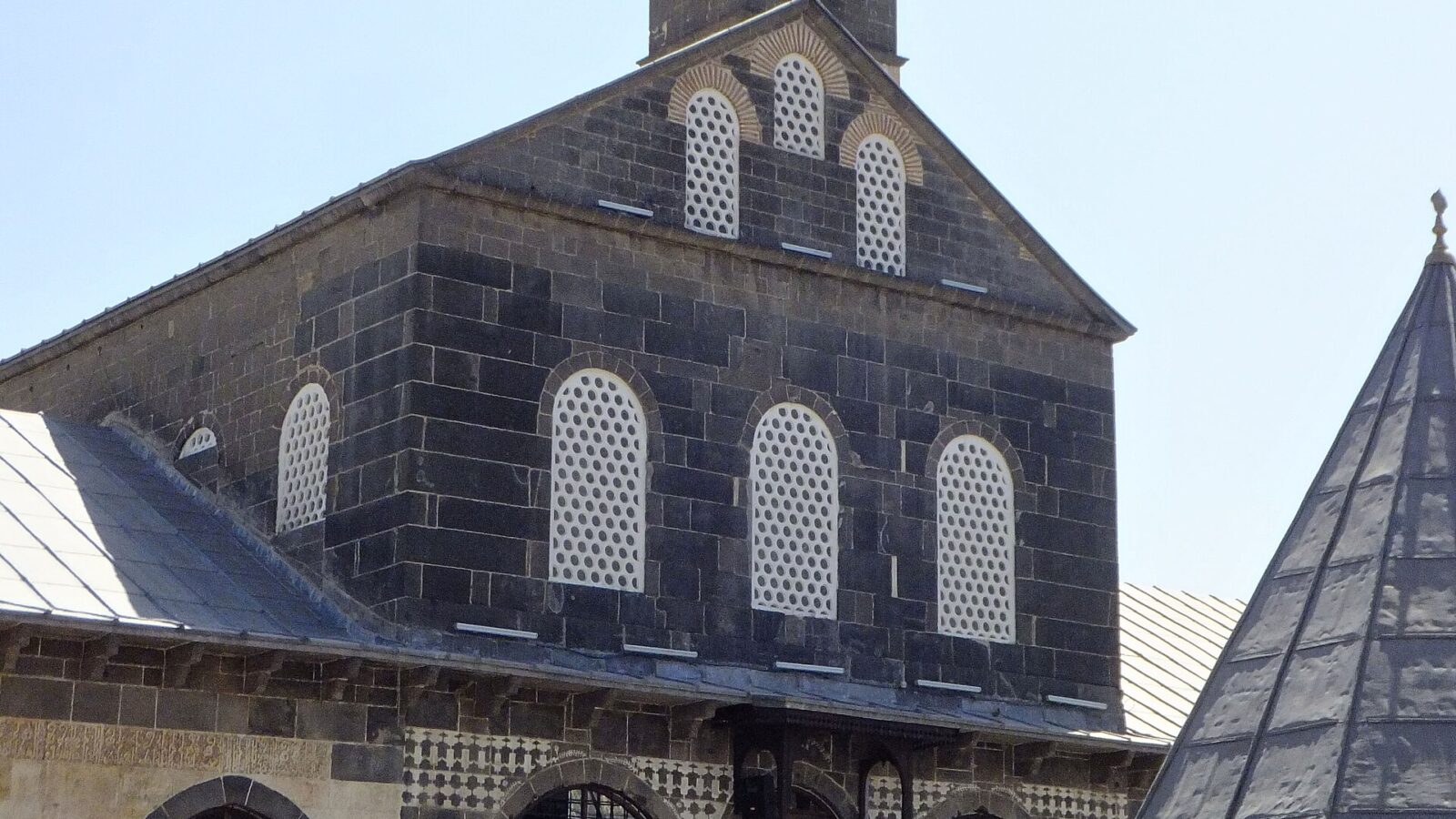
The Great Mosque (Ulu Cami) is the main mosque of Diyarbakır and the centre of the walled old city. It is a large courtyard mosque: a long prayer hall on the south side, two-storey arcades on the east and west, and the Mesudiye Madrasa closing the north side. The courtyard is paved with basalt and has a domed fountain at its centre.
Many scholars see the Umayyad Mosque in Damascus as its model. The 2002 provincial inventory says the plan resembles that of the Umayyad mosques of Damascus built in 705–715, and that the mosque, with the two madrasas and other buildings around it, still stands out today as a monumental complex.
How do you get to the Great Mosque of Diyarbakır?
The mosque is on Gazi Caddesi, the main north–south street of Sur, roughly halfway between Dağ Kapı and Mardin Kapı. From Dağ Kapı it is a ten-minute walk south. The Hasan Pasha Han is directly to the east, so most visitors combine the two.
Book a Great Mosque of Diyarbakır tour
−5% Istambul readers save 5% on every tour below — applied at checkout.
Partner listings via GetYourGuide · free cancellation on most
When is the best time to visit the Great Mosque of Diyarbakır?
Visit between prayer times, ideally in the morning when the courtyard is quiet and the light falls on the west façade. The mosque is in daily use, so avoid the Friday noon prayer. Dress modestly: covered shoulders and knees for everyone, and a headscarf for women inside the prayer hall. Spring and autumn are the most comfortable seasons for lingering in the courtyard.
What is the history of the Great Mosque of Diyarbakır?
The 2002 inventory records that after the city was taken by the Muslim armies, its largest Christian temple, the Church of Mar Toma, was converted into a mosque in 639. It describes Mar Toma as a building first raised as a temple before Christianity, whose original date is unknown, and which became a church once Christianity was the official religion.
The present building belongs to the Seljuk era. The Seljuks took the city in 1085, and the oldest inscription, on the west façade of the prayer hall, dates work to 1091–1092 under the sultan Malik Shah. The inventory notes that the mosque was badly damaged in an earthquake and fire in 1115 and was repaired with the help of the townspeople. Inscriptions record further work in 1117–1118, 1124–1125, 1141 (the minaret), 1155–1156 (the prayer hall) and 1163–1164. The only recorded architect, Hibatallah of Gurgan, supervised the courtyard decoration and completed the prayer hall.
The Mesudiye Madrasa on the north side was built between 1193–1194 and 1223, and the separate Zinciriye Madrasa nearby is dated to 1198. After the Ottoman conquest a Shafi’i prayer hall was added in 1528–1529. The present minaret was rebuilt in 1839, and the courtyard fountain added in 1849.
What is the Great Mosque of Diyarbakır famous for?
- Age. The inventory calls it the oldest mosque in Anatolia and the city’s first Islamic building.
- Its reputation. The inventory says it is known in the Islamic world as the fifth Harem-i Şerif, a title also used by the provincial culture and tourism directorate.
- Reused Roman stone. The east and west courtyard façades are built with columns, Corinthian capitals, vine friezes and fragments of Greek inscriptions taken from older buildings, arranged into a deliberate decorative scheme.
- The Mesudiye Madrasa. It may be the oldest surviving madrasa that taught all four Sunni schools of law.
What can you see at the Great Mosque of Diyarbakır?
The courtyard façades. The two-storey arcades on the east and west are the highlight. Look for the classical columns and capitals, the carved vine scrolls and the Greek letters on reused blocks, set between bands of black basalt and white limestone.
The prayer hall. It has three aisles parallel to the qibla wall, divided by a central nave leading to the main mihrab. Unlike Damascus there is no central dome, and the arcades rest on thick piers rather than round columns. The roof is pitched and lead-covered.
The inscriptions. The inventory notes that the mosque is especially valuable for the fountains in its courtyard and its inscriptions from many periods. The Arabic inscriptions run along the façades and record the building campaigns of the 12th century.
The madrasas. The Mesudiye Madrasa closes the north side of the courtyard. The Zinciriye Madrasa stands as a separate building nearby.
The East Maqsura. A two-storey timber-roofed hall on the east side of the courtyard.



Frequently asked questions about the Great Mosque of Diyarbakır
How old is the Great Mosque of Diyarbakır?
A mosque has stood on the site since 639. The present building was begun around 1091–1092 under the Seljuk sultan Malik Shah, with most work completed in the 12th century.
Can non-Muslims visit the Great Mosque of Diyarbakır?
Yes, outside prayer times. Dress modestly, remove your shoes in the prayer hall, and women should cover their hair inside.
Why does the mosque have Roman columns?
The east and west courtyard façades reuse columns, Corinthian capitals and inscribed blocks from earlier Byzantine buildings, arranged as a deliberate decorative scheme.
What is the Mesudiye Madrasa?
The college on the north side of the courtyard, built between 1193–1194 and 1223. It may be the oldest surviving madrasa that taught all four Sunni schools of law.
Is the Great Mosque the oldest mosque in Türkiye?
The 2002 provincial inventory calls it the oldest mosque in Anatolia, and it is widely described that way, although the present building dates from the late 11th century.
What do the official records say about the Great Mosque of Diyarbakır?
It is known in the Islamic world as the fifth Harem-i Şerif. After Diyarbakır was conquered by the Islamic armies, the largest Christian temple in the province, the Church of Mar Tama, was converted into a mosque in 639. It was repaired in 1091 in the time of the Great Seljuk Sultan Malikshah. Badly damaged in an earthquake and fire in 1115, the mosque was repaired in 1240 with the help of the people.
This first Islamic building, of great value for the fountains in its courtyard and its inscriptions of various periods, was built of black stone. The Great Mosque, the oldest mosque in Anatolia, still draws attention today as a monumental group together with the two madrasas and other buildings around it. In plan it resembles the Umayyad mosques of Damascus built in 705–715. (Ministry of Culture and Tourism, Diyarbakır Provincial Tourism Inventory, 2002)
Main photo: R Prazeres, CC BY-SA 4.0, via Wikimedia Commons.
Ready to see Great Mosque of Diyarbakır?
Hand-picked tours with good reviews and clear prices.
Partner listings via GetYourGuide · free cancellation on most
Before or after: Istanbul
Most trips start or end in Istanbul. Our own experiences there:

 Dinner, sunset and day cruises between Europe and Asia.See cruises bosporuscruise.com

 Historic Turkish baths in the old city — hand-picked hamams, booked direct.Book a hamam istanbulhamam.com

 Istanbul’s tallest viewpoint: both continents from 369 metres.Get tickets camlicatower.com

 Free audio guides in 15 languages, safe routes and local tips — plus 5% off GetYourGuide.Open the free guide localada.com
Nearby
All destinationsDiyarbakır City Walls
Diyarbakır City Walls: the UNESCO-listed basalt circuit of 82 towers…
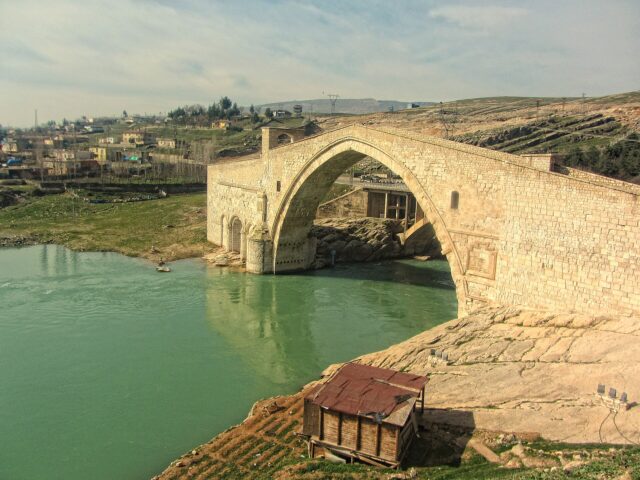
Malabadi Bridge
Malabadi Bridge near Silvan, Diyarbakır: the 12th-century Artuqid bridge with…
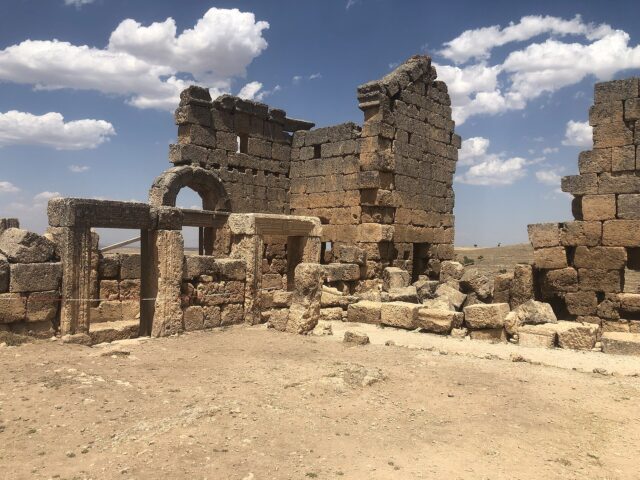
Zerzevan Castle
Zerzevan Castle near Çınar, Diyarbakır: a 4th-century Roman frontier garrison…
Ten-Eyed Bridge
Ten-Eyed Bridge (On Gözlü Köprü): Diyarbakır's ten-arched basalt bridge of…
